



Italian Marquetry Drawers
Italian marquetry drawers combine rigorous geometry with warm timber tones, offering practical storage wrapped in centuries of continental craftsmanship.
Italian Marquetry Drawers
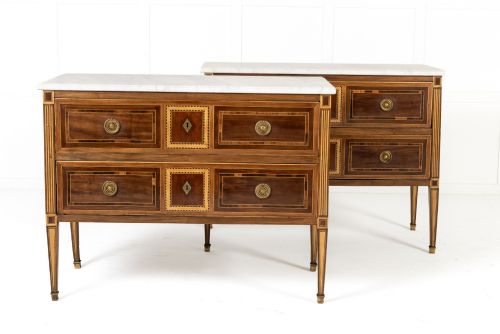
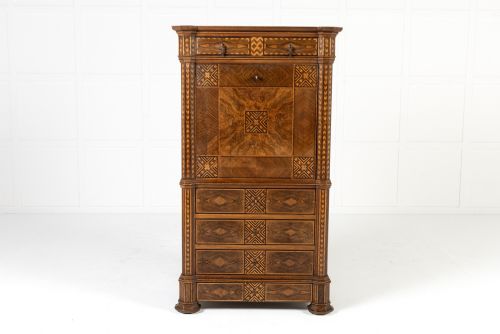
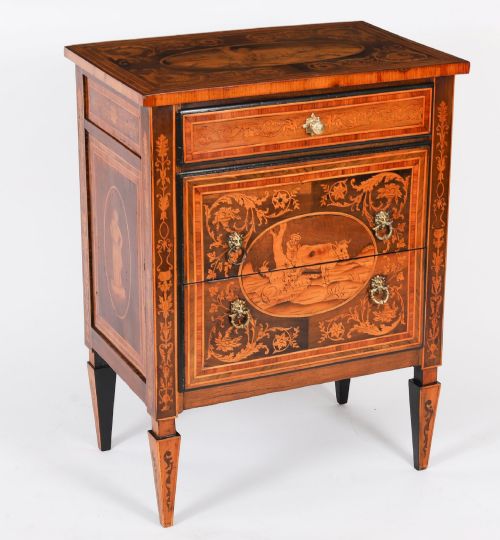
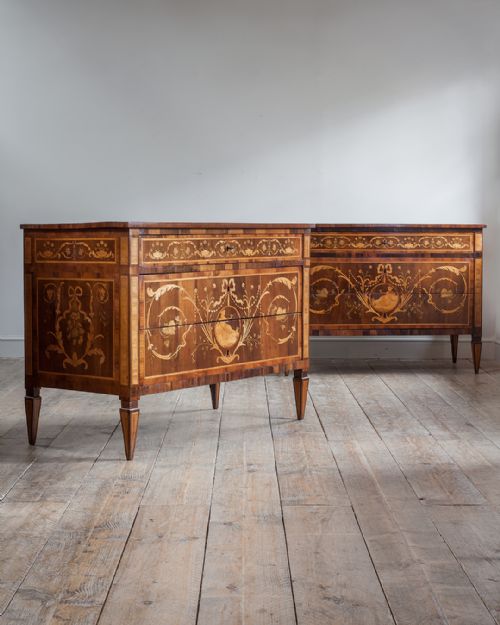
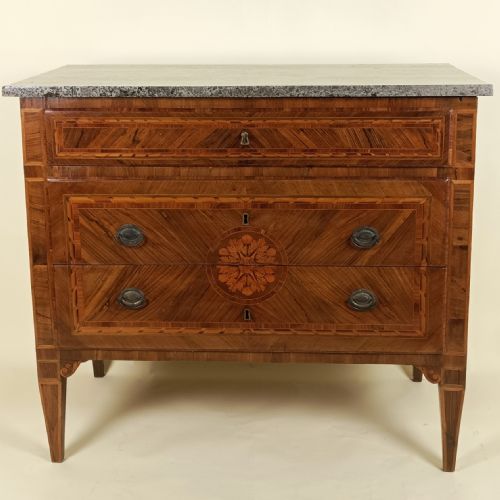
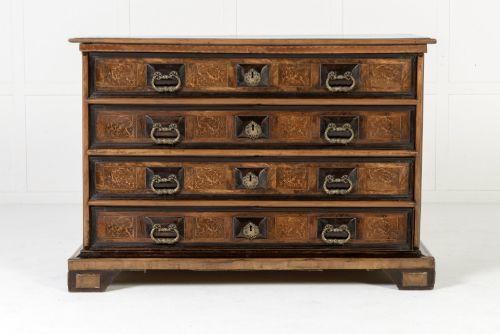
Italian marquetry drawers encompass case furniture designed for storage, appearing most frequently on this page as commodes, bedside cabinets, chests of drawers, and bureau cabinets. These forms span several centuries of production, drawing on regional traditions from workshops across Italy.
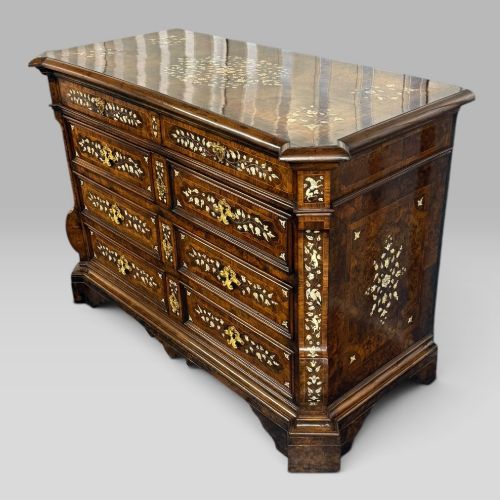
The pieces visible here date from the late seventeenth century through the nineteenth century, capturing periods such as the Italian Baroque, Italian Rococo, Italian Neoclassical, and Italian Renaissance Revival. Buyers encounter robust walnut carcases alongside lighter fruitwood veneers and kingwood panels.
Regional variations shape the silhouettes, ranging from serpentine bombe commodes to rectilinear Lombardy chests. Each piece demonstrates the enduring appeal of pictorial wood inlay applied to functional domestic furniture.
Materials and construction
Cabinetmakers constructed the foundational carcases using sturdy timbers like walnut, upon which intricate surface patterns were laid. Craftsmen then applied fine veneers of fruitwood, burl walnut, and kingwood to create contrasting geometric and pictorial designs across the drawer fronts and tops.
Surface decoration frequently incorporated delicate bone inlay to highlight borders and architectural motifs. Metal mounts in brass and ormolu often reinforced corners, drawer pulls, and escutcheons, while certain models integrated marble tops for added weight and utility.
Italian Marquetry Drawers Retail Price Guide 2026
Typical asking prices for italian marquetry drawers among the pieces listed under this phrase on Sellingantiques today, from the lower quarter to the upper quarter. They describe what is for sale here now, not the wider market.
The furniture range spans from Baroque commodes to Neoclassical chests of drawers and bureau cabinets.
Assessing quality
The hierarchy of quality rests primarily on the precision of the wood inlay and the artistry of the pictorial design. Superior examples exhibit seamless integration of disparate timber species, where grain direction and natural colour variations create depth without relying on surface paint.
Structural integrity and the retention of original mounts, such as brass and ormolu hardware or bone inlay elements, separate masterworks from utilitarian pieces. The complexity of the form itself, particularly curved bombe profiles or architectural bureau interiors, demands higher technical proficiency from the cabinetmaker.
Grand Ducal Workshops
The Italian Marquetry Drawers Glossary
- Marquetry
- A technique where small pieces of veneer are assembled into pictorial or geometric patterns on a wooden carcase. This decorative method defines the visual character of the pieces on this page.
- Commode
- A low chest of drawers, typically featuring two or more drawers and standing on legs. This form developed in France but was widely adopted by Italian cabinetmakers.
- Bombe
- A swollen or bulging contour characteristic of Rococo furniture forms. Commodes with this profile require advanced woodworking skill to veneer accurately.
- Kingwood
- A dense, richly figured timber native to Brazil, used extensively for contrasting veneers in eighteenth-century furniture. Its dark purple-brown tones provide sharp definition against lighter fruitwoods.
- Ormolu
- Gilded bronze used for decorative mounts, feet, and handles on high-status case furniture. The material adds a metallic highlight to the wooden surfaces.
Italian Marquetry Drawers: Frequently Asked Questions
How do I care for italian marquetry drawers?
Keep these pieces away from direct sunlight and sudden temperature shifts to protect the delicate wood veneers from drying and lifting. Regular dusting with a soft, dry cloth preserves the finish without requiring heavy polishes.
Maintain stable indoor humidity levels to safeguard the structural timber and prevent warping in the older carcases. Handle brass and ormolu mounts with care during routine cleaning.
Where were these pieces made?
Production centres varied across the Italian peninsula, with notable regional styles emerging from Lombardy and other historic design hubs. Each area developed distinct preferences for specific fruitwoods, walnut tones, and geometric motifs.
Local workshops adapted broader European movements like the Baroque and Neoclassical styles into distinctively Italian interpretations.
What is the difference between marquetry and inlay?
Marquetry involves assembling an entire picture or pattern from various veneers before gluing the completed sheet onto the furniture carcase. This creates a continuous surface of fitted woods across the drawer fronts.
Inlay traditionally refers to cutting recesses directly into solid wood and inserting contrasting materials like bone or metal into those cavities.
Can I use a commode as a bedside cabinet?
Smaller commodes and bedside cabinets from the eighteenth and nineteenth centuries adapt well to modern bedroom layouts for bedside storage. Their drawers offer practical space for contemporary items while retaining historic character.
Verify the height and proportions of the specific piece against your bed frame before placement to ensure comfortable daily access.