


Antique Instruments for Wall
Antique instruments for wall mountings bring scientific utility into domestic interiors through fitted barometers, thermometers and weather stations.
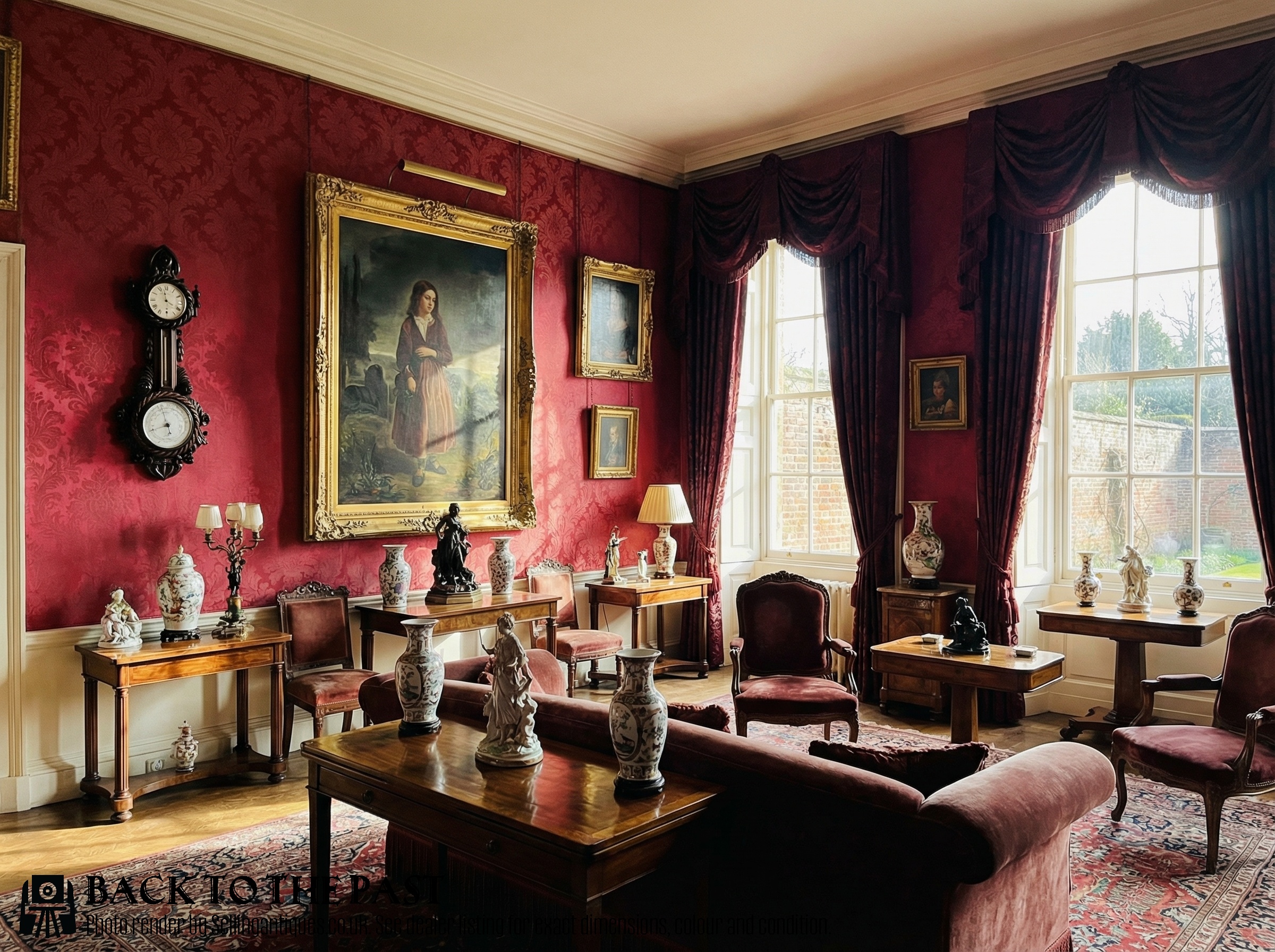
Antique Instruments for Wall
Antique instruments for wall display combine practical meteorological tracking with period cabinetmaking. The selection relies heavily on nineteenth-century domestic pieces designed to record barometric pressure, temperature and humidity in domestic rooms or public offices.
Domestic weather recording equipment appears most frequently as aneroid or mercury stick barometers housed in architectural timber cases. Buyers encounter Victorian oak and walnut banjo barometers alongside Georgian mahogany stick forms and carved Black Forest examples.
The assortment includes specialised scientific apparatus such as hair hygrometers, yarn testers and altitude adjustment metres alongside conventional domestic barometers and weather stations.
Materials and construction
Cabinetmakers constructed instrument housings using dense hardwoods including mahogany, oak, walnut and rosewood. These timbers were carved, turned or inlaid to produce architectural frames capable of supporting delicate glass tubes and brass dials.
Metal components utilise brass, copper and silvered bronze for bezels, scales and pointers. Mercury filled glass tubes and delicate aneroid capsules provide the mechanical response to atmospheric changes.
Hair hygrometers use human hair to measure humidity, contracting or expanding as moisture in the air shifts.
Evaluating craftsmanship
Superior examples display crisp carving and careful timber selection, such as burr walnut veneers or detailed Black Forest foliage. Case integrity and the legibility of engraved or silvered dials distinguish workshop standards.
The distinction between ordinary production items and better pieces rests upon the maker's reputation and the precision of the internal mechanical movement. Signed dials by recognised opticians and instrument makers elevate the stature of an individual piece.
Hyde & Sons Sleaford·Wilh. Lambrecht·George Adams London·P. Caminada·Poulenc Freres·Elliott Brothers·Short & Mason·George Adams·G & L Guanziroli·Negretti & Zambra·Bramwell & Harbron
The Antique Instruments for Wall Glossary
- Barometer
- An instrument measuring atmospheric pressure to forecast weather changes. Mercury stick models use a vertical column of liquid, while aneroid versions rely on a flexible metal box.
- Hygrometer
- A device for measuring humidity in the air. Specialised examples utilise human hair or animal membrane to register moisture levels.
- Banjo barometer
- A domestic wall barometer shaped like a banjo, typically housing a dial face at the bottom and a thermometer or hygrometer along the stem.
- Aneroid
- Operating without liquid. Aneroid barometers use an internal sealed corrugated metal capsule that expands or contracts with pressure changes.
- Stick barometer
- A tall, narrow wall instrument containing an exposed or enclosed vertical tube of mercury. Georgian examples often feature exposed scales and vernier adjustments.
Antique Instruments for Wall: Frequently Asked Questions
What is an aneroid barometer?
An aneroid barometer measures atmospheric pressure using a sealed, flexible metal capsule rather than liquid mercury. The expansion and contraction of this internal chamber moves the pointer across the dial.
Invented in the nineteenth century, these instruments allowed barometers to be built into more compact wall cases, including banjo shapes and decorative carved timber frames.
How do I hang a stick barometer?
Stick barometers must be hung securely from a vertical wall surface using robust fixings suited to the weight of the timber case. They require a stable location away from direct heat sources and heavy vibrations.
Because mercury stick models contain a column of liquid, the tube must remain upright and undisturbed to prevent air bubbles from entering the measurement column.
What is a weather station?
A weather station combines multiple measuring instruments, such as a barometer, thermometer and hygrometer, within a single housing. These multifunctional boards allowed households to monitor pressure, temperature and humidity simultaneously.
Victorian examples range from simple domestic oak panels to elaborate silver gilt desk and wall stations fitted by prominent instrument makers.
How do I date a wall barometer?
Dating relies on stylistic clues in the woodwork, the typography of the dial and the technical construction of the mechanism. Georgian pieces generally feature plain mahogany stick cases, while Victorian versions introduce heavy carving, aneroid dials and walnut veneers.
Signed dials naming specific makers or retail addresses provide the most reliable evidence for narrowing down the production period.