

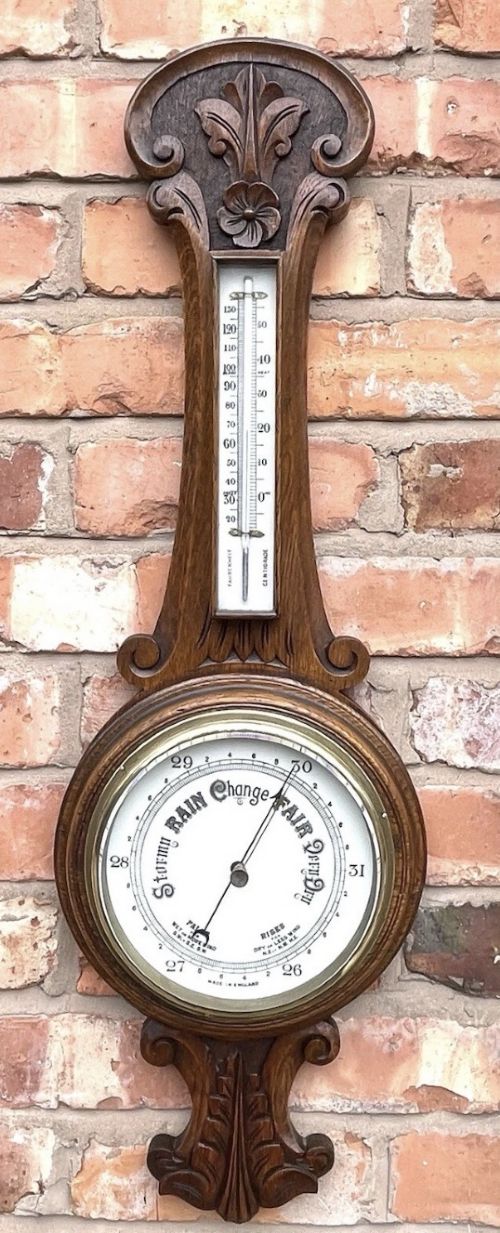


Victorian Carved Barometer Clock
A victorian carved barometer clock combines timekeeping and atmospheric tracking in a heavily decorated timber case, offering a functional centrepiece for the interior.
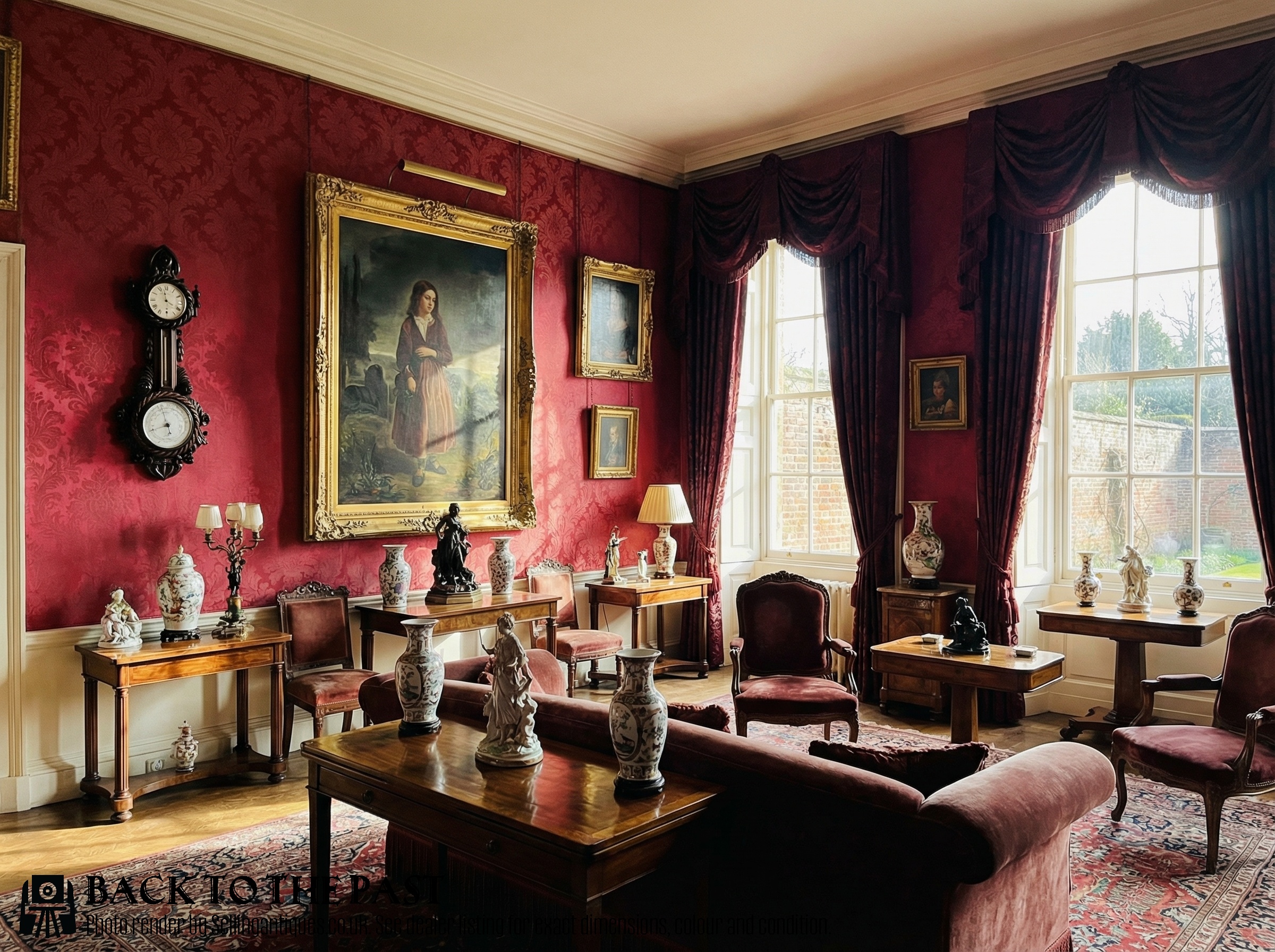
Victorian Carved Barometer Clock
When searching for a victorian carved barometer clock, buyers encounter combined instruments housing both a clock face and a barometer within a single carved wooden housing. These hybrid pieces often incorporate thermometers or calendars alongside the main dials.
Most examples found on this page date from the Victorian era and the later nineteenth century, spanning various regional interpretations. Wall-mounted banjo formats and desktop designs appear frequently across the inventory.
The styles range from British oak and walnut banjo instruments to continental Black Forest carvings and architectural desk pieces. Buyers typically select these items to anchor a room with period utility and dense woodcarving.
How they were made
Cabinetmakers utilised dense hardwoods such as oak, walnut, and mahogany to form the substantial housings required for these complex instruments. These timbers were deeply hand-carved with foliage, architectural motifs, and structural detailing.
Mechanical components including aneroid barometer movements, clock gears, glass dials, and brass bezels were fitted carefully into the carved wooden chassis. Ceramic dials and visible skeletonised barometer workings also appear within the assembly.
Victorian Carved Barometer Clock Retail Price Guide 2026
Typical asking prices for victorian carved barometer clock among the pieces listed under this phrase on Sellingantiques today, from the lower quarter to the upper quarter. They describe what is for sale here now, not the wider market.
Listings feature walnut, oak, and mahogany timbers alongside brass, glass, and ceramic elements across the Victorian era and the nineteenth century.
What varies in quality
The distinction between standard examples and superior pieces rests upon the depth and crispness of the timber carving. Finer instruments display intricate, undercut foliage and harmonious proportions rather than mechanical repetition.
Material selection and the integration of multiple instruments dictate the upper tier of the range. Combining a clock, barometer, thermometer, and calendar within a single balanced housing demonstrates advanced Victorian craftsmanship.
The Victorian Carved Barometer Clock Glossary
- Aneroid barometer
- An instrument that measures atmospheric pressure using a flexible metal box without liquid mercury. This design allowed makers to house barometers compactly within wall clocks and desk stands.
- Banjo barometer
- A domestic barometer housed in a tapering wooden case resembling a stringed instrument. This silhouette became a standard format for combined Victorian weather and time pieces.
- Skeletonised
- A design where the outer dial or casing is cut away to reveal the mechanical workings underneath. This treatment exposes the internal brass springs and linkages to view.
- Black Forest
- A style of exuberant woodcarving originating from the mountain region of Germany, often featuring naturalistic foliage and animal motifs. Pieces from this tradition utilise deeply carved walnut and oak.
- Caduceus
- A classical staff entwined with serpents, sometimes utilised as a decorative motif for the overall shape of an instrument case. This mythological symbol adds an architectural silhouette to desktop pieces.
Victorian Carved Barometer Clock: Frequently Asked Questions
What is a Victorian carved barometer clock?
A Victorian carved barometer clock is a dual-purpose domestic instrument housed in a heavily decorated timber case. It brings together the functions of telling the time and measuring atmospheric pressure.
These pieces emerged during the nineteenth century when domestic science and decorative carving intersected. They served both a practical utility and a display function in period interiors.
Where should I place one at home?
These pieces suit prominent wall spaces or sturdy desks where their substantial timber frames can be appreciated. Banjo formats require wall mounting with secure fixings suited to their weight.
Keep them away from direct heat sources and damp environments to protect the sensitive internal mechanical components and wooden cases. Stable indoor temperatures help preserve the antique timber and brass elements.
How do I identify a Victorian piece?
Look for dense hardwoods like walnut and oak paired with characteristic nineteenth-century carving styles. The presence of aneroid movements alongside ceramic or glass dials points towards this era.
Architectural details, combined thermometer scales, and specific regional cabinetmaking styles further confirm the period origin. Comparing the layout to documented nineteenth-century examples clarifies the timeline.