


Antique Inlay Accent Table
An antique inlay accent table brings warmth and intricate pattern into a room through contrasting timbers and delicate decorative motifs.
Antique Inlay Accent Table
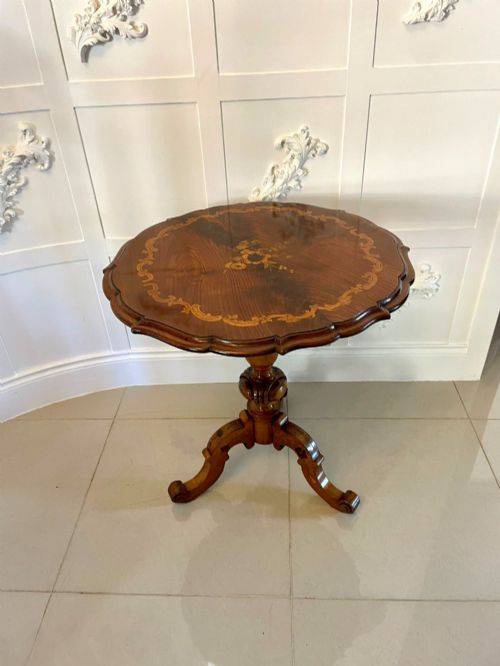
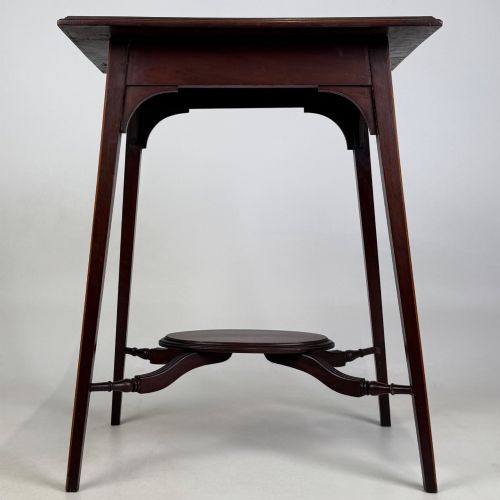
When you search for an antique inlay accent table, you encounter a variety of compact occasional furniture designed to sit beside seating or anchor smaller spaces. The selection spans centuries from the Georgian and Victorian eras through to the Edwardian period, encompassing diverse regional workshops.
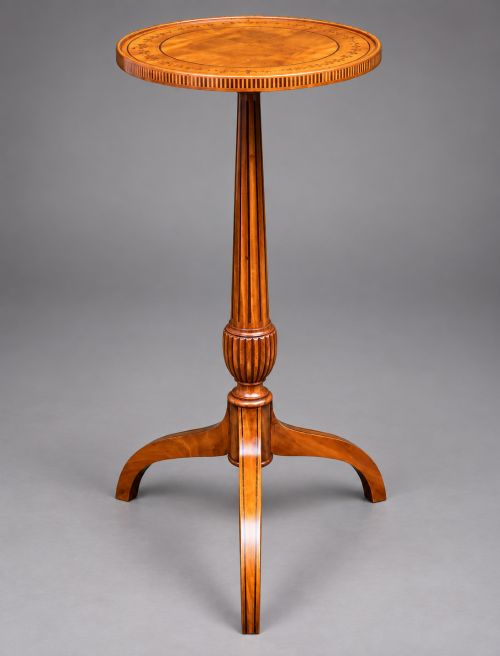
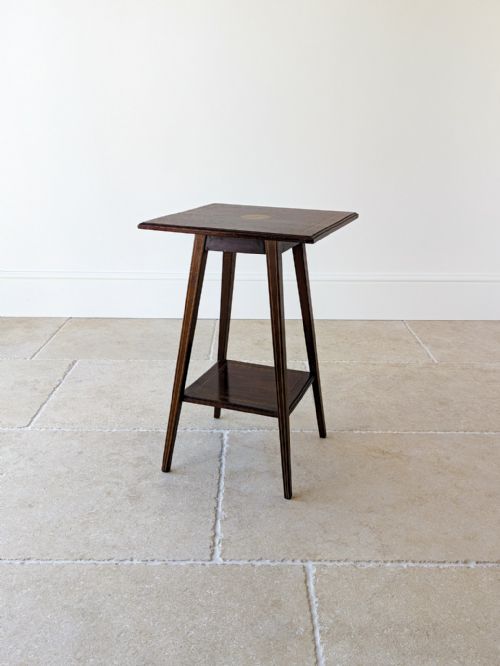
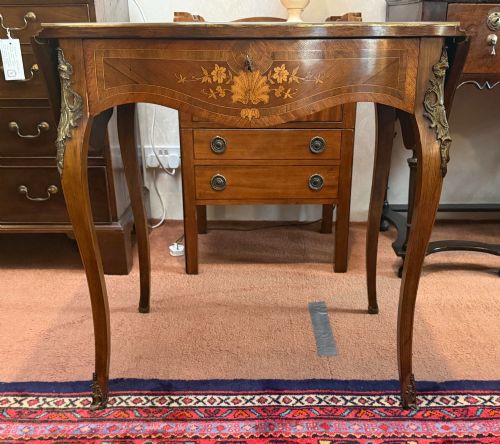
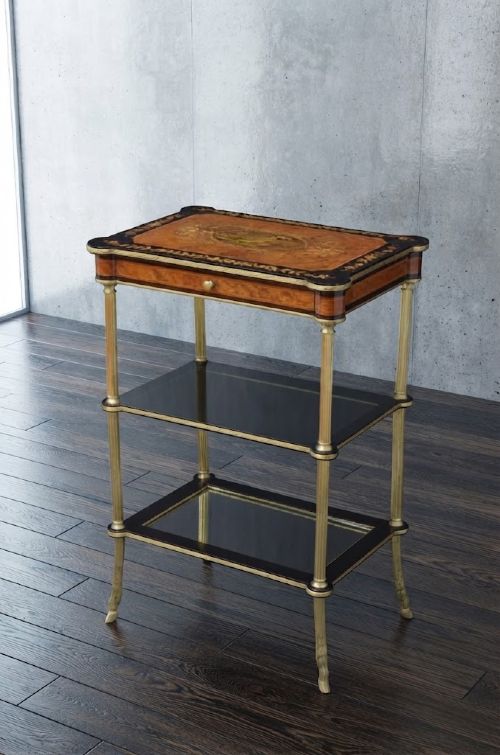
The most common forms on this page include lamp tables, occasional tables, side tables, and occasional Pembroke or centre tables. Pieces range from British walnut and mahogany examples with delicate Sheraton revival motifs to French marquetry pieces and distinctive Anglo-Indian or Syrian tables.
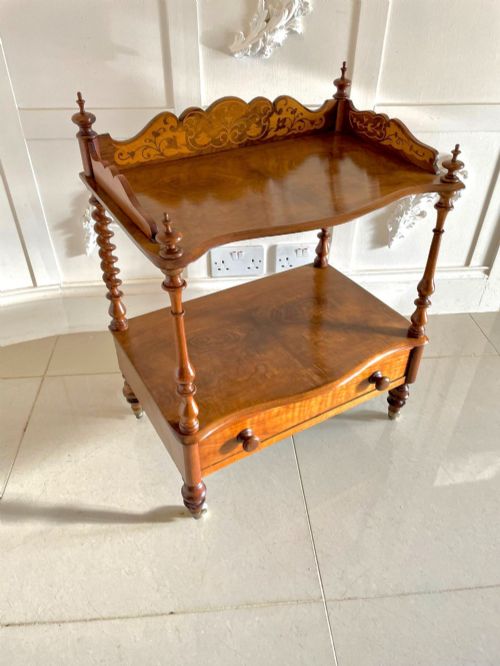
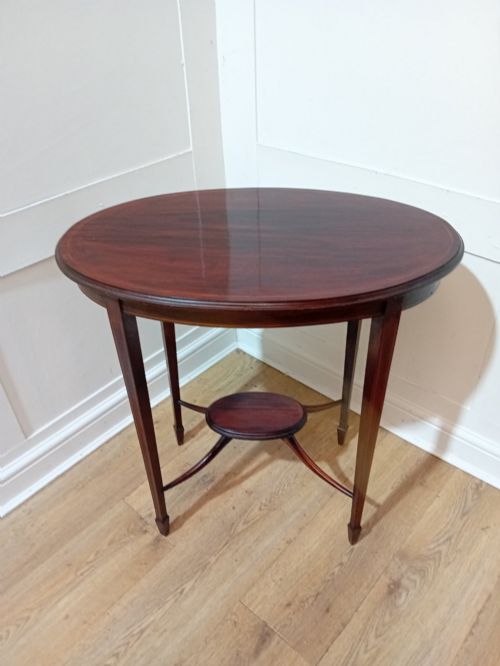
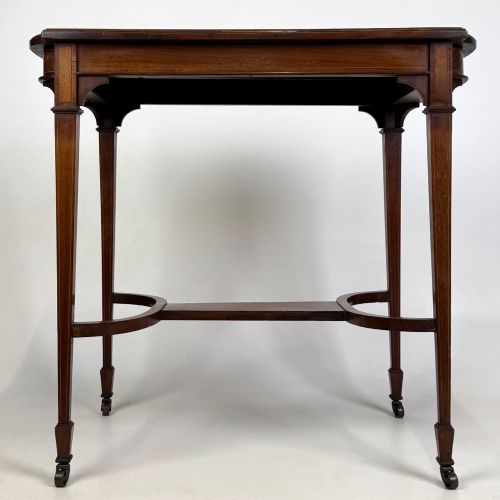
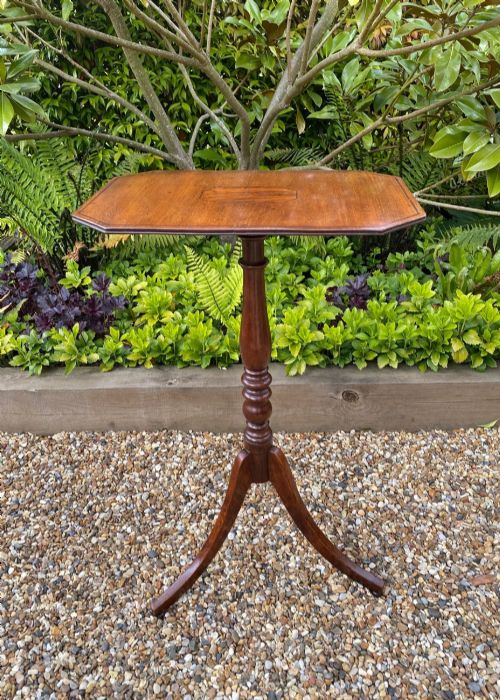
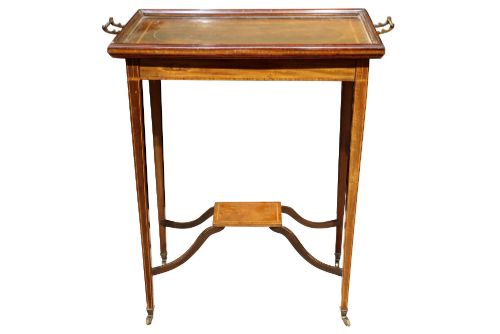
Makers utilised various silhouettes such as oval, kidney-shaped, octagonal, and square tops supported by pedestals, bobbin legs, or tapering table legs. Each form served a domestic purpose in the parlour or drawing room, functioning as a surface for lamps, books, or tea.
Materials and construction
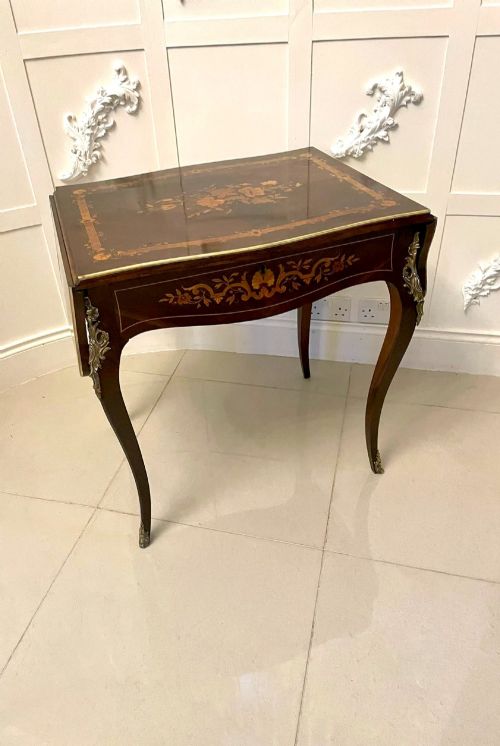
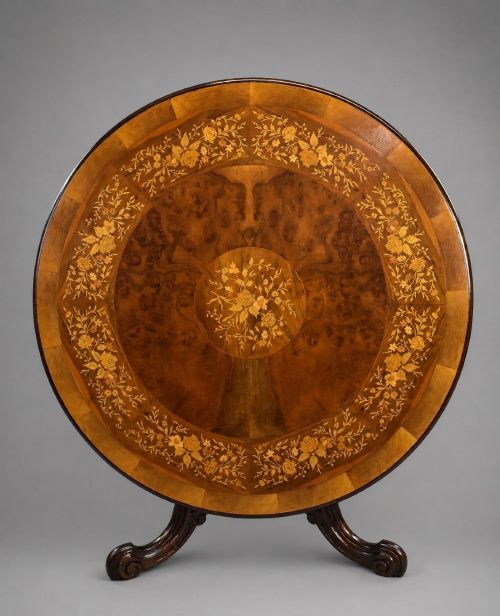
Cabinet makers built these tables using a carcase of solid timber such as mahogany, oak, or walnut, overlaid with fine veneers of satinwood, rosewood, kingwood, or burr walnut. The decorative surface relies on precision cutting of contrasting woods, brass, or mother of pearl to form intricate floral, geometric, or figurative patterns.
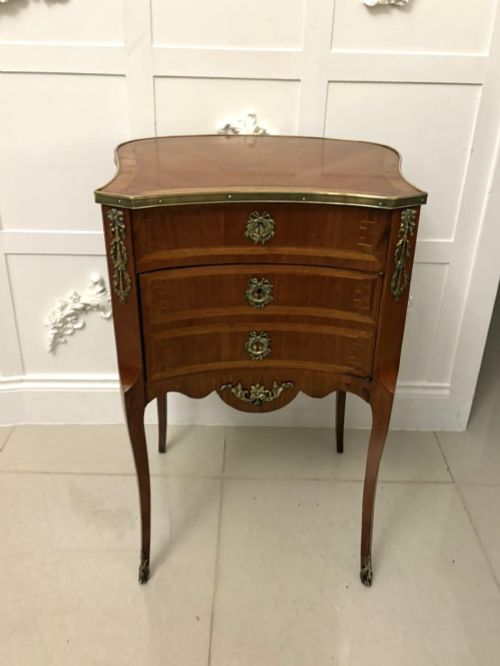
Inlaid elements were meticulously fitted into recesses carved directly into the primary wood or veneer ground before being polished and finished. Additional detailing often involved Ormolu mounts, brass galleries, or turned wooden supports to complement the rich surface decoration.
The furniture styles span Georgian, Regency, Victorian, Edwardian, and Arts & Crafts periods, alongside Anglo-Indian and French regional designs.
Judging quality and craftsmanship
Quality in these tables rests upon the precision of the timber matching and the crispness of the inlaid work. Superior pieces display seamless integration of contrasting woods without visible gaps or excessive filler around the delicate motifs.
The choice of primary timber and secondary veneers dictates the distinction between standard production and exhibition grade items. Finer examples feature highly figured burr walnut, rich satinwood, or elaborate pictorial marquetry paired with robust, well-proportioned framing.
Liberty & Co.·William Birch·Gillows
The Antique Inlay Accent Table Glossary
- Marquetry
- Form of wood inlay that creates pictorial or decorative patterns by assembling small veneer pieces on a background. It differs from parquetry through its organic or figurative designs.
- Satinwood
- Hard, yellowish timber prized for its smooth texture and reflective sheen. It is frequently employed in late eighteenth and nineteenth-century tables for contrasting panels.
- Ormolu
- Gilded bronze ornamentation applied to furniture edges and mounts. This technique adds metallic contrast to wooden surfaces, particularly on French revival pieces.
- Pembroke table
- Small drop-leaf table with hinged flaps on two opposite sides. It typically includes a single drawer and slender legs.
- Parquetry
- Geometric mosaic woodwork pattern formed of veneer blocks. It creates repeating diagonal or chequerboard designs across the tabletop.
Antique Inlay Accent Table: Frequently Asked Questions
What is an accent table used for?
These small tables serve practical functions in living spaces as convenient surfaces for lighting, drinks, or decorative objects. Their compact proportions allow them to fit easily beside chairs or in narrow hallways.
Historically, specific forms such as wine tables or lamp tables catered to distinct social rituals in the home. Today they remain versatile additions that introduce historic character and surface utility to modern interiors.
How do I distinguish Edwardian tables from Victorian ones?
Victorian examples frequently showcase heavier timbers like burr walnut with rich, dark tones and deep marquetry panels. Design influences often draw heavily on earlier historical revivals and robust construction methods.
Edwardian pieces generally present a lighter aesthetic, often utilising satinwood, simpler mahogany frames, and delicate Sheraton revival motifs. The overall proportions tend to feel airier, reflecting changing interior tastes at the turn of the twentieth century.
Where were Hoshiarpur tables made?
Hoshiarpur tables originated in the Punjab region of India, specifically in a town renowned for its intricate woodworking traditions. Local artisans carved dense geometric and floral designs into timber frames.
These pieces frequently incorporated contrasting materials such as brass wire inlay or bone elements. Their distinct aesthetic gained popularity in Britain during the late nineteenth century through retailers embracing Anglo-Indian styles.
How should I care for an inlaid surface?
Protect antique wood and inlay by keeping tables away from direct sunlight and sudden temperature fluctuations. Excessive heat or dryness can cause veneers to lift or timber to split.
Clean surfaces gently with a soft, dry cloth and apply a quality beeswax sparingly to nourish the wood. Avoid using liquid polishes or modern chemical sprays that might penetrate hairline cracks in the inlay.