

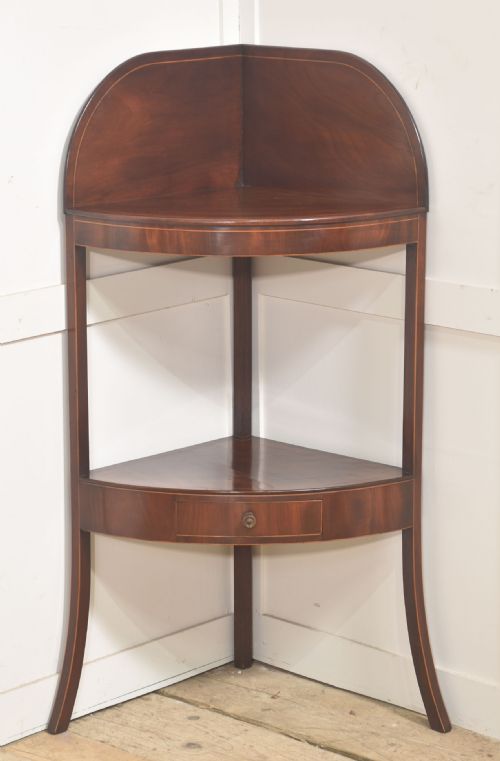


Antique Inlaid Washstand
An antique inlaid washstand brings refined timber and subtle detail to a bedroom, combining practical daily utility with period craftsmanship.
Antique Inlaid Washstand
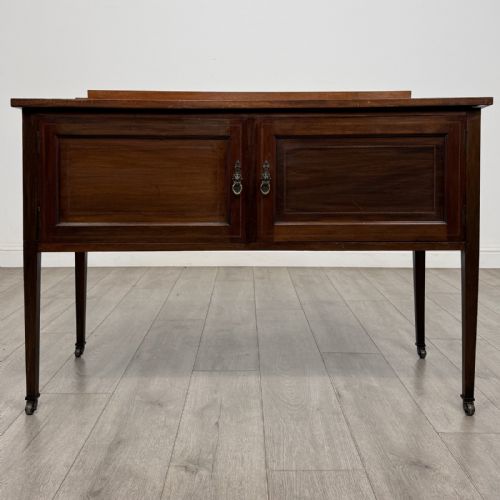
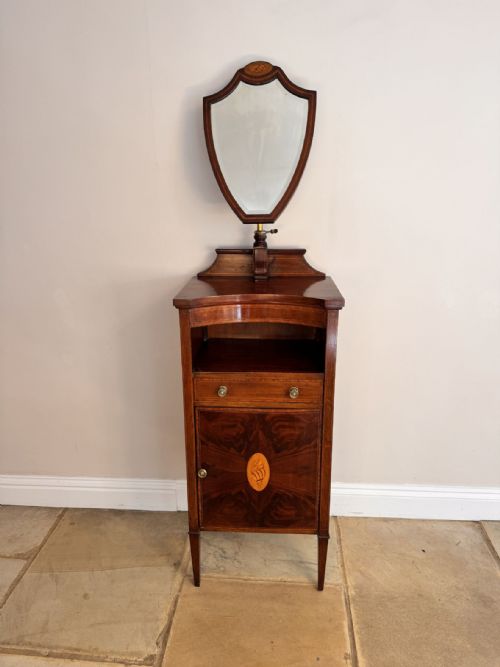
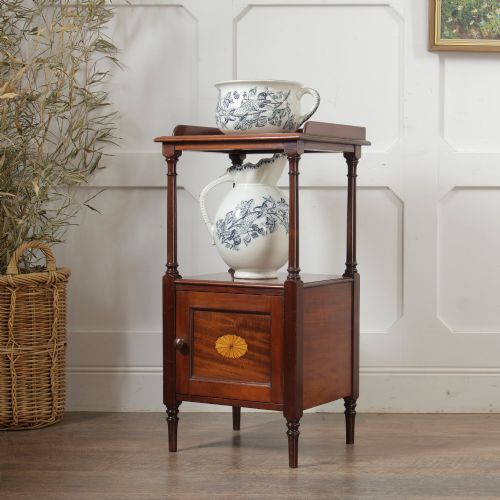
An antique inlaid washstand is a functional bedroom cabinet or stand built to hold basins and ewers, frequently featuring decorative stringing or marquetry. The pieces available span several eras, predominantly drawing from the Georgian, Victorian, and Edwardian periods.
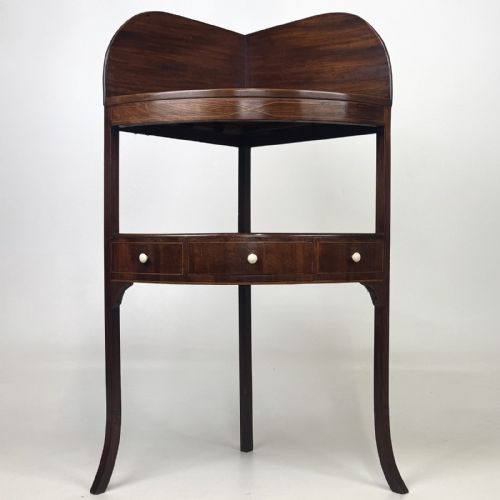
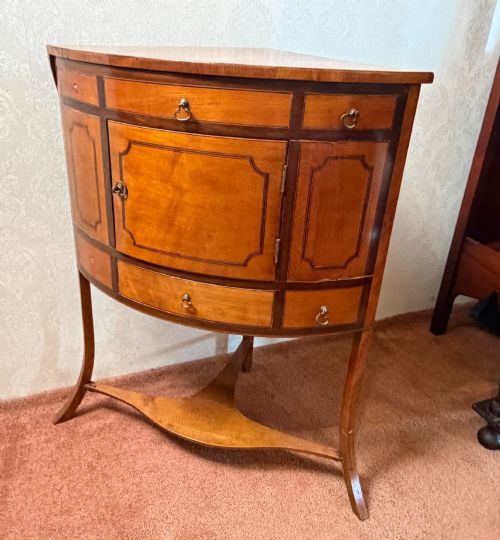
Forms vary significantly, ranging from straight-fronted cabinets and bedside tables to specialised corner washstands designed to fit neatly into domestic spaces. Many examples incorporate satinwood, boxwood, or brass accents into a primary mahogany structure.
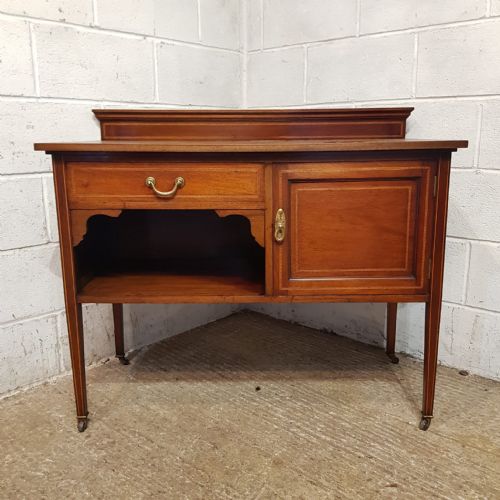
Origins stretch from the late eighteenth century through to the early twentieth century, showing shifts from simple functional utility to ornate revival styles. Buyers often encounter corner variants alongside larger Edwardian washstands equipped with raised galleries.
Materials and construction
Makers built these pieces primarily using solid mahogany, frequently pairing it with contrasting timbers such as satinwood and boxwood for decorative inlay work. Brass fittings appear on doors and handles, while marble tops provide durable, water-resistant surfaces on specific surviving examples.
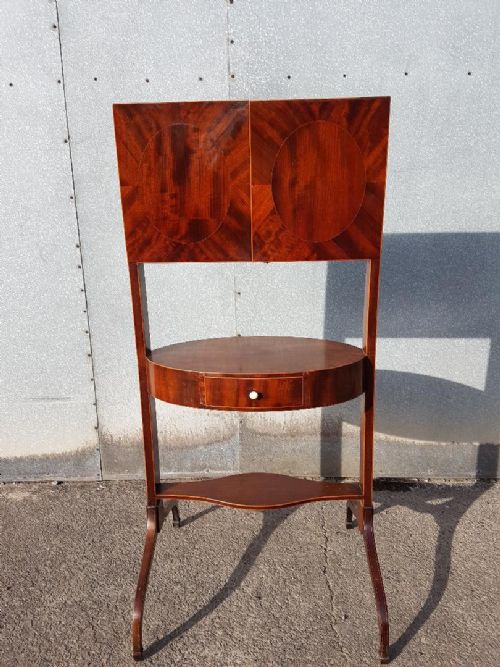
Cabinetmakers utilised precision techniques to fit angled corner stands and folding tops, accommodating the specific space-saving demands of period bedrooms. Inlay patterns range from simple geometric stringing to more elaborate motifs set into the drawer fronts and tabletops.
Antique Inlaid Washstand Retail Price Guide 2026
Typical asking prices for inlaid washstand among the pieces listed under this phrase on Sellingantiques today, from the lower quarter to the upper quarter. They describe what is for sale here now, not the wider market.
The listings span multiple eras, including Georgian, Regency, Victorian, and Edwardian periods, constructed primarily in mahogany with boxwood and satinwood inlay.
Assessing quality in the range
The standard of an antique inlaid washstand rests on the precision of its timber selection and the crispness of its marquetry or stringing. Finer examples display harmonious grain alignment across panels and careful integration of contrasting woods without gaps.
Structural integrity and original hardware further distinguish superior pieces from simpler utilitarian items. The presence of maker stamps, such as those from documented workshops like Gillows, elevates the historical interest of a washstand significantly.
Flashman & Co·Gillows
The Antique Inlaid Washstand Glossary
- Gallery
- A raised wooden border running along the back or sides of a washstand top. It prevented water splashes from reaching the bedroom walls during daily ablutions.
- Stringing
- A narrow line of contrasting timber inlaid into the surface of a piece. It forms delicate geometric borders around drawer fronts and tabletops.
- Marble top
- A polished stone slab fitted to the upper surface of a washstand. This provided a waterproof platform resistant to staining from water and toiletries.
- Corner stand
- A triangular or wedge-shaped piece of furniture designed to fit directly into the corner of a room. These saved valuable floor space in smaller period bedchambers.
Antique Inlaid Washstand: Frequently Asked Questions
What is an antique inlaid washstand used for today?
While originally designed to hold washing basins and pitchers in bedrooms, these pieces now serve well as striking hallway consoles or distinctive bathroom vanity surrounds.
Their compact footprints and built-in cupboards also make them practical bedside tables or small storage cabinets for modern homes.
How do I identify a Georgian washstand?
Georgian examples often feature sturdy mahogany construction with clean architectural lines, sometimes incorporating clever folding tops designed to conceal the basin aperture.
Look for period characteristics such as fine boxwood stringing, tapered legs, and authentic period brass hardware.
Are corner washstands difficult to place in a room?
Corner washstands are specifically engineered to utilise awkward angles and empty room corners efficiently, making them surprisingly adaptable for smaller spaces.
They draw the eye upward and fill dead space where standard rectangular furniture would block doorways or walkways.
What timber is most common on these washstands?
Mahogany forms the structural foundation for the majority of these pieces, prized by period cabinetmakers for its strength and rich reddish-brown tone.
Satinwood and boxwood frequently appear alongside the primary timber as contrasting inlay elements to create decorative borders.