
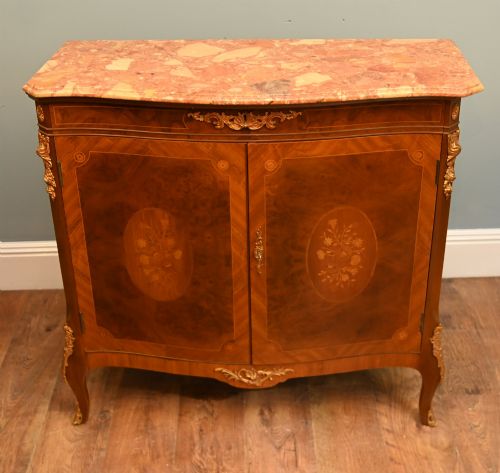
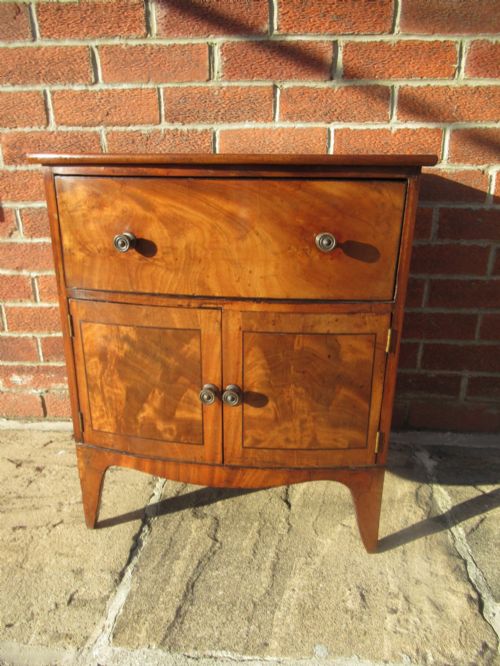
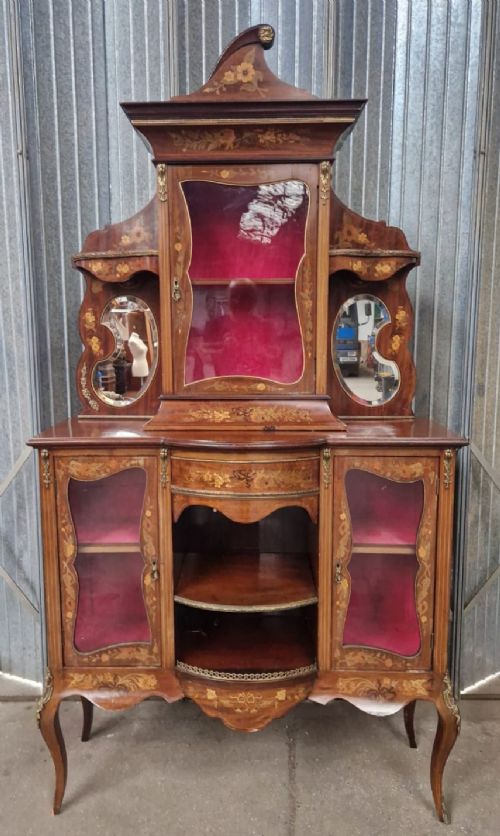
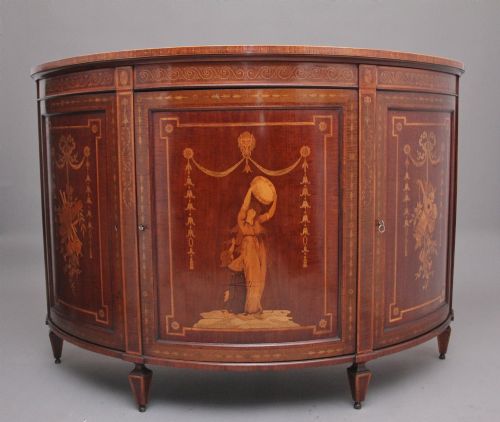
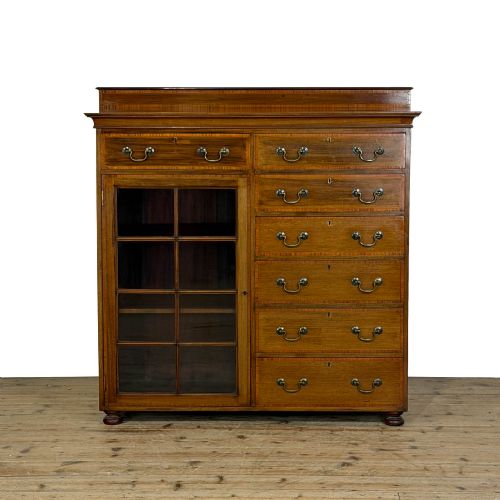
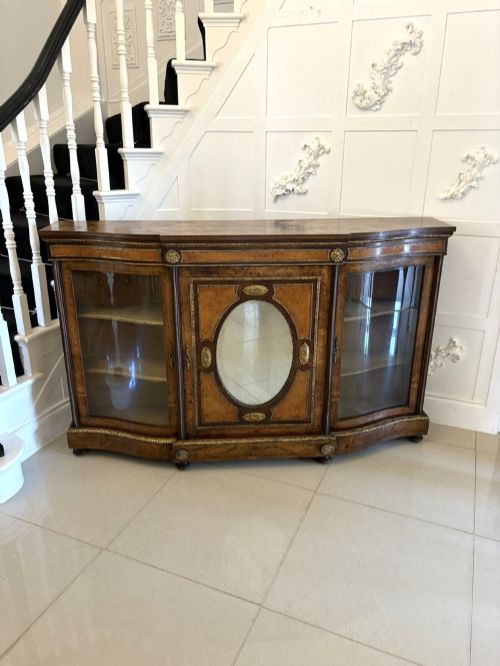
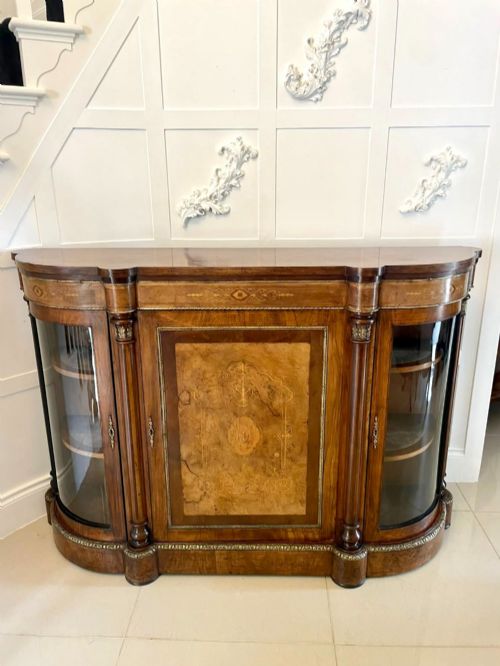
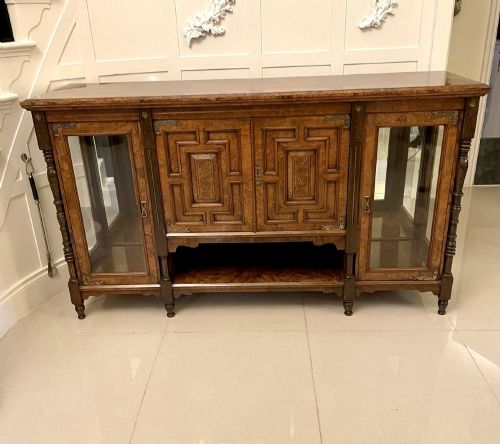
Antique Inlaid Sideboard Cabinet
An antique inlaid sideboard cabinet brings together timber, brass and delicate marquetry to anchor a dining room or hall with period presence.
Antique Inlaid Sideboard Cabinet
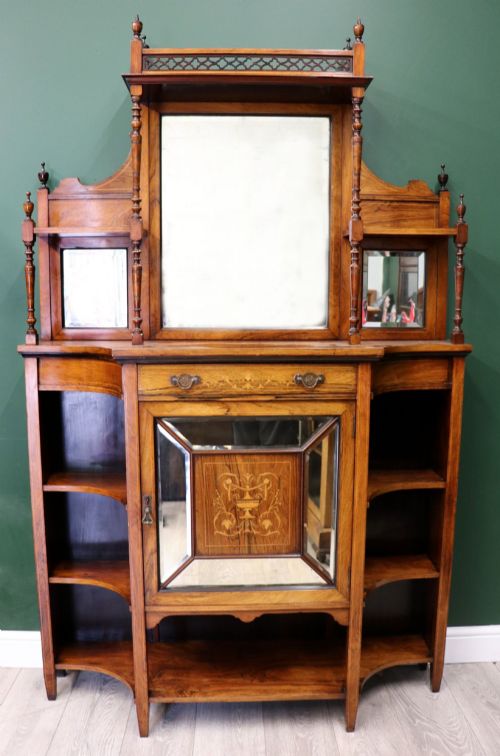
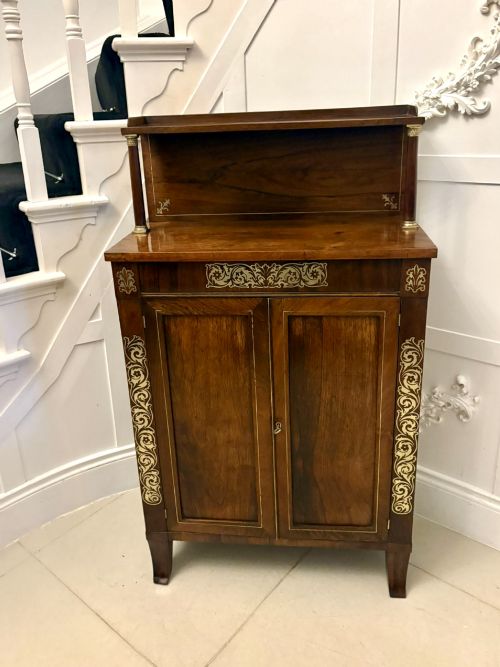
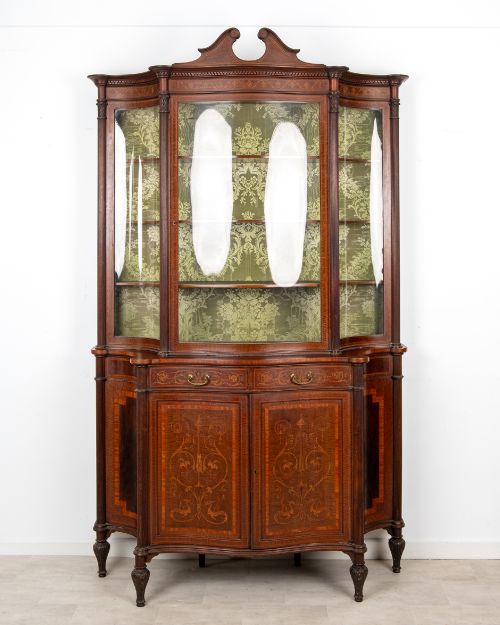
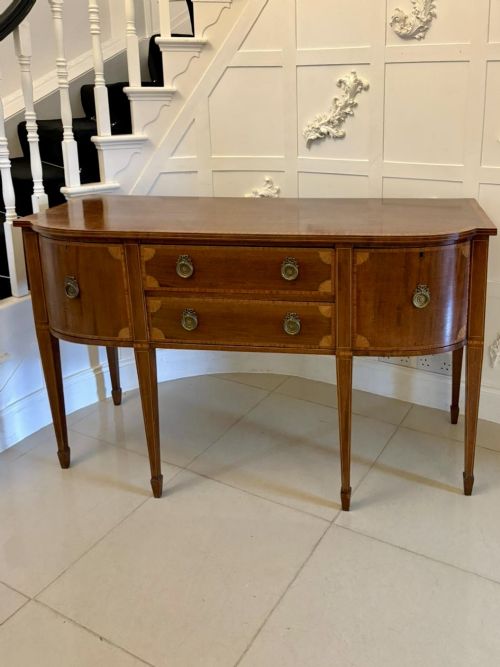
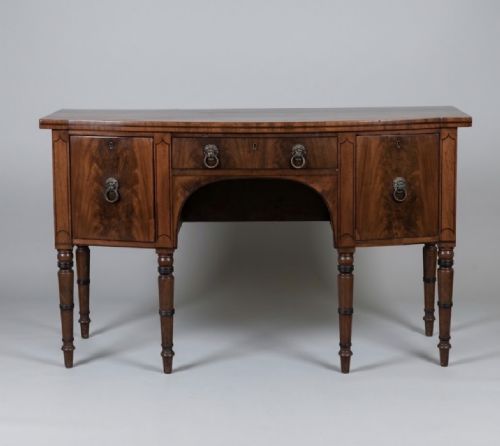
When you search for an antique inlaid sideboard cabinet, you encounter a variety of forms including credenzas, chiffoniers and display cabinets produced across the Georgian, Victorian and Edwardian periods. These items served primarily for storage and display in grand dining rooms and reception spaces, holding porcelain, silver and glassware.
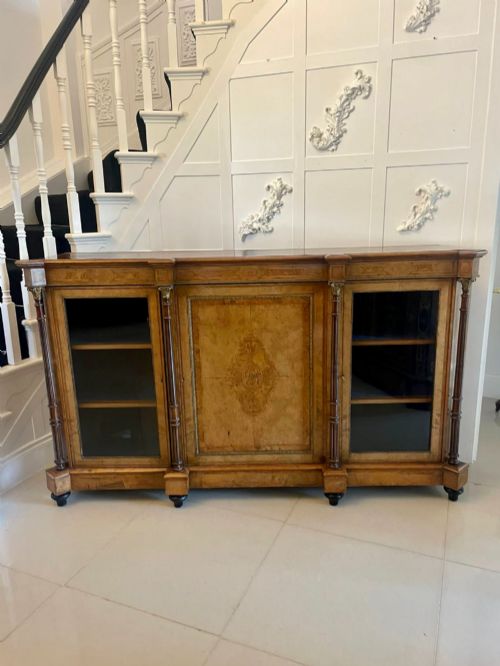
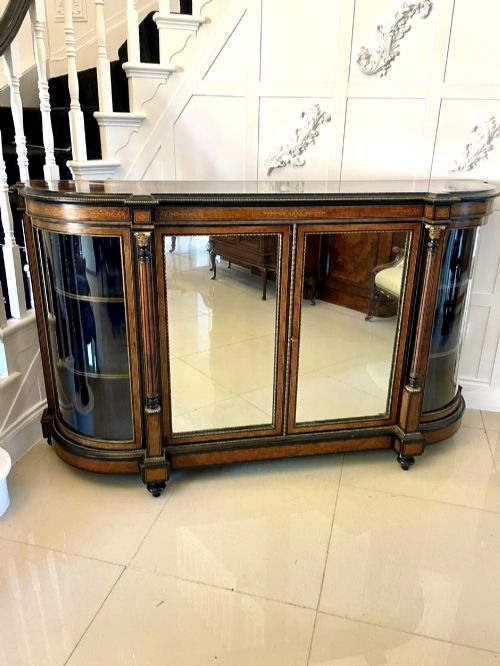
The Victorian examples in burr walnut and rosewood dominate the selection, often featuring serpentine fronts and intricate floral marquetry. Alongside these, you find satinwood pieces from the Edwardian Sheraton revival and heavier mahogany pieces rooted in Georgian and Regency designs.
How they were made
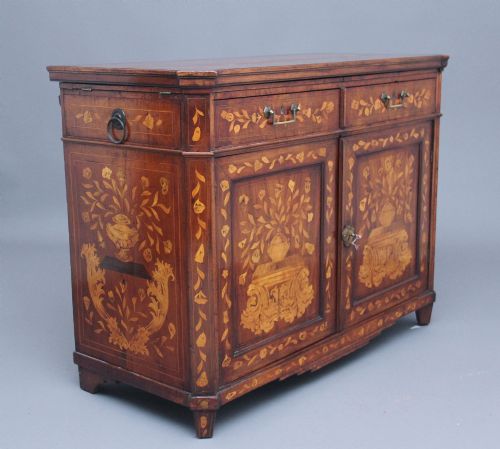
Cabinet makers built these pieces using solid timber frames overlaid with figured veneers such as burr walnut, flame mahogany and satinwood to create rich grain patterns on the main surfaces. They then cut contrasting woods, brass and mother-of-pearl into the surface to form geometric bands and elaborate floral marquetry.
Makers mounted many of the grander Victorian credenzas with gilt bronze or ormolu mounts around the doors and pillars, sometimes adding inset porcelain plaques. Glass doors on display cabinets used timber glazing bars or brass frames to enclose shelves lined for display.
Some Victorian credenzas include secret compartments designed to hide your silver spoons from inquisitive guests.
What varies in quality
The distinction between ordinary and exceptional pieces lies in the crispness of the marquetry cutting and the choice of veneer. Finer cabinets employ tightly figured burr walnut or select satinwood matched symmetrically across the doors, while simpler items use straightforward grain without the same attention to symmetry.
Mounts and hardware also mark the grade of the piece. Cast ormolu mounts with deep chasing and heavy brass feet indicate a workshop of higher standing, whereas stamped or thin pressed metal fittings appear on standard commercial production.
Hewetsons London·Collinson and Lock·Edwards and Roberts·Gillows·August Ungethüm·Maison Gagneau
The Antique Inlaid Sideboard Cabinet Glossary
- Marquetry
- The art of forming decorative patterns by fitting together thin slices of wood veneer on a solid ground. This technique creates detailed floral or geometric pictures across cabinet doors.
- Ormolu
- Gilded bronze mounts applied to furniture for decorative effect. These metal ornaments catch the light and accentuate the curves of Victorian credenzas.
- Serpentine
- A curved shape resembling a snake, featuring a convex centre flanked by concave curves. This contour requires skilled carpentry to shape the timber and fit the veneer.
- Credenza
- A low cabinet or sideboard designed for display and storage, often featuring glass panels or enclosed cupboards. Victorian versions frequently include central doors flanked by curved side cabinets.
- Burr walnut
- Wood taken from the gnarled growths on walnut trees, yielding turbulent and highly decorative grain patterns. Cabinet makers prized this veneer for the front panels of high-end furniture.
Antique Inlaid Sideboard Cabinet: Frequently Asked Questions
How do I clean an antique inlaid cabinet?
Dust the surfaces regularly with a soft, dry cloth to prevent dirt from settling into the grain and the fine joints of the marquetry.
Avoid using household sprays or silicone polishes, applying a traditional beeswax sparingly instead to nourish the timber without harming the finish.
Where should I place a credenza at home?
Position your credenza against a flat wall in a dining room or living space where it can function as a focal point without blocking doorways.
Keep the piece away from direct sunlight and heat sources to protect the delicate veneers and prevent the timber from warping.
What is the difference between a sideboard and a credenza?
Sideboards traditionally feature cupboards and drawers raised on legs, designed primarily for serving food and storing dining accessories.
Credenzas sit lower to the ground, often featuring enclosed cupboards flanked by curved glass display sections and decorated with rich ormolu mounts.
How do I identify a Victorian piece?
Look for dense timbers like burr walnut and rosewood combined with elaborate floral marquetry, ormolu mounts and sometimes inset porcelain plaques.
Examine the interior construction and timber linings behind the doors, as nineteenth-century workshops used specific joining methods and secondary woods.