


Antique Inlaid Sheet Cabinet
An antique inlaid sheet cabinet brings together fine timber and delicate marquetry to organise domestic papers with distinct period style.
Antique Inlaid Sheet Cabinet
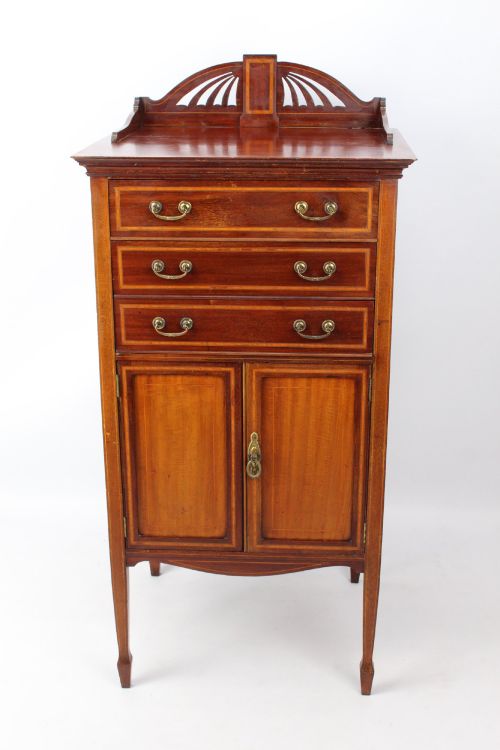
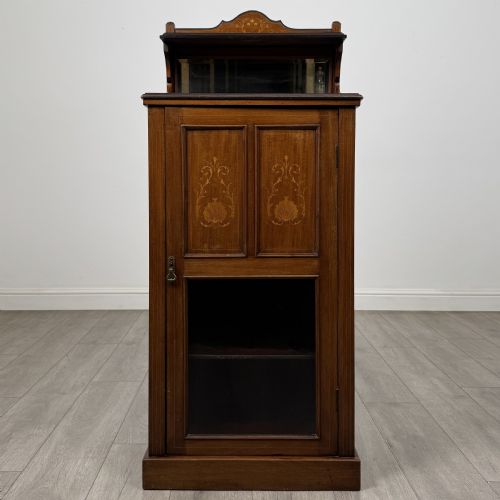
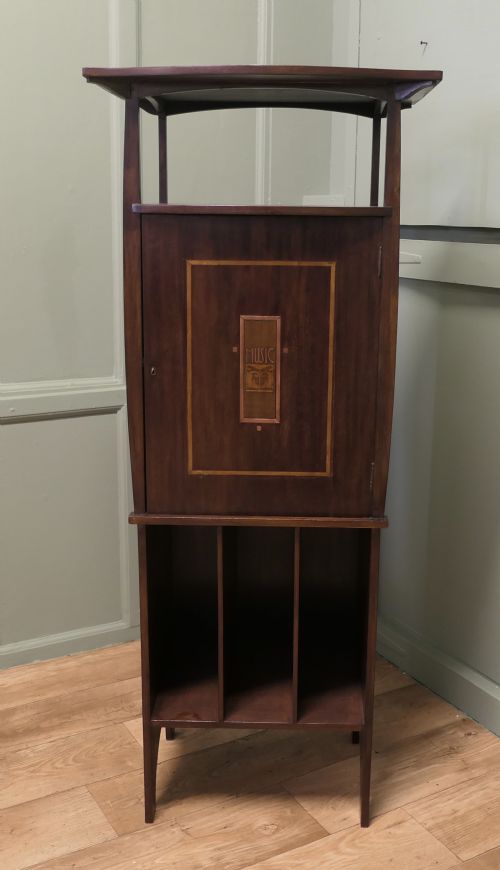
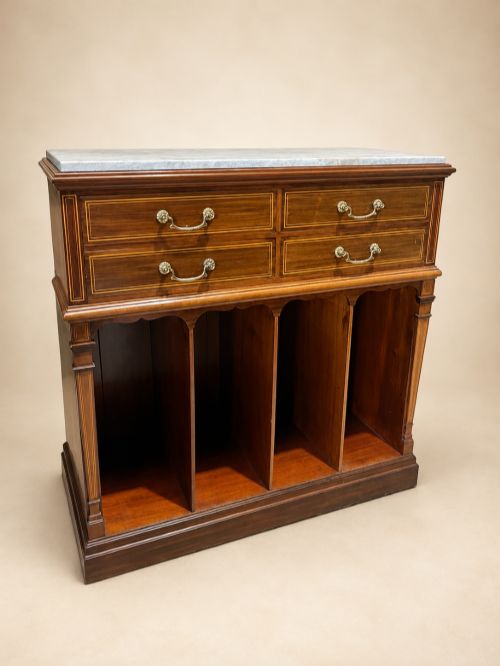
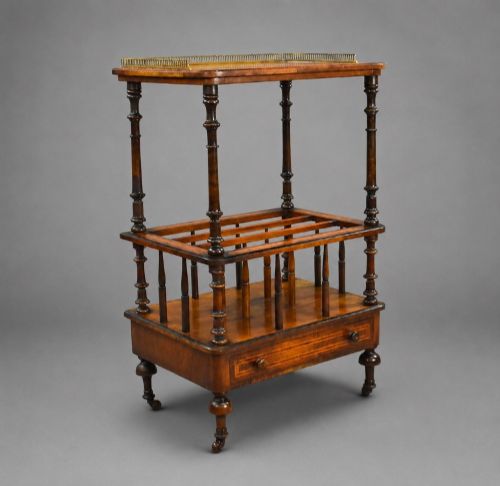
When you search for an antique inlaid sheet cabinet, you encounter dedicated receptacles designed to hold loose music scores, documents, and folios within the Victorian and Edwardian home. These pieces frequently manifest as music cabinets, canterburys, and whatnots equipped with multiple drawers or vertical compartments.
The versions most commonly met on this page span the late nineteenth century through to the early twentieth century, reflecting the popularity of home piano playing and parlour entertainments during that era. They combine functional storage with decorative cabinetry suited to formal reception rooms.
How they were made
Cabinetmakers utilised robust primary timbers such as mahogany, walnut, burr walnut, and rosewood, often contrasting the dark grains with lighter stringing and marquetry motifs in satinwood, boxwood, and ebony. Brass fittings such as handles, hinges, and castors complete the construction of these refined storage items.
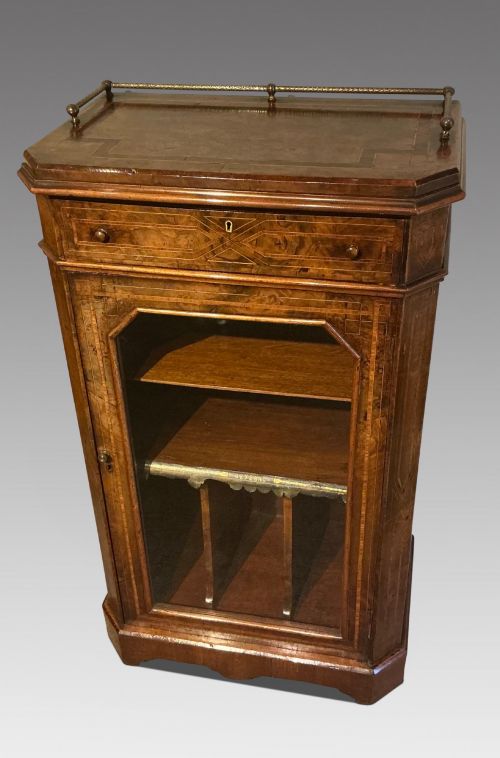
Surfaces frequently display detailed inlaid patterns executed in various woods, alongside raised galleries, glazed doors, and specialised internal divisions designed specifically for the neat filing of sheet music.
Some Victorian sheet music cabinets survive with internal dividers still holding traces of nineteenth century chalk annotations from past pianists.
What varies in quality
The distinction between standard examples and superior pieces rests on the precision of the marquetry work and the choice of cabinet timbers. Finer specimens employ highly figured burr walnut, rosewood, or gonçalo Alves, paired with intricate, crisply executed satinwood and boxwood inlay rather than simple linear stringing.
Construction details such as dovetailed drawer linings, the integration of glazed or panelled doors, and original brass hardware elevate certain items beyond straightforward utilitarian music chests into notable examples of period design.
GM Elwood for JS Henry·Keeble London
The Antique Inlaid Sheet Cabinet Glossary
- Canterbury
- A low stand featuring slatted partitions, originally built to hold sheet music or newspapers near a fireplace or piano. Later variants often incorporate a single drawer beneath the main rack.
- Marquetry
- The art of applying small pieces of varied veneer to a structural panel to form decorative pictures or geometric patterns. It provides the principal ornamental detail on these cabinets.
- Whatnot
- An open set of multiple shelves supported by slender columns or pillars, used for displaying ornaments or holding books and papers. Examples on this page frequently combine shelves with enclosed music storage.
- Stringing
- A narrow strip of contrasting wood inlaid into the surface of a larger timber panel to create a fine border line. This technique frames the drawer fronts and top surfaces of Edwardian and Victorian cabinets.
- Burr walnut
- A highly figured wood obtained from the burl growths of walnut trees, prized for its swirling grain patterns. It forms the primary decorative veneer on many nineteenth century music chests.
Antique Inlaid Sheet Cabinet: Frequently Asked Questions
What is an antique inlaid sheet cabinet used for?
These cabinets were originally manufactured to store unbound sheet music, folios, and scores neatly beside a domestic piano or music room table.
The internal drawers and compartments keep paper goods flat and protected from dust and light exposure.
How do I date a sheet music cabinet?
Dating relies upon observing the primary timber, the style of the inlay, and the overall silhouette of the piece. Victorian examples often feature dark walnut or rosewood with heavy marquetry, whereas Edwardian pieces commonly utilise lighter mahogany with delicate satinwood stringing.
Hardware such as brass handles and castors also provides strong chronological indicators.
Where should I place one in a modern home?
These compact cabinets fit well in living rooms, studies, or hallways where surface display space and enclosed storage are both required.
The narrow proportions of many music chests make them suitable for smaller corners or beside seating areas.