



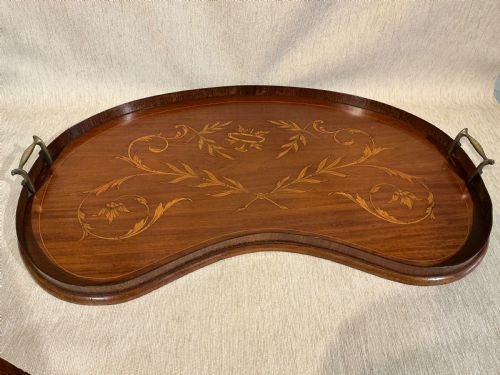

Antique Inlaid Serving Tray
An antique inlaid serving tray brings substance and decorative detail to a room, offering a practical surface shaped by craftsmanship from past centuries.
Antique Inlaid Serving Tray
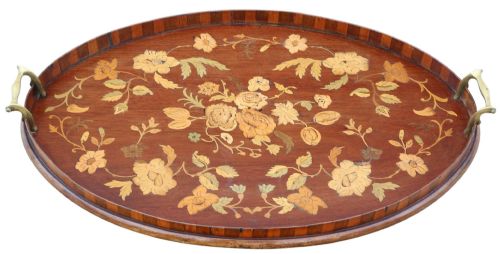
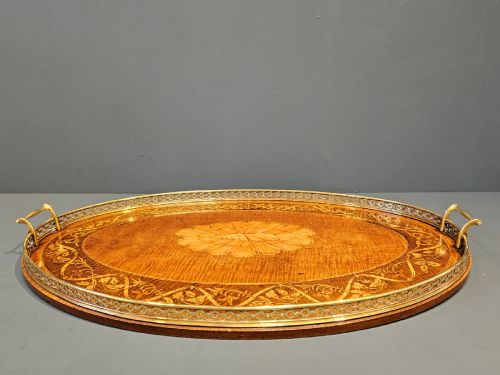
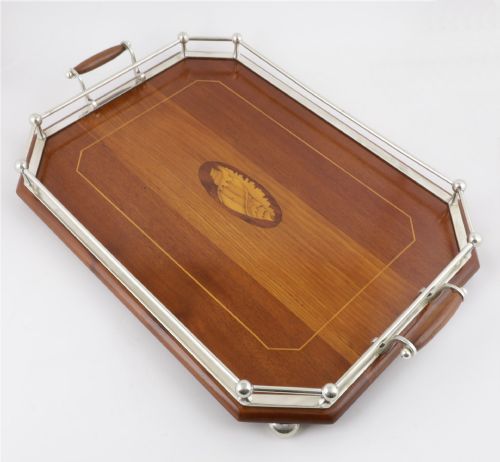
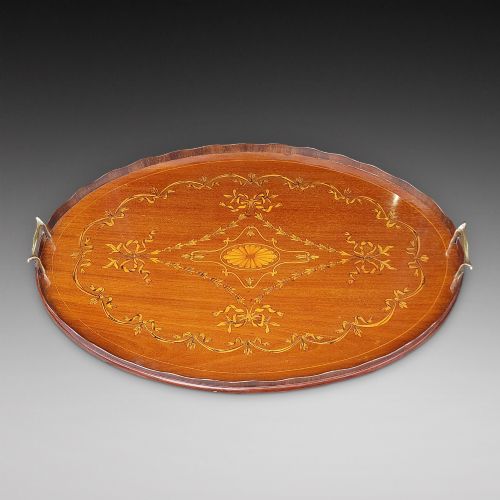
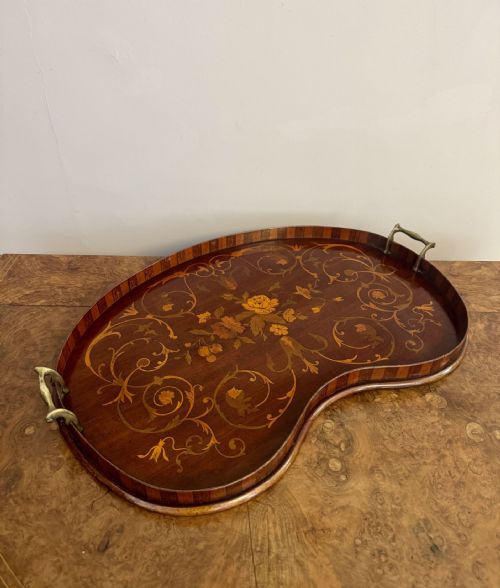
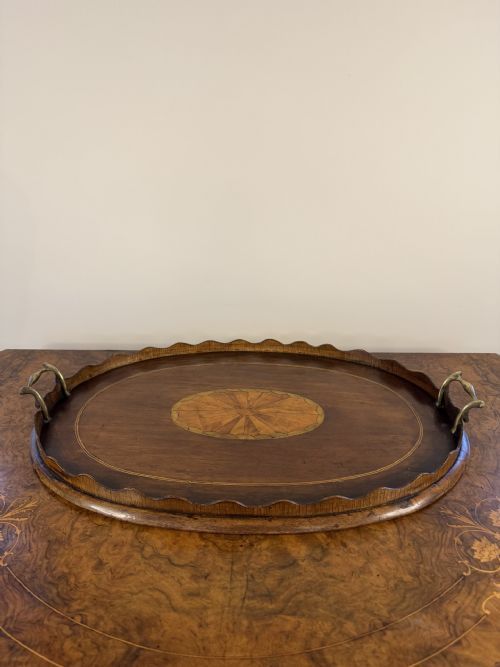
An antique inlaid serving tray encompasses pieces designed for carrying drinks and food, alongside flat decorative platters intended for display. Buyers searching this phrase meet oval, kidney-shaped, octagonal, and circular formats suited to afternoon tea or side table use.
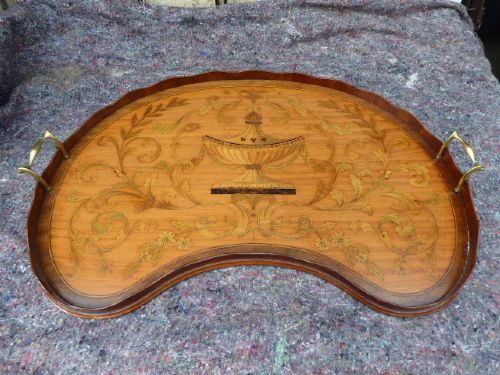
The selections span the Georgian, Victorian, and Edwardian eras, alongside pieces from 1900 and the early twentieth century. Mahogany and satinwood versions dominate the offerings, often decorated with marquetry or shell inlay.
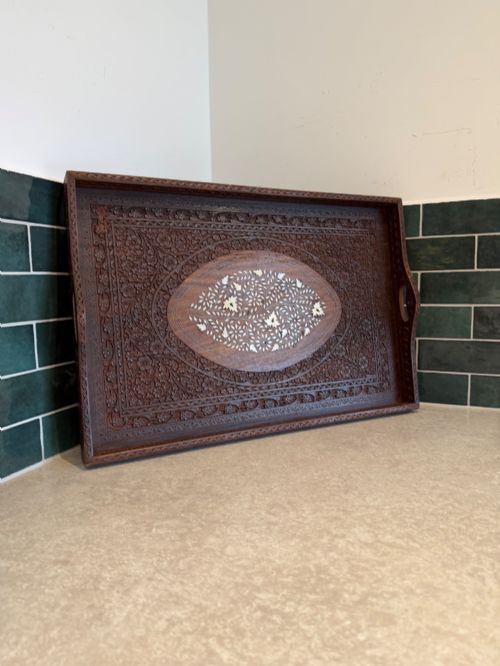
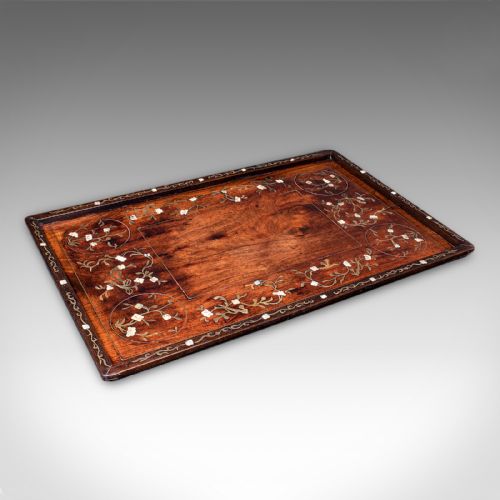
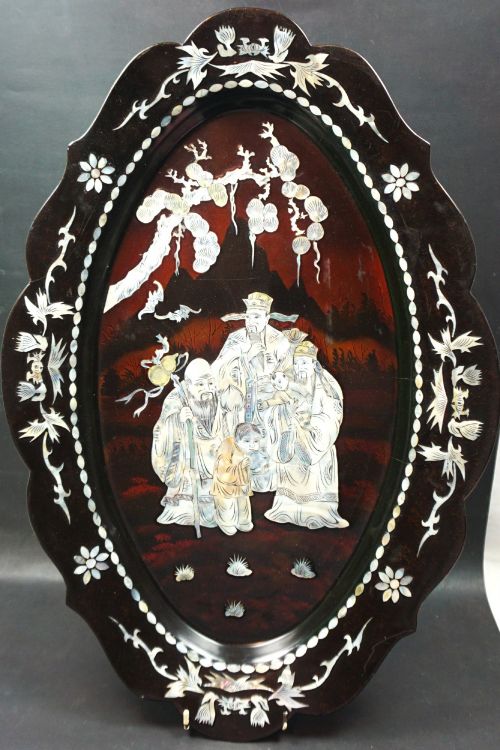
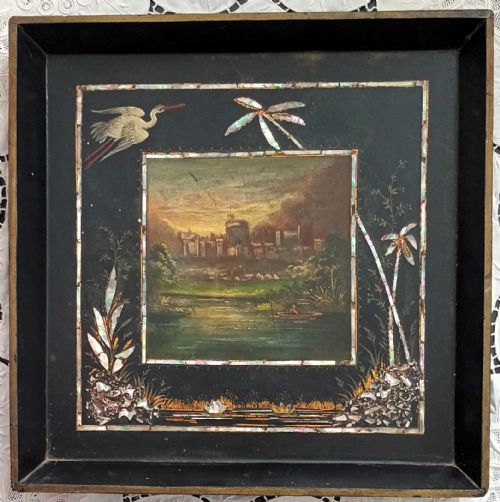
Regional variations appear alongside standard English pieces, including Anglo-Indian teak trays and Chinese lacquered wood platters with mother of pearl inlay. Occasional related forms such as etageres and two-tier tables supplement the primary serving tray category.
Materials and construction
Cabinetmakers utilised dense timbers like mahogany, teak, and rosewood for the foundational structure, pairing them with lighter contrasting woods such as satinwood and burr yew for decorative surfaces. Marquetry inlay techniques incorporated multiple wood veneers to create geometric or pictorial motifs.
Alternative bases include papier-mâché and lacquered wood, often embellished with mother of pearl or painted scenes. Metal elements such as brass galleries and silver plating provided secure raised edges for retaining glassware and porcelain.
Antique Inlaid Serving Tray Retail Price Guide 2026
Typical asking prices for inlaid serving tray among the pieces listed under this phrase on Sellingantiques today, from the lower quarter to the upper quarter. They describe what is for sale here now, not the wider market.
Craftsmanship and design
Quality rests in the precision of the marquetry and the crispness of the timber selection, where tightly grained satinwood and figured mahogany elevate a piece above standard utility items. The integration of contrasting veneers requires exact fitting that remains stable across changing temperatures.
Hardware additions demonstrate the tier of manufacture, with solid brass handles and gallery rails showing heavier gauge metalwork and secure fastening. Form influences desirability, with kidney-shaped and oval profiles demanding greater joinery skill than plain rectangular boards.
Edwards and Roberts
The Antique Inlaid Serving Tray Glossary
- Marquetry inlay
- The art of forming decorative patterns by fitting together small pieces of wood veneer and contrasting materials. This technique defines the pictorial and geometric surfaces found on Edwardian and Victorian trays.
- Butler's tray
- A deep, heavy wooden tray originally designed to sit upon a folding stand for the service of drinks or meals. These pieces often feature hinged sides or shaped handholds cut directly into the timber.
- Papier-mâché
- A composite material made from paper pulp or layers of paper bound with glue, then pressed and dried. Makers painted and varnished this substance to create smooth, dark serving platters.
- Gallery
- A raised pierced or solid rim fitted around the perimeter of a tray or table top. Brass or wooden galleries prevented items from sliding off during transit.
- Satinwood
- A durable tropical hardwood with a lustrous yellowish sheen that reflects light across the surface. Cabinetmakers utilised this timber for stringing, banding, and field veneers on high-status trays.
Antique Inlaid Serving Tray: Frequently Asked Questions
How do I clean an antique tray?
Dust timber surfaces gently with a dry, soft cloth to remove everyday particles without disturbing the polish. Avoid water and harsh modern cleaning sprays, which can penetrate hairline cracks in old varnish or lift delicate veneer.
For papier-mâché or lacquered pieces, use a slightly damp cloth followed immediately by a dry one. Preservation of the original finish takes priority over achieving a high modern shine.
Can I use these trays daily?
Serving drinks or displaying items remains possible provided you protect the antique finish from moisture and heat rings. Placing coasters and linen runners on the surface prevents condensation from marking the old wood or lacquer.
Heavier items require careful handling to protect delicate brass handles and raised galleries from strain. Many owners choose to display them on stands or side tables when not in active use.
What is a kidney shaped tray?
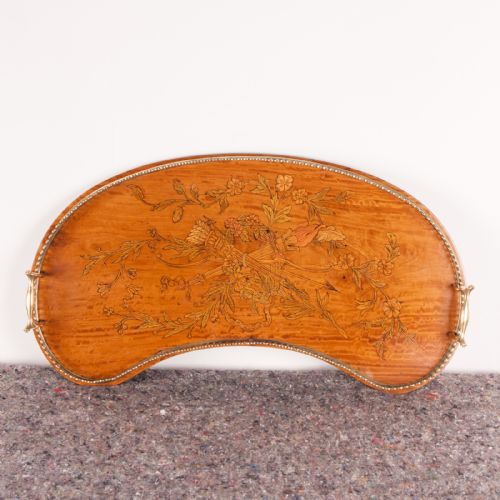
A kidney shaped tray curves inward along one long edge to fit comfortably against the body of a person carrying it. This ergonomic form became particularly popular during the Edwardian period.
Makers often paired this silhouette with elaborate satinwood marquetry and brass handles. The curved outline required precise woodworking skill to bend and join the outer rim cleanly.
How do I date an inlaid tray?
Examine the wood species, construction methods, and inlay style to determine the likely era of manufacture. Georgian pieces often display restrained mahogany frames with simple stringing, while Edwardian examples favour lighter satinwood grounds and complex floral marquetry.
Materials like papier-mâché point toward the nineteenth century, whereas specific maker marks or distinct regional woods help narrow the origin further.