

Antique Inlaid Linen Press
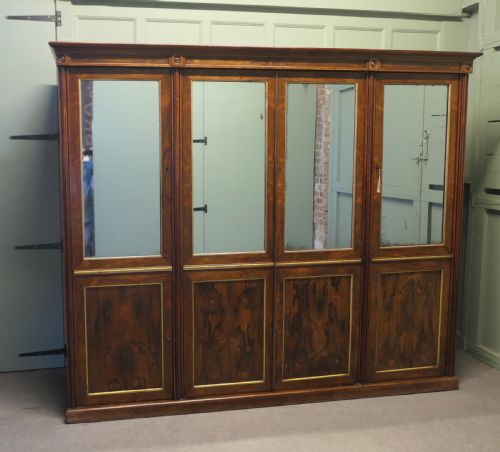
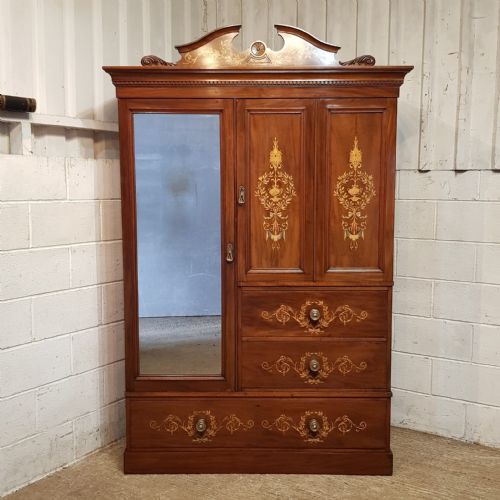
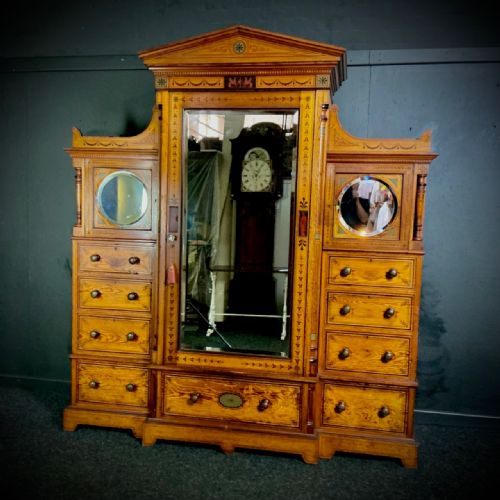
An antique inlaid linen press combines deep storage with crisp stringing and banding across Georgian, Regency, and Edwardian forms.
Antique Inlaid Linen Press
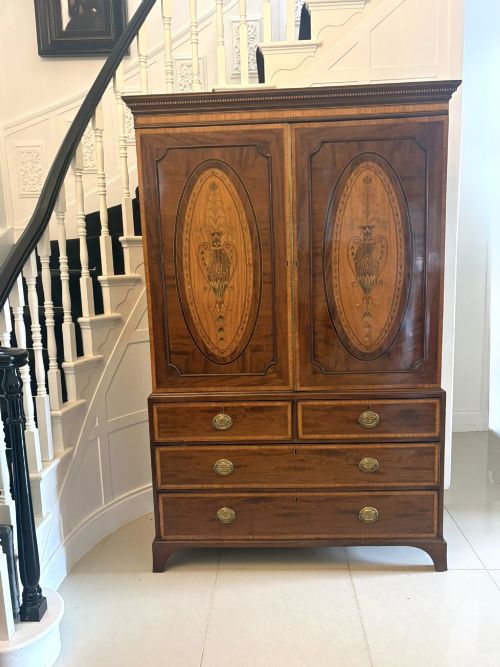
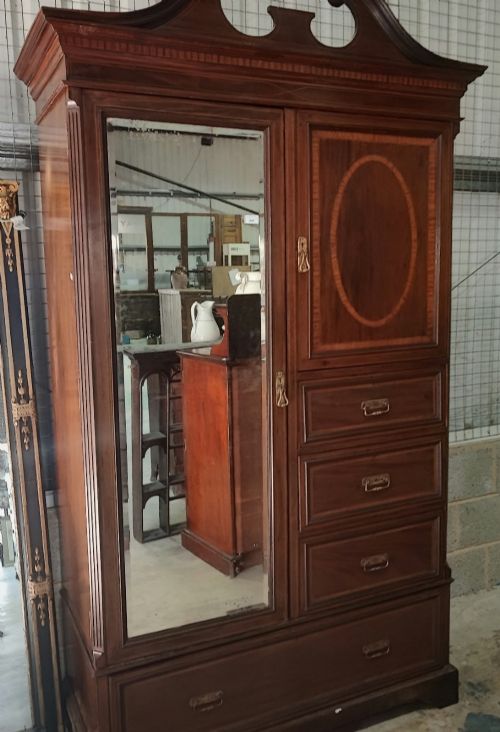
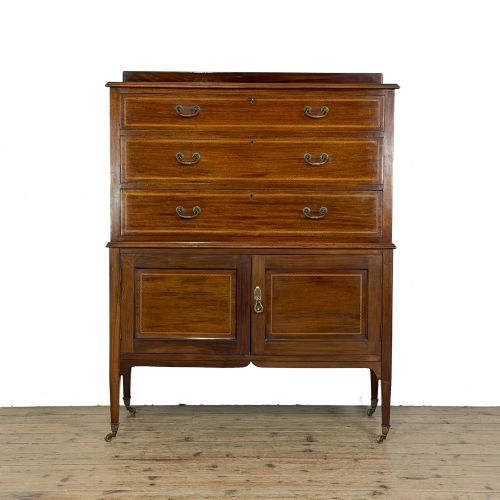
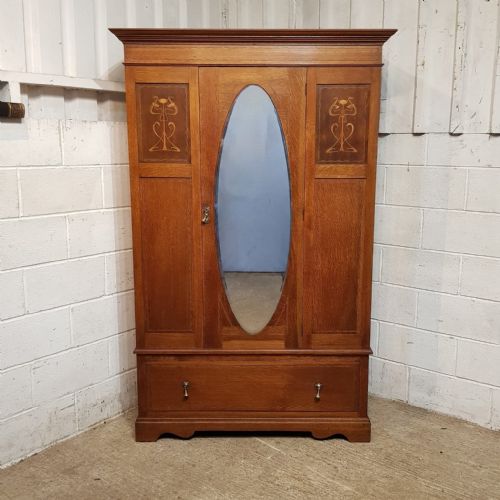
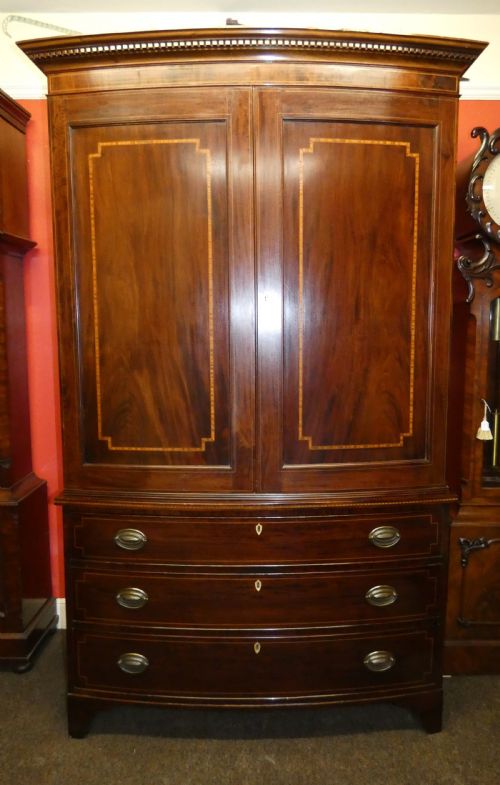
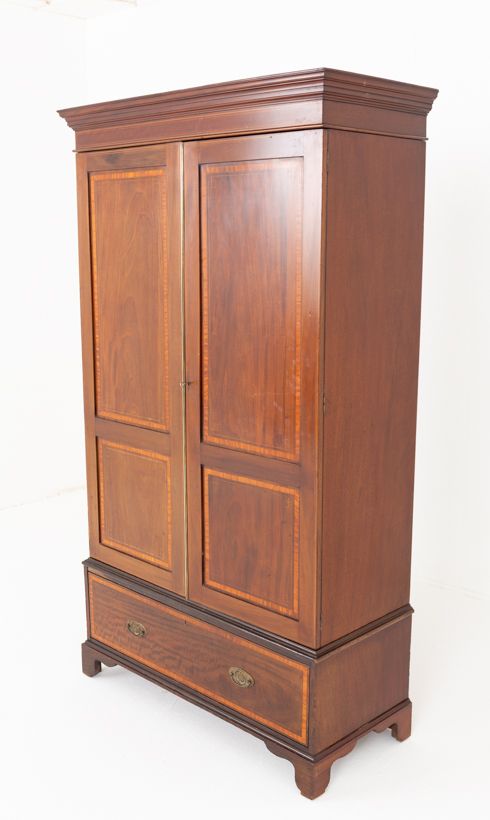
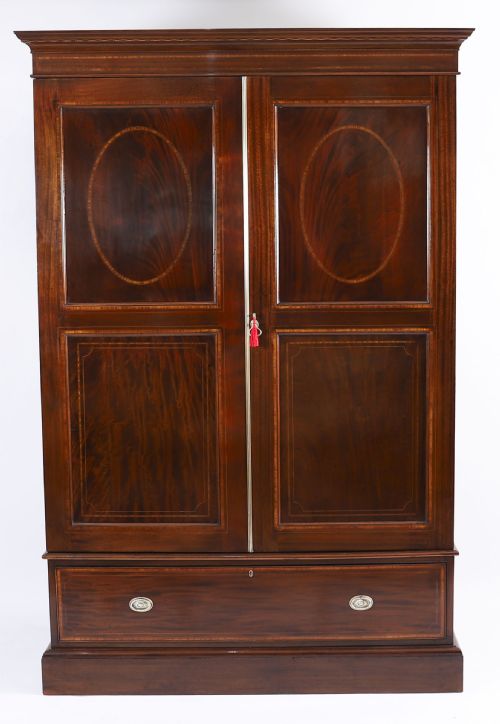
When you search for an antique inlaid linen press, you encounter substantial storage furniture designed to house household linens and garments, merging upper linen slides or hanging space with lower drawer sections. These pieces most commonly appear in Georgian and Edwardian forms, rooted in domestic traditions of the eighteenth and nineteenth centuries.
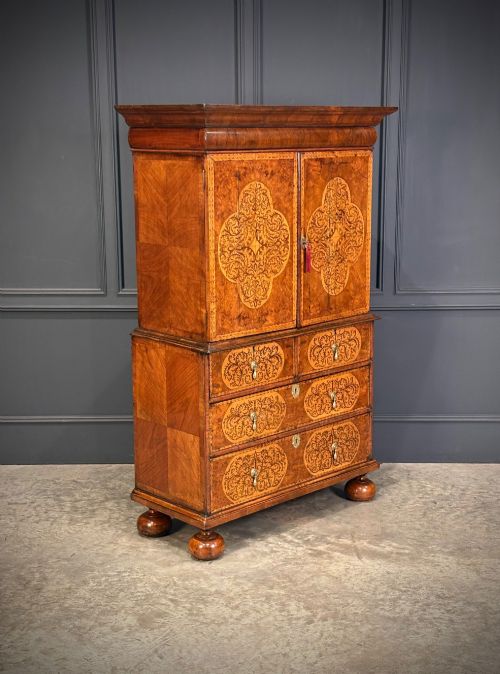
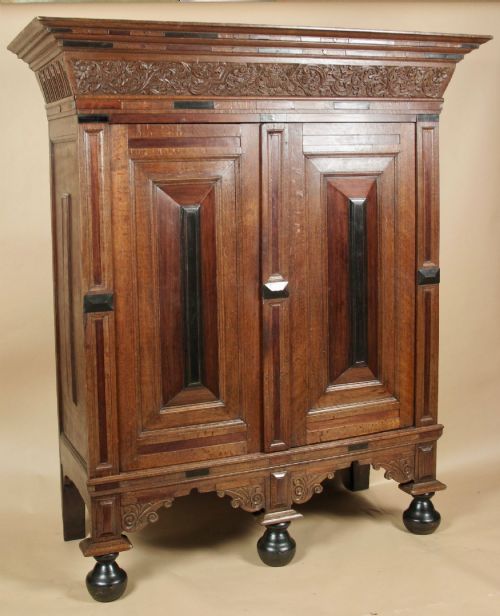
The material vocabulary spans rich timbers like mahogany, walnut, and oak, lifted visually by contrasting lighter woods such as satinwood and boxwood. Examples frequently demonstrate regional variations, from English George III flame mahogany proportions to Dutch marquetry and compact Edwardian interpretations.
How they were made
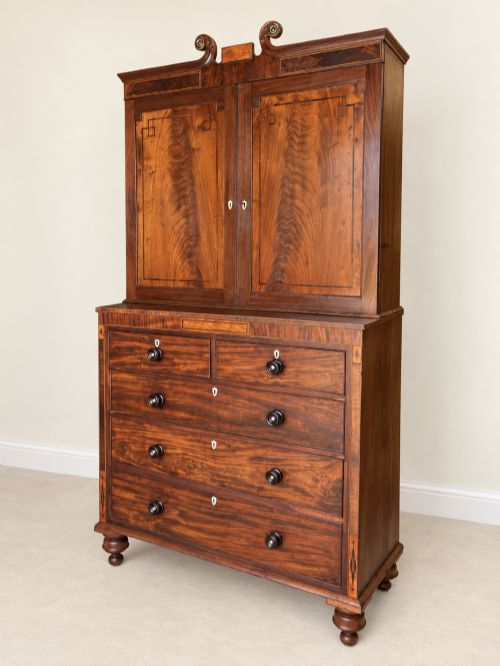
Cabinet makers built these presses using solid timbers and stable veneers, laying down primary woods like mahogany, oak, or walnut over secondary ground timbers. Panels and doors often utilised flame mahogany or figured grains selected for visual movement.
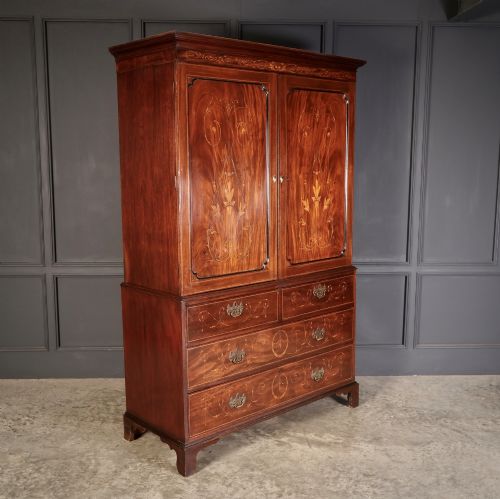
Inlay and banding techniques defined the surface ornamentation, employing contrasting woods such as satinwood, boxwood, and ebony cut into precise channels. Marquetry panels incorporated floral or pictorial motifs, while brass hardware secured doors and drawers.
Listings feature mahogany, satinwood, oak, walnut, rosewood, and boxwood across periods spanning the 17th century to the Edwardian era.
What varies in quality
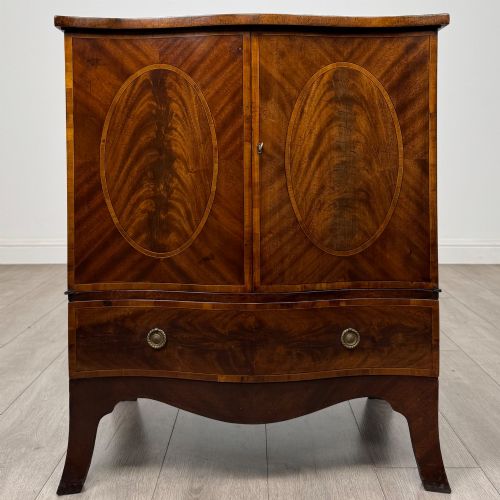
The tier of a piece rests upon the selection of timber figures, such as highly flamed mahogany or finely figured satinwood, matched symmetrically across doors and drawer fronts. Cabinet work that maintains tight mitres in the stringing and precise execution of marquetry distinguishes superior examples from standard workshop production.
Internal construction also divides the range, where secondary timbers like oak drawer linings and original sliding trays demonstrate the uncompromising standards of master makers. Proportion and architectural balance further separate pieces, ensuring the cornice and base mouldings complement the body without heaviness.
maples & co·Edwards and Roberts·Druce & Co.·Maple & Co·Waring & Gillow·Gillows of Lancaster
The Antique Inlaid Linen Press Glossary
- Linen press
- A tall piece of furniture featuring upper doors enclosing sliding shelves for linen, positioned above a chest of drawers base. Later adaptations often integrated hanging space.
- Stringing
- A narrow inlay of contrasting wood set into channels on drawer fronts or doors to create linear borders. This technique highlights panel outlines on Georgian and Edwardian furniture.
- Banding
- A decorative border strip applied around the edges of drawer fronts or tabletops, typically utilising contrasting grain directions or lighter timbers like satinwood. It frames the primary wood surface.
- Marquetry
- The art of forming decorative patterns using thin veneers of different coloured woods, ivory, or shell. It creates pictorial or floral scenes across cabinet doors.
- Compactum
- A multi-functional wardrobe combining hanging space, sliding trays, drawers, and sometimes small cupboards in a single integrated unit. These appeared with greater frequency by the Victorian and Edwardian eras.
Antique Inlaid Linen Press: Frequently Asked Questions
What is the difference between a wardrobe and a linen press?
A traditional linen press houses horizontal sliding trays behind its upper doors for flat textiles, whereas a wardrobe is designed primarily for hanging garments vertically.
Over time, many presses were converted internally to include hanging rails, though their exterior proportions retain the characteristic two-part chest and cupboard design.
How do I date an inlaid linen press?
Dating relies on examining the primary timbers, secondary woods inside the drawers, and the style of the inlay work. Georgian pieces often show flame mahogany with subtle satinwood banding, while Edwardian revivals employ brighter satinwood and extensive painted or marquetry decoration.
Hardware fixings, construction joints, and backboards provide further physical evidence for placing a piece within the eighteenth, nineteenth, or early twentieth century.
How do I fit a large linen press into a modern bedroom?
Because these presses are substantial pieces of case furniture, measuring ceiling height and clearance for opening doors is essential before placement. Many historic presses separate into an upper cabinet and a lower chest of drawers, which assists with transport and positioning.
Allowing sufficient clearance around the base ensures the drawers operate smoothly without obstruction from flooring or skirting boards.
What woods are most common in these pieces?
Mahogany serves as the dominant structural and surface timber across Georgian and Regency examples, frequently enhanced by figured flame veneers and contrasting satinwood stringing. Oak and walnut appear in earlier periods, alongside Dutch marquetry interpretations.
Edwardian pieces often introduce lighter satinwood or combination timbers, reflecting changing domestic tastes at the turn of the twentieth century.