



Antique Inkstand Desk Tidy
An antique inkstand desk tidy brings order to correspondence, housing inkwells and pen rests in brass, silver, or exotic woods.

Antique Inkstand Desk Tidy
An antique inkstand desk tidy gathers writing implements into a single stationary housing, designed to hold inkwells, blotters, and pen rests. These pieces originate primarily from the Georgian, Victorian, and Edwardian periods, stretching through to the Art Deco era.
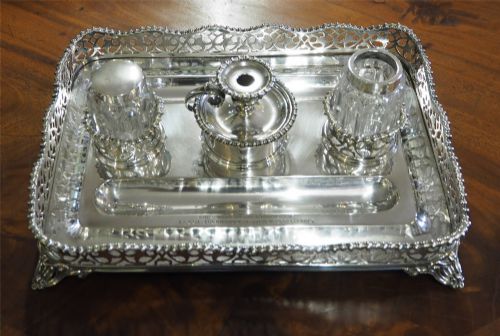
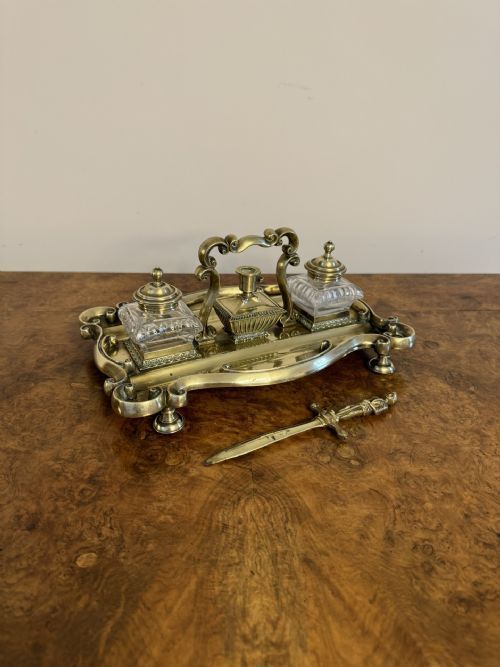
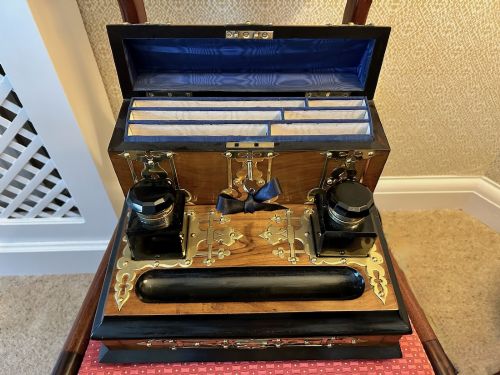
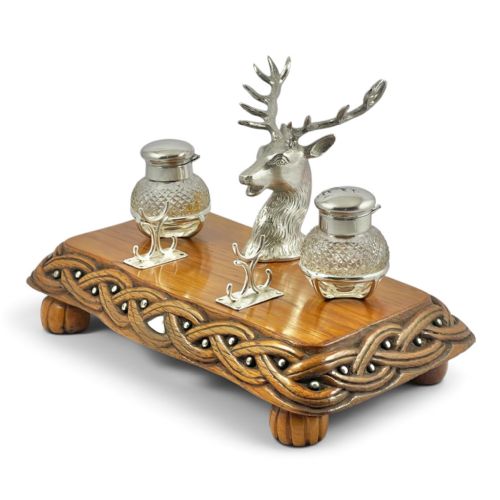
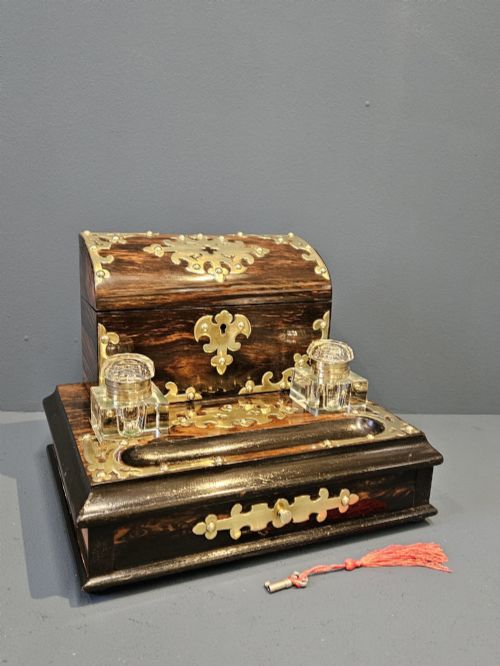
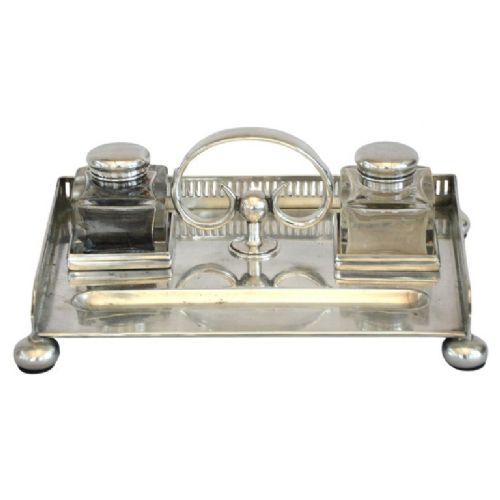
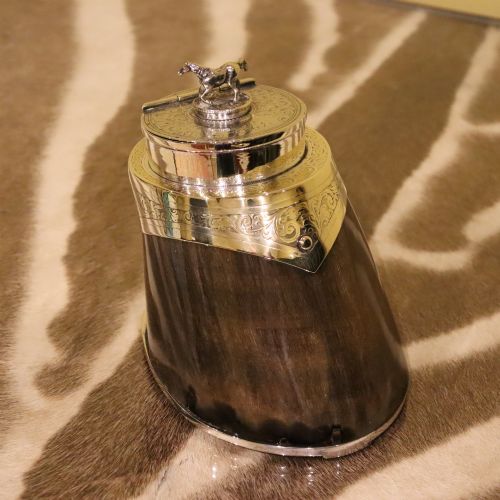
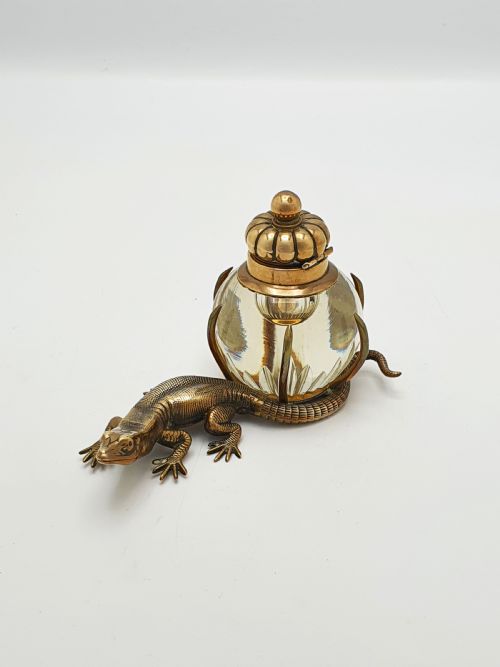
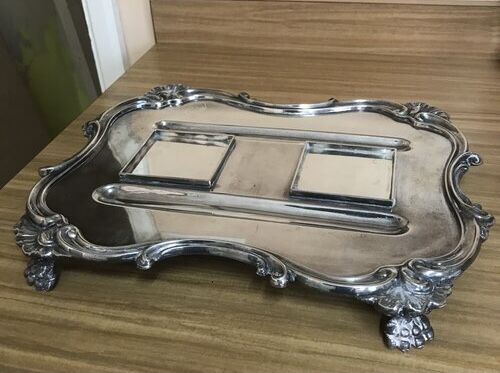
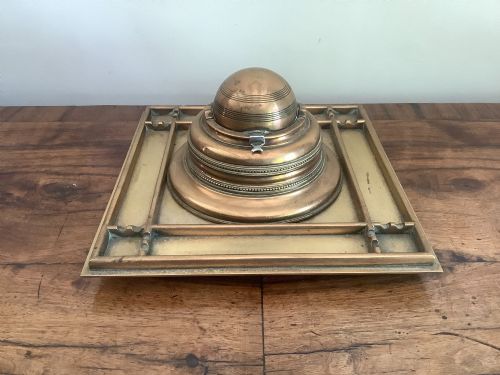
Most examples encountered here use metals like brass, silver plate, and bronze, or feature rich timbers such as walnut, coromandel, and mahogany. Formats range from simple brass trays to elaborate double-sided sets incorporating chambersticks, drawers, and cut glass inkwells.
Makers utilised decorative techniques including Boulle inlay, taxidermy, hand-painted papier-mâché, and French ormolu mounting. Buyers select these items to anchor a writing desk with period utility and distinct craftsmanship.
Materials and construction methods
Metals such as brass, bronze, ormolu, and silver plate form the structural framework or decorative mounts for many pieces, shaped through casting and fine chasing. Timber stands rely on dense hardwoods like coromandel, oak, and burr walnut, frequently accented with inlaid brass, tortoiseshell, or ebony.
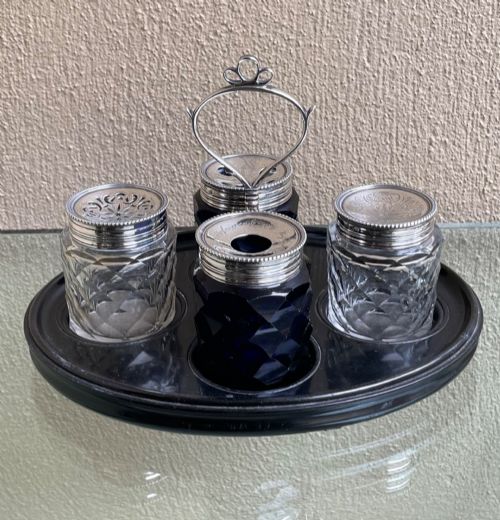
Glass components, particularly cut glass inkwells with hinged lids, sit within designated wells or metal collars, accompanied by ceramic elements like Dutch Delft faience. Woodwork incorporates mitred joints and fitted compartments, while metal pieces utilise secure screw fixings and heavy bases to support the weight of glass and metal.
Materials span heavy brass, cut glass, silver plate, ormolu, tortoiseshell, and exotic timbers such as coromandel and burr walnut.
Distinguishing quality across the range
Quality rests upon the crispness of metal casting, the weight of the silver plate or bronze, and the selection of timber veneers. Superior examples display precise hand-chasing on ormolu mounts, tight joinery on coromandel or walnut carcasses, and heavy cut glass inserts that fit snugly into their housings.
Subtle details separate standard utilitarian pieces from exceptional ones, such as integrated drawers with smooth movement, complete sets of matching inkwells with intact collars, and sophisticated decorative motifs like Boulle work or multi-stone inlay.
Elkington·Walker And Hall·Harrods·Robert Garrard
The Antique Inkstand Desk Tidy Glossary
- Standish
- An alternative term for an inkstand or desk tidy that holds writing materials. These portable metal or wooden trays typically incorporate one or more inkwells and a pen rest.
- Ormolu
- Gilded bronze used extensively for decorative mounts on nineteenth-century French and English desk accessories. The process involves applying a gold amalgam to cast bronze before heating.
- Coromandel
- A dense, heavily figured timber imported from Asia, prized for dark brown colouring and dramatic black grain. Cabinetmakers utilised it as a veneer on high-end Victorian desk sets.
- Boulle
- A marquetry technique combining tortoiseshell and brass inlay developed in France. It appears on luxury nineteenth-century freestanding desk stands.
- Faience
- Tin-glazed earthenware, seen in Dutch Delft inkstands decorated in blue and white. This ceramic technique creates a smooth, opaque surface for painted motifs.
Antique Inkstand Desk Tidy: Frequently Asked Questions
Where were antique inkstands placed?
These desk tidies sat on writing tables, Davenport desks, and library partners' desks within nineteenth-century homes and offices. They provided a stationary anchor for daily correspondence.
Larger double-sided versions stood centrally on large desks to allow access from multiple positions, while smaller portable variants moved easily between rooms.
How do I care for wooden desk sets?
Maintain wooden carcasses of walnut or coromandel using appropriate furniture wax applied sparingly to preserve the grain and veneer. Avoid excessive moisture near metal mounts and hinges.
Glass inkwells lift out independently for safe washing with warm water, ensuring no liquid seeps into surrounding wood or velvet linings.
What is the difference between an inkstand and an inkwell?
An inkwell is simply the small lidded vessel that holds the liquid ink itself. An inkstand or desk tidy is the complete tray or chassis that holds the inkwell alongside pen rests and other accessories.
Many listings combine both terms when a desk tidy includes its original matching inkwells.
How can I date an antique desk set?
Dating relies on combining material choices, stylistic clues, and any visible hallmarks or maker signatures. Georgian pieces often feature simpler mahogany or brass forms, while Victorian examples embrace ornate cast bronze, coromandel, and Boullework.
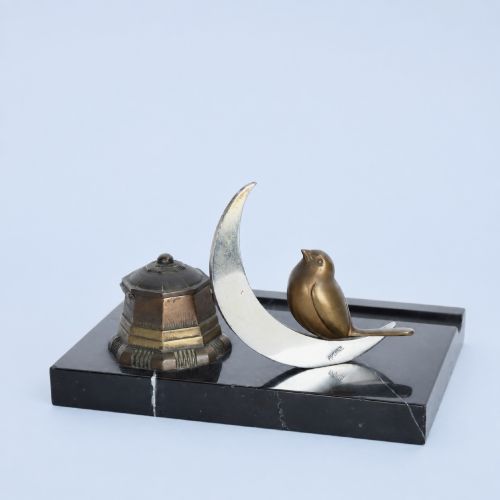
Edwardian and later twentieth-century sets frequently incorporate onyx, marble, or heavier silver plate alongside fitted drawers.