





Antique Industrial Stool
These antique industrial stool examples bring heavy cast iron and solid timber into domestic rooms, offering honest workspace character.
Antique Industrial Stool
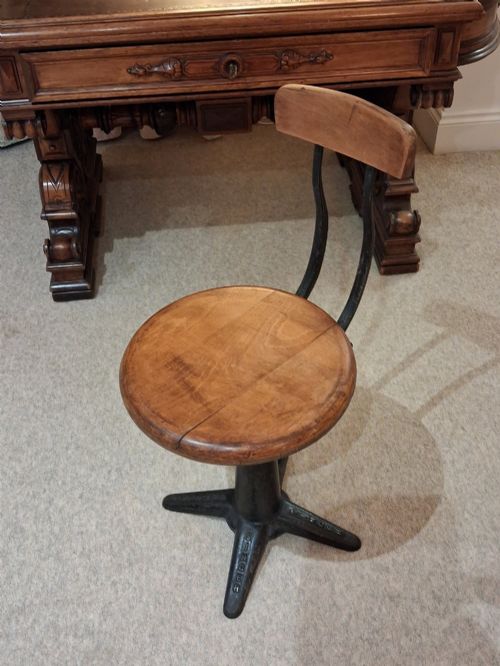
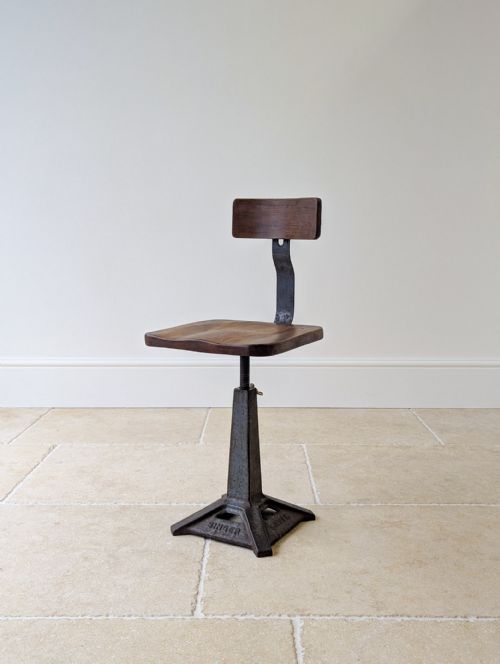
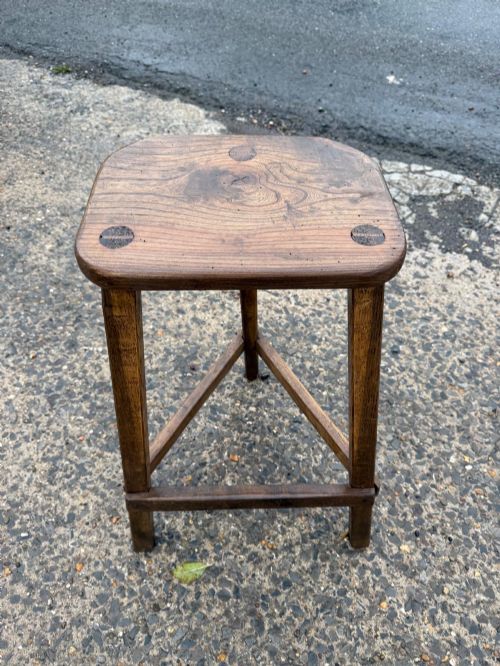
An antique industrial stool combines robust metal framing with timber seats, originating from factories, mills, and workshops of the nineteenth and early twentieth centuries. Working environments demanded durability, resulting in sturdy bases designed to withstand heavy daily use by machinists, mill workers, and artisans.
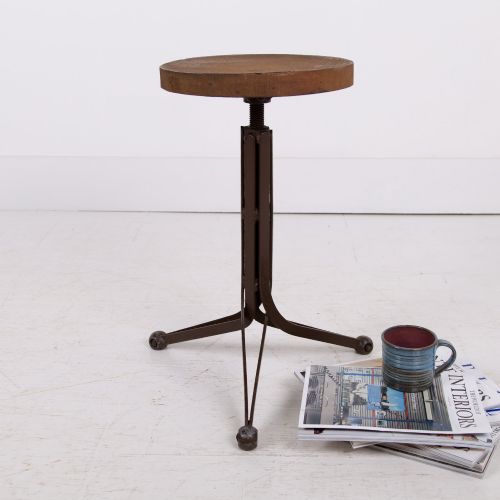
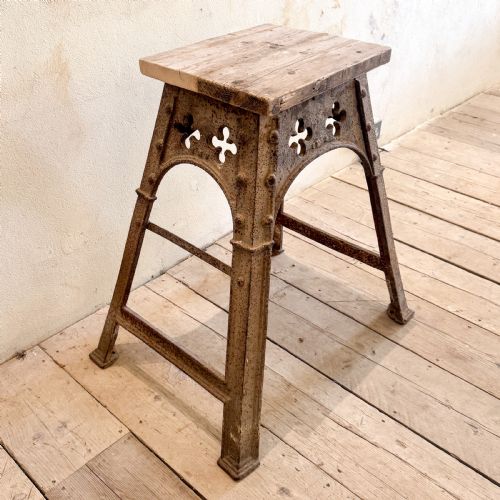
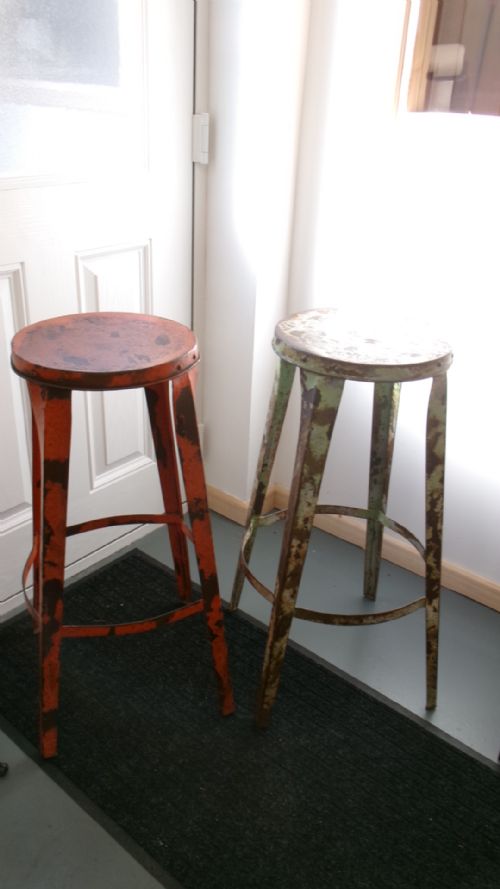
The most frequent examples found here include revolving machinist stools, mill worker designs, and workshop seats featuring cast iron supports paired with oak, elm, or pine tops. Surviving pieces often display traces of original paint alongside the natural scuffs and wear accumulated from decades of hard labour.
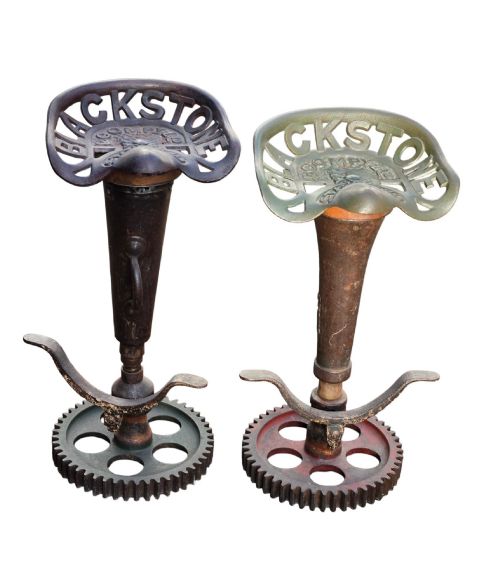
Beyond standard workshop seating, related utilitarian forms appear across the evidence, including bar stools, office chairs, and swivel stools. These utilitarian objects share a common engineering focus, prioritising mechanical adjustment and unadorned structural strength over decorative refinement.
Materials and construction
Foundry cast iron and heavy steel form the rigid skeletal framework of these pieces, providing the essential mass and stability required for workshop machinery seating. Metal components frequently feature riveted joints, adjustable screw stems, and maker markings cast directly into the iron bases.
Solid timber elements such as oak, elm, pine, and pitch pine are shaped into thick seats, often moulded with a slight central depression for comfort during long hours of work. These wooden tops are secured to iron frames using robust fixings, creating a resilient union between metal and wood.
Antique Industrial Stool Retail Price Guide 2026
Typical asking prices for industrial stool among the pieces listed under this phrase on Sellingantiques today, from the lower quarter to the upper quarter. They describe what is for sale here now, not the wider market.
The listings on this site record items spanning from the nineteenth century through the 1930s, incorporating oak, elm, pine, cast iron, and steel.
Distinguishing quality and integrity
The distinction between standard workshop seating and finer examples lies in the retention of original mechanisms, such as smooth-working cast iron swivel screws and height adjustment levers. Pieces that retain their original factory paint surfaces alongside unpolished timber grain hold greater architectural clarity.
Structural honesty and component purity determine the standing of an individual stool, where matched iron bases and authentic period timber tops demonstrate unbroken utility. Maker attribution, seen in cast iron details from manufacturers like Singer or Evertaut, adds verifiable provenance to the piece.
Singer·Evertaut·GNR Railway
The Antique Industrial Stool Glossary
- Machinist stool
- A workshop seat featuring a cast iron base and a round wooden top, often designed with a threaded spindle for height adjustment. These pieces were standard equipment in nineteenth and early twentieth century textile mills and garment factories.
- Swivel mechanism
- The central screw or pivot device allowing the seat to rotate. On period examples, this is typically constructed from heavy forged steel or cast iron.
- Pitch pine
- A durable, resinous softwood sourced from North America, frequently utilised for workshop furniture tops due to its exceptional resistance to wear.
- Cast iron
- An iron-carbon alloy poured into moulds to create complex structural shapes. It provides the heavy, rigid bases characteristic of industrial seating.
Antique Industrial Stool: Frequently Asked Questions
How do I adjust the height?
Many period workshop seats utilise a central threaded steel rod or screw mechanism positioned beneath the wooden top. Rotating the seat turns this rod within the cast iron base, raising or lowering the seating surface.
Other designs rely on fixed heights or simple pin adjustments depending on the specific trade the stool served.
Are these seats comfortable for daily use?
The timber tops on these pieces are frequently shaped with a slight central hollow to accommodate the body. While designed for endurance in factories rather than prolonged lounging, their sturdy proportions suit modern kitchen counters and desks.
Adding a loose cushion can soften the solid wood surface if used for extended periods.
How should I clean the iron and wood?
Maintenance involves removing dust with a dry cloth and occasionally applying a clear wax to protect both the exposed timber and the iron framework. This preserves the existing surface character without removing historical patina.
Avoid harsh chemical solvents that might strip original paint traces or dry out the aged wood.
How do I date an industrial stool?
Dating relies on observing construction details such as the casting style, rivet patterns, and the type of wood utilised in the seat top. Nineteenth-century examples often feature simpler hand-finished iron castings, whereas twentieth-century pieces incorporate standardised factory components.
Maker names cast directly into the metal base provide a reliable benchmark for production eras.