


Antique Hunting Scene Picture
An antique hunting scene picture captures the drama of the chase on canvas, paper, or glass for your walls.
Antique Hunting Scene Picture
An antique hunting scene picture depicts equestrian pursuits, hounds, and country sports across centuries of British and European art. When you search this phrase, you meet works ranging from oil paintings on canvas to hand-coloured engravings and watercolours.
The material record spans the seventeenth century up through the early twentieth century, with the nineteenth century heavily represented. Painters and printmakers capture both the mounted meet and quiet sporting moments in wood and field.
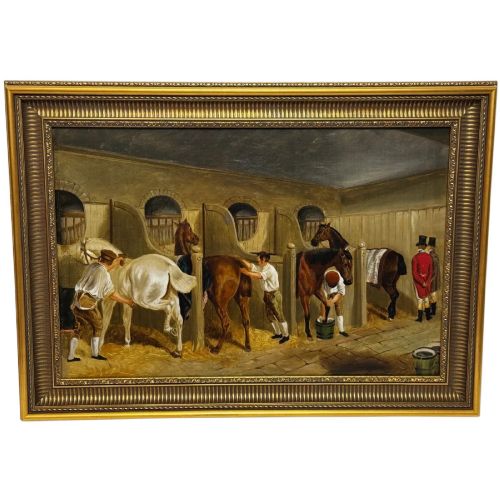
Most examples lean towards Victorian sporting art, showing riders in red coats, packs of hounds, and stable yards. These pictures decorated country houses and continue to bring traditional rural atmosphere to modern interiors.
Materials and technique
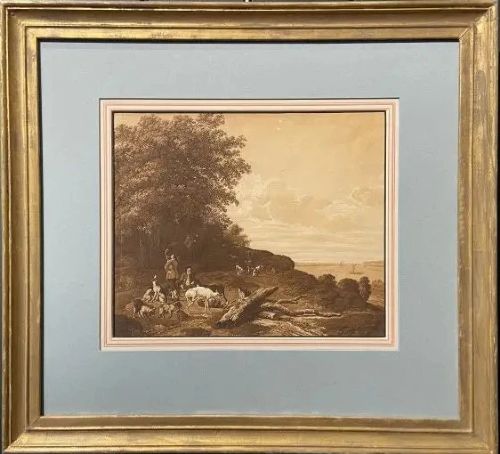
Artists painted these subjects using oil paint on canvas or wood panels, building rich textures for horses, coats, and moorland landscapes. Watercolours on paper provide a lighter, more translucent alternative often favoured for detailed studies.
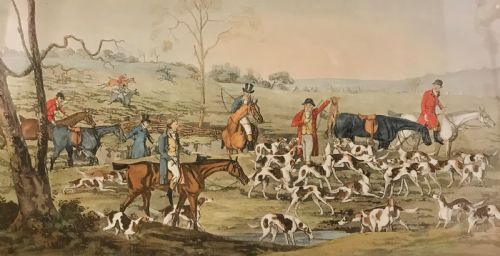
Printmakers utilised engraving and lithography to reproduce popular sporting compositions for wider distribution. Hand colouring frequently added vibrant hues to monochrome prints after the initial impression was pulled.
Framing often involves gilt wood moulding that complements the traditional subject matter. Reverse glass painting offers a specialised technique where artists applied silhouette and pigment directly behind glass.
Listings feature works spanning the seventeenth, eighteenth, nineteenth, and early twentieth centuries.
Distinctions in quality
The skill of the draughtsman in rendering horses and hounds accurately separates master works from routine studio output. Superior pieces capture dynamic movement and correct anatomy rather than stiff, generic animal forms.
The depth of the landscape and the treatment of light elevate certain canvases above simple record-keeping. Finer works integrate the human figures and animals seamlessly into a coherent atmospheric setting.
The preservation of the original medium, whether oil, watercolour, or print pigment, dictates the visual impact. Crisp lines in engravings and stable, uncracked paint surfaces on canvases denote careful historical upkeep.
Johannes Lingelbach·John Arthur Lomax·Charles Faulkner·John Charles Tunnard·John Sanderson Wells·Henri Schouten·Snaffles·Robert Cleminson·Guillaume Urban Régamey·George Goodwin Kilburne·Edgar Hunt·William J Hodgson·Charles Hunt·Francis Calcroft Turner·Frank Dadd·Samuel John Egbert Jones·Charles Hunt Jnr·Dean Wolstenholme·James Pollard
The Antique Hunting Scene Picture Glossary
- Reverse glass painting
- A technique where the artist paints directly on the reverse side of a glass sheet, viewing the finished image from the front. This method creates a glossy, preserved surface common in eighteenth and nineteenth-century decorative panels.
- Engraving
- A printmaking process where an artist cuts lines into a metal plate to hold ink for transfer onto paper. Hand colouring was frequently applied afterwards to enhance the visual detail of sporting prints.
- Lithography
- A planographic printing method based on the chemical repulsion of oil and water on a limestone or metal plate. It allowed for accurate reproduction of detailed watercolours and drawings.
- Gilt wood
- Wood coated with a thin layer of gold leaf or metallic paint used extensively for traditional picture frames. It adds a reflective border that isolates and highlights the artwork within.
- Watercolour
- A paint consisting of pigment suspended in a water-soluble vehicle, typically applied to paper. It offers transparent washes that capture subtle light effects in landscape and sporting scenes.
Antique Hunting Scene Picture: Frequently Asked Questions
What is a hunting scene picture?
A hunting scene picture is an artwork depicting equestrian sport, foxhounds, shooting parties, and rural pursuits. These pieces record the traditions of British country life from the seventeenth century onwards.
They serve primarily as decorative wall art that brings historical narrative and equestrian themes into domestic spaces. Collectors value them for their artistic merit and their documentation of historical sporting attire and landscape.
How do I date a hunting painting?
Dating relies on stylistic clues, clothing fashions, artist signatures, and framing materials. Victorian works often feature bright reds and detailed animal anatomy, while earlier seventeenth-century pieces show distinct Dutch or Stuart influences.
Examining the canvas weave, stretcher frames, and paper types provides further confirmation of age. Signatures or inscriptions on the reverse often point directly to the artist's active working period.
Where were these pictures originally hung?
These artworks traditionally hung in country houses, estate libraries, and sporting lodges. They reflected the lifestyle and leisure pursuits of the landowners who commissioned or collected them.
Today, they transition easily into modern country homes, studies, or hallways. Their traditional aesthetic pairs well with wood panelling, leather furniture, and neutral interior palettes.
Are prints less valuable than oil paintings?
Original oil paintings generally command higher interest due to their unique, hand-painted nature and greater material cost. However, period engravings and watercolours by notable artists remain highly sought after by collectors.
Hand-coloured prints offer an accessible entry point into sporting art without sacrificing historical authenticity. Quality in prints depends on the clarity of the impression and the vibrancy of any contemporary hand colouring.