


Antique Hunter Painting
An antique hunter painting captures the spirit of the stables, the field, and the open countryside through the brush of equestrian artists.
Antique Hunter Painting
When you search for an antique hunter painting, you examine visual records of prized horses, sporting dogs, and the individuals who rode them across the centuries. The pieces on this page span the Georgian, Victorian, and Edwardian eras, reflecting changing tastes in British sporting art.
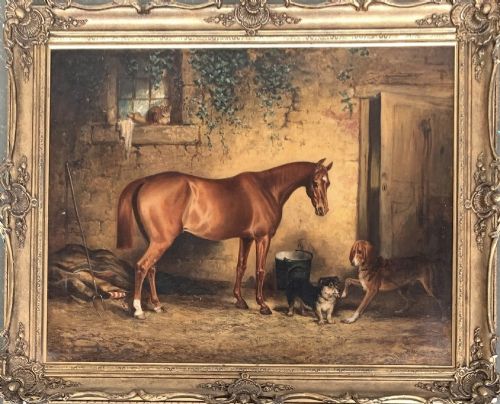
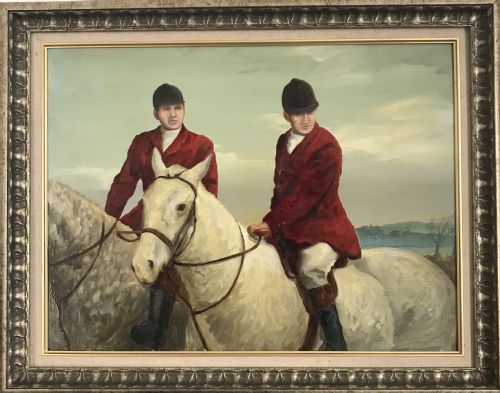
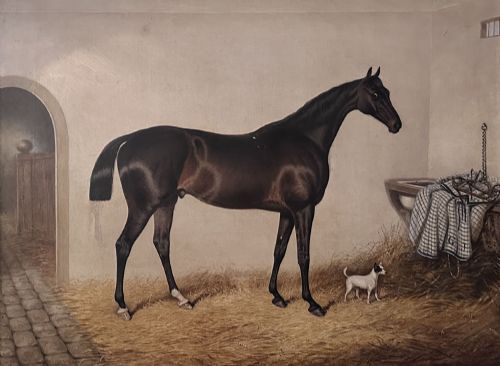
You will encounter individual portraits of bay, chestnut, and roan horses standing in stables or sweeping landscapes, alongside broader scenes involving hounds, grooms, and riders. These works document specific animals, notable hunts, and rural traditions.
The format varies from oils on canvas and oak panels to watercolours on paper and reverse glass painted prints. Some focus strictly on the equine subject, while others place the hunter within a historical genre or landscape setting.
Materials and technique
Artists relied primarily on oil paint applied to stretched canvas or wooden panels, building up layers of pigment to capture the musculature and sheen of the horse coat. Watercolours on paper appear alongside these oils, utilising transparent washes for lighter, more fluid rural landscapes.
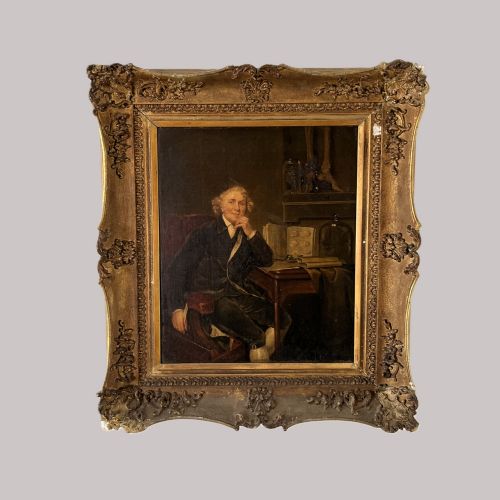
Frames made from wood and gilt wood enclose many of the works, serving to protect the edges of the canvas and complement the composition. In select instances, reverse glass painting techniques were utilised to create smooth, luminous prints with enduring colour.
The archive and current listings demonstrate a strong preference for oil on canvas, supplemented by watercolours, bronze sculptures, and Staffordshire figures.
Distinctions in quality
The highest quality works demonstrate a deep anatomical understanding of the horse, capturing accurate proportions, stance, and spirit rather than a generic outline. Skilled painters render the play of light across a stable interior or a damp moorland with precise brushwork and balanced perspective.
Provenance and attribution elevate certain pieces, particularly those bearing signatures or documentation linking them to established sporting artists and notable collections. The integration of background details, such as stable architecture or accompanying hounds, further distinguishes accomplished compositions from standard works.
Henry Barraud·Benjamin Cam Norton·Edwin Frederic Holt·Alfred Moginie Bryant·Alfred Grenfell Haigh·Abraham Cooper·John Sanderson-Wells·Charles Bilger Spalding·Ludolf de Jongh·Thomas Ivester Lloyd·Franz Bergman·Adolphe Alexandre Lesrel·James Barenger·Benjamin Marshall·Robert Richard Scanlan·Thomas Walker Bretland·George Sherwood Hunter·Evelyn Harke
The Antique Hunter Painting Glossary
- Bay hunter
- A horse with a reddish-brown body and black points on its mane, tail, and lower legs, bred or used for hunting.
- Reverse glass painting
- An artwork painted directly onto the reverse side of a glass sheet and viewed from the front, producing a polished surface.
- Sporting art
- Fine art depicting blood sports, equestrian pursuits, shooting, and rural pastimes, particularly popular in British history.
- Provenance
- The documented history and chain of ownership of an artwork, establishing its authenticity and origin.
Antique Hunter Painting: Frequently Asked Questions
What is an antique hunter painting?
These works are historical artworks depicting horses, riders, and sporting dogs from eras such as the Georgian and Victorian periods.
They record the importance of equestrian culture, featuring named horses, stable yards, and countryside hunts.
How were these paintings displayed?
Owners traditionally hung these works in country houses, libraries, and estate dining rooms to celebrate their prize animals and sporting achievements.
Today, they suit traditional interiors, studies, and hallways where wooden furniture and equestrian themes predominate.
How do I identify the period?
You can determine the period by examining the materials, framing styles, clothing of any figures, and written signatures or inscriptions on the canvas or reverse.
Stylistic conventions in equine portraiture also shift over time, moving from formal Georgian stagings to more atmospheric Victorian and Edwardian landscapes.
Are all the pieces painted in oil?
While oil on canvas and wood panel form the majority of the works, you will also find watercolours on paper and reverse glass painted prints.
Each medium offers a different visual texture, from the heavy impasto of stable oils to the delicate transparency of early watercolours.