


Antique Hound Sculpture
An antique hound sculpture brings the muscular energy of the hunting field into the room through bronze, marble, and ceramic forms.
Antique Hound Sculpture
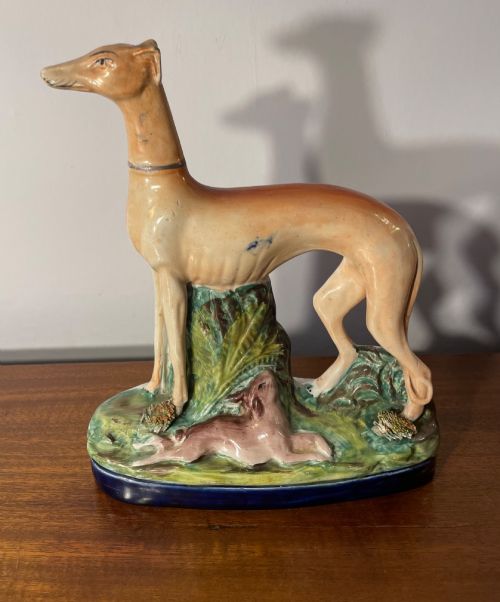
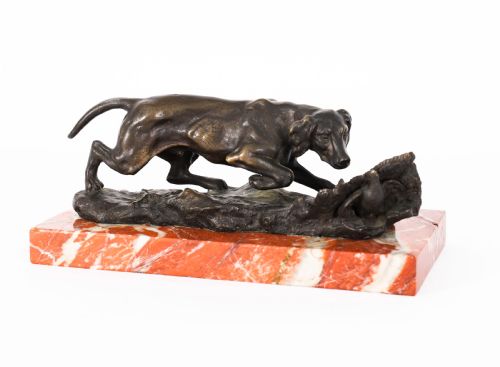
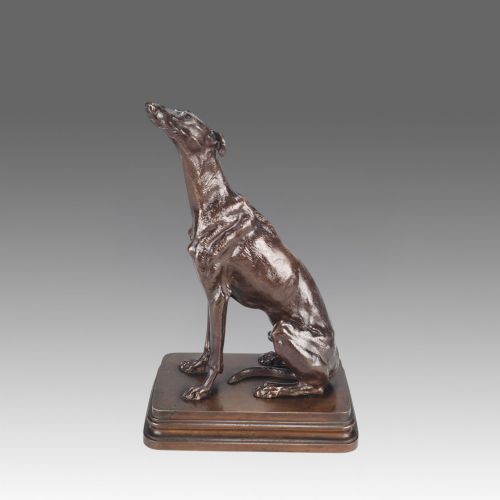
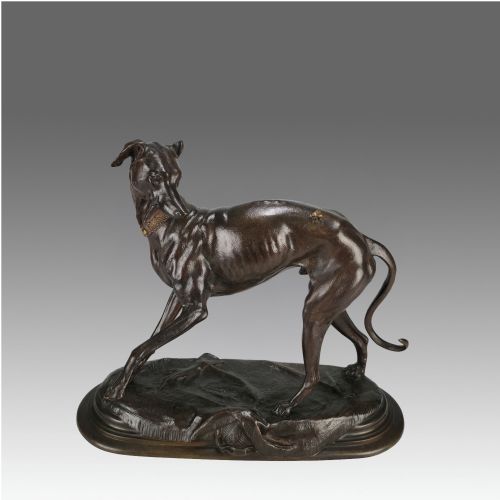
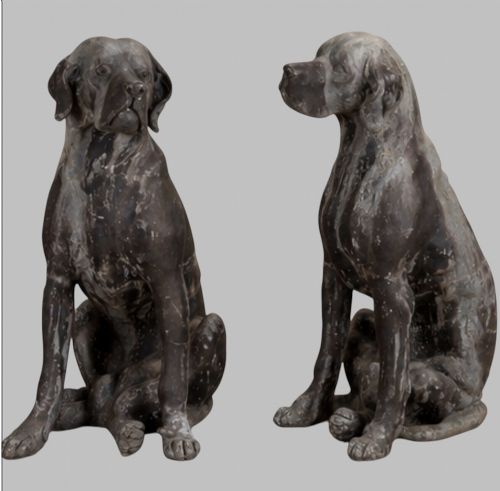
When you search for an antique hound sculpture, you encounter figures capturing sporting dogs, greyhounds, bassets, and setters created across the nineteenth and early twentieth centuries. These works span decorative mantel objects and cabinet figurines to large garden statues and heavy cast lead pairs. French animalier bronzes and Staffordshire pottery pieces dominate the selection, showing the canine form in repose, hunting, or paired with game.
Makers and foundries utilised various materials to render the physique of the hunting dog, placing the animals on marble bases or mounting them as desk ornaments and car mascots. Art Deco examples introduce stylised hounds alongside human figures, while Victorian pieces lean towards naturalistic depictions of greyhounds and setters. Grand Tour items from Italy also appear, offering small marble models modelled on ancient prototypes.
The objects serve as a record of nineteenth-century animalier sculpture and earlier ceramic traditions, reflecting both domestic pet ownership and the culture of the hunt. Buyers find works cast by notable foundries or modelled by recognised sculptors alongside unmarked vernacular pottery. Each piece preserves a distinct attitude, from the alert posture of a sighthound to the relaxed stretch of a resting hound.
How they were made
Foundries cast metal figures using the lost-wax method or sand casting, applying patinas ranging from deep black to warm brown over bronze, spelter, and cast iron. Marble and serpentine pieces were hand-carved and polished, sometimes incorporating bronze mounts or ormolu details. Terracotta and lead examples provided robust options for larger garden statues.
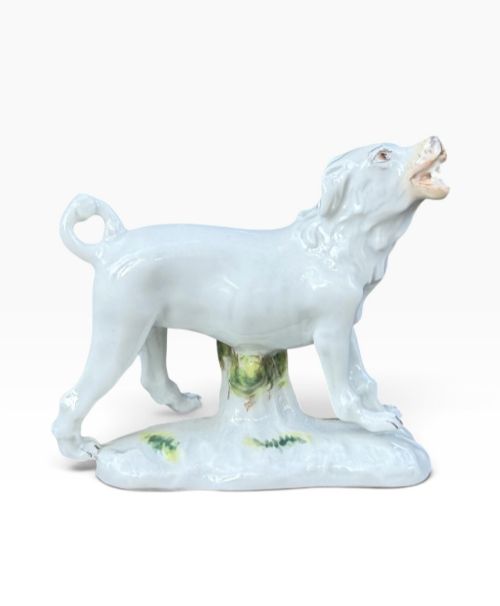
Pottery figures utilised earthenware, porcelain, and parian ware, shaped in moulds and hand-painted or glazed before kiln firing. Staffordshire potters decorated their earthenware greyhounds and setters with underglaze colours and enamel highlights. Parian ware offered a smooth, unglazed biscuit porcelain finish that mimicked carved marble for detailed figure groups.
Some nineteenth-century hounds hold balls or share their bases with unlucky pheasants, frogs, and flies.
What varies in quality
In ceramics, the finesse of the moulding and the control over the glaze or enamel painting determine the standard of the piece. Early Staffordshire pottery displays clean moulding lines and careful hand-painting, while later derivative versions often appear blurred and heavily simplified. Porcelain and parian figures rely on the purity of the ceramic body and the absence of firing distortions.
Carl Kauba·Alfred Dubucand·Alfred Barye·Pierre Jules Mene·Thomas Parr·Auguste Nicholas Cain·Arthur Waagen·Geo Maxim·Enoch Wood factory·Antoine Louis Barye·Louis Lejeune·Joseph Francois Victor Chemin·Christophe Fratin·John Willis Good·Nikolai Lieberich·Barbedienne·Royal Dux·L.Bureau·Henri Jaquesmart
The Antique Hound Sculpture Glossary
- Animalier
- A nineteenth-century artistic movement focusing on the realistic depiction of animals, particularly in bronze. Sculptors in this tradition studied live specimens in menageries to achieve anatomical accuracy.
- Parian Ware
- A fine-grained, unglazed biscuit porcelain developed in the nineteenth century to imitate carved marble. It takes its name from Parian marble found on the Greek island of Paros.
- Spelter
- An alloy of zinc used as a less expensive alternative to bronze for decorative figures, frequently painted to resemble patinated metal. It is softer and lighter than bronze.
- Grand Tour
- A cultural journey undertaken by wealthy Europeans in the eighteenth and nineteenth centuries, bringing home small-scale copies of classical sculptures and architectural models in marble or bronze.
- Serpentine
- A group of green silicate minerals often carved into decorative objects and architectural details, prized for its mottled, snake-skin appearance.
Antique Hound Sculpture: Frequently Asked Questions
What is an animalier hound sculpture?
An animalier sculpture depicts animals with anatomical accuracy, a style that gained immense popularity in nineteenth-century France. Artists observed hounds in motion or at rest to capture realistic muscle structure and posture.
These bronzes were cast in varying sizes for domestic display, often mounted on heavy marble plinths. They represent a distinct departure from formal portraiture by focusing entirely on the natural behaviour of the hunting dog.
How do I identify a bronze from a spelter hound?
Bronze is heavier, colder to the touch, and develops a stable patina over time that shows warm undertones beneath the surface. Spelter is a softer zinc alloy that feels lighter and often exhibits chipping or flaking in the applied dark paint.
Lifting the piece usually reveals the difference in weight immediately. Examining the underside can also expose the paler grey metal beneath worn areas of spelter finishes.
Where were Staffordshire pottery dogs displayed?
Staffordshire pottery greyhounds and setters were typically manufactured as mantelpiece ornaments during the Victorian era. Owners placed pairs on either side of the fireplace or on dining room sideboards.
These earthenware figures added domestic cheer and reflected the owners' affection for sporting dogs. Their brightly coloured enamels brightened dimly lit nineteenth-century interiors.
What are the Dogs of Alcibiades?
The Dogs of Alcibiades refer to a famous ancient sculptural group depicting two hounds, copied during the Grand Tour period in marble and bronze. Italian workshops produced reduced versions for travellers touring classical sites.
These green serpentine marble or bronze models served as sophisticated souvenirs of European travel. They brought classical antiquity into nineteenth-century studies and libraries.
How should I care for an antique bronze hound?
Antique bronzes require only gentle dusting with a soft, dry brush to prevent dirt accumulation in the crevices. Avoid using chemical cleaners, polishes, or water, which can strip the original patination.
An occasional light application of microcrystalline wax can protect the metal surface from atmospheric moisture. Keeping the sculpture away from direct sunlight preserves the depth of the bronze finish.