



Antique Horology Wall Timepiece
These antique horology wall timepieces keep time on timber dials and brass movements, offering practical function and history for any room.
Antique Horology Wall Timepiece
An antique horology wall timepiece encompasses a broad sweep of wall-mounted timekeeping devices, ranging from early English lantern clocks to nineteenth-century fusee dial clocks and Vienna regulators. These objects served utilitarian and decorative roles in domestic and public spaces across several centuries.
Earlier examples include hook and spike wall timepieces alongside chamber clocks utilising iron and brass, while later Victorian items lean towards refined cabinetwork with inlaid veneers and carved bezels.
How they were made
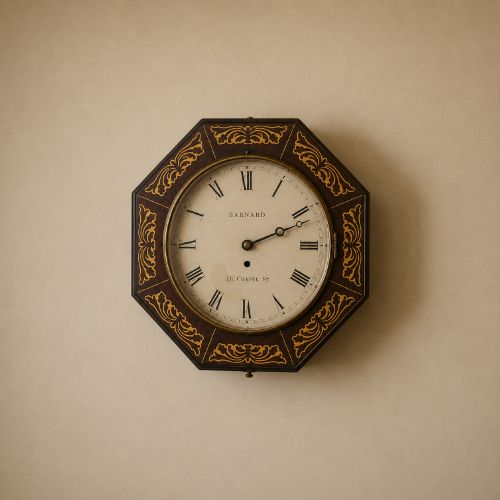
Cabinetmakers constructed the primary housings from dense hardwoods such as mahogany, walnut, and rosewood, frequently incorporating brass inlay or carved bezels around the dial. Iron and steel components form the internal movements, while glass protects the delicate faces.
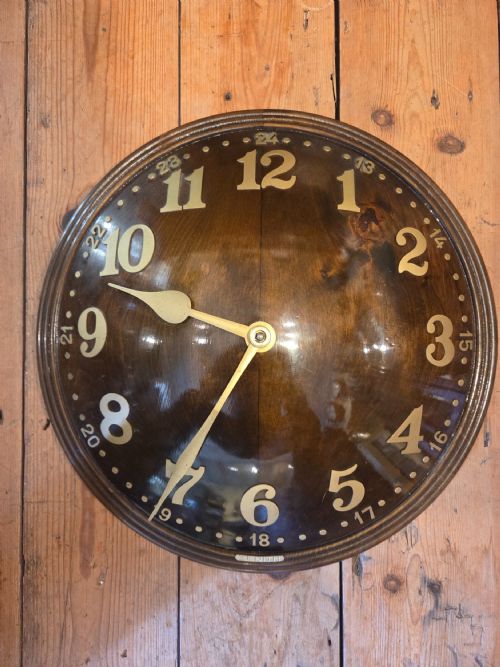
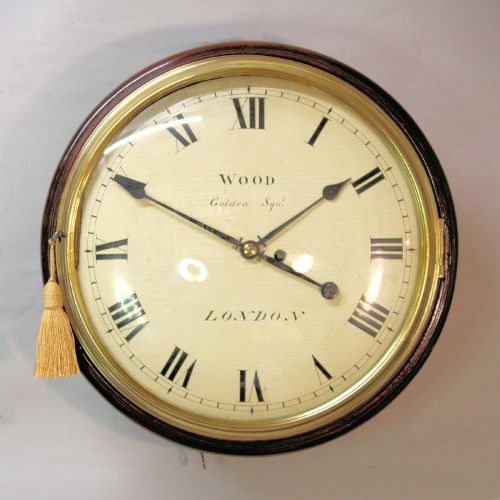
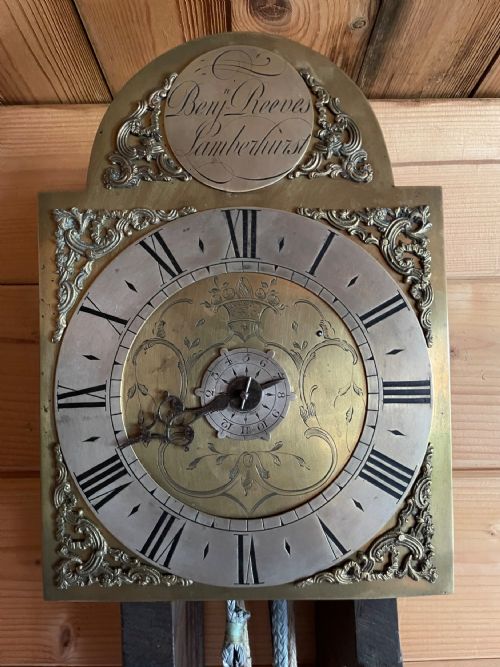
Dials display painted enamel, wooden convex surfaces, or engraved brass, paired with hand-cut hands and specialised escapements like the pinwheel mechanism. Fusee movements ensure even tension across the drive train for accurate timekeeping.
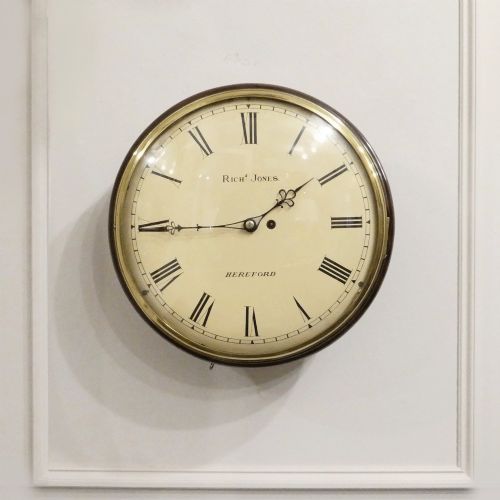
Listings feature eighteenth and nineteenth-century movements housed in mahogany, rosewood, and walnut cabinets with brass and enamel dials.
What varies in quality
Quality rests in the precision of the movement, the integrity of the timber housing, and the clarity of the dial inscriptions naming the maker. Finer items exhibit crisp dial lettering, harmonious proportions in the cabinetwork, and original mechanical components.
The choice of cabinet materials, from simple stained pine to figured mahogany and rosewood with intricate brass inlay, dictates the visual presence of the piece.
Richard Jones of Hereford·John Spershott of Titchfield·Benj Reeves Lamberhurst·John Walker·Balbiani Brookley·Kleyser of London·Payne of Tunbridge Wells·Valiant Paris·J Fisher
The Antique Horology Wall Timepiece Glossary
- Fusee
- A conical pulley used in clock movements to maintain an even pull as the mainspring unwinds. This mechanism improves timekeeping accuracy across the power reserve.
- Dial
- The face of the clock where the hours and minutes are displayed. These can be painted enamel, convex wood, or engraved brass.
- Escapement
- The mechanical linkage that controls the release of power in a clock and gives the pendulum or balance wheel its impulse. Examples include pinwheel varieties.
- Bezel
- The ring of metal or wood that holds the glass protecting the dial. It often hinges open for winding and hand adjustment.
- Lantern clock
- An early form of weight-driven brass chamber clock with an open-framed cage design. These represent some of the earliest domestic timekeepers.
Antique Horology Wall Timepiece: Frequently Asked Questions
How do fusee wall clocks work?
A fusee movement uses a conical pulley attached to a cord or chain connected to the mainspring barrel. As the spring unwinds and loses strength, the chain moves to a wider part of the cone to maintain consistent torque.
This clever mechanical device ensures the clock maintains steady timekeeping as the power reserve diminishes between windings.
What is a Vienna regulator?
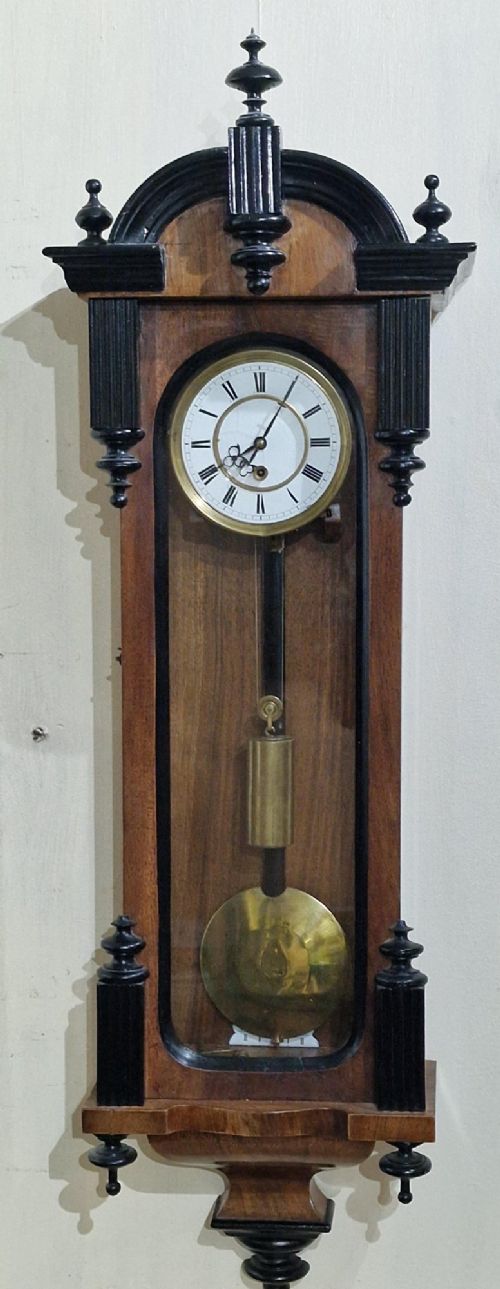
Vienna regulators are precise pendulum clocks developed in Austria during the nineteenth century, known for their elegant glazed cases and refined movements. They prioritize exceptional timekeeping accuracy and visual clarity.
These pieces typically feature elongated wooden cases designed to display the swinging pendulum and weighted drive system clearly.
How do I hang a heavy wall timepiece?
Wall timepieces require secure fixing directly into structural timber or masonry using appropriate wall plugs and heavy-duty screws. Hanging them from a sturdy bracket or hook prevents vibration and ensures the movement stays plumb.
Getting the case level is essential to ensure the pendulum swings evenly and the clock keeps correct time.
What is the difference between a timepiece and a clock?
In horological terms, a timepiece is a device that measures and displays the time without striking hours or ringing alarms. A clock generally incorporates a striking train to sound the hours.
Many wall-hung instruments are strictly timepieces designed solely for visual time recording.