



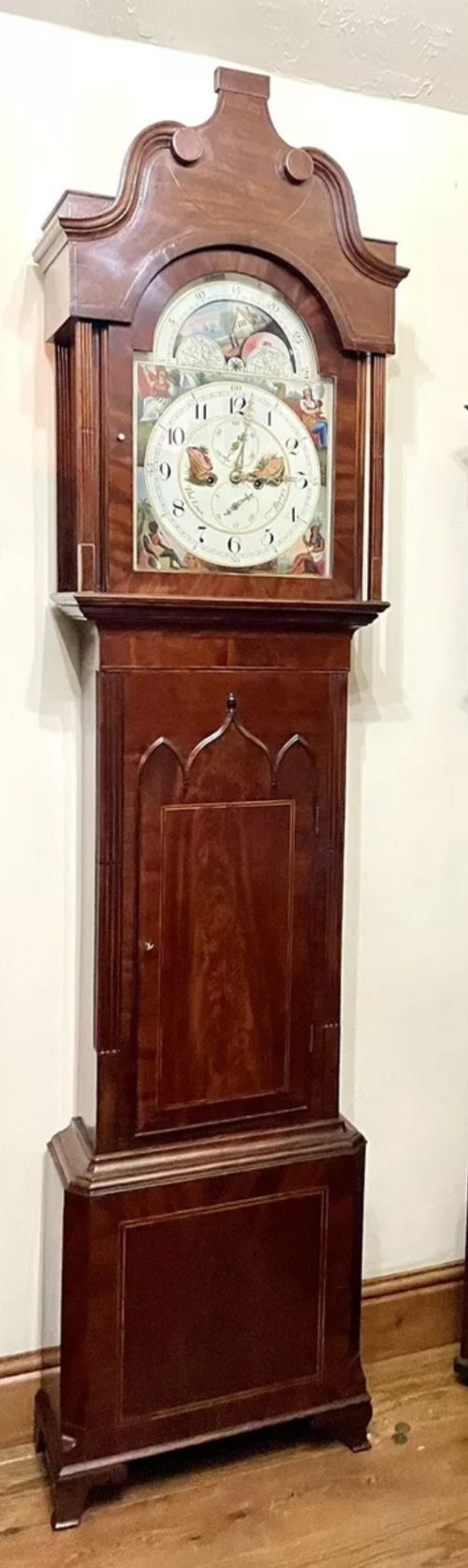


Antique Horology Standing Clock
These antique horology standing clock examples span centuries of master woodworking and precision movement making, bringing timeless mechanical elegance to any room.
Antique Horology Standing Clock
An antique horology standing clock combines precise mechanical movement with architectural cabinetry to measure time in grand style. Most examples on this page take the form of longcase clocks, often referred to as grandfather clocks, alongside more compact granddaughter clocks.
The selection ranges from the 17th century through the Georgian and Victorian eras, reflecting shifting tastes in domestic interiors. Makers housed these complex movements in tall timber cases designed to protect the delicate weights and pendulums while anchoring the piece within the home.
Regional variations emerge clearly across the makers represented, from London workshops to Scottish and Welsh provincial towns. Buyers encounter regional stylistic choices in dial decoration and hood architecture that distinguish a metropolitan piece from a country workshop.
Materials and construction
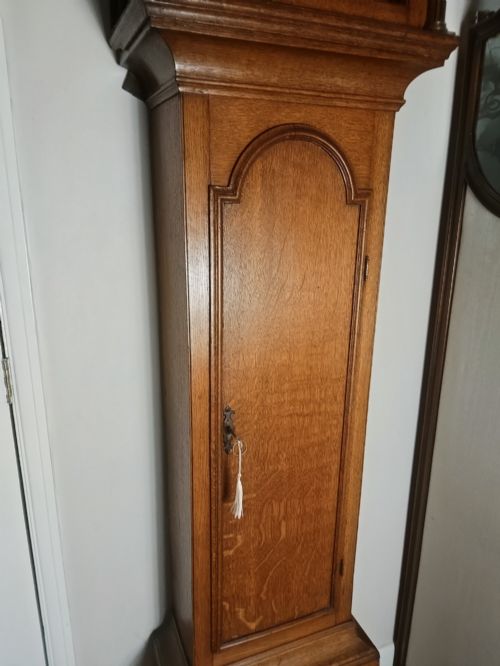
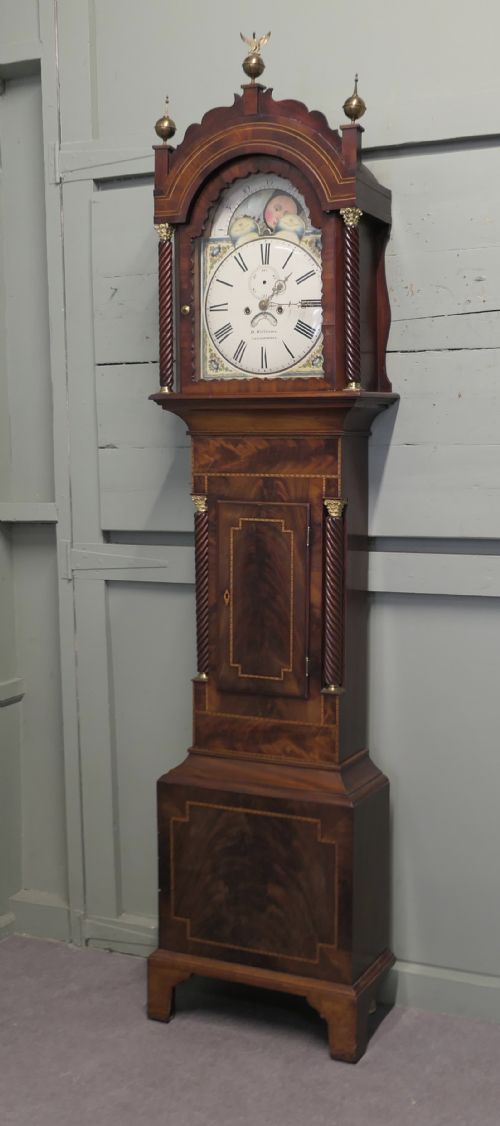
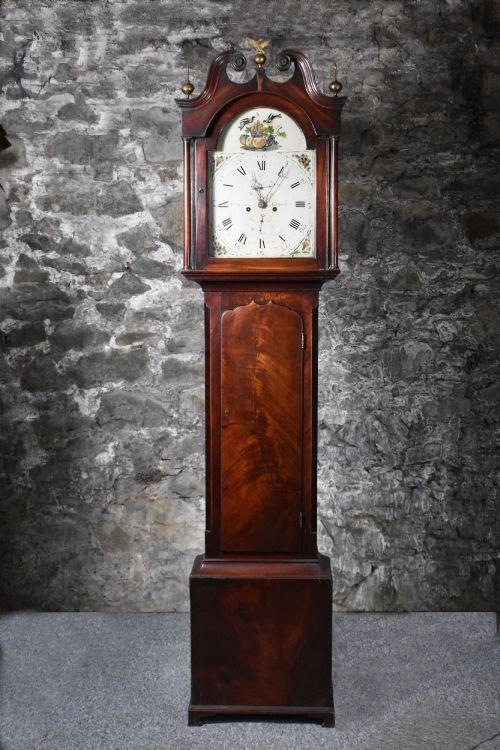
Cabinetmakers utilised rich timber veneers and solid boards, selecting oak for early provincial pieces and mahogany or burr walnut for later, high-status commissions. Flame mahogany and inlaid details provided visual depth to the tall wooden trunks.
Dial construction relied on brass, painted iron, and steel components, engraved or painted with chapter rings, seconds hands, and occasionally moonphase displays. Movement plates and gear trains required expert metallurgical work to ensure reliable timekeeping over eight-day or thirty-hour durations.
Markers of quality
Quality rests heavily on the integrity of the movement and the sophistication of the dial work, particularly when signed by a known maker. Finer dials incorporate strike and silent mechanisms or detailed moonphase complications executed with crisp engraving.
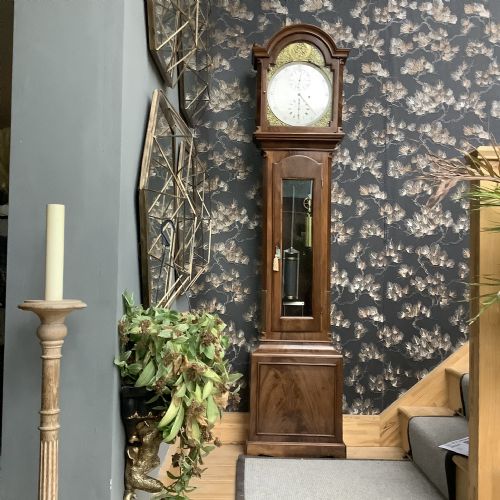
Cabinetwork distinguishes standard production from exceptional artistry, seen in the choice of burr walnut or flame mahogany veneers and the proportion of the hood and trunk. Retaining original surfaces and untouched movement components elevates a piece significantly above examples with extensive later replacement parts.
D Williams of Crickhowell·Henry Weedon London·Henry Massy·David Craig Ford Path head·Whitelaw of Edinburgh·Richard Prew Of Tewksbury·THOMAS LEES BURY·JOSEPH WINDMILLS LONDON·Herbert of Haversham·Thos Newsom of Tottenham
The Antique Horology Standing Clock Glossary
- Longcase clock
- A tall pendulum clock enclosed in a wooden case standing directly on the floor. These pieces are frequently called grandfather clocks by modern collectors.
- Granddaughter clock
- A smaller, more compact version of the traditional longcase clock. They offer the same mechanical complexity in a reduced stature suitable for lower ceilings.
- Moonphase
- A dial mechanism tracking the phases of the lunar cycle through a rotating painted disc. This complication adds visual interest and mechanical sophistication to the face.
- Strike and silent
- A mechanism allowing the clock's striking train to be manually silenced at night. This function was especially valued in bedchambers and formal sitting rooms.
- Chapter ring
- The circular metal ring affixed to the dial bearing the hour numerals. Traditional examples feature separate minute markers and finely cut divisions.
Antique Horology Standing Clock: Frequently Asked Questions
What is the difference between a longcase and a grandfather clock?
There is no functional difference between the two terms, as grandfather clock is simply the popular domestic name for a longcase clock.
Horological historians and specialist dealers tend to use the formal term longcase when discussing the mechanics and cabinet architecture of these pieces.
How do eight-day movements differ from thirty-hour clocks?
An eight-day clock requires winding roughly once a week, utilising a dual-weight or spring-driven train system designed for longer intervals.
Thirty-hour movements typically rely on a single weight or simpler gear train, requiring more frequent winding by the owner.
Where should a standing clock be placed in the home?
Standing clocks require a stable, dry interior wall away from direct sunlight, central heating vents, and damp exterior stone.
A solid floor surface ensures the case remains plumb, allowing the pendulum to swing evenly and keep accurate time.
How can I tell an 18th-century clock from a Victorian one?
Eighteenth-century examples often feature brass dials with cast spandrels and casework in oak or early mahogany, reflecting Georgian design proportions.
Victorian pieces frequently display painted iron dials, Scottish regional characteristics, or heavier case mouldings typical of the 19th century.