





Antique Hinged Chest
These antique hinged chest examples offer solid timber construction and practical storage, holding centuries of domestic history in enduring forms.
Antique Hinged Chest
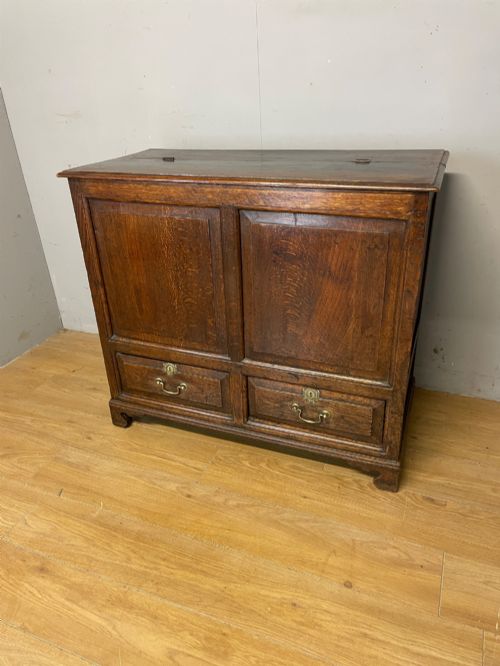
An antique hinged chest brings centuries of practical timber storage into modern rooms, taking forms from simple country boxes to elaborate elevated cabinets. When you search for an antique hinged chest, you encounter a diverse group of receptacles designed to hold textiles, valuables, or household goods beneath a lifting or dropping lid.
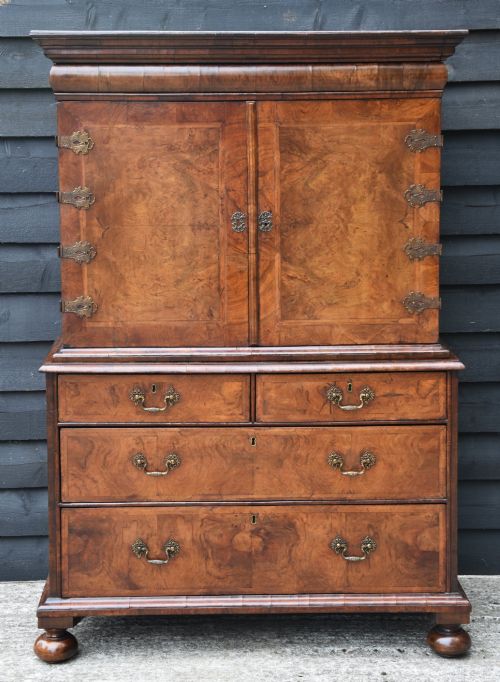
The pieces on this page span the seventeenth, eighteenth, and nineteenth centuries, alongside pieces from the early twentieth century. You meet rustic elm blanket boxes, painted pine trunks, mahogany commodes, and sophisticated walnut cabinets dating from the William and Mary period.
Utility defines the category, shifting from heavy oak coffers used for church and domestic storage to specialised military campaign pieces and refined cocktail cabinets. Each survival demonstrates how earlier households managed storage before fitted cupboards became standard.
How they were made
Cabinetmakers utilised heavy native and imported timbers, selecting oak, elm, mahogany, walnut, and pine depending on the intended function and social status of the furniture. Solid boards were joined with traditional woodworking joints to create rigid carcases capable of bearing heavy loads.
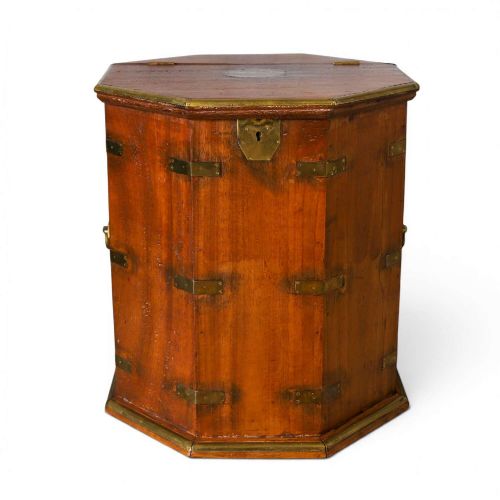
Iron and brass hardware provided both structural reinforcement and operational mechanisms, securing heavy lids with robust strap hinges and locks. Secondary treatments included grained paint finishes and polished veneer work such as burr walnut.
Specialised forms incorporated complex internal drawers, drop fronts, and safe mechanisms within the timber housing, requiring precise joinery to ensure smooth movement.
Antique Hinged Chest Retail Price Guide 2026
Typical asking prices for hinged chest among the pieces listed under this phrase on Sellingantiques today, from the lower quarter to the upper quarter. They describe what is for sale here now, not the wider market.
Materials represented across the inventory include brass, burr walnut, walnut, iron, mahogany, pine, elm, and teak.
What varies in quality
The distinction between standard utility items and finer examples rests on timber selection and decorative ambition. Plain painted pine and utilitarian elm boxes prioritise rugged function, whereas burr walnut veneers and matched mahogany display the deliberate artistry of metropolitan workshops.
Hardware integrity and the survival of original working locks or brass drop handles elevate a piece significantly. Construction details, such as the thickness of secondary timbers and the crispness of mouldings, separate workshop output from mass production.
S. Mordan & Co
The Antique Hinged Chest Glossary
- Cofer
- A heavy wooden chest, often constructed from oak, used historically for storing valuables and personal belongings before the advent of fitted closets.
- Campaign chest
- Portable furniture made in sections with brass corners and recessed handles, designed for military officers on active service during the nineteenth century.
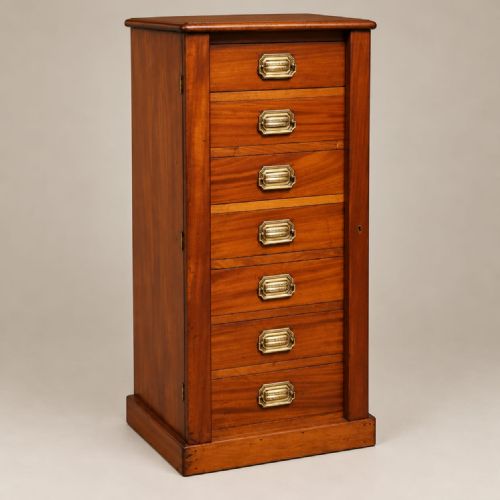
- Wellington chest
- A tall, narrow chest of drawers secured by a locking hinged vertical side flap that fastens over the drawer edges.
- Commode
- A low cabinet or chest of drawers, which in the nineteenth century often concealed sanitary equipment or took the form of a faux drawer unit.
- Bible box
- A small tabletop chest with a sloped or flat hinged lid, historically utilised for storing family Bibles and important documents.
Antique Hinged Chest: Frequently Asked Questions
What were antique hinged chests used for?
These receptacles served primarily to store household textiles, blankets, clothing, and valuable documents securely away from dust and damp. Their robust construction allowed them to double as seating benches in domestic settings.
Over time, specialised variations emerged for specific duties, ranging from military transport to drinks storage and the safeguarding of domestic archives.
How do I date an antique chest?
Dating relies on observing the timber species, construction joints, hardware, and stylistic motifs present on the piece. Seventeenth-century examples often display heavy oak boards and hand-cut joinery, while nineteenth-century pieces frequently utilise mahogany or walnut with machine-assisted elements.
Secondary woods inside drawers and the style of the hinges provide further physical evidence to narrow down the decade of manufacture.
Where should I place a chest at home?
These versatile pieces suit hallways, living rooms, and bedrooms, where they provide both surface display space and concealed internal storage. Placing them away from direct heat sources and strong sunlight protects vulnerable timber veneers and polished finishes.
Heavier trunks and coffers anchor larger empty wall spaces, while smaller bible boxes and commodes sit comfortably on tables or desks.
Are eighteenth-century chests fragile?
Eighteenth-century pieces are remarkably durable, having survived centuries of domestic use through sound timber construction. However, they benefit from stable indoor humidity levels to prevent timber splitting or veneer lifting.
Lifting heavy lids and operating original brass hardware gently preserves the historical mechanisms for daily use.