
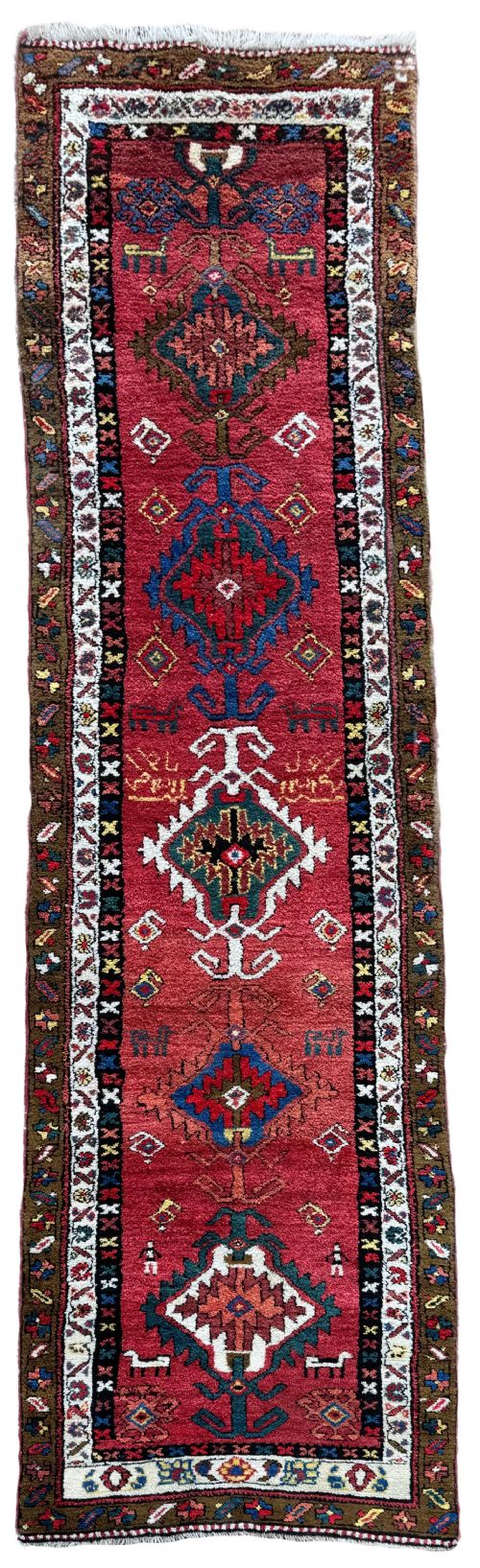
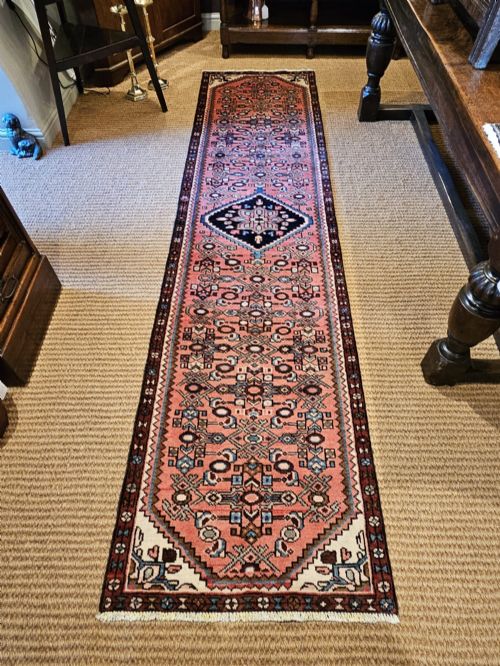
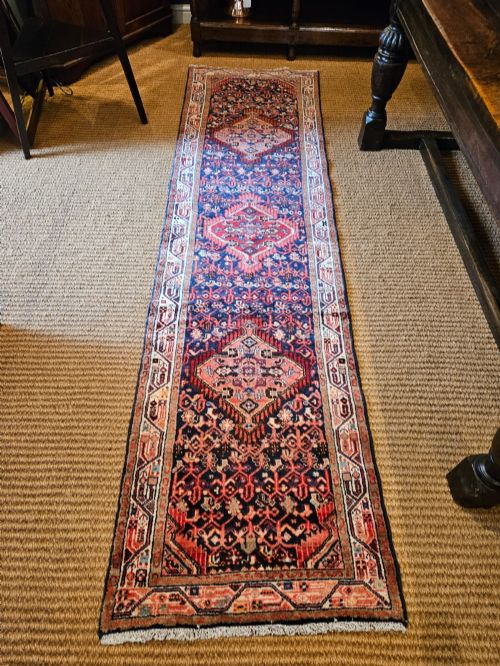
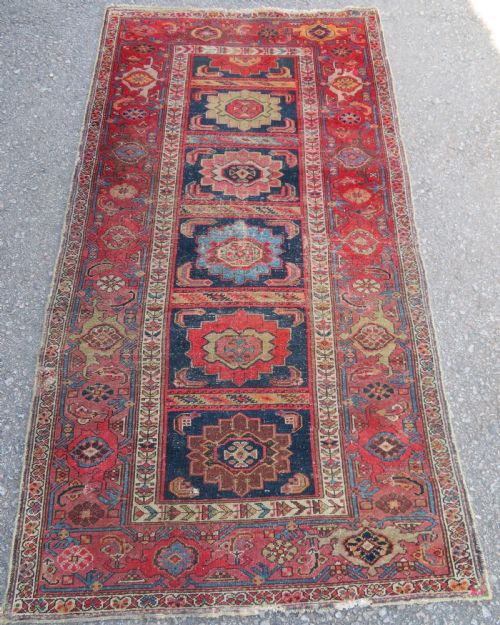
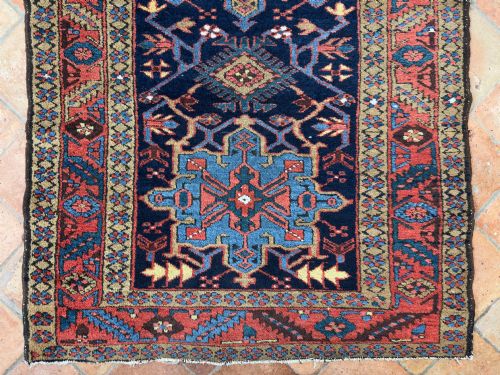
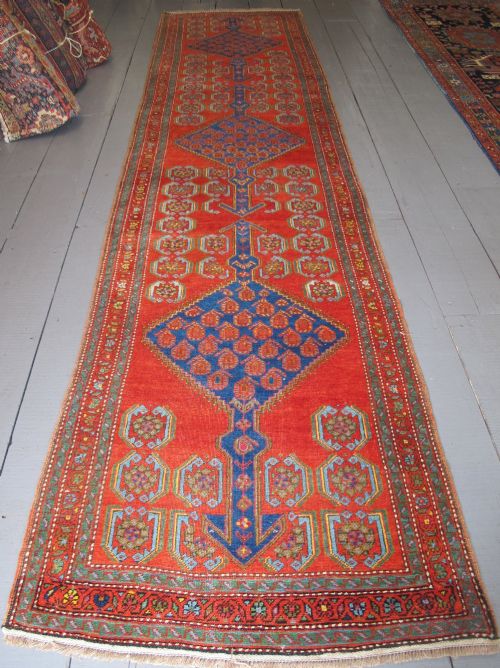


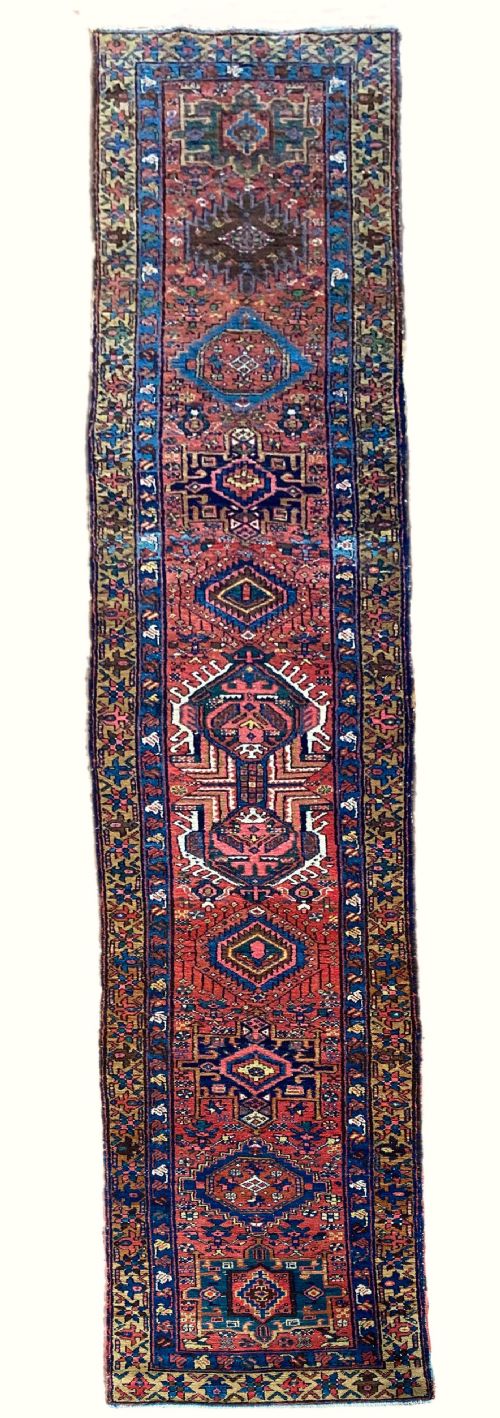

Antique Heriz Hallway Rug
An antique heriz hallway rug brings geometric strength and durable wool to a narrow space.
Antique Heriz Hallway Rug
An antique heriz hallway rug is a hand-knotted runner designed for long passages and corridors. These pieces originate from North-West Persia and appear in formats stretching over three or four metres in length.
The version most commonly met on this page is the classic Heriz runner from the decades around nineteen hundred, characterised by substantial proportions and bold geometric medallions. Alongside these sit related regional types such as Karaja, Gorevan, Serapi, Bakshaish, and Hastrud runners.
Makers include Waring and Gillow, who retailed imported pieces alongside traditional weavers from the region. The listings span periods from eighteen eighty through to nineteen thirty.
Materials and construction
These floor coverings utilise pure wool pile knotted onto sturdy cotton foundations. This pairing provides the structural resilience required for high-traffic corridors.
The weaving employs traditional techniques originating in North-West Persia, yielding dense, heavy carpets designed to lie flat in narrow spaces.
Some narrow formats measure a mere eighty-two centimetres wide, proving that nineteenth-century weavers understood the challenge of tight corridors.
Distinctions in quality
Quality rests upon the precision of the geometric layout and the fineness of the knotting across the runner. Tighter execution of the bold medallion design distinguishes the finer examples from simpler village work.
Proportion also defines the grade of a piece, with exceptionally narrow widths or balanced long formats commanding particular attention. Preservation of the original wool pile across the length determines the overall integrity of the runner.
Waring and Gillow
The Antique Heriz Hallway Rug Glossary
- Heriz
- A region in North-West Persia known for durable rugs featuring large geometric medallions and rectilinear floral motifs. These pieces often incorporate a prominent central star or hexagonal medallion.
- Karaja
- A style of runner hailing from a village near Heriz, typically displaying smaller geometric repeats or tribal medallions. They share the robust wool construction of their larger neighbours.
- Serapi
- An older, coarser designation associated with nineteenth-century production from the Heriz district, known for spacious designs and softer colour palettes. Examples often pre-date standard Heriz output.
- Medallion
- The central ornamental motif dominating the field of the rug. In these runners, the medallion is usually geometric and anchored by corner spandrels.
- Runner
- A long, narrow carpet format specifically proportioned for hallways, corridors, and stairs. Dimensions stretch significantly in length while maintaining a narrow width.
Antique Heriz Hallway Rug: Frequently Asked Questions
Where should I place a runner?
These long carpets suit narrow spaces such as hallways, corridors, and passageways where durability matters.
The geometric designs draw the eye along the length of the floor while the wool pile handles regular foot traffic.
How do I identify a Heriz runner?
Look for bold geometric medallions and sturdy rectilinear patterns set against a distinct central field. The palette often relies on deep reds, blues, and contrasting ivory tones.
Materials typically consist of wool pile on a cotton foundation, reflecting North-West Persian origins from the late nineteenth or early twentieth century.
What is the difference between Heriz and Karaja?
Heriz runners tend to feature large, dominant central medallions with expansive geometric structures. Karaja pieces often display smaller repeated motifs or multiple medallions in a more tribal arrangement.
Both originate from North-West Persia and share similar wool and cotton material construction.
How do I care for my rug?
Regular gentle vacuuming without a beater bar keeps the wool pile clean and free from trapped grit. Professional cleaning suited to antique textiles preserves the structure.
Using an appropriate underlay prevents slipping and reduces friction against the floorboards.
What dates do these rugs span?
The pieces listed date from the late nineteenth century through to the nineteen thirties. Production spans the eighteen eighties, eighteen nineties, and the early decades of the twentieth century.
Design nuances and structural details help distinguish between an eighteen eighty Serapi and a nineteen twenty Heriz runner.