
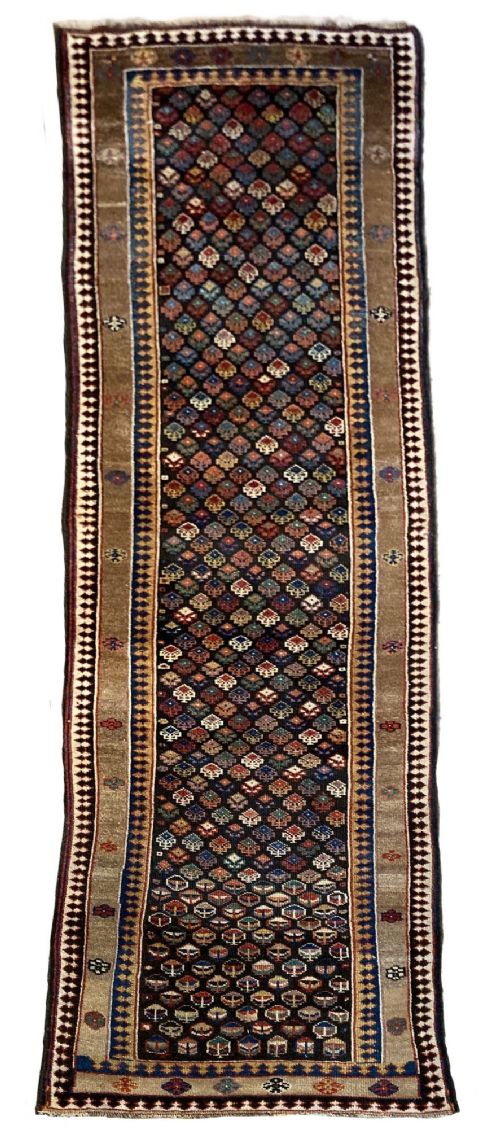


Long Narrow Oriental Rug
A long narrow oriental rug anchors a hallway or staircase with centuries of tribal craftsmanship and geometric precision.
Long Narrow Oriental Rug
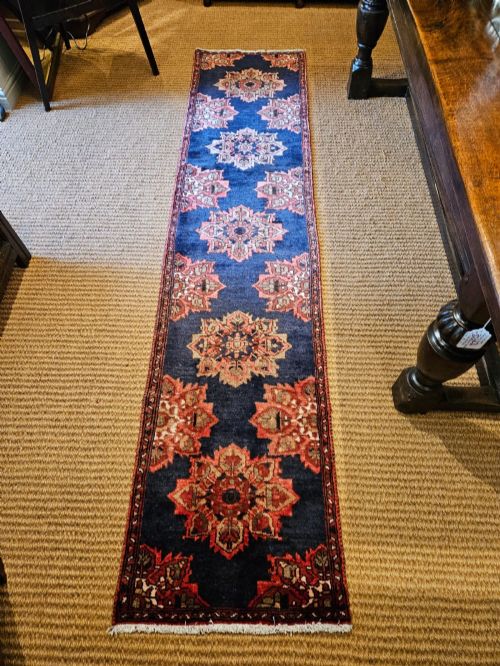
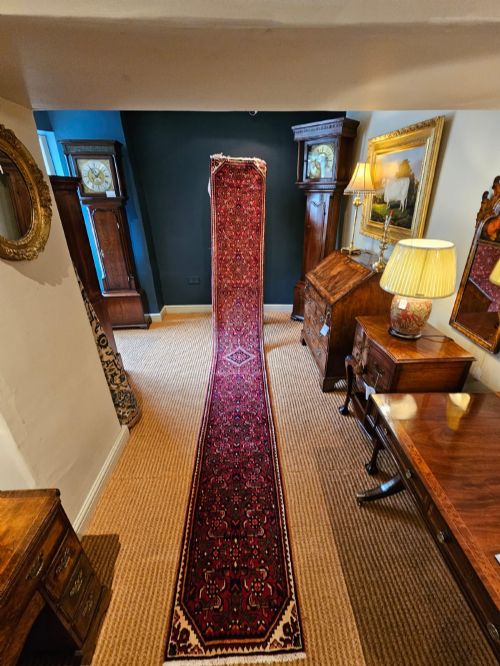
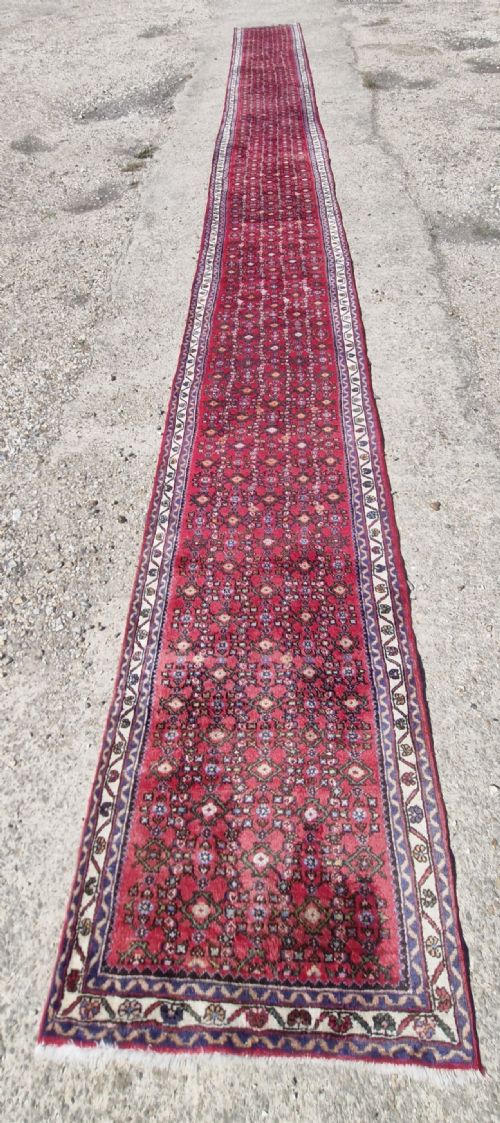
A long narrow oriental rug serves as a linear floor covering designed for corridors, landings, and extended hallways. These floor coverings bridge rooms while adding warmth and traditional pattern to transitional spaces.
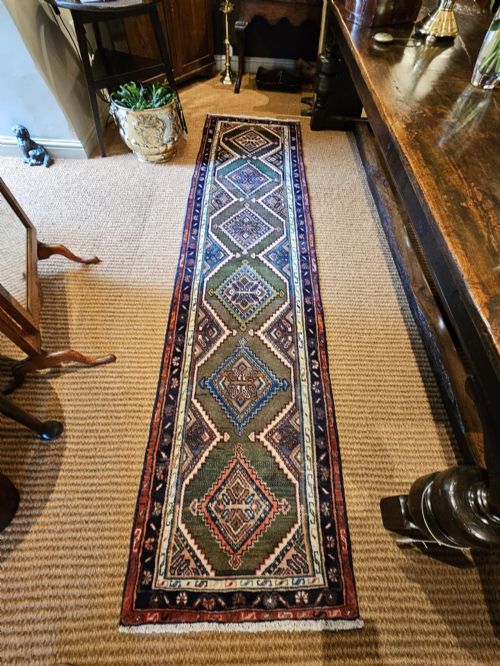
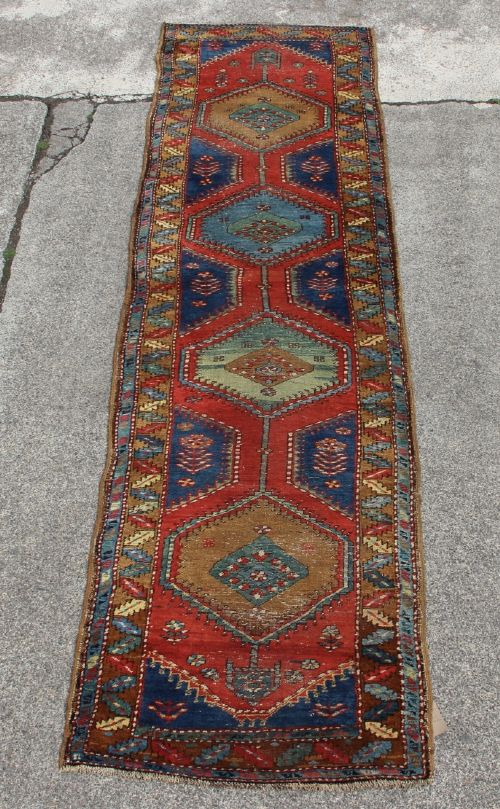
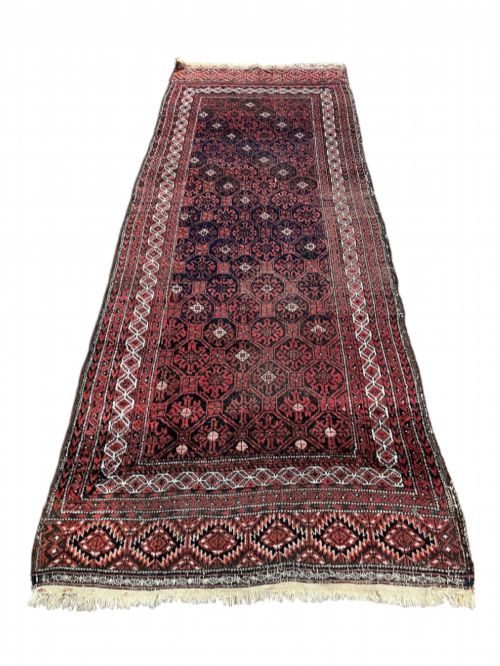
Most examples originate from Persian workshops, Turkish looms, and Caucasian tribal centres dating from the nineteenth century through the mid twentieth century. Buyers encounter regional variants such as Heriz, Hamadan, and Kurdish runners featuring distinct rectilinear or medallion motifs.
Materials and construction
Weavers constructed these runners using hand-spun wool pile knotted onto sturdy cotton or wool foundations. Natural dyes derived from plants and minerals provided the deep red, navy blue, and olive green background tones.
Nomadic and village weavers utilised upright looms to tie symmetrical or asymmetrical knots by hand. This dense construction yields a durable textile capable of withstanding heavy foot traffic in domestic corridors.
Listings feature runners spanning from the mid nineteenth century through the 1960s, constructed predominantly from wool, cotton, and camel hair.
What separates the finest pieces
Knot density and structural integrity dictate the upper tier of quality. Finer examples display precise geometry in the border guards and central medallions without lateral distortion along the length.
The choice of wool and the saturation of natural dyes distinguish superior survivals from standard workshop output. Hand-spun wool retains lanolin that enhances the sheen and softens the palette as the pile ages.
The Long Narrow Oriental Rug Glossary
- Runner
- A long, rectangular carpet format proportioned specifically for hallways, stairs, and narrow passages. These pieces measure significantly longer than their width.
- Medallion
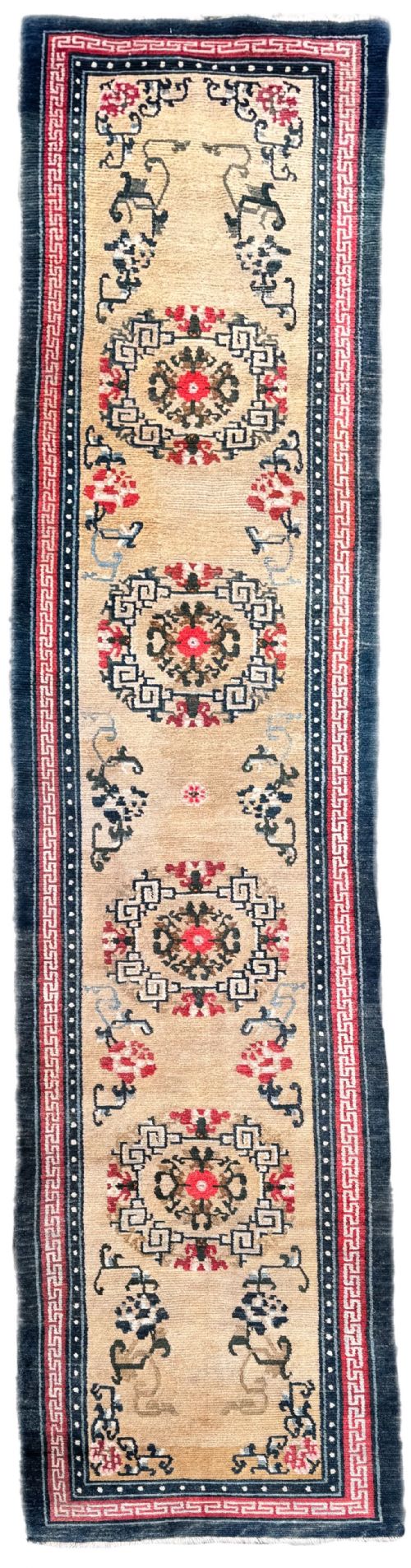
- A central ornamental design motif placed symmetrically in the field of the rug. It often anchors the geometric composition of Persian and Turkish village pieces.
- Weft
- The horizontal threads passed back and forth through the warp threads to hold the knots in place. Tight beating of the weft creates a firm, durable handle.
- Warp
- The vertical foundation threads stretched tightly on the loom before knotting begins. Fringe typically forms from the exposed ends of these threads.
- Kilim
- A flat-woven textile produced without a pile, occasionally utilised as a runner or combined with knotted sections. These pieces lack the raised texture of standard pile rugs.
Long Narrow Oriental Rug: Frequently Asked Questions
Where should I place a long runner?
These textiles suit narrow architectural spaces such as hallways, entryways, corridors, and long landings. Their elongated proportions guide the eye down a passage while protecting wooden or tiled floors.
Positioning them away from direct exterior exposure prevents moisture damage to the foundation wool and cotton. A quality underlay keeps the textile flat and prevents slipping under foot traffic.
How do I identify a tribal rug?
Tribal pieces display geometric motifs, repeating hooked polygons, and asymmetrical irregularities resulting from memory-based weaving. Village and nomadic makers improvised patterns without formal paper cartoons.
Palette choices in these works often rely on saturated primary tones combined with earthy browns and ivories. The wool texture tends to feel heavier and slightly more rustic than urban workshop carpets.
Are these runners durable for hallways?
Traditional village and workshop runners were built for heavy domestic use on stone or timber floors. The combination of dense wool pile and sturdy foundation threads withstands decades of foot traffic.
Regular gentle rotation distributes wear evenly across high-traffic sections of the runner. Professional dusting and hand-washing preserve the fibre strength without damaging the natural dyes.
How do I read regional rug styles?
Regional attributions depend on specific border guard designs, palette combinations, and structural characteristics. Heriz pieces often show bold geometric medallions, while Hamadan runners display repeating Herati patterns.
Comparing knot count on the reverse side reveals whether a piece originated from a settled town workshop or a nomadic tribal camp. Secondary weft colours and edge bindings provide further clues to geographic origin.