


Antique Hepplewhite Accent Chairs
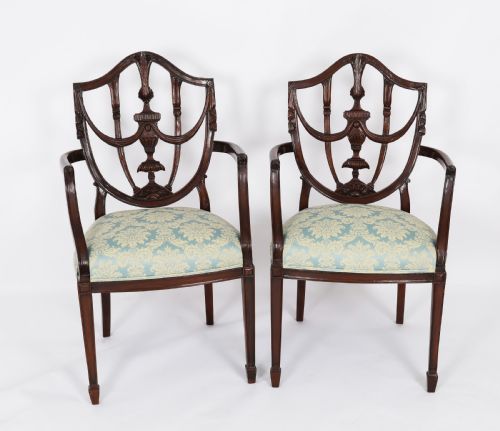
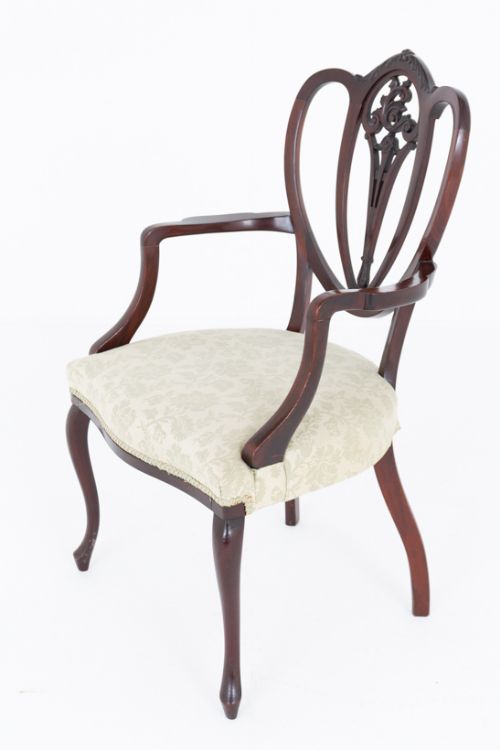
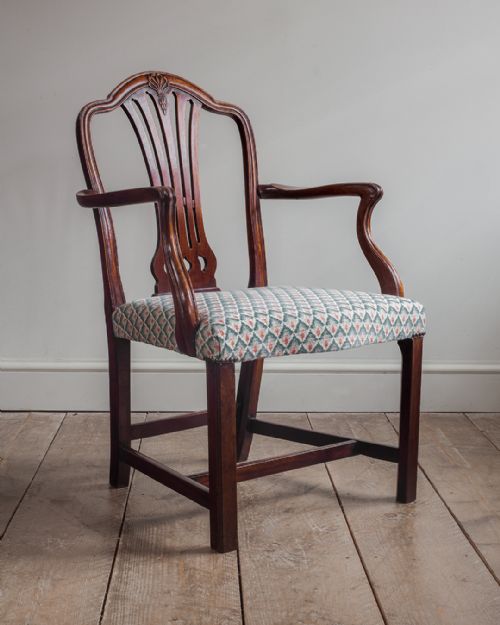
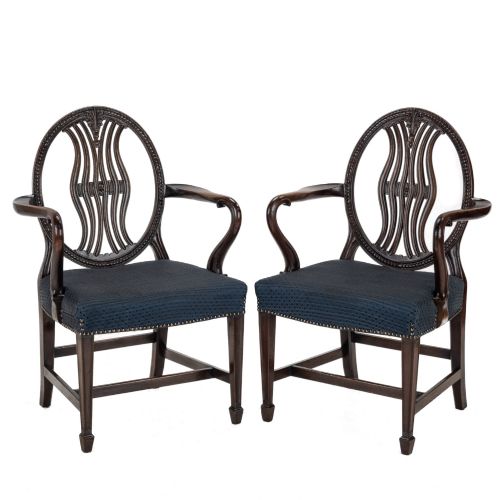
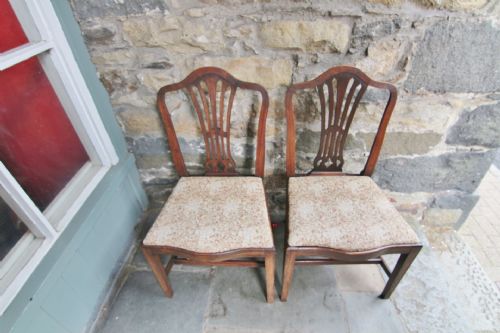
These antique hepplewhite accent chairs bring distinct shield backs and carved mahogany forms to a room, offering both historical proportion and enduring seating.
Antique Hepplewhite Accent Chairs
When you search for antique hepplewhite accent chairs, you encounter seating that spans the Georgian period through later revivals. The forms include open armchairs, side chairs, hall seats, and salon chairs shaped with distinct backs.
The version you meet most often on this page is the mahogany arm chair or side chair, frequently rendered in a revival style from the nineteenth or twentieth century. These pieces draw on eighteenth-century design vocabulary, incorporating shield backs and carved woodwork.
Originating from English workshop traditions, these chairs bridge formal dining requirements and decorative salon use. The selection covers period examples alongside later interpretations in fruitwood, satinwood, and painted finishes.
Materials and construction methods
Makers utilised solid mahogany, oak, and fruitwood to build the structural frames of these chairs. Satinwood appears alongside paint and ebonising for surface decoration.
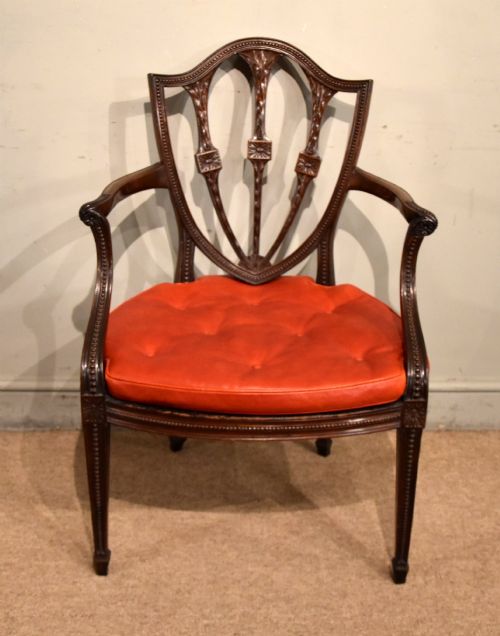
Carving defines the ornamentation, with shield backs frequently displaying carved details such as Prince of Wales feathers. Joinery relies on traditional methods to secure open arms and legs.
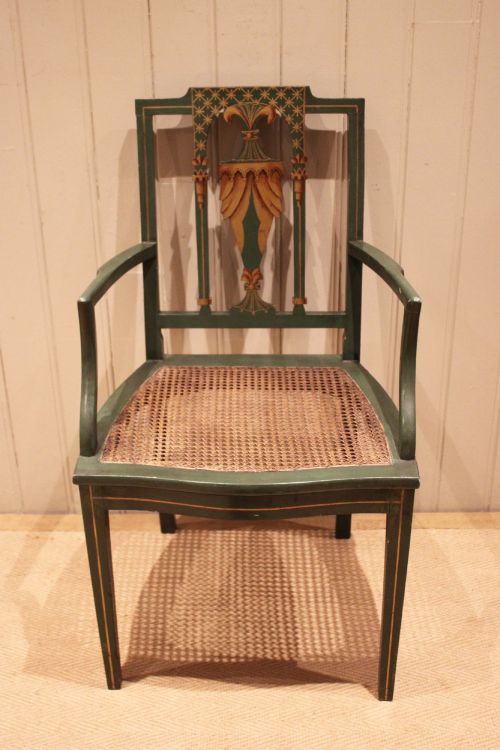
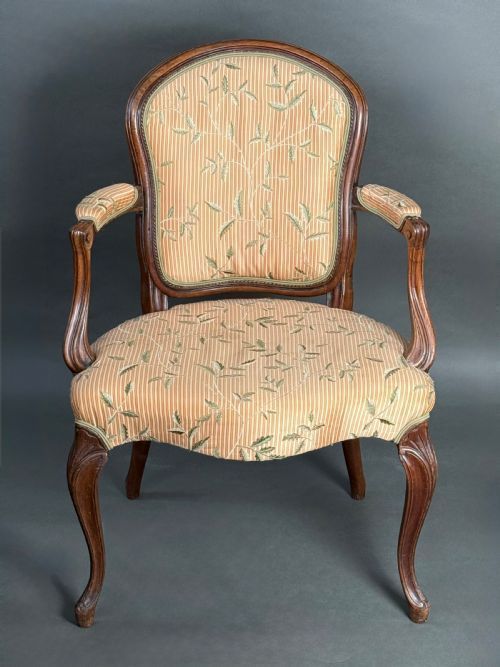
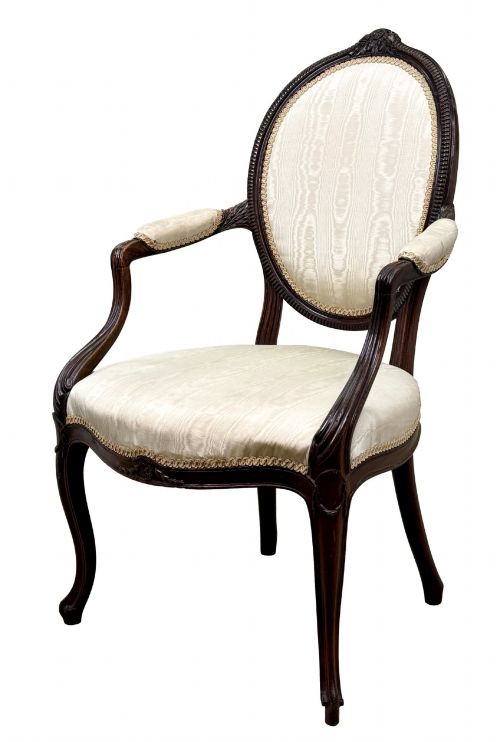
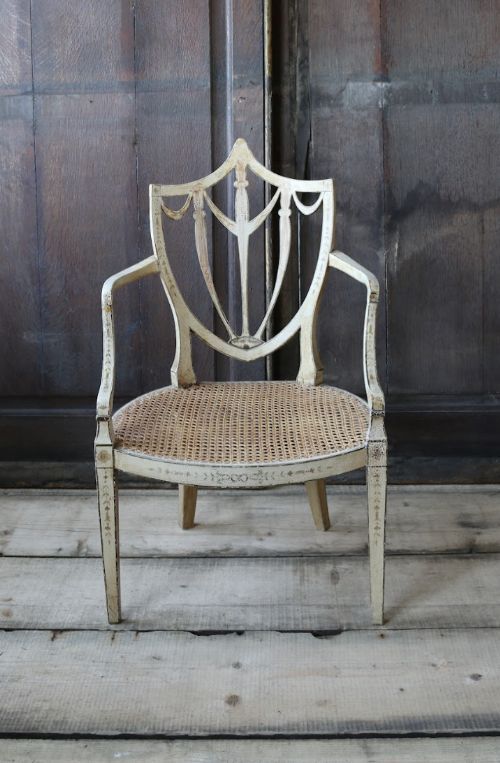
Upholstery materials range from textile and fabric to silk and specialised upholstery fabric. Cane seating also appears on specific painted and wood-framed variations.
Several shield backs come equipped with Prince of Wales feathers, ready to crown your hallway.
Distinctions in quality and execution
The refinement of the carving on the shield back and arms separates standard workshop production from exceptional examples. Crisp detail in the woodwork indicates superior hand skill.
The choice of primary timber, such as figured mahogany or select satinwood inlay, shifts the visual weight of a chair. Consistency in period materials reflects the dedication of the maker.
The preservation of original painted surfaces, polychrome decoration, or early textile upholstery influences the historical integrity of the piece.
The Antique Hepplewhite Accent Chairs Glossary
- Shield-back
- A chair back shaped in the outline of a shield, characteristic of Hepplewhite designs. This silhouette defines many examples from the eighteenth century onwards.
- Carver
- A traditional term for an armchair, often used alongside side chairs in dining and hall settings. These pieces feature structural armrests for added support.
- Revival
- A later design movement that reinterprets historical periods like the Georgian era. Pieces from the nineteenth and twentieth centuries often carry this designation.
- Polychrome
- Decorated in multiple colours, seen on painted wood frames from the eighteenth century. This surface treatment adds decorative depth to the woodwork.
- Satinwood
- A light-coloured, lustrous timber utilised for fine inlay and cabinet work. It contrasts effectively with darker woods like mahogany.
Antique Hepplewhite Accent Chairs: Frequently Asked Questions
How do I spot a revival piece?
Revival pieces date from the nineteenth and twentieth centuries, referencing eighteenth-century design idioms. They often show nineteenth-century or later construction methods while retaining the classic shield back.
Examining the timber preparation and secondary woods helps clarify the exact manufacturing era. Makers during the revival periods carefully copied earlier proportions.
Are these chairs suitable for daily use?
These chairs function well in living spaces, halls, and bedrooms as accent seating. Their sturdy mahogany and fruitwood frames provide stable support for everyday placement.
Placing them away from direct heat sources helps preserve the antique wood and upholstery fabric. Regular gentle dusting keeps the carved surfaces in good condition.
What is the difference between an armchair and a side chair?
An armchair includes structural armrests attached to the seat frame, offering a more formal presence. A side chair lacks arms, making it compact enough to tuck neatly around tables or walls.
Both forms share similar leg configurations and back designs within matching sets. Historically, matching armchairs sat at the table heads while side chairs filled the sides.