
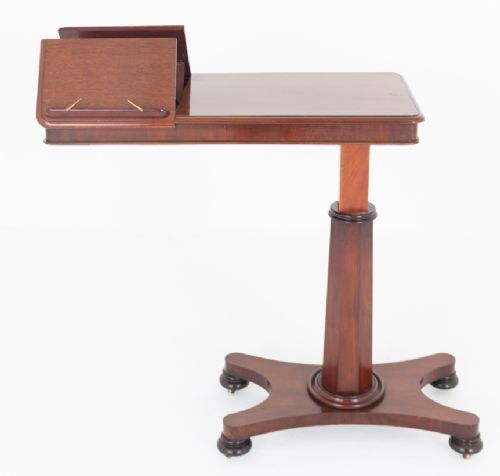


Antique Height Adjustable Table
An antique height adjustable table brings practical nineteenth-century engineering into a modern room, offering adaptable surfaces for reading, music, or display.
Antique Height Adjustable Table
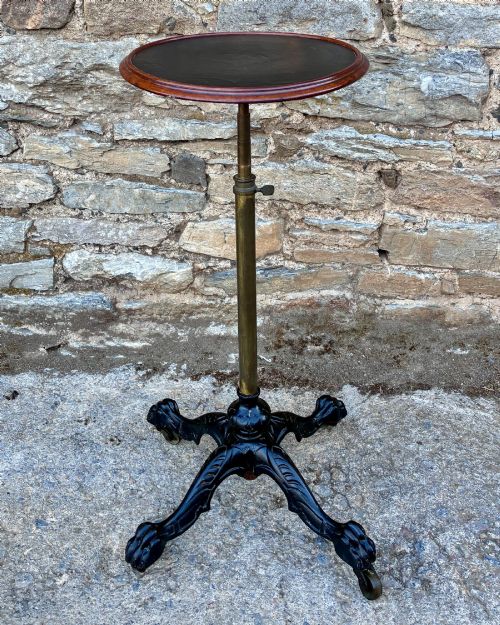
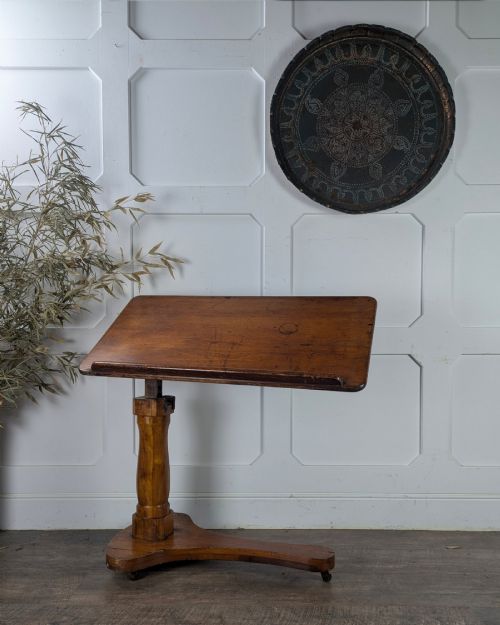
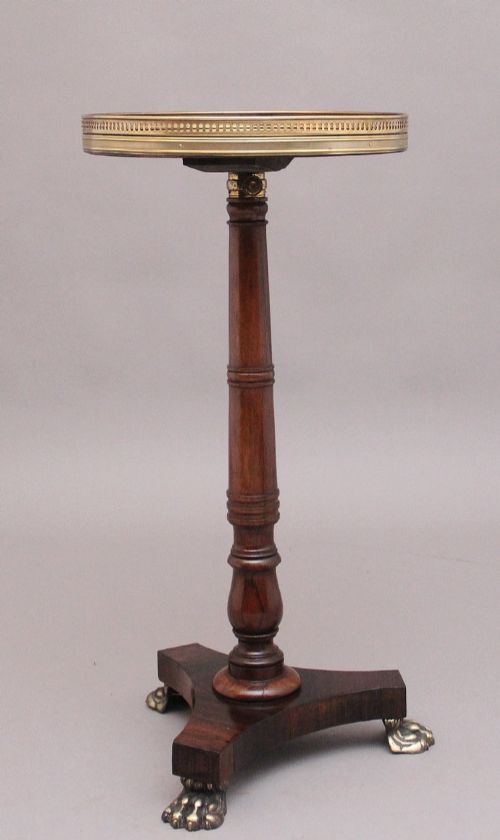
An antique height adjustable table encompasses various forms designed to raise or lower their surfaces for specific domestic tasks. The selection includes reading tables, lecterns, occasional tables, display stands, and architects' tables originating from the Georgian, Victorian, and Edwardian periods.
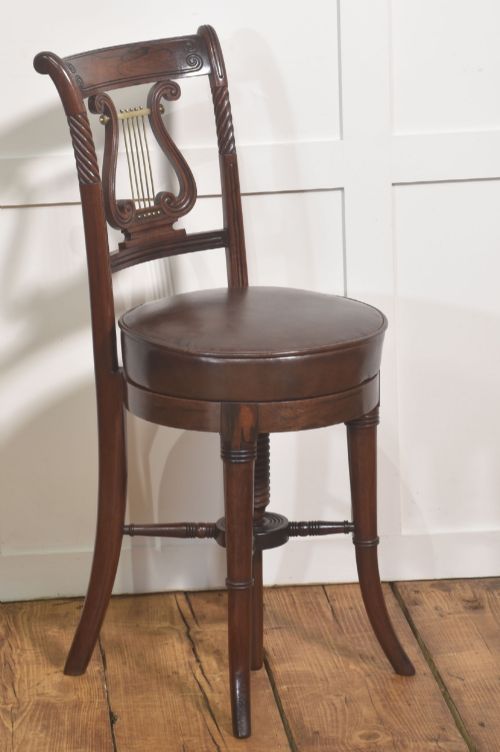
Piano stools, dressing stools, and music seats also frequently appear within this category, utilising similar rise-and-fall mechanisms. These pieces bridge the gap between versatile furniture and mechanical ingenuity.
Mahogany, walnut, and rosewood feature predominantly among the wooden examples, alongside sturdy iron, brass, and pine constructs. Buyers encounter both utilitarian stands and finely upholstered seating designed for the nineteenth-century parlour.
How they were made
Cabinet makers utilised dense hardwoods such as mahogany, walnut, and rosewood for structural durability, pairing them with brass and cast iron mechanisms. Telescopic shafts, screw threads, and rise-and-fall ratchets allowed the surfaces to move smoothly and lock securely into position.
Upholstered items incorporated leather, textile seating, and revolving mechanisms to combine comfort with mechanical adjustment. Brass fittings and patinated iron hardware provided the necessary functional strength for daily manipulation.
Some nineteenth-century makers built height adjustability into dressmakers' dummies, allowing tailors to raise or lower their silent muses.
What varies in quality
The sophistication of the mechanical movement largely determines the standing of a piece, with patented systems and smooth telescopic actions commanding attention. Heavier castings and robust iron or brass components reflect superior initial manufacture.
The selection of timber grain, the tightness of joinery, and the preservation of original leather or upholstery surfaces elevate certain examples above standard utilitarian items.
Carter’s Patent·Tiffany Studios NYC
The Antique Height Adjustable Table Glossary
- Telescopic
- A mechanism allowing one cylindrical shaft to slide inside another to alter height. This construction appears frequently in adjustable stands and reading tables.
- Rise-and-fall
- A mechanical action enabling a seat or tabletop to move vertically. This movement is commonly controlled by a screw mechanism or a rotating top.
- Lectern
- A slanted reading stand designed to hold books or papers at an ergonomic angle. These pieces often feature adjustable heights for standing or seated use.
- Architects table
- A specialised form with a top that tilts and adjusts in height for drafting and drawing. George III and Victorian examples represent traditional iterations of this form.
- Old Sheffield plate
- A composite material made by fusing a thin layer of silver onto a copper base. This technique predates modern electroplating.
Antique Height Adjustable Table: Frequently Asked Questions
How do I operate the height adjustment mechanism?
Most pieces utilise either a threaded screw rod, a sliding telescopic shaft with a thumb screw, or a rotating seat top. Turning or releasing the designated fastener allows the surface to move to the desired position before securing it again.
Older mechanisms require gentle handling to preserve the original metal threads and internal springs. Regular cleaning and light lubrication keep these moving parts functioning properly.
Were these tables used in offices or homes?
The pieces span both domestic and professional settings, with reading tables and music stools residing in Victorian parlours. Architects' tables and lecterns served specific study or work functions.
Their adaptable nature made them suitable for multiple rooms, accommodating different users throughout the household.
How do I care for the moving metal parts?
Keep the brass and iron components clean and free from moisture to prevent corrosion. Avoid harsh chemical cleaners that strip the historic surface patination.
A light application of suitable wax or oil on exposed metal threads helps maintain a smooth mechanical action.
How do I distinguish a Victorian piece from an Edwardian one?
Victorian examples often display heavier rosewood or mahogany timbers with robust turned columns and ornate cast iron bases. Edwardian pieces tend to feature lighter pine or mahogany constructions with simpler lines.
Patent stamps and registration marks can also provide precise chronological markers for dating the construction.