

Tilting Top Table
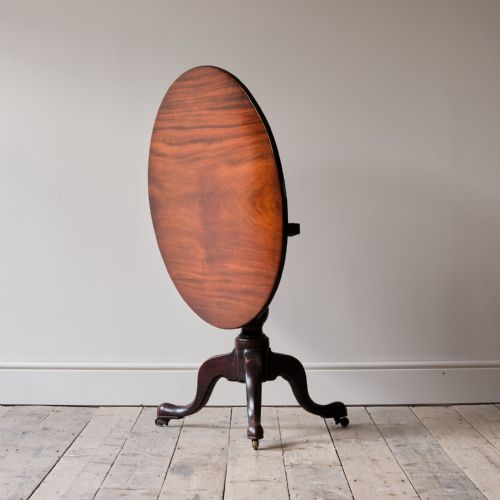
A tilting top table gives you a clever space-saving surface that drops flat when needed and tips upright to tuck against a wall.
Tilting Top Table
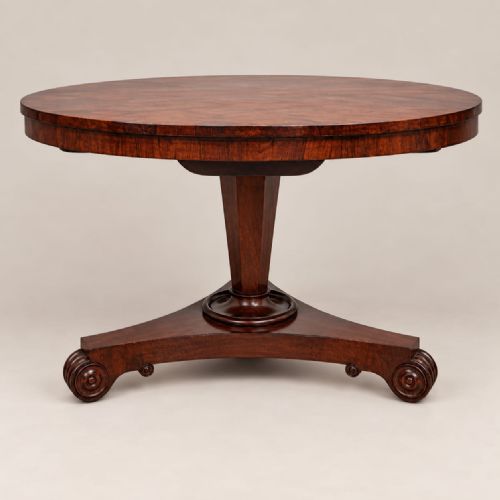
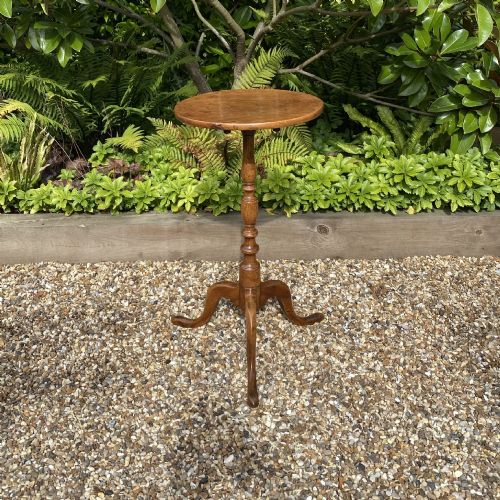
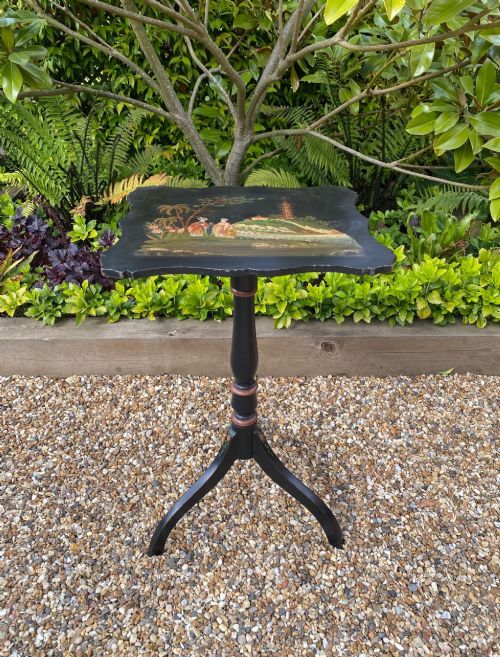
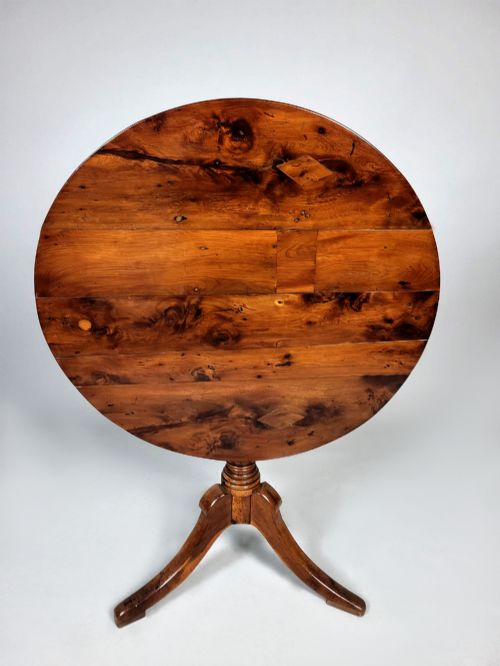
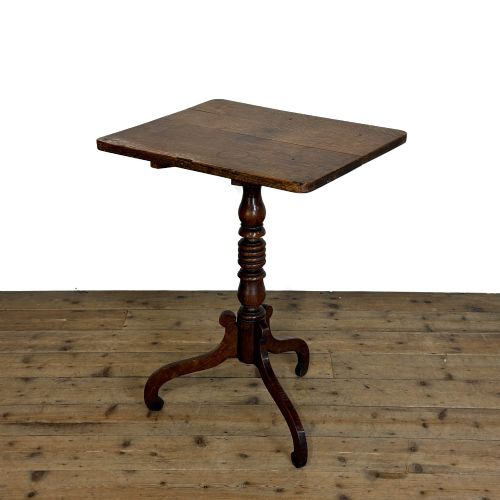
A tilting top table serves as a versatile piece designed with a hinged mechanism that allows the surface to pivot into a vertical position. You encounter these tables across various periods including the Georgian, Regency, and Victorian eras, manifested in forms ranging from small wine tables to large dining and breakfast pieces.
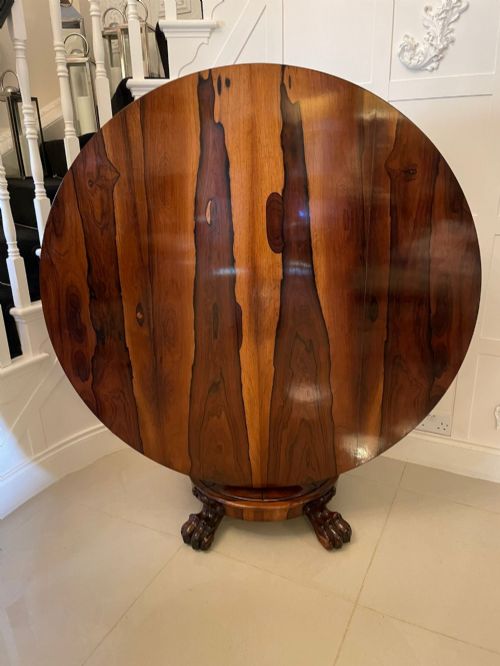
The materials span solid mahogany, rosewood, walnut, and oak, often supported by a central pillar on a tripod base or a robust pedestal. Smaller examples function easily as lamp or occasional tables, while larger versions accommodate several seats for dining.
Georgian and Victorian iterations dominate the selection, showing distinct craftsmanship from the eighteenth and nineteenth centuries alongside later revival pieces. Buyers seek them for their dual character as functional furniture and decorative architectural elements in a room.
Materials and construction
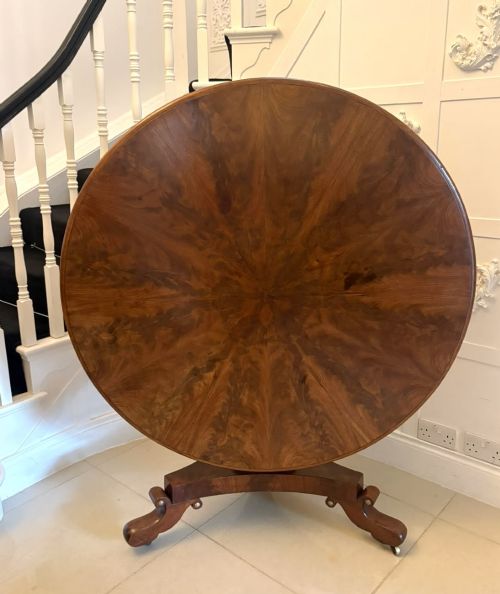
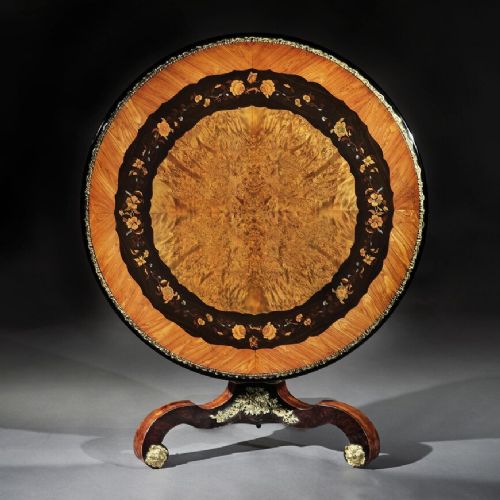
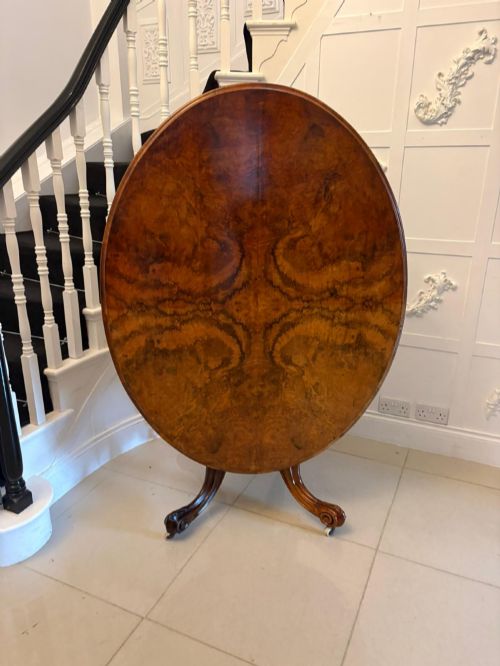
Cabinet makers utilised dense hardwoods like mahogany, rosewood, and walnut, often selecting figured grains for visual depth on the surfaces. Burr walnut and burr oak veneers appear on tabletops, complemented by boxwood inlay and brass hardware.
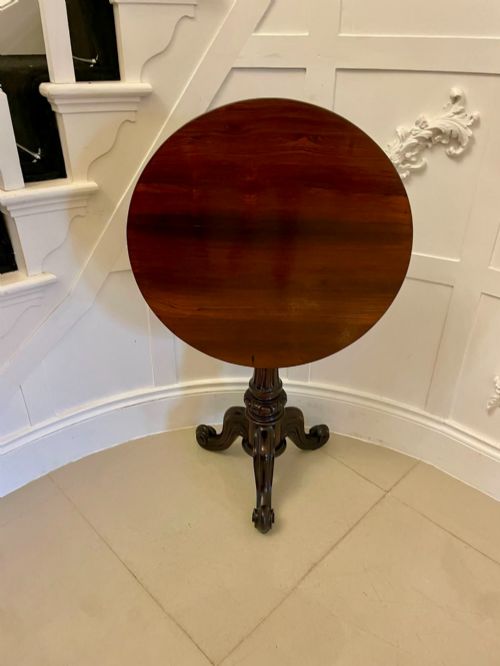
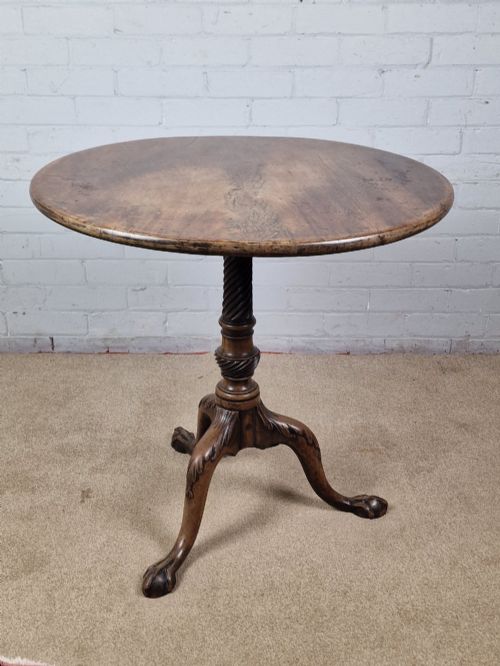
The tilting mechanism relies on a sturdy catch or a birdcage movement fixed to the underside of the top, allowing the surface to rotate and fold. Central pedestals often feature turned columns mounted on three or four shaped legs, sometimes terminating in carved feet.
Victorian households tilted their tables vertically against drawing-room walls like silent wooden sentinels when the floor was needed for dancing.
What separates the best from the rest
Quality rests upon the selection of timber and the precision of the joinery within the tilting mechanism and the pedestal base. Solid timbers with well-figured grain and crisp carving on the knees and feet elevate a piece far above simpler, plain-turned alternatives.
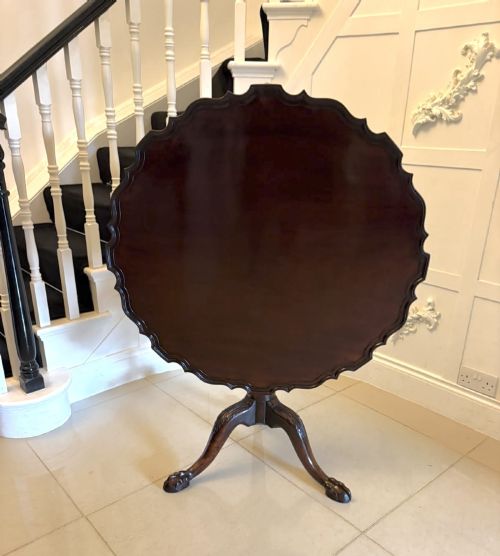
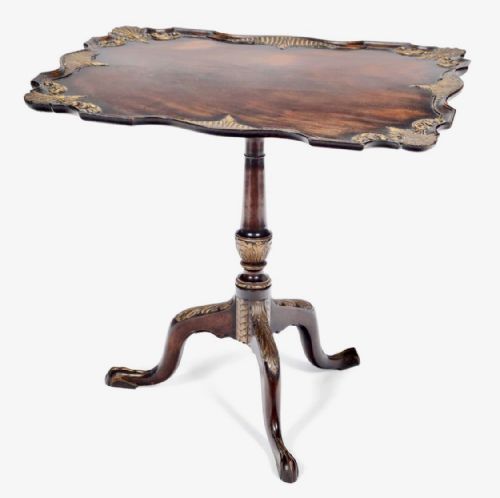
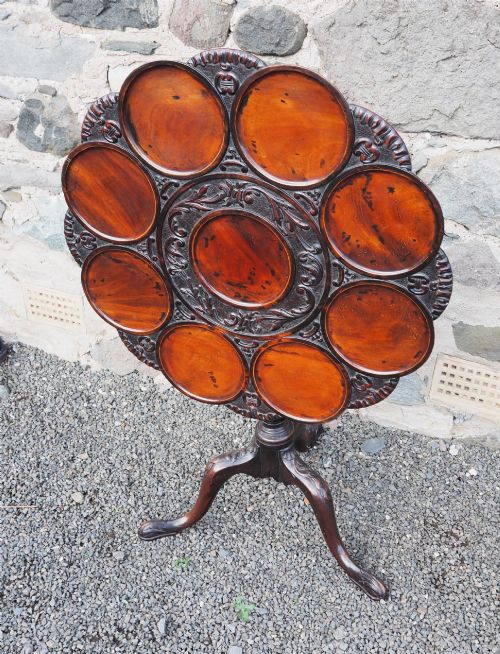
The stability of the pivot action and the trueness of the top when lowered determine the standard of manufacture. Finer examples display meticulous marquetry, boxwood stringing, or pie crust moulding carved directly from solid mahogany rather than applied in sections.
Edward Holmes Baldock·Gillows
The Tilting Top Table Glossary
- Tilt top table
- A table featuring a hinged surface that pivots from horizontal to vertical for storage or movement. This design allows the furniture to stand flat against a wall when not in use.
- Tripod base
- A support structure consisting of three legs radiating from a central pillar. It provides balanced footing on uneven historical floors.
- Pie crust edge
- A raised, scalloped carved rim detail along the circumference of a circular tabletop. This ornamental border resembles the pastry edge of a baked pie.
- Birdcage
- A wooden framework beneath the tabletop that enables the surface both to tilt and to revolve. It uses small turned spindles resembling a cage structure.
- Loo table
- A large round or oval centre table from the Victorian period designed for card games. These tables frequently feature tilting tops for convenient room clearance.
Tilting Top Table: Frequently Asked Questions
How do you operate the tilting mechanism?
Most tables use a wooden catch, a brass button, or a peg system beneath the surface that releases the top from the pillar. Once disengaged, the table pivots smoothly on its hinge.
Older examples featuring a birdcage mechanism also permit the top to rotate horizontally in addition to tilting. Ensure you support the weight of the surface with one hand while releasing the catch.
Were these tables used for dining?
Larger circular versions, often called breakfast tables or loo tables, served meals and social gatherings in domestic rooms. Their tilting design allowed servants to clear floor space quickly after use.
Smaller tripod variations functioned as wine tables, lamp stands, or occasional surfaces for tea and reading. Their portability made them easy to move near a hearth or window.
How do I care for a polished wood surface?
Maintain the timber by applying a traditional beeswax polish sparingly and buffing it with a soft cloth. Avoid placing the table in direct sunlight or near heat sources to prevent the wood from drying out.
Use coasters and mats to protect antique finishes from moisture and heat marks. Lift the table by its central column or frame rather than the edge of the top when moving it.
How can I tell a Georgian table from a Victorian one?
Georgian tables typically exhibit restrained classical proportions, elegant tripod legs, and fine timbers like Cuban mahogany or walnut. Their construction focuses on clean architectural lines and subtle carving.
Victorian pieces often showcase heavier proportions, elaborate turned pedestals, and rich veneers such as burr walnut with marquetry inlay. The introduction of oval tops and rosewood is also characteristic of nineteenth-century production.