


Antique Hare Figurine
These antique hare figurine pieces capture natural form with striking realism, offering collectors a tactile piece of nineteenth century artistry for the mantelpiece.
Antique Hare Figurine
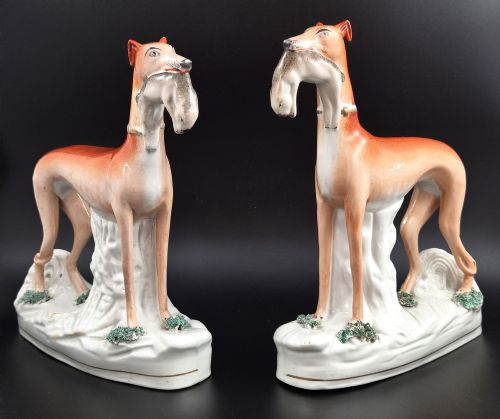
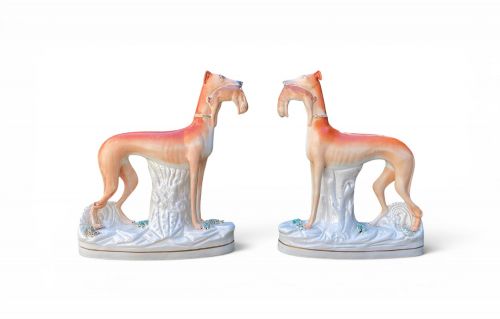
When you search for an antique hare figurine, you are examining sculptural works rendered in bronze, earthenware and wood that span the nineteenth century. The examples available on this page encompass French animalier bronzes, Victorian Staffordshire pottery figures featuring greyhounds with hares, and carved wooden Japanese okimono. These objects bridge decorative art and natural history, recording the animal in alert postures or part of a hunt.
The most prevalent forms on this page are Victorian Staffordshire pottery figures and nineteenth century French bronze sculptures. Staffordshire pairings typically show greyhounds alongside captured hares, reflecting domestic country pottery traditions of England. Meanwhile, French animalier works focus squarely on the hare or rabbit, rendered with acute anatomical observation by named sculptors of the period.
Originating primarily from Britain, France and Japan, these pieces display distinct regional aesthetics from the eighteen fifties onward. The British pottery examples utilise lead glaze and enamel paint, while the French bronzes employ rich patination and gilt work. Japanese wood carvings from around nineteen hundred demonstrate a completely different sculptural sensibility through detailed hand carving.
Quality factors in sculpture
The degree of anatomical precision and texture in the fur separates standard production work from exceptional casting or carving. In bronze animalier pieces, the crispness of the musculature and the subtlety of the patina demonstrate the skill of the founder and artist. Similarly, wood carvings rely on the depth of the chisel work to bring the subject to life.
Completeness and original surface preservation dictate the standing of a piece within its category. On Staffordshire pottery, the integrity of the lead glaze and the vibrancy of the hand painted enamel paint determine visual appeal. For bronzes, an intact signature and an undisturbed original cast surface carry significant weight.
Several Victorian pairs depict greyhounds apparently pausing mid hunt to contemplate their remarkably calm companion hares.
Antoine Louis Barye·Isidore Jules Bonheur·Alfred Dubucand·Barbedienne
The Antique Hare Figurine Glossary
- Animalier
- A nineteenth century artistic movement focused on the realistic portrayal of animals. Sculptors in this tradition studied live specimens in menageries to achieve accuracy.
- Okimono
- A Japanese decorative carving intended for display on a shelf or in a traditional alcove. These small wooden or ivory sculptures often depict animals with great charm.
- Staffordshire pottery
- Earthenware figures produced in the pottery districts of England during the Victorian era. These decorative pieces commonly feature animals and hunting scenes.
- Lead glaze
- A glossy coating applied to earthenware pottery before firing to waterproof the ceramic body and enhance colours. It produces a characteristic shine on nineteenth century figures.
- Gilt bronze
- Metal sculpture coated in a thin layer of gold or gold leaf. This technique protects the underlying bronze and provides a warm, reflective finish.
Antique Hare Figurine: Frequently Asked Questions
What is an animalier hare bronze?
An animalier bronze is a nineteenth century sculptural work focusing on realistic animal forms. These pieces were cast by specialised foundries in France.
Artists observed wildlife directly to capture accurate movement and posture in metal.
How do I date a Staffordshire hare figure?
Staffordshire pottery figures with hares generally date from the mid to late nineteenth century. Clues lie in the type of earthenware body and the application of lead glaze.
Victorian examples often pair the hare with greyhounds in traditional hunting groups.
How should I clean a bronze hare?
Bronze sculptures require minimal intervention to preserve their historic patina. Dust them gently with a soft, dry cloth without using abrasive liquids.
Avoid polishes that can strip the original surface finish applied by the foundry.