



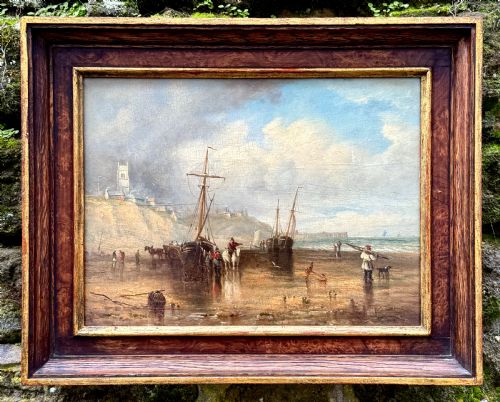
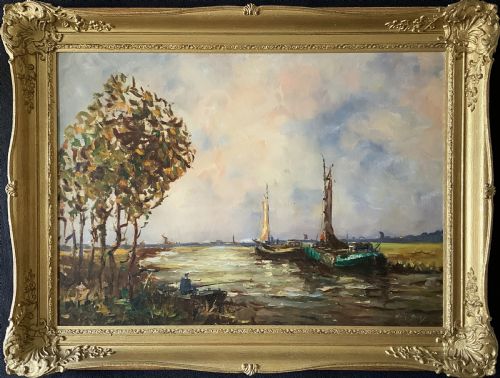
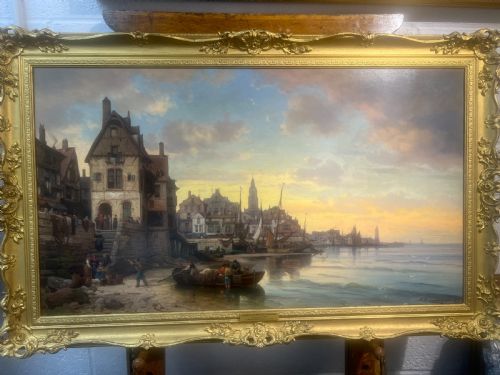
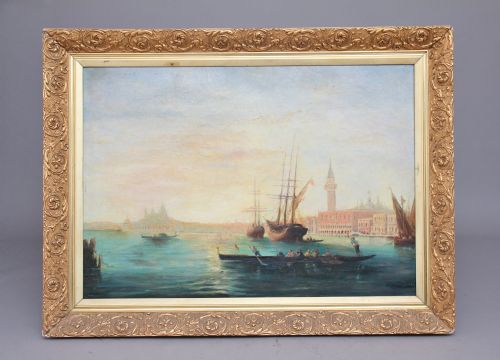
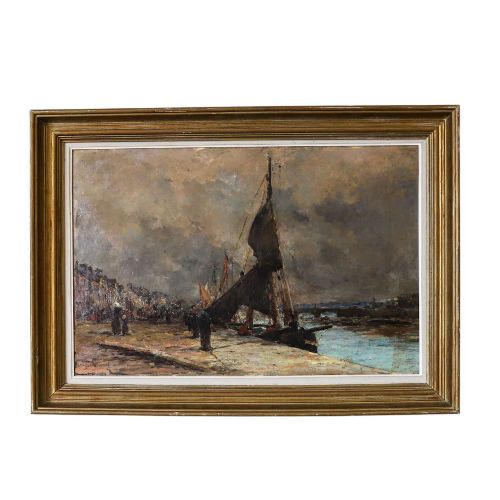
Antique Harbour Seascape
An antique harbour seascape captures the salt air, stone quays, and shifting light of historic maritime ports on canvas and paper.
Antique Harbour Seascape
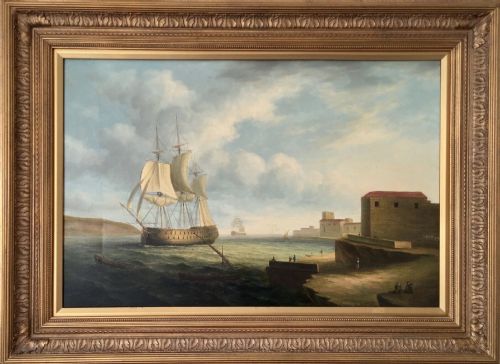
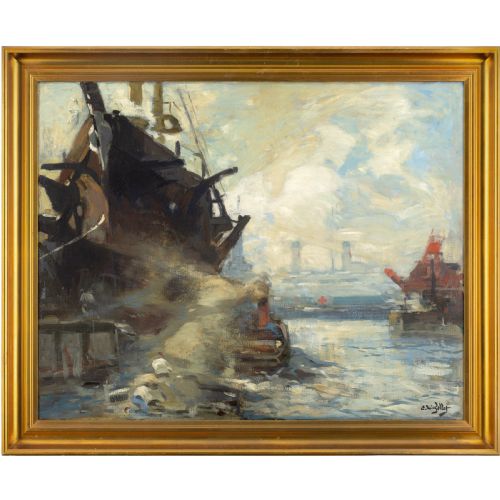
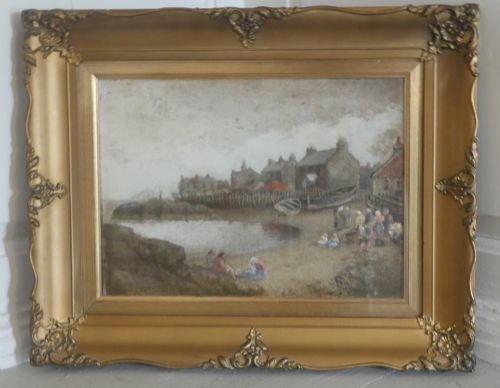
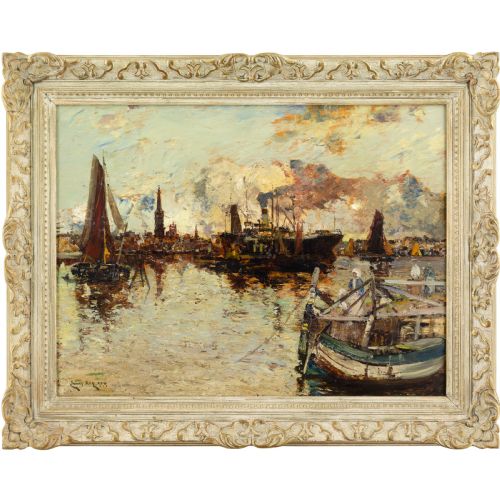
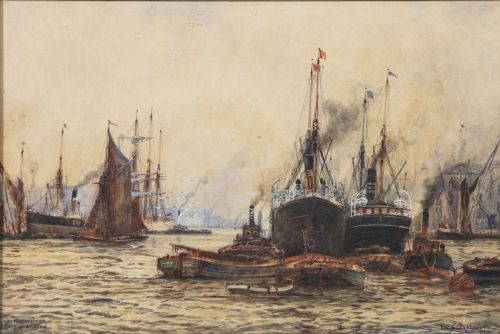
An antique harbour seascape records working ports, tidal inlets, and coastal shipping points from the nineteenth and early twentieth centuries. These paintings and watercolours document specific European locations, from Cornish fishing villages to Mediterranean lagoons.
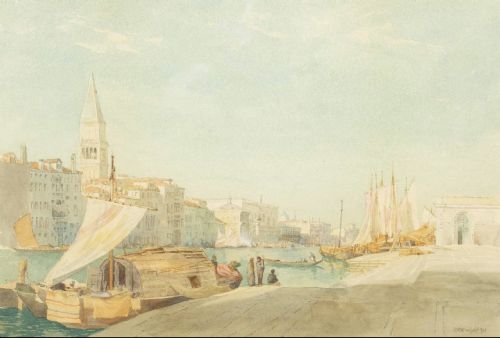
The works appearing on this page range from detailed Victorian watercolours of English harbours to early twentieth-century oil paintings of French and Venetian ports. Common subjects include masted vessels at anchor, fishing luggers returning to stone piers, and quiet canals.
Makers and regional schools across Britain and continental Europe utilised these coastal subjects to explore atmospheric conditions, marine architecture, and the daily rhythm of maritime communities.
How They Were Made
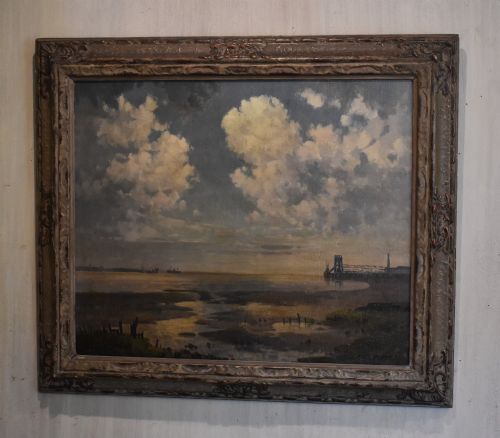
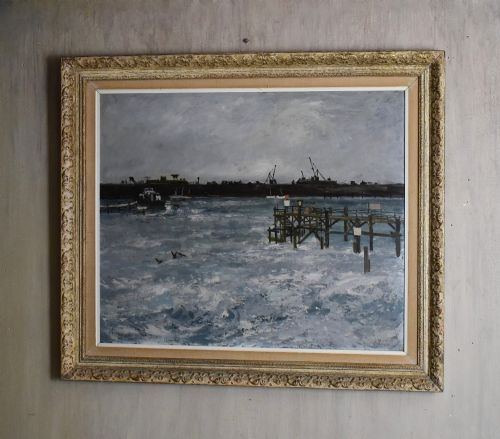
Artists painted these coastal views using oil paint or watercolour applied to canvas, wood panels, paper, or card. Oil on canvas allowed for rich textures in depicting rough seas and clouded skies, while watercolour facilitated rapid studies of light on water.
Gilt wood frames often enclose these artworks, providing a period housing that complements the maritime subject matter. Many works relied on direct observation of port activity, capturing specific vessels, lighthouses, and tidal states.
Several artists clearly braved choppy English Channel squalls just to capture the exact list of a fishing lugger entering harbour.
What Varies in Quality
The standard of a maritime painting depends upon the artist's command of atmospheric light, water movement, and architectural perspective. Stronger examples display confident brushwork and accurate tonal relationships that convey the specific weather and time of day.
Compositional balance distinguishes finer works from routine topographical records, with superior pieces integrating shipping vessels, figures, and harbour walls into a coherent spatial arrangement.
James Hardy·Eugène Louis Gillot·Edward Mills·William Banks Fortescue·James Kay·Frank William Scarbrough·Hector Caffieri·Richard Henry Wright·Thomas Creswick·Willem Bos·Charles Euphraisie Kuasseg·William Matthison·Thomas Hodgson Liddell·Frank Kelsey·Charles William Wyllie·Paul Delvaux·William Edward Webb·Edward Matthew Elliott·Richard Harry Carter·Jean Baptiste Olive·William Lee Hankey·George Turland Goosey·Thomas Bush Hardy·Ernest Dade·Adrian Van Porten
The Antique Harbour Seascape Glossary
- Watercolour
- A painting method where fine pigment is suspended in a water-based solution, typically applied to paper. This medium suits translucent effects of light on sea and sky.
- Oil on Canvas
- A technique utilising pigments bound with drying oils applied to stretched fabric. It provides durability and allows for layered textures in marine painting.
- Panel
- A flat support made of wood used by artists as a ground for oil painting. Wooden panels were common in nineteenth-century and earlier works.
- Gilt Wood
- Wood carved and covered with a thin layer of gold leaf or metallic gilt finish. These frames enhance the visual weight of antique oil paintings.
- Seascape
- A work of art depicting the sea, coastal views, ships, or harbour scenes. These compositions focus on maritime environments and coastal topography.
Antique Harbour Seascape: Frequently Asked Questions
What subjects appear in these paintings?
These artworks depict working harbours, sailing vessels, fishing boats, quayside architecture, and coastal towns across Britain and Europe.
Scenes frequently capture specific ports at low tide, during departures, or under atmospheric evening light.
How do I date a maritime painting?
Dating relies on costume details of figures, ship riggings, architectural elements, and documented artist lifespans. Victorian and Edwardian works often bear signatures, dates, or exhibition labels on the reverse.
Frame styles and canvas stamps also offer helpful chronological indicators for nineteenth-century pieces.
How should I frame these artworks?
Many pieces retain their original gilt wood frames, which complement the period aesthetic and protect the edges of the canvas or paper. If framing a loose work, select a period-appropriate moulding that respects the scale of the seascape.
Ensure watercolours receive proper conservation framing with acid-free mounts and UV-protective glass.
Where were these maritime scenes painted?
Artists painted locations along the English, Scottish, and Welsh coasts, alongside major European ports in France, Italy, Belgium, and the Netherlands. Popular destinations included Whitby, St Ives, Scarborough, Venice, and the River Thames.
Many artists travelled extensively to sketch working harbours and coastal communities directly from life.