

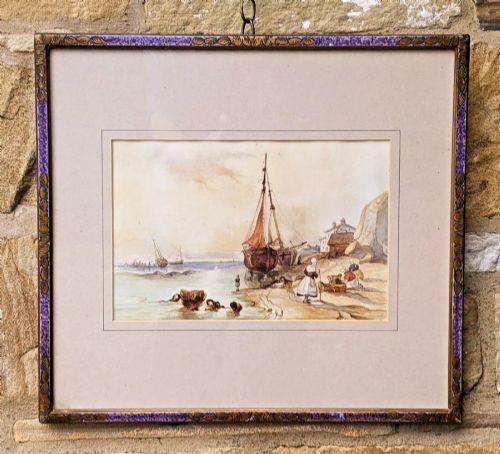


Antique Harbour Boat Picture
An antique harbour boat picture captures the enduring pull of the coast through oil, watercolour, and pastel.
Antique Harbour Boat Picture
An antique harbour boat picture depicts maritime scenes, fishing fleets, and coastal towns across the nineteenth and twentieth centuries. These works range from small Victorian watercolours to large British Impressionist oil paintings.
Most examples found here date from the Victorian period through to the mid-twentieth century, capturing working ports, moored sailing yachts, and quiet estuaries in paint or paper.
Materials and methods
Artists painted these scenes using oil on canvas, oil on board, and watercolour pigment on paper, often incorporating gouache for highlights. Canvases are stretched on wooden frames and frequently housed within giltwood surrounds.
Pastel drawings and mixed media works also appear, showing coastal towns like Polperro and Whitby through layered strokes of colour.
The selection includes works spanning the 1800s through to the 1950s, executed in oil, watercolour, and pastel.
Qualities of distinction
Quality rests upon the artist's handling of light upon water and the structural accuracy of the vessels depicted. Stronger works demonstrate a confident command of atmosphere, perspective, and tone rather than mere documentary recording.
The integration of the original frame adds considerable character, particularly where giltwood mouldings complement the palette of the painting.
William Lee Hankey·William Tuck·Fred Waugh·T.S. Wallis·Ernest F. Hill·Alfred Henry Vickers·Edward Henry Holder·Robert Anderson·Owen Bowen·Micheal Matthews·Frank Myers Boggs·Robert Leslie Howey·Fred Dade·Frank William Scarbrough·John William Gilroy
The Antique Harbour Boat Picture Glossary
- Watercolour
- A painting method where fine pigment is suspended in a water-based solution, traditionally applied to absorbent paper. It allows for translucent washes and delicate atmospheric effects.
- Oil on Canvas
- A technique utilising pigments bound in drying oil applied to a woven fabric surface stretched across a wooden frame. This medium permits rich textures and deep tonal ranges.
- Giltwood
- Wood carved and covered with a thin layer of gold leaf or metallic gilt powder. It is commonly found on traditional picture frames from the nineteenth century.
- Impressionism
- An art style focused on capturing the visual impression of a moment, paying particular attention to the shifting effects of light and colour.
Antique Harbour Boat Picture: Frequently Asked Questions
How do I date a harbour painting?
Dating relies on stylistic clues, costume details of any figures present, and the type of vessel shown in the composition. Framing methods and stretcher construction also provide clear chronological indicators.
Signatures, exhibition labels on the reverse, and artist biographical dates help narrow the creation period to a specific decade or movement.
Are watercolours as durable as oils?
Watercolour works require protection from direct sunlight and moisture to prevent fading and paper degradation. Proper framing behind glass with acid-free mounts ensures their preservation.
Oil paintings on canvas are generally more resilient to environmental factors, though they still benefit from stable indoor humidity and temperature.
Where should I hang a marine painting?
Select a wall with indirect light to protect pigments from ultraviolet damage over time. Positioning the piece at eye level allows the fine details of the harbour and shipping to be appreciated properly.
Keep paintings away from heat sources like radiators to prevent the wood and canvas from warping or cracking.
How do I identify the specific port shown?
Artists often inscribed the location on the reverse of the canvas, on the mount, or directly within the lower corners of the composition. Landmarks, church spires, and distinctive coastal topography offer further clues.
Local history records and shipping registers from the period can help confirm the exact harbour depicted.