




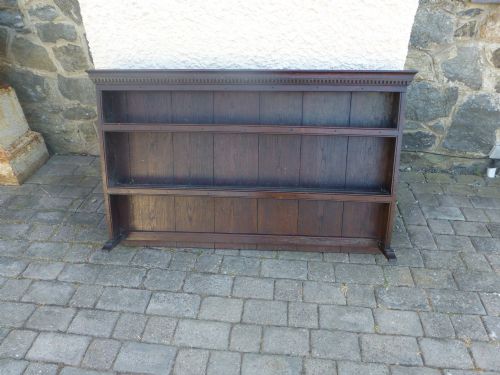
Antique Hanging Display Rack
An antique hanging display rack lifts domestic storage onto the wall, turning everyday kitchen plates, books and small collections into timber-framed room features.
Antique Hanging Display Rack
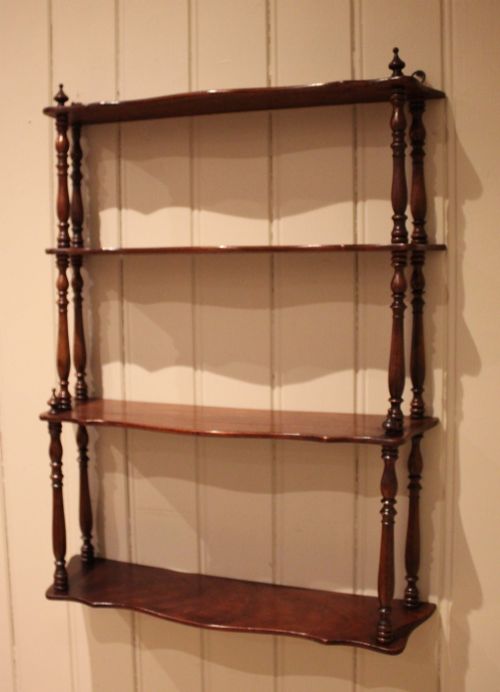
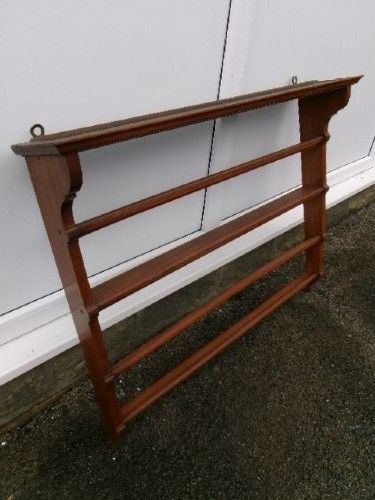
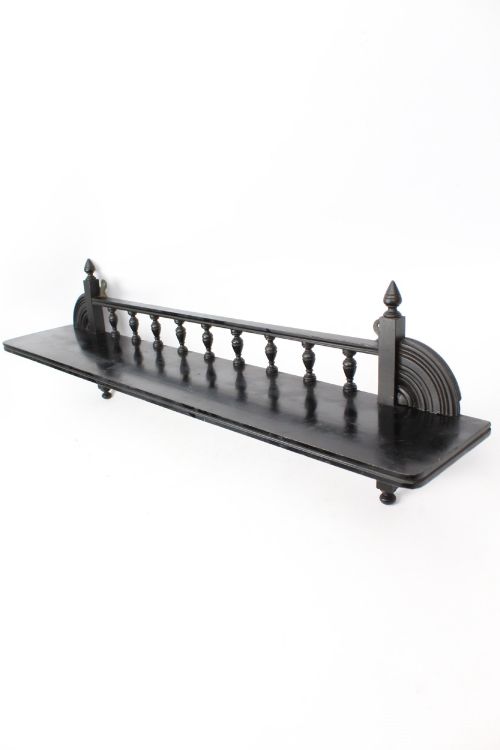
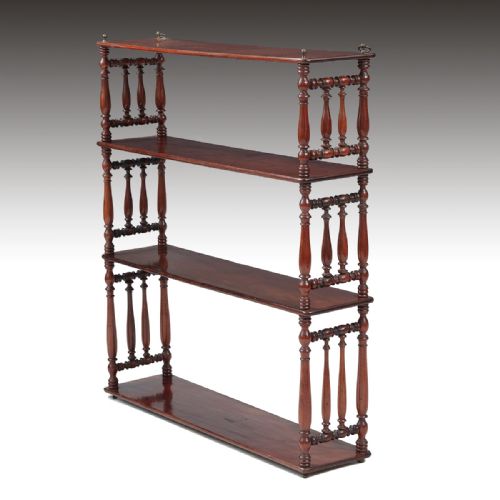
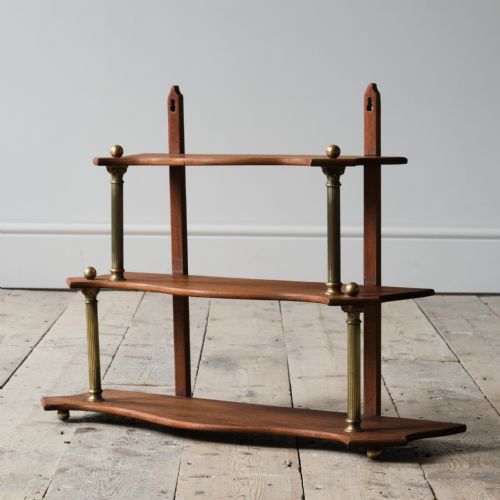
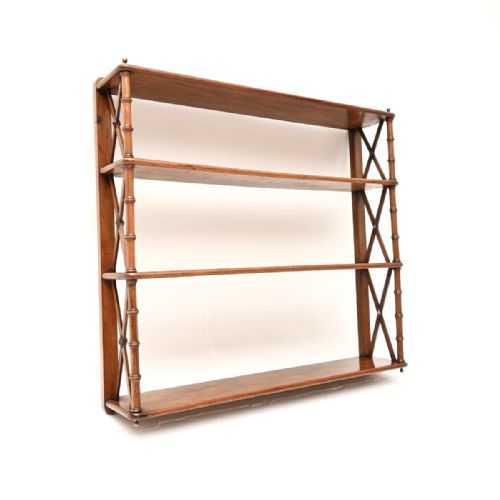
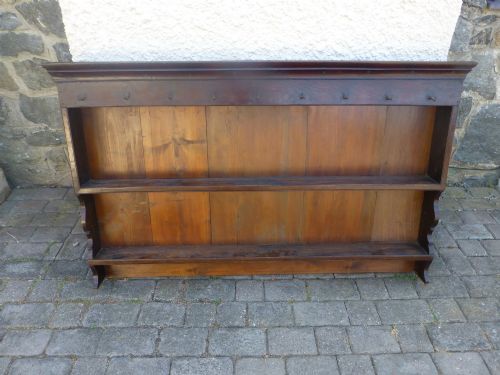
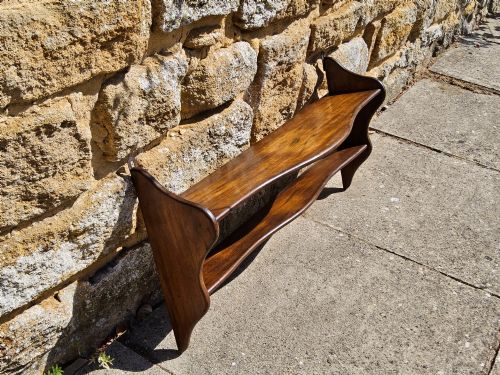
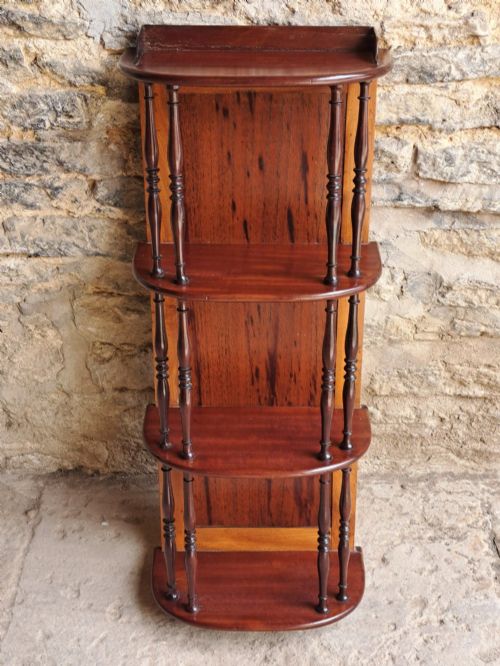
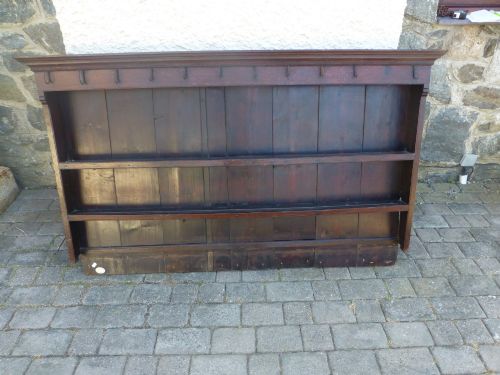
When searching for an antique hanging display rack, buyers encounter a utilitarian domestic group spanning wall shelves, plate racks, and small bookcases designed to mount securely above floor furniture. The pieces seen on this page range from compact nineteenth-century mahogany bookshelves and walnut wall units to substantial eighteenth-century oak delft racks intended for kitchen display.
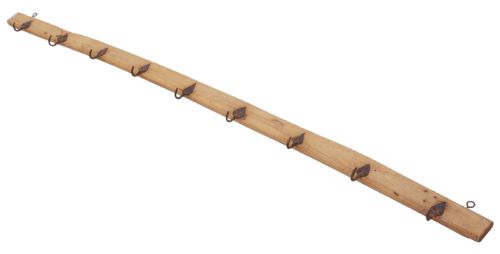
The majority of surviving examples date from the Georgian, Victorian, and Edwardian eras, utilising regional timbers such as oak, mahogany, and pine. Common forms include tiered open shelves, wall hooks, and specialised spoon or plate racks that attach directly to structural wall fixings.
Materials and construction
Cabinetmakers built these wall fixtures primarily in solid hardwoods like mahogany and oak, supplemented by walnut, cherry wood, pine, and occasional sections of brass or wrought iron for hanging loops and gallery rails. Construction methods rely on traditional dovetail joints for shelf assemblies and rebated backs to ensure structural stability under load.
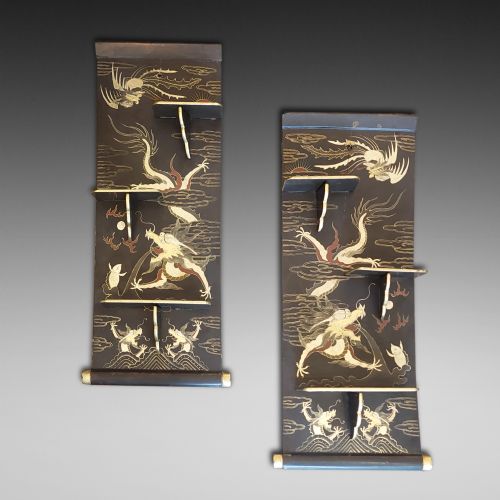
Surface finishes vary according to domestic function, ranging from polished mahogany and satin birch to practical painted wood schemes, hand-painted decorative accents, and traditional marquetry inlay.
Antique Hanging Display Rack Retail Price Guide 2026
Typical asking prices for hanging display rack among the pieces listed under this phrase on Sellingantiques today, from the lower quarter to the upper quarter. They describe what is for sale here now, not the wider market.
Several racks retain original seventeenth-century kitchen game hooks, ready for small game or very determined bunches of dried herbs.
Evaluating quality and proportion
Quality in these wall units rests on the selection of timber grain, the crispness of fretwork or carved details, and the integrity of the original hanging brackets. Superior examples demonstrate thoughtful architectural proportions, such as graduated tier depths and well-balanced side panels, rather than purely utilitarian assembly.
The degree of surface preservation also dictates standing, with untouched patinated finishes on eighteenth-century oak and original painted schemes holding greater architectural presence than later stripped surfaces.
The Antique Hanging Display Rack Glossary
- Delft rack
- A wall-mounted timber shelving unit traditionally designed with narrow grooves to display delftware plates upright against a panelled back.
- Whatnot
- A multi-tiered open shelving piece designed for displaying small ornaments and books, often adapted for wall hanging in Edwardian interiors.
- Fretwork
- Openwork ornamentation cut into thin timber boards using a fret saw, frequently seen along the crests of Chippendale-style wall shelves.
- Marquetry
- The art of applying decorative veneer pieces in contrasting wood grains to form geometric or pictorial patterns on the face of the shelving unit.
- Trefid
- An early style of spoon featuring a flat, three-lobed terminal handle, commonly housed within antique spoon racks from the eighteenth century.
Antique Hanging Display Rack: Frequently Asked Questions
How do I hang a heavy antique wall shelf safely?
Heavy timber shelves require direct fixing into structural wall studs or masonry using appropriate wall anchors suited to the weight of the hardwood.
Most period hanging racks feature reinforced back battens or integrated brass mounting loops designed to distribute the load evenly across the wall surface.
Were plate racks originally meant for kitchens?
Eighteenth and nineteenth-century plate racks served primarily as functional kitchen storage for earthenware and pewter plates used in daily meals.
Over time, homeowners moved these open display units into dining rooms and parlours to showcase decorative ceramics rather than working tableware.
How can I tell a Georgian plate rack from a Victorian one?
Georgian plate racks typically utilise heavy oak construction with simple pegged joints and deep plate grooves suited to thick earthenware.
Victorian and Edwardian iterations frequently employ mahogany or walnut with finer mouldings, fretwork friezes, and lighter brackets intended for ornamental display.
Can these shelves hold heavy books?
Smaller nineteenth-century mahogany and walnut wall shelves function well for lightweight volumes, but depth and bracket strength determine capacity.
Checking the original depth of the shelves and the attachment points ensures the timber can support the downward pressure of stacked books without strain.