


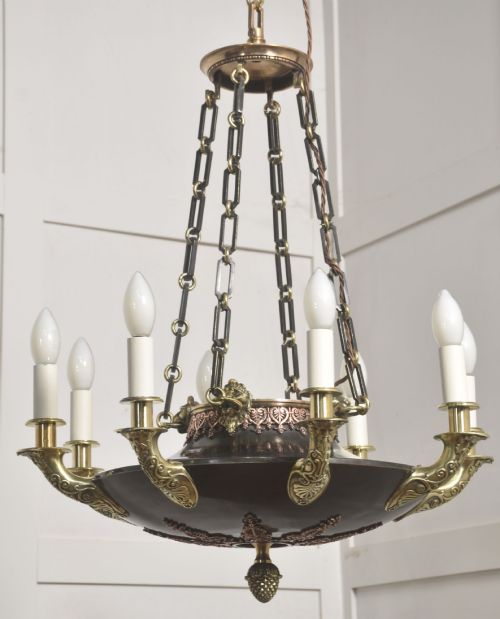
Antique Hanging Ceiling Lights
Antique hanging ceiling lights illuminate rooms with period character, offering everything from brass lanterns to multi-branch crystal chandeliers.
Antique Hanging Ceiling Lights
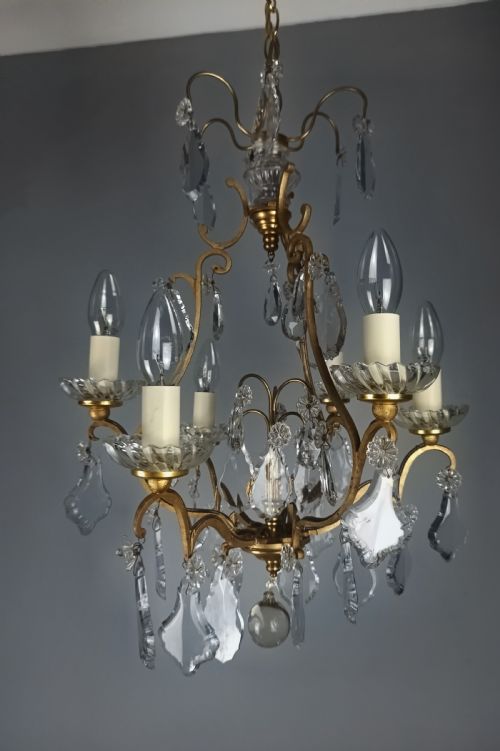
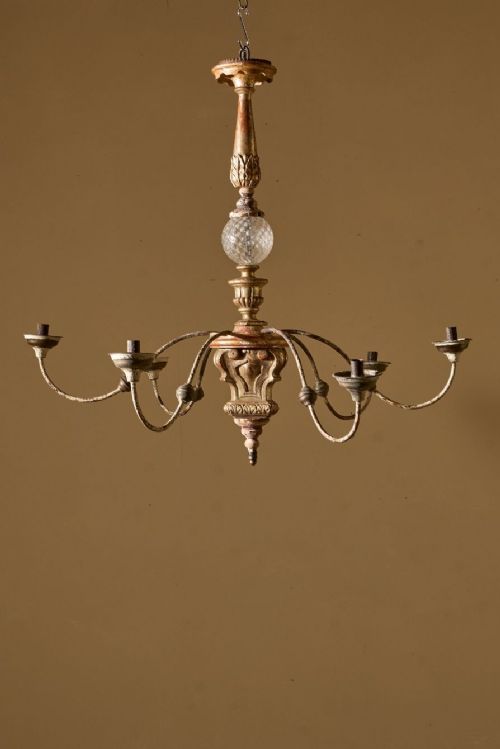
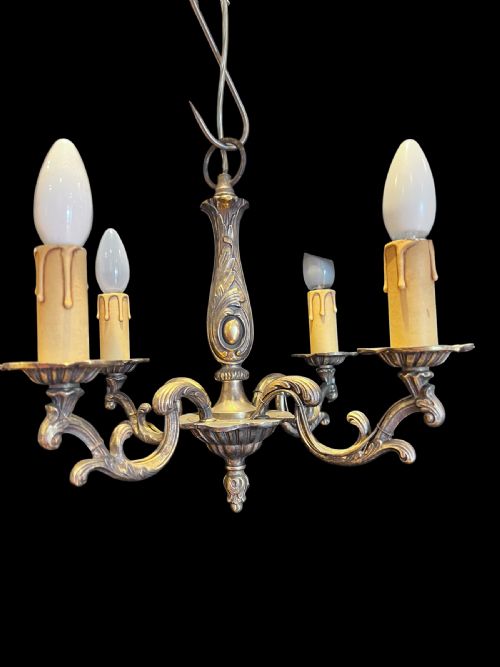
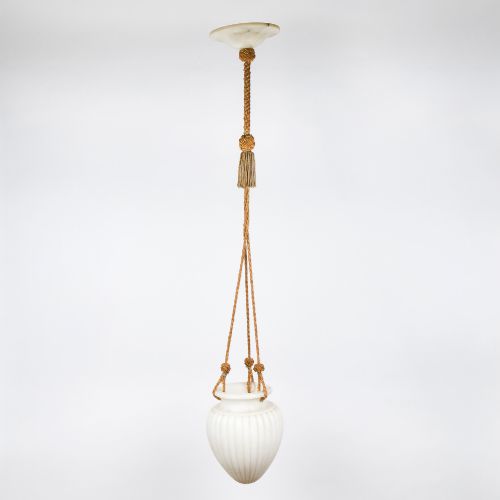
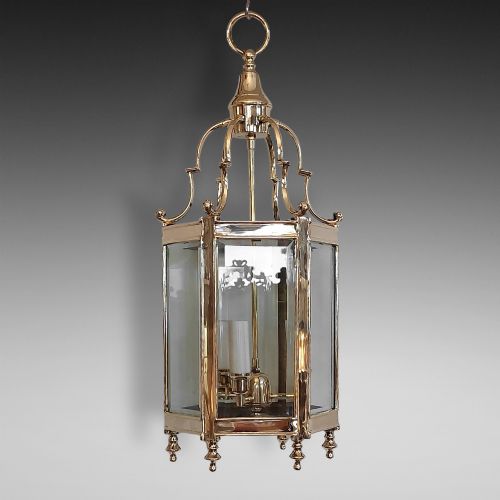
When searching for antique hanging ceiling lights, buyers encounter a diverse range of fixtures designed to suspend from overhead points. These include chandeliers, pendant lights, hall lanterns, and plafonniers originating from various nineteenth and twentieth-century periods.
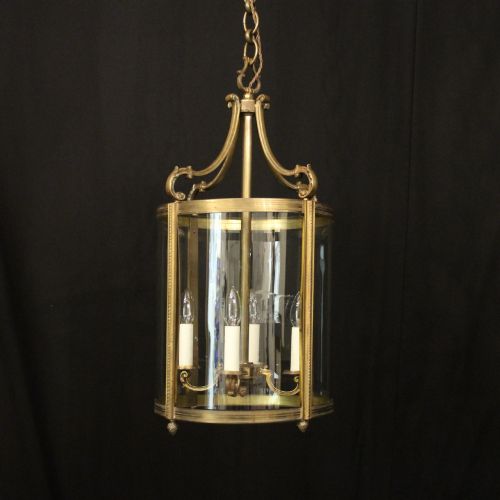
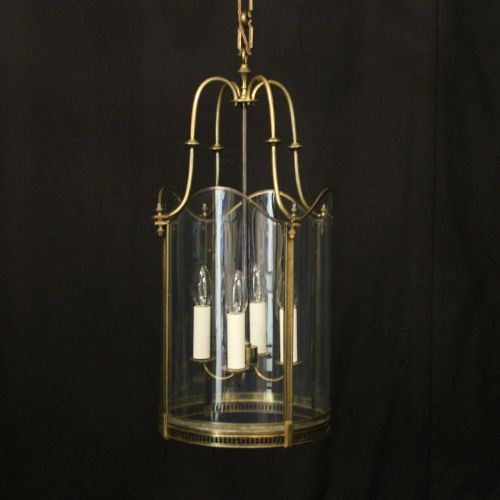
Lanterns specifically designed for halls and vestibules appear frequently alongside domestic living area fixtures. Metalwork ranges from simple copper and cast brass to elaborate gilt bronze and silver-gilt finishes.
How they were made
Construction relies heavily on metals such as brass, copper, and bronze, often shaped through casting, spinning, or hand-forging framework. Gilt finishes and applied patinations enhance the metallic surfaces.
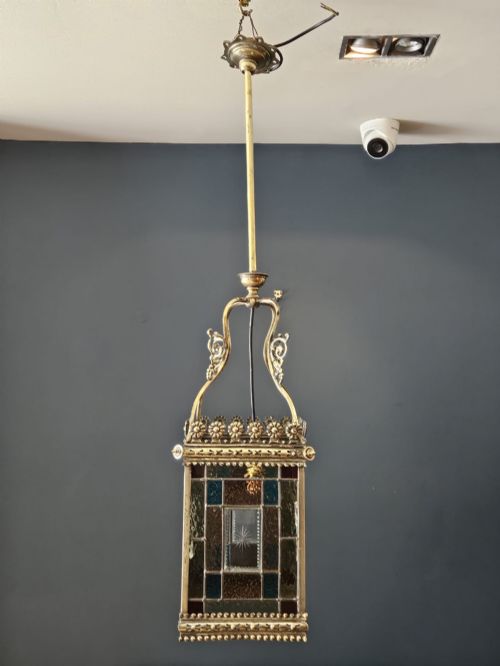
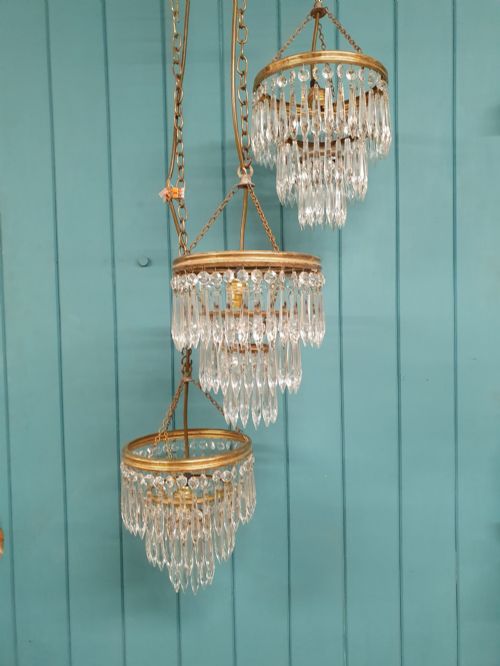
Glass components utilise techniques including leaded construction, bevel cutting, etching, and mould-blowing to create panels, globes, and decorative shades. Crystal elements are typically cut and polished before being hung with wire pins.
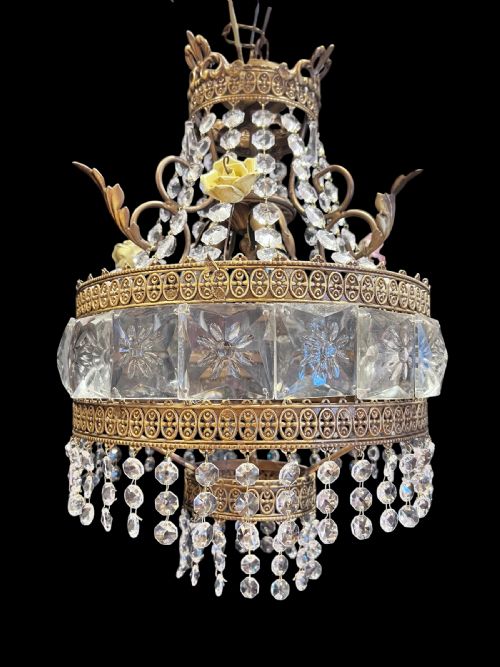
Specialised decorative details incorporate porcelain flowers, ceramic elements, and toleware components. Frames assemble via mechanical joints, screws, and soldered connections suited to supporting suspended weight.
Some fixtures incorporate delicate porcelain flowers, ensuring perpetual bloom regardless of the season.
What varies in quality
The distinction between tiers rests upon the weight of the metal casting and the crispness of chased or moulded detail. Heavy gilt bronze and substantial brass assemblies demonstrate greater durability and refined design execution than lighter sheet metal counterparts.
Glass quality depends on the clarity of cut crystal, the absence of bubbles in blown shades, and the precision of bevelled leaded glass panels. Hand-etched motifs and integrated porcelain elements further elevate the execution.
Cohesion of style and historical integrity define the upper tier, where decorative schemes remain unified across frames, suspension chains, and ceiling caps. Original finishes and intact period glass add substantive character.
Émile-Jacques Ruhlmann·Voysey
The Antique Hanging Ceiling Lights Glossary
- Chandelier
- A branched ornamental light fixture suspended from the ceiling. These pieces hold multiple bulbs or candles arranged across arms.
- Plafonnier
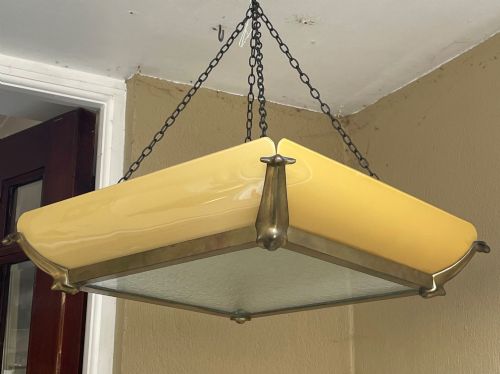
- A bowl-shaped ceiling light mounted close to the ceiling or hung on a short drop. This form often utilises frosted or moulded glass.
- Lustre
- A cut crystal pendant or drop hung from a chandelier to reflect light. Lustres catch and disperse illumination throughout a room.
- Toleware
- Painted or lacquered sheet metal items used for decorative light bodies. This technique allows for colourful floral and surface ornamentation.
- Mazarin
- A specific historic style of French chandelier frame configuration. These fixtures often employ structured bronze armatures.
- Lyre
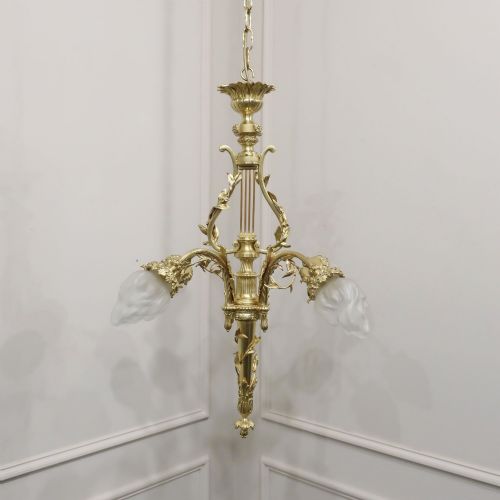
- A decorative motif shaped like an ancient stringed musical instrument. This symmetrical form frequently appears on French Neoclassical style brass and bronze frames.
Antique Hanging Ceiling Lights: Frequently Asked Questions
How do I hang a heavy ceiling light?
Suspension requires securing the fixture directly to a ceiling joist or an adequate structural support box using appropriate fixings. Professional electrical installation ensures the weight is safely borne by the mounting hardware.
Chains and cords can be adjusted for ceiling height during fitting. Checking the internal wiring is essential before connecting to mains power.
How do I clean crystal lustres?
Crystal parts can be cleaned in place using a specialist spray cleaner and a soft cloth to remove dust safely. Allowing the solution to drip dry onto a protective sheet underneath protects lower surfaces.
For a deeper clean, individual drops can be unpinned and washed in lukewarm soapy water. Drying them thoroughly with a lint-free cloth restores their brilliance before rehanging.
Where were hall lanterns traditionally placed?
Hall lanterns were originally positioned in entrance vestibules, corridors, and stairwells to greet visitors and illuminate transitional spaces. Their enclosed glass sides protected candle or gas flames from drafts.
Today, these fixtures function effectively in narrow spaces where a low profile is desirable. Their directional downward light suits entryways and passages.