
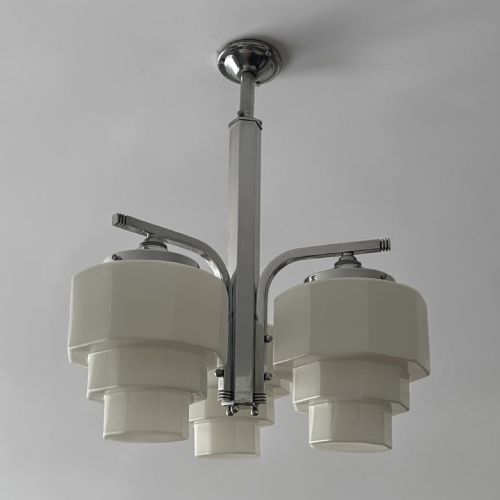
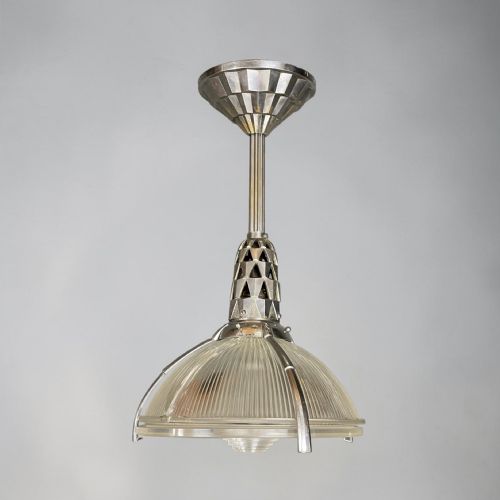

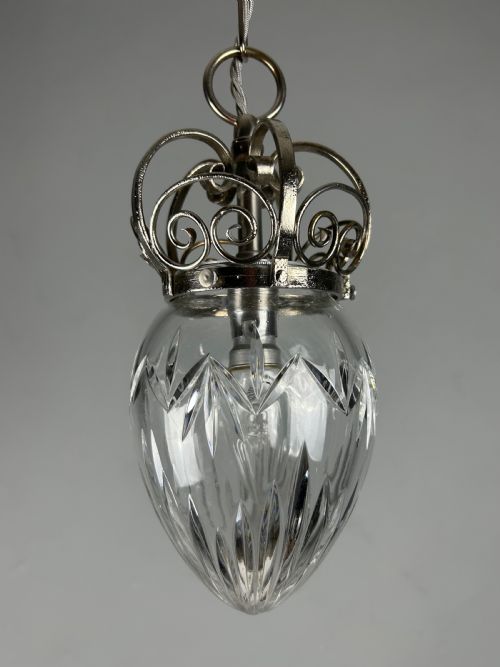


Silver Glass Ceiling Shade
These silver glass ceiling shade pieces bring period illumination to interiors, offering homeowners authentic early twentieth-century lighting.
Silver Glass Ceiling Shade
A silver glass ceiling shade provides functional overhead illumination through suspended fixtures featuring reflective glass components and metallic mounts. When searching for a silver glass ceiling shade, buyers encounter pendant lights, chandeliers, and hall lanterns dating from the Edwardian era through the nineteen-thirties.
The selections on this page span the nineteen-hundreds to nineteen-thirty, capturing distinct design shifts from Edwardian refinement to Art Deco geometrics. Pendant lights and single-light hall lanterns dominate the available forms, utilising mercury glass and cut glass paired with silver plate, chrome, or brass hardware.
How they were made
The construction of these fixtures relies on glass-shaping techniques such as moulding and hand-cutting, which create prismatic effects and reflective surfaces. Mercury glass interior silvering produces a mirrored appearance that diffuses light differently than transparent or cut varieties.
Metal components utilise silver plate, chrome, nickel-plated brass, and unplated brass to form the structural frames and suspension hardware. These metals are assembled alongside glass shades through collars and chains designed to support the weight of the pendant.
Listings feature four distinct periods: nineteen hundred, Edwardian, nineteen-twenty, and nineteen-thirty.
What varies in quality
Quality in these fixtures rests on the depth of the glass cutting and the integrity of the silvering on mercury glass shades. Heavier metal mountings in brass or silver plate demonstrate superior material selection compared to lighter plated alternatives.
The refinement of period design attributes, such as the attribution to notable makers or specific stylistic revivals like Italian Rococo, elevates certain pieces above standard utility lighting. Original fittings and surviving silver-plated surfaces further distinguish the finest examples.
F And C Osler
The Silver Glass Ceiling Shade Glossary
- Mercury glass
- A blown double-walled glass filled with a silvering liquid and sealed, producing a mirrored reflective finish. This material gained popularity in the nineteenth and early twentieth centuries for tableware and decorative lighting.
- Silver plate
- A base metal, often copper or brass, coated with a thin layer of pure silver. It provides the visual appeal of solid silver at a different weight and cost.
- Edwardian
- The period spanning the reign of King Edward VII from nineteen hundred to nineteen ten, noted for lighter and more refined domestic interiors. Lighting from this era often combines cut glass with silver-plated mounts.
- Art Deco
- A design style emerging in the nineteen-twenties characterised by sleek geometric shapes, streamlined forms, and modern industrial metals like chrome. Fixtures from this movement favor functional elegance.
- Pendant light
- A single light fixture suspended from the ceiling by a chain, cord, or metal rod. These fixtures serve as task or ambient illumination in hallways and rooms.
Silver Glass Ceiling Shade: Frequently Asked Questions
What periods do these ceiling fixtures represent?
The available lighting spans from nineteen hundred through the nineteen-thirties, encompassing Edwardian and Art Deco aesthetics. These eras reflect shifting tastes from ornate cut glass designs to streamlined chrome and glass forms.
Buyers will find that nineteen-twenty and nineteen-thirty dates are common, representing the transition into modernist domestic design.
Are these lights suitable for modern electrical systems?
Many period fixtures are rewired to meet contemporary safety standards while retaining their original frames and glass shades. Rewiring ensures that vintage ceiling lights can be safely installed in modern homes.
Buyers should examine listing details to confirm whether modern wiring has been fitted.
What metal finishes appear on these fixtures?
The metal components utilise silver plate, chrome, brass, and nickel-plated metal. These materials form the canopies, chains, and galleries holding the glass shades.
Edwardian pieces often feature silver plate or brass, while nineteen-thirties examples frequently incorporate chrome.