
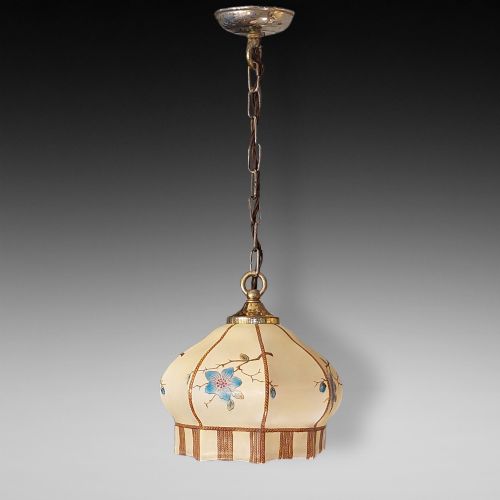


1920s Glass Hanging Light
A 1920s glass hanging light brings genuine interwar character to a room, offering warm diffusion and striking geometric forms.
1920s Glass Hanging Light
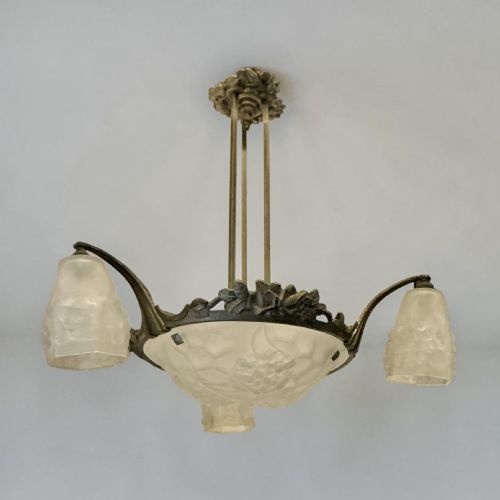
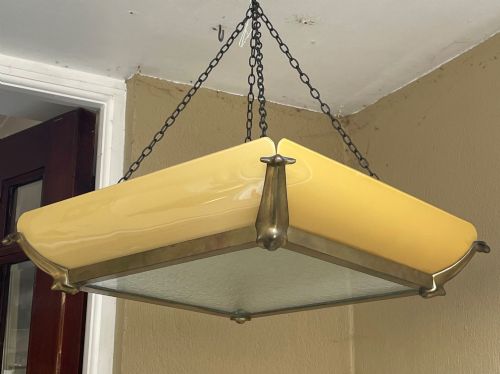
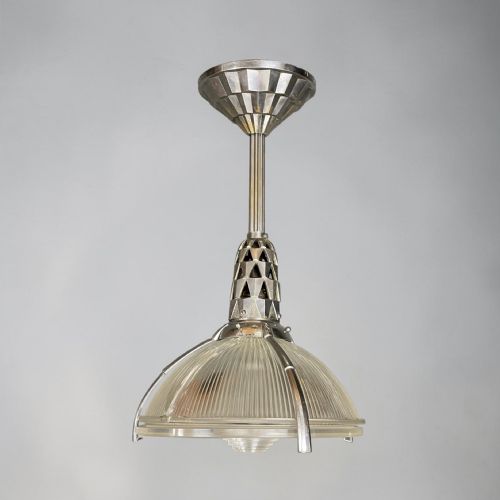
A 1920s glass hanging light encompasses pendant lights, ceiling lights, hall lanterns, and chandeliers designed during the interwar period. These fixtures illuminate spaces while serving as architectural centrepieces through distinctive period forms.
Buyers encounter styles ranging from streamlined Art Deco and Art Nouveau to Moroccan Revival, Gothic Revival, and Interwar Classic designs. The most common examples on this page are single pendant lights and ceiling lights featuring moulded or frosted glass shades.
Origins vary across English, American, and continental workshops, reflecting international taste between 1920 and 1930. The selection balances utilitarian hall lighting with grander domestic and ballroom chandeliers.
Materials and construction
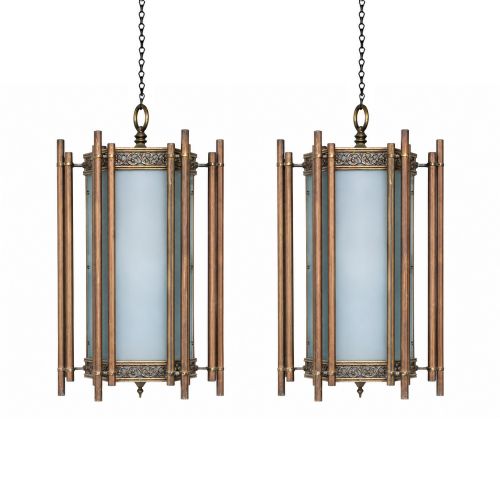
Makers combined glass with robust metals including brass, copper, nickel plated metal, and wrought iron to support heavier shades and lanterns. Blacksmith made cast iron and forged components provide structural strength for larger hall lanterns.
Shades utilise moulded glass, frosted glass, hand painted glass, and mercury mirrored glass to manipulate light output and create soft interior illumination. Mercury glass finishes provide reflective, silvery depths that catch ambient room light.
One forty-one light ballroom chandelier proves that interwar hosts took their ceiling illumination exceptionally seriously.
Assessing quality and craftsmanship
Quality rests in the weight and clarity of the glass, alongside the precision of metalwork found in brass frames and wrought iron mounts. Heavy moulded shades and hand painted details distinguish finer fixtures from standard production pieces.
The integrity of original metal finishes, whether polished copper, nickel, or blackened iron, dictates the visual success of the piece. Pair configurations and monumental scale elevate the desirability of specific lanterns and pendants.
Émile-Jacques Ruhlmann·Schneider
The 1920s Glass Hanging Light Glossary
- Pendant light
- A single light fixture suspended from the ceiling by a chain, cord, or metal rod. These units focus illumination downwards onto specific areas.
- Mercury glass
- Double walled blown glass coated with a silvering mixture inside to create a mirror-like finish. It produces a soft, reflective glow when illuminated.
- Hall lantern
- An enclosed ceiling fixture designed specifically for narrow entrance spaces and corridors. They often feature protective metal frames around glass panels.
- Moulded glass
- Glass shaped by being pressed into a metal or wooden form while hot. This technique allowed makers to produce repeating geometric patterns typical of the era.
- Art Deco
- A design style characterised by sleek geometric shapes, stylised motifs, and modern industrial materials. It dominated decorative arts throughout the interwar years.
1920s Glass Hanging Light: Frequently Asked Questions
How do I hang a heavy glass lantern?
Heavy glass and iron lanterns require secure joist fixings and appropriate ceiling hooks to bear the weight safely. Professional installation ensures the electrical wiring and suspension chain match the fixture's load.
Consult an electrician to verify that your ceiling box supports the specific mass of cast iron and thick glass combinations.
How do I clean mercury glass shades?
Mercury glass requires gentle cleaning with a dry or slightly damp microfibre cloth to protect the delicate interior silvering. Avoid submerging the glass in water or using harsh chemical cleaners.
Standard glass sprays can seep behind the silvered coating and cause the reflective layer to flake or degrade over time.
What rooms suit a 1920s pendant light?
Single pendant lights and frosted shades suit hallways, kitchens, and smaller bedrooms where directional, diffused illumination is useful. Larger chandeliers and paired lanterns fit high ceilinged reception rooms and dining spaces.
Consider the drop height of the ceiling rose to ensure the fixture hangs clear of head height in busy walkways.