
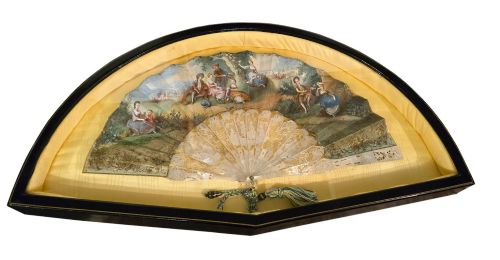


Antique Hand Painted Fan
An antique hand painted fan brings delicate artistry into a room, offering fine pictorial scenes crafted on silk, paper, or mother-of-pearl.
Antique Hand Painted Fan
When you search for an antique hand painted fan, you encounter folding examples designed for personal use alongside framed leaves and decorative plates shaped in the Japanese Imari style.
The pieces appearing on this page span the eighteenth and nineteenth centuries, including Victorian face screens, Chinese export lacquer items, and French framed silk designs.
Folding fans with painted paper or silk leaves sit alongside framed wall art and rigid face screens, reflecting the varied domestic and decorative roles these objects held.
How they were made
Maker workshops utilised delicate materials such as paper, silk, porcelain, and glass, often mounting them onto carved mother-of-pearl or wood sticks.
Gilding and gold leaf frequently enhance the painted pictorial surfaces, whilst framed pieces incorporate gilt metal or wooden box frames to protect the fragile leaf.
Lacquered wood and papier-mâché provide structured backing for rigid face screens and shaped decorative plates.
Listings feature items from the eighteenth and nineteenth centuries, utilising paper, silk, porcelain, glass, and carved mother-of-pearl.
What varies in quality
Quality rests in the intricacy of the hand-painted details, ranging from simple decorative motifs to elaborate biblical, pastoral, or thousand-face scenes.
The substance of the sticks distinguishes standard items from superior works, with carved mother-of-pearl achieving a finer finish than basic wood.
Condition remains paramount, as fragile paper and silk leaves suffer from tears or fading over time, separating well-preserved specimens from heavily worn examples.
The Antique Hand Painted Fan Glossary
- Face Screen
- A rigid handheld screen used to protect a lady's complexion from the heat of a fireplace. These items often feature papier-mâché or framed painted leaves.
- Imari
- A style of Japanese export ceramics characterised by blue, iron red, and gilt decoration. This aesthetic also influenced fan-shaped decorative plates.
- Mother-of-Pearl
- The iridescent inner layer of mollusc shells, carved into delicate sticks for folding fans. It offers durability and a lustrous appearance.
- Fan Leaf
- The flexible paper, silk, or vellum portion of a folding fan that bears the painted decoration. Leaves are frequently removed and framed as wall art.
Antique Hand Painted Fan: Frequently Asked Questions
What is an antique hand painted fan?
An antique hand painted fan is a personal accessory or decorative object featuring pictorial artwork rendered directly onto silk, paper, or vellum. These pieces often incorporate carved mother-of-pearl or wooden sticks.
Many examples from the eighteenth and nineteenth centuries survive today either as folding objects or removed from their frames and mounted behind glass as wall art.
How were face screens used?
Face screens served a practical domestic purpose in nineteenth-century drawing rooms by shielding a person's face from the intense heat of an open coal fire. They prevented makeup from melting and protected the skin.
Unlike folding accessories, these rigid pieces remained mounted on fixed handles and often sat on mantelpieces when not in active use.
How do I care for framed fan leaves?
Framed fan leaves require protection from direct sunlight to prevent the delicate pigments on paper or silk from fading. Maintaining a stable indoor humidity level prevents the material from becoming brittle.
Displaying them away from moisture and heat sources ensures the painted pictorial scenes and gilt framing endure.
What styles are common in these fans?
The pieces span various cultural aesthetics, including French Rococo pastoral scenes, Chinese export thousand-face motifs, and Japanese Imari patterns. Neoclassical influences also appear in late eighteenth-century works.
These diverse styles reflect the global trade and artistic tastes prevalent during the Georgian and Victorian eras.