


Antique Hall Stand Bench
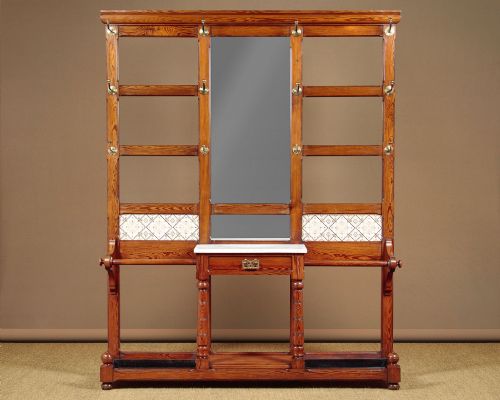
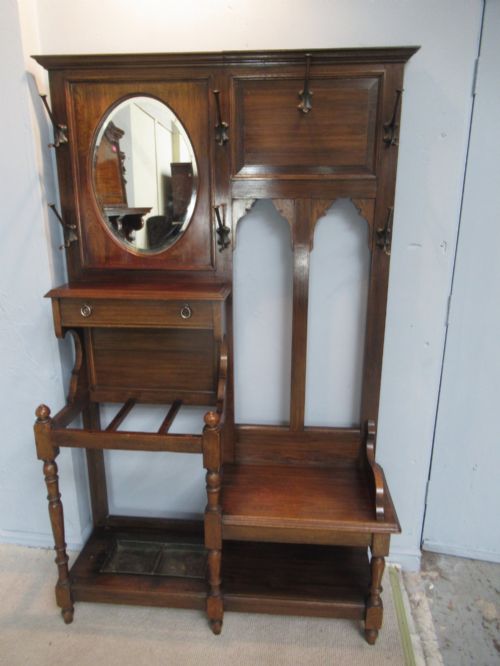
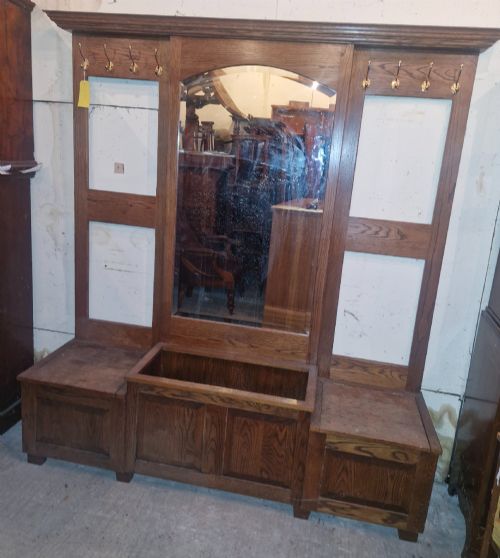
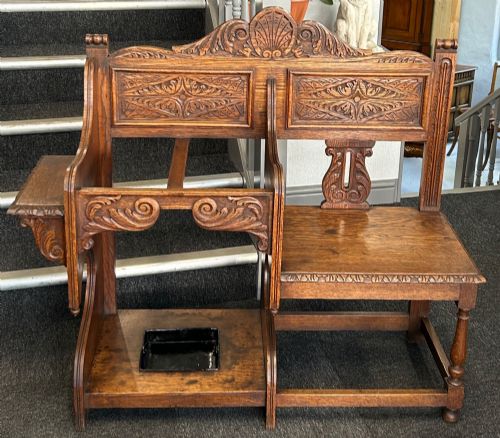
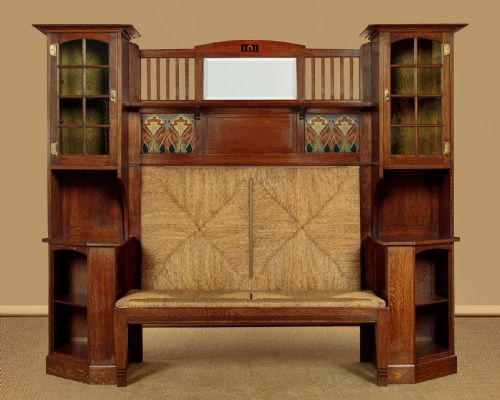
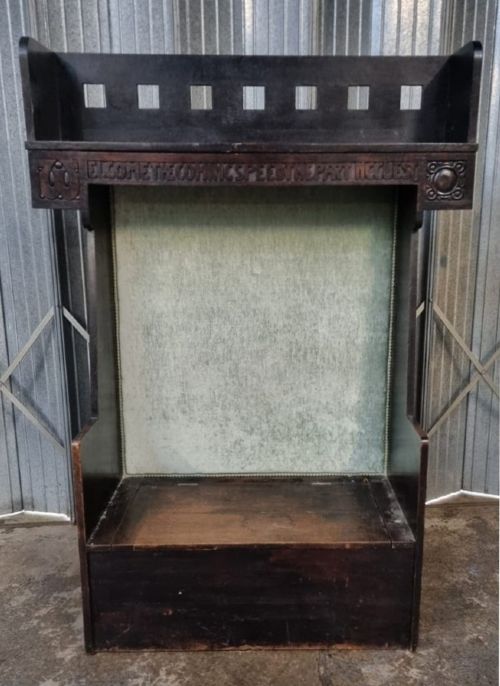
An antique hall stand bench greets visitors with practical storage for coats, hats and sticks combined with a seat for putting on shoes.
Antique Hall Stand Bench
When searching for an antique hall stand bench, you encounter sturdy hallway furniture designed to organise outerwear and provide seating upon entering a home. These pieces span from the late nineteenth century through the Edwardian period and into the nineteen twenties, reflecting the domestic needs of past eras.
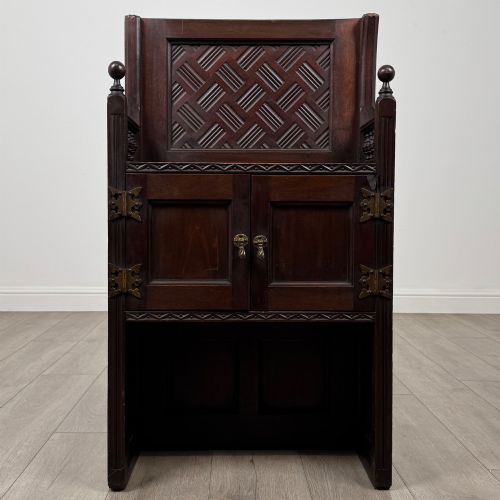
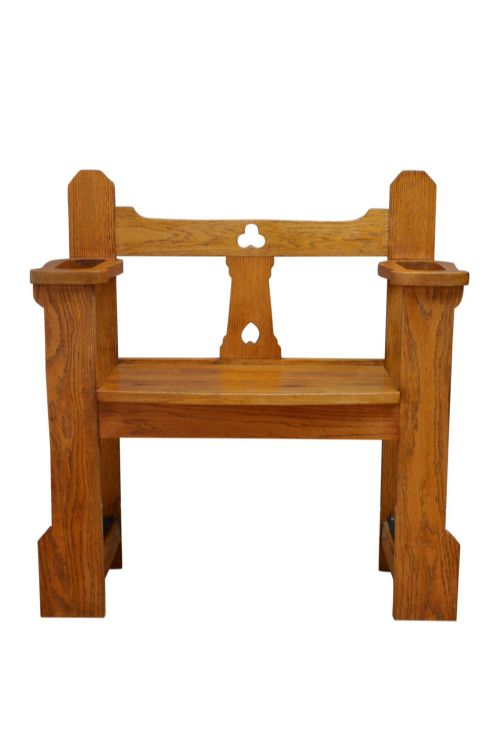
The selections on this page predominantly feature oak timber, often carved, alongside pine, mahogany and walnut examples. Forms range from narrow Arts and Crafts designs to large multi-functional cupboards, seats with shoe storage and combined umbrella holders.
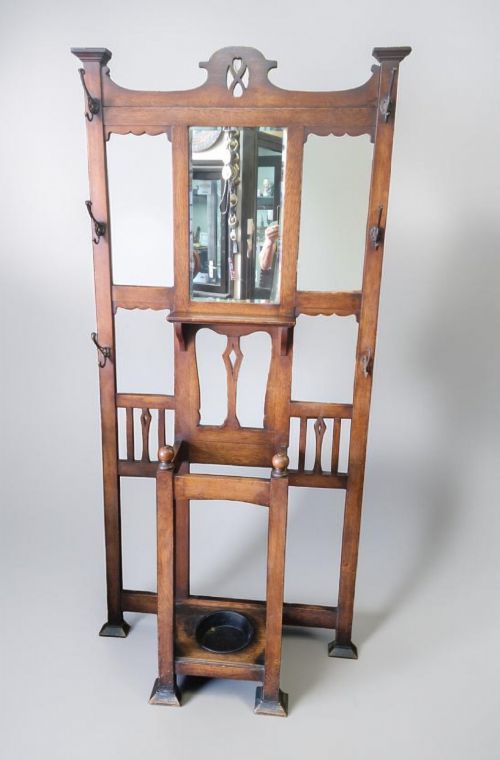
Victorian and Edwardian workshops produced these combinations of coat hooks, mirrors and benches to maximise narrow hallway spaces. You frequently meet pieces incorporating brass hooks, ceramic tiles and marble inserts alongside built-in stick and hat compartments.
Distinctions in craftsmanship
Quality in these pieces rests upon the depth and precision of the carved decoration, the choice of timber and the integration of multiple functions. Superior examples feature well-figured oak or mahogany, crisp hand-carved details and harmonious proportions rather than plain, assembly-line construction.
The standard of secondary materials elevates a piece, such as the inclusion of heavy bevelled glass mirrors, original stamped brass hardware and intact ceramic tiles. Structural cleverness also separates standard items from the best work, seen in neatly concealed shoe storage, robust umbrella wells and well-balanced benches.
Listings demonstrate that oak is the dominant timber used across these nineteenth and twentieth-century hallway furnishings.
Shapland and Petter·Waring and Gillow·Minton
The Antique Hall Stand Bench Glossary
- Arts and Crafts
- A design movement prioritising traditional craftsmanship and simple forms over mass-produced ornamentation. Pieces from this style often display exposed joinery and hand-carved motifs.
- Luggage rack
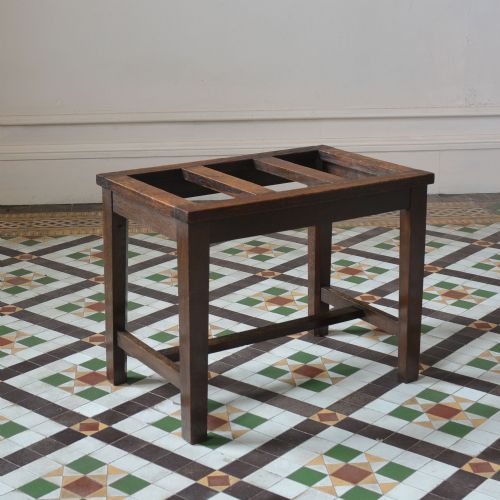
- A form of furniture featuring a slatted shelf for bags and cases, frequently combined with coat hooks and benches in hallway settings. These items provide compact storage for entrance halls.
- Stick stand
- An integrated section designed to hold umbrellas and walking sticks upright, usually featuring a metal or ceramic drip tray at the base to catch rainwater. This feature protects wooden flooring from dampness.
- Settle
- A wooden bench with high backs and solid arms, sometimes incorporating enclosed storage beneath the seat. In hallway settings, they offer enclosed space for boots and shoes.
- Bevelled mirror
- A mirror glass plate with an angled, polished edge that catches the light. These plates are commonly set into the upper backboards of hall furniture.
Antique Hall Stand Bench: Frequently Asked Questions
How do I spot an Edwardian piece?
Edwardian hall furniture often displays lighter golden oak timbers and refined proportions compared to earlier Victorian designs. Cabinet makers during this period favoured simpler lines while maintaining practical umbrella and hat storage.
Look for Edwardian hallmarks such as polished brass fittings, lighter mirror frames and subtly curved woodwork that suits smaller entrance spaces.
What timber was most commonly used?
Oak is the predominant wood seen across these listings, appearing in both dark carved Victorian styles and brighter Edwardian golden oak finishes. Pine, mahogany and walnut also feature in specific regional or period pieces.
Makers selected these hardwoods for their structural strength, ensuring the furniture could support the weight of heavy winter coats and daily seating.
How were umbrella stands kept clean?
Many hall stands incorporate metal or ceramic drip trays positioned at the base of the umbrella section to catch water from wet walking sticks. These removable trays protected the wooden floorboards from moisture damage.
Users could easily slide out the metal pans or ceramic basins to empty rainwater accumulated during stormy weather.
Can I store shoes inside the bench?
Certain hall seats and settles feature integrated storage compartments or lower shelving specifically designed for boots and shoes. These enclosed spaces help keep narrow hallways free of footwear clutter.
Lift-up seat lids or dedicated under-bench cubbies provide direct access to footwear upon entering the home.