
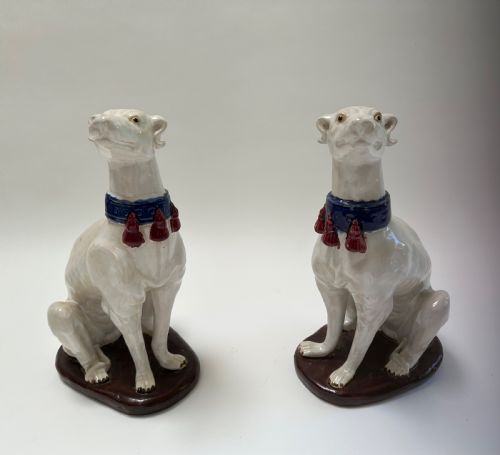


Antique Greyhound Figure
An antique greyhound figure captures the sleek lines and quiet intensity of the breed, prized by collectors for generations.
Antique Greyhound Figure
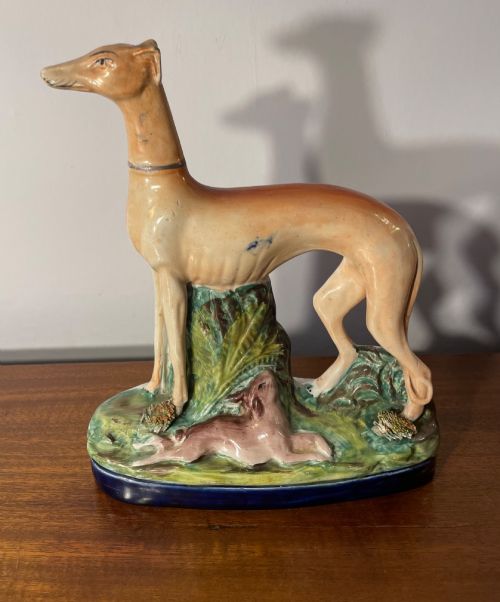
An antique greyhound figure typically takes the form of a pottery model, a desk accessory, or a bronze sculpture. These pieces capture the distinctive anatomy of sighthounds, often shown seated, recumbent, or paired with hares.
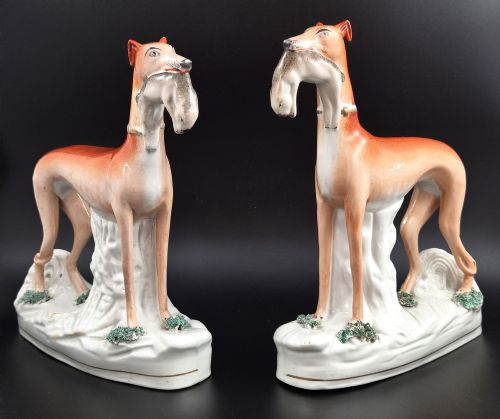
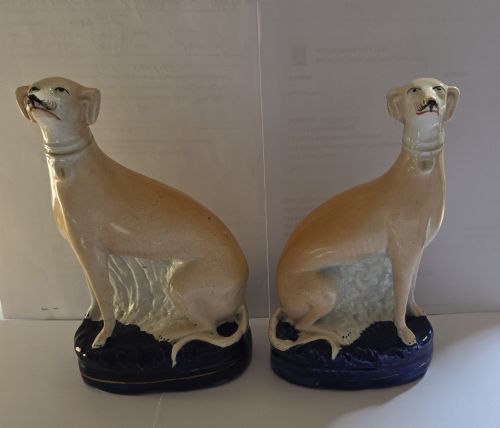
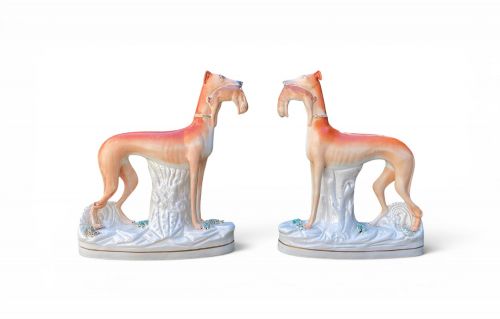
The version most commonly met on this page is the Victorian Staffordshire pottery figure, frequently produced as a pair or adapted into functional items such as quill holders and inkwells. These earthenware examples reflect the domestic tastes of nineteenth-century Britain.
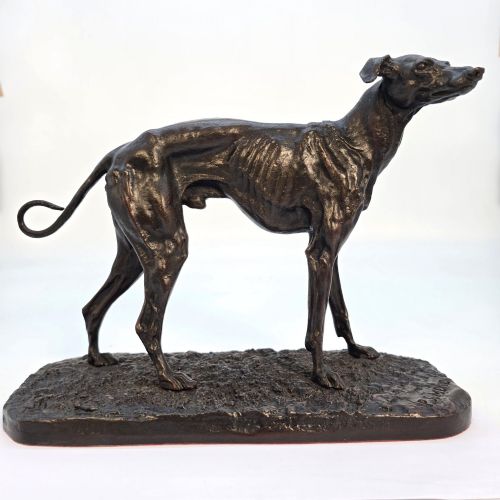
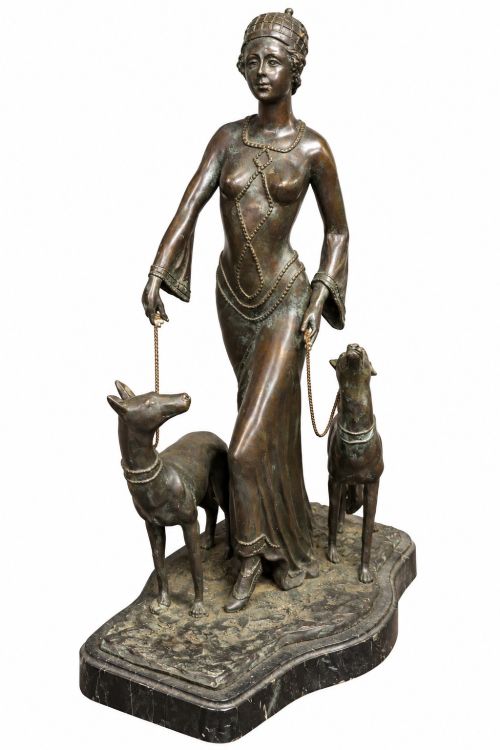
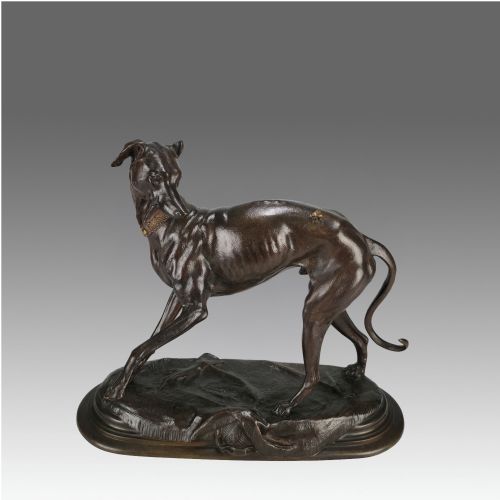
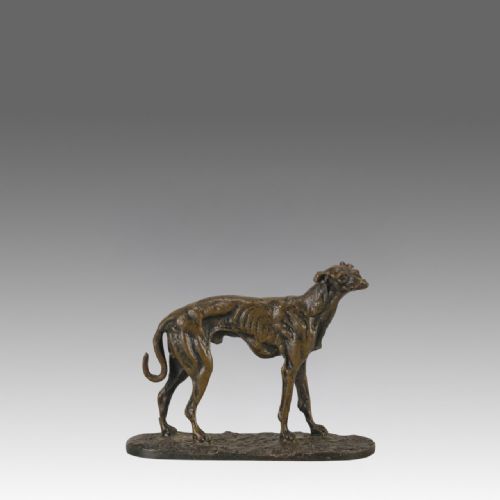
Beyond earthenware, the selections encompass French animalier bronzes and Art Deco metalwork depicting racing dogs. These metal sculptures emphasise muscular tension and dynamic movement rather than the static poses of Staffordshire pottery.
Materials and Manufacture
Pottery figures rely on earthenware bodies finished with lead glazes and enamel paint to render markings and facial details. Potters shaped these ceramics in moulds before hand-painting the surfaces prior to firing.
Bronze sculptures utilise the lost-wax casting technique to achieve fine anatomical definition and smooth patination. Foundry workers then finished these metal pieces through chasing and patination to highlight the muscular forms.
Certain smaller decorative items employ cold painting over bronze or brass, applying colour by hand without subsequent high-temperature firing. This technique produces vibrant surface decoration on desk accessories and small dishes.
Materials recorded across the inventory range from glazed ceramic and lead glaze to bronze, marble, and enamel paint.
Factors of Distinction
In bronze sculptures, distinction arises from the sharpness of the cast and the depth of the original patina. Superior examples preserve fine details in the musculature and harness without losing definition through excessive cleaning or recasting.
Alfred Barye·P J Mêne·Pierre Jules Mene·Thomas Parr·Karl Hagenaur·Geo Maxim·Joseph Francois Victor Chemin·Christophe Fratin
The Antique Greyhound Figure Glossary
- Animalier
- A nineteenth-century artistic movement focused on the realistic depiction of animals, particularly in bronze. Practitioners studied live subjects in menageries to capture authentic posture and movement.
- Staffordshire pottery
- Earthenware produced in the potteries of Staffordshire, England, known for domestic ornaments and figures. These wares served as affordable mantelpiece decoration for middle-class homes.
- Quill holder
- A desk accessory featuring a hollowed base or integrated tray designed to hold writing quills or pens. Pottery versions often incorporate recumbent dogs flanking a central well.
- Vienna bronze
- Small, highly detailed bronze figures produced in Austrian foundries and finished with cold-painted enamel colours. These pieces often depict humorous or sporting subjects.
- Lost-wax casting
- A method of metal casting in which a molten metal is poured into a mould that has been created by means of a wax model. The wax is melted and drained away to leave the cavity for the metal.
Antique Greyhound Figure: Frequently Asked Questions
What are antique greyhound figures made from?
These figures are primarily formed from earthenware pottery or cast bronze, reflecting the dominant manufacturing traditions of the nineteenth and early twentieth centuries.
Pottery examples feature glazed earthenware surfaces decorated with enamel paint, whilst metal versions utilise cast bronze with various patinas and cold-painted finishes.
How were Staffordshire greyhound figures used?
Staffordshire figures served chiefly as decorative ornaments designed to sit upon mantelpieces and sideboards in Victorian homes. Pairs were typically arranged facing one another.
Certain examples were constructed to serve practical domestic functions, incorporating inkwells, paperweights, or quill holders into their ceramic bases.
How do I distinguish Victorian from Art Deco pieces?
Victorian examples lean towards Staffordshire earthenware, static seated poses, and hand-painted enamel details intended for domestic mantelpieces. These pieces often include decorative elements like hares or quill holders.
Art Deco items typically date to the twentieth century, focusing on dynamic movement, racing greyhounds, and metal sculptures produced by named European artists and foundries.
Where were French animalier bronzes made?
French animalier bronzes were cast in specialised foundries in France during the nineteenth century, driven by a cultural fascination with realistic animal sculpture.
Artists studied live animals to model musculature and movement accurately before sending their models to professional founders for casting.