


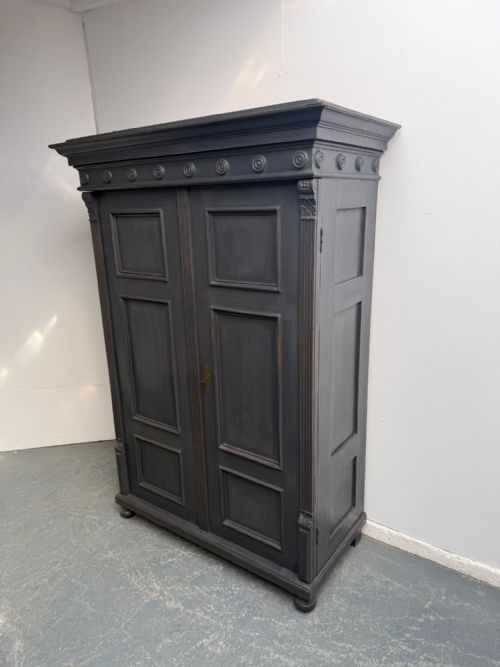

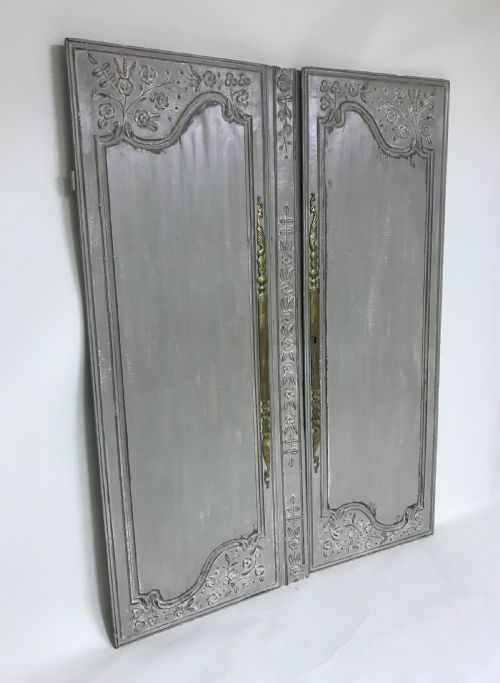

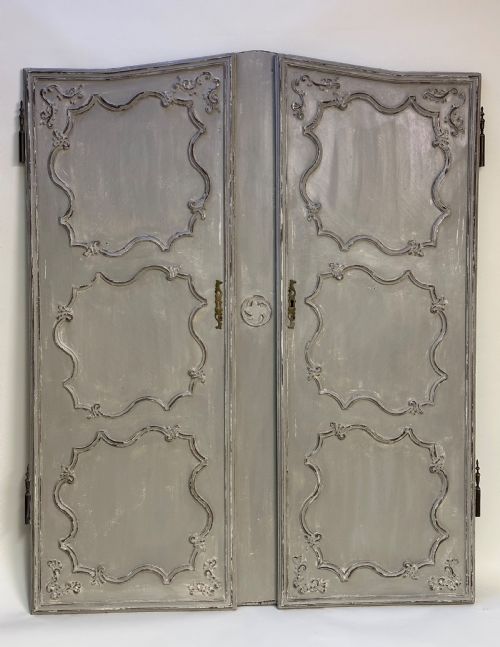


Antique Grey Cupboard Panels
These antique grey cupboard panels bring weathered provincial character to a room, offering genuine architectural salvage for interior schemes.
Antique Grey Cupboard Panels
When buyers search for antique grey cupboard panels, they encounter architectural salvage items drawn from European country properties and rural homes. The selection spans the nineteenth century up to nineteen twenty, featuring items from Swedish, French, Hungarian and Scandinavian origins.
Most pieces on this page appear as architectural elements or furniture components, notably paired wooden doors and cupboard doors. These salvaged items typically display painted finishes in shades of grey, alongside carved woodwork and pine or walnut construction.
The objects reflect regional European country styles, including Gustavian, French provincial and Scandinavian country aesthetics. Buyers select these panels to add historical depth and texture to interior walls or bespoke cabinetry projects.
How they were made
These pieces are constructed from solid timber substrates such as pine, walnut and cherrywood, shaped by hand carving and traditional joinery. Artisans built doors and cupboards to withstand daily use in domestic settings across rural Europe.
Surfaces receive layered coats of paint, frequently in light or mid grey tones, which age naturally over decades of use. Hardware components utilise forged iron and brass to secure doors and hinges.
Antique Grey Cupboard Panels Retail Price Guide 2026
Typical asking prices for grey cupboard panels among the pieces listed under this phrase on Sellingantiques today, from the lower quarter to the upper quarter. They describe what is for sale here now, not the wider market.
Materials documented across the available inventory include pine, walnut, cherrywood, brass, iron, and painted timber.
What varies in quality
Quality rests in the integrity of the original timber and the subtlety of the aged painted surface. Hand carved detailing demonstrates sculptural depth that elevates simpler utilitarian items.
Proportion and scale determine how effectively these architectural elements integrate into modern interiors. Pieces retaining their original hardware and undisturbed surface patination command greater interest among purists.
The Antique Grey Cupboard Panels Glossary
- Architectural salvage
- Building elements removed from older structures for reuse in new interior schemes. These items preserve historical craftsmanship and materials.
- Gustavian
- The Swedish interpretation of neoclassical design, characterised by restrained carving and pale painted finishes. This style emerged during the late eighteenth century and influenced Scandinavian country furniture.
- Pine
- A softwood commonly used in European country furniture and architectural elements. It accepts paint readily and forms a durable base for distressed finishes.
- French provincial
- Furniture and architectural pieces created in the provinces outside Paris, combining practical utility with regional decorative flair. These items often feature subdued carved details and painted surfaces.
- Patina
- The surface appearance developed through age, wear and repeated painting over decades or centuries. Collectors value this textural depth as evidence of authenticity.
Antique Grey Cupboard Panels: Frequently Asked Questions
Where did these panels originate?
The listings show origins primarily across France, Sweden and Hungary, reflecting rural European architectural traditions from the nineteenth and early twentieth centuries.
Local workshops produced these items for domestic storage and architectural separation within farmhouses and provincial homes.
Can I repaint antique grey panels?
While the existing painted surfaces provide historical character, panels can be adapted to suit specific interior colour schemes.
Preserving the underlying layers of historic paint maintains the textural patina valued by designers and collectors.
What woods were used for these panels?
Construction materials recorded in the evidence include pine, walnut and cherrywood, selected for structural stability and availability in regional workshops.
Secondary elements incorporate brass and iron for functional hardware and structural reinforcement.