
Antique Green Top Desk
An antique green top desk brings together rich timber and hand-tooled leather to anchor a study with enduring character.
Antique Green Top Desk
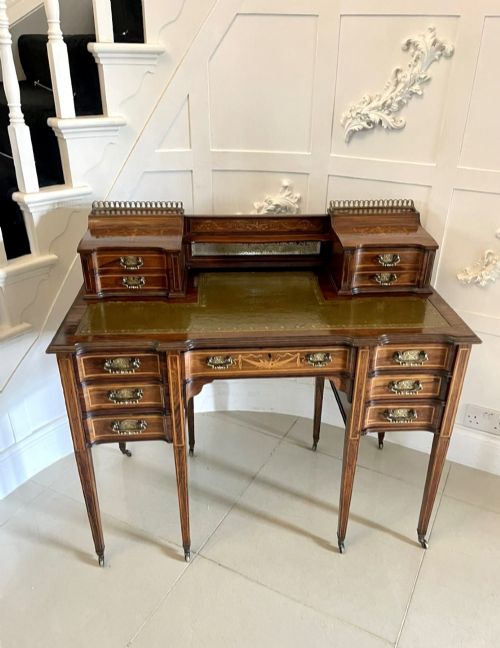
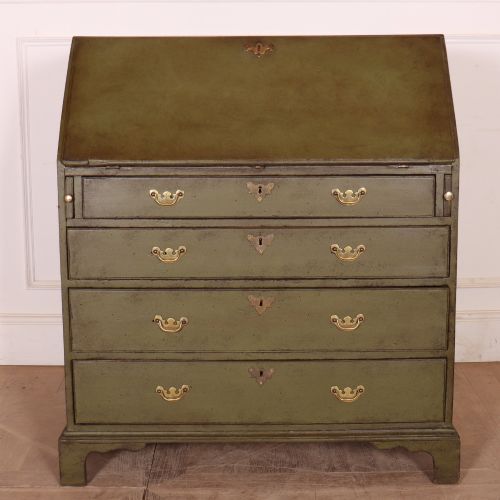
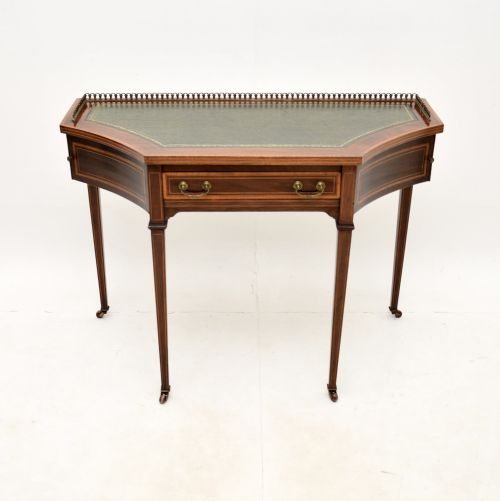
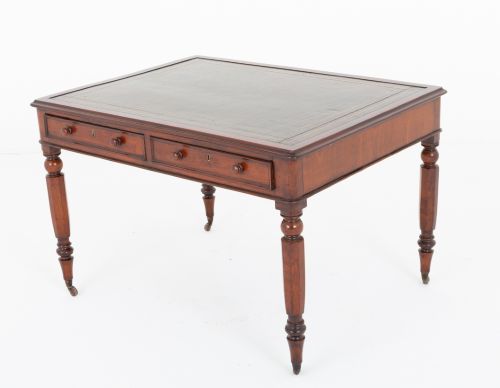
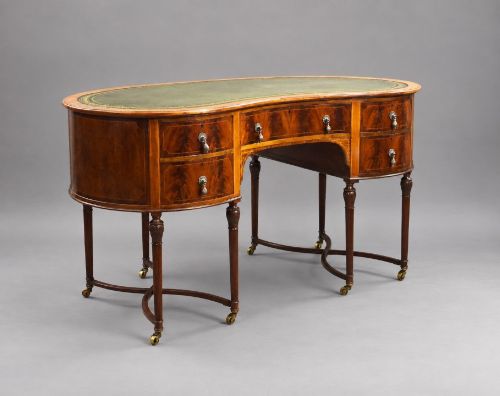
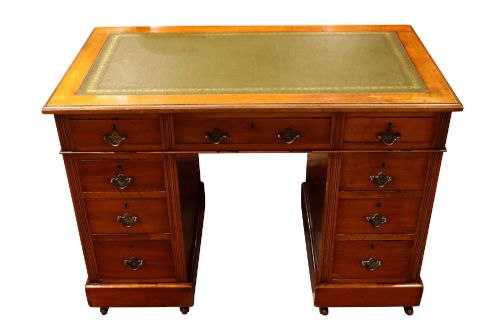
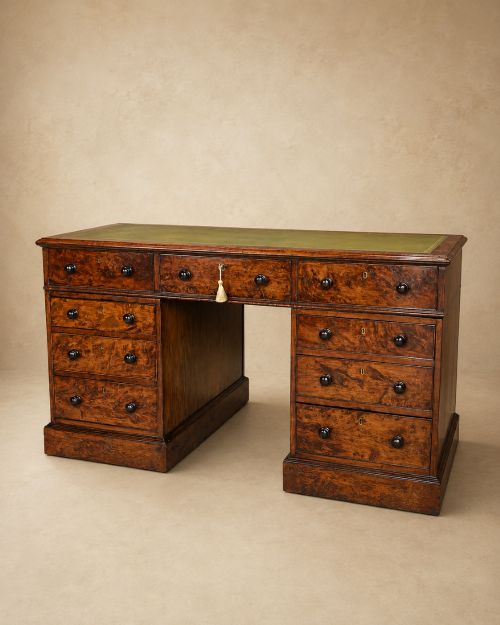
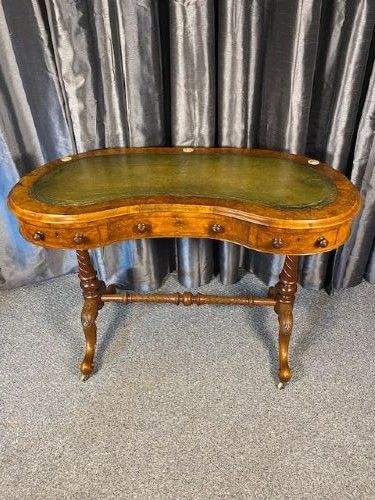
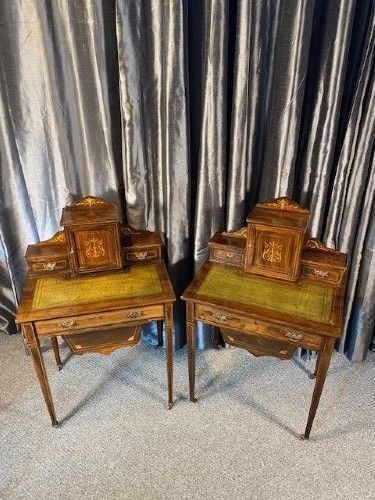
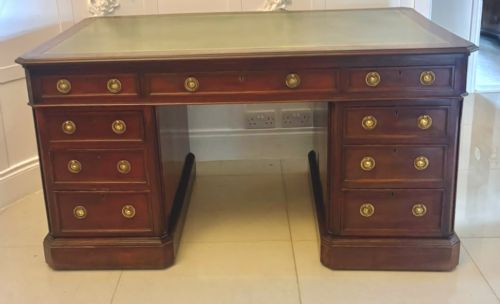
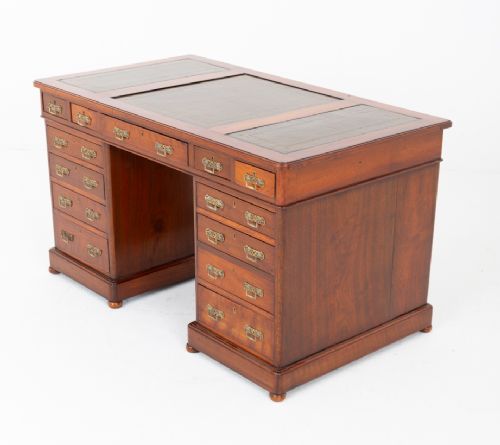
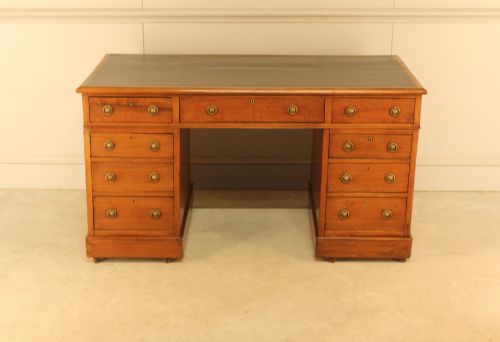
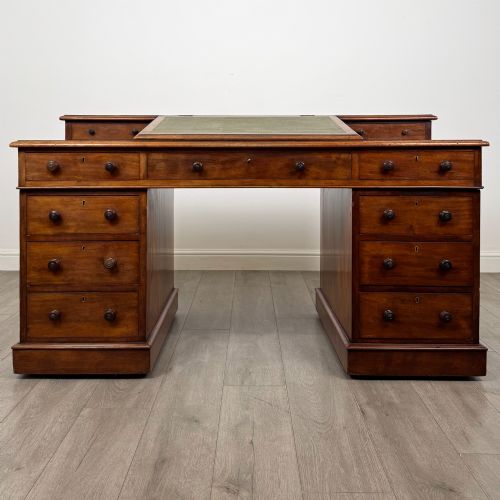
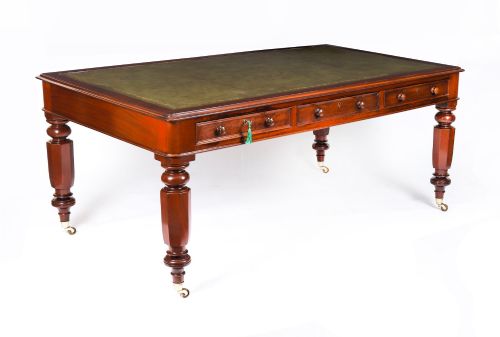
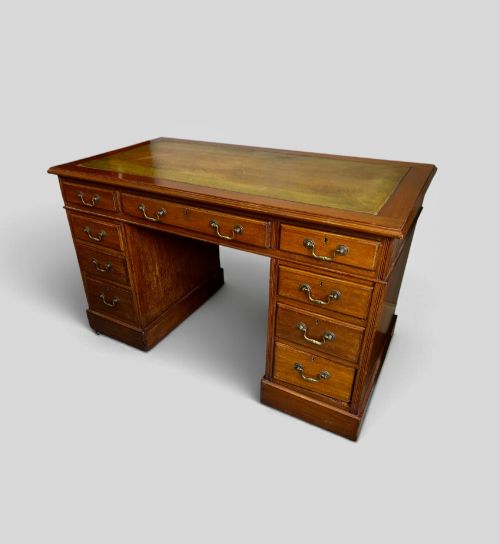
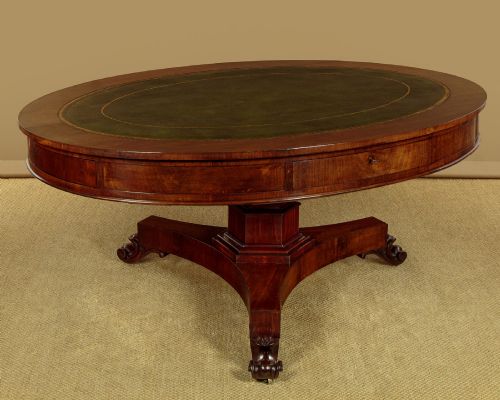
An antique green top desk unites classic timber construction with a traditional tooled leather writing surface, creating a functional workspace rooted in nineteenth and early twentieth century cabinet making. Buyers encounter diverse formats on this page, ranging from partner tables and twin pedestal configurations to compact writing tables and kneehole desks.
The materials span mahogany, walnut, oak, and rosewood, often paired with shades of olive or darker green hide inserts. Victorian and Edwardian examples dominate the selection, alongside earlier Regency and William IV pieces, reflecting the evolution of domestic and library furnishings over successive centuries.
Materials and Construction
Cabinet makers relied on solid and veneered timbers such as mahogany, walnut, and oak for structural integrity and visual depth. Drawer linings frequently utilised secondary woods, while brass fittings provided functional hardware for handles and castors.
Writing surfaces received durable leather inserts, finished with blind or gilt tooling along the perimeter. Joinery techniques involved precision dovetailing for drawers and robust framing to support heavy pedestals and freestanding library tables.
Listings span the eighteenth, nineteenth, and early twentieth centuries, featuring woods such as mahogany, walnut, oak, satinwood, and rosewood.
Distinctions in Quality
Quality rests upon the selection of timber figures, such as flame mahogany or burr walnut, and the precision of cabinet joinery. Superior examples maintain structural balance from all angles, allowing them to stand freely within a room rather than against a wall.
The refinement of the interior fittings, the crispness of brass hardware, and the execution of inlaid details distinguish standard utility pieces from high workshop production.
Maple & Co.·Holland & Sons·James Shoolbred & Co.
The Antique Green Top Desk Glossary
- Pedestal desk
- A heavy writing desk comprising two supporting banks of drawers with a central recess for a chair. These units often feature inset leather surfaces and substantial plinth bases.
- Partners desk
- A large double-sided desk designed for two people to work opposite one another, featuring drawers and cupboards accessible from both sides. They frequently appear in library settings.
- Writing table
- A freestanding table designed primarily for correspondence, typically possessing slender legs rather than heavy pedestals. Many examples incorporate one or more shallow frieze drawers.
- Library table
- A large freestanding table utilised for reading and sorting papers in institutional or domestic libraries. These pieces often exhibit finished backs for central room placement.
- Davenport desk
- A compact writing desk featuring a sloping, hinged top above a set of side drawers. Originating in the early nineteenth century, they maximise workspace within a small footprint.
Antique Green Top Desk: Frequently Asked Questions
How do I care for the leather top?
Maintain the leather surface by dusting gently with a dry cloth and avoiding harsh cleaning chemicals that strip the original finish.
Nourish the hide periodically with appropriate leather balms to prevent cracking while preserving the historical gold tooling.
Are these desks suitable for daily computer work?
Many historical desks accommodate modern technology, provided the dimensions and kneehole clearances match your seating requirements.
Freestanding models offer enough depth for monitors and keyboards without disrupting the traditional aesthetic of the room.
How do I identify a Victorian desk?
Victorian pieces typically employ dense timbers like mahogany and walnut, accompanied by robust construction methods and deep frieze drawers.
Stylistic markers range from restrained classical revival designs to ornate carved pedestals and tooled leather inserts.