

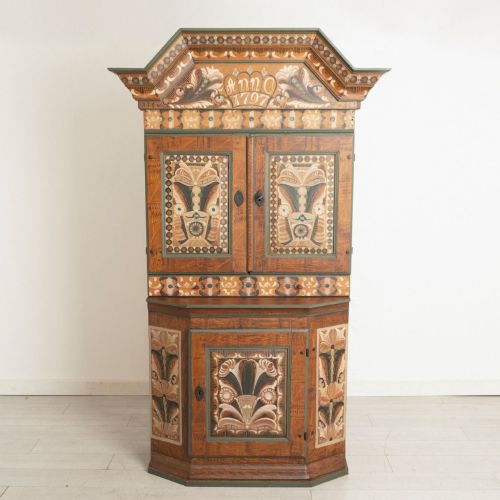


Antique Green Press Cupboard
An antique green press cupboard brings substantial storage and painted character to a room, ranging from country pine to formal oak.
Antique Green Press Cupboard
An antique green press cupboard provides traditional storage in forms such as housekeepers cupboards, linen presses, and hall wardrobes. These pieces combine hanging space, shelving, or drawer sections behind panelled doors.
The pieces on this page span several centuries, reaching from the eighteenth century through the Victorian and Edwardian eras. Georgian and nineteenth-century examples appear frequently alongside country interpretations.
Regional variations connect these cupboards to English, Irish, Dutch, Swedish, and broader Scandinavian traditions. The green surfaces range from later decorative paint to original historic finishes on pine, softwood, and oak.
Materials and construction
Carpenters built these cupboards primarily in solid pine, softwood, and oak, often joining large panels to handle heavy domestic textiles. Brass hardware such as hinges, escutcheons, and latches completes the structural assembly.
Surface treatment defines the aesthetic, utilising layered paint over wood, sometimes showing later application or original pigment. Glazed doors appear on dresser and cabinet variants alongside solid two-door configurations.
Antique Green Press Cupboard Retail Price Guide 2026
Typical asking prices for green press cupboard among the pieces listed under this phrase on Sellingantiques today, from the lower quarter to the upper quarter. They describe what is for sale here now, not the wider market.
Some housekeepers cupboards still retain the faint aroma of old linen and dried lavender locked inside their pine doors for centuries.
Judging quality and character
Quality rests in the harmony of proportions and the integrity of the timber frame. Fine examples retain their original structural joinery without excessive replacement of internal shelving or cornices.
The character of the painted surface plays a major role in the visual appeal of each piece. Appreciated work shows honest patination, where age and wear integrate naturally with the green pigment.
The Antique Green Press Cupboard Glossary
- Press cupboard
- A large storage furniture item traditionally used for linen and clothes, featuring internal shelves or hanging space enclosed by doors.
- Housekeeper's cupboard
- A large utility cupboard historically used in country houses to store household linens, preserves, and dry goods.
- Linen press
- A tall cabinet specifically designed to store folded textiles and bedding, often featuring sliding trays or linen slides in the upper section.
- Compactum
- A fitted wardrobe design divided internally into sections for hanging, drawers, and shelving to maximise storage efficiency.
Antique Green Press Cupboard: Frequently Asked Questions
What is a green press cupboard?
A green press cupboard is a large antique storage cabinet finished in a green painted surface. These pieces were traditionally utilised for linens, clothing, and household supplies.
They appear in various regional styles, ranging from English country pine to formal Georgian oak and Scandinavian interpretations.
How were press cupboards used historically?
Historically, large cupboards held household linens, blankets, and garments before built-in closets became standard in domestic architecture. Housekeepers and staff managed these pieces to keep household textiles clean and organised.
The upper and lower sections often divided different types of storage, keeping everyday items accessible while protecting delicate fabrics.
Are the green finishes original?
The paint finishes on these cupboards vary between original historic surfaces and later decorative applications. Many country pieces received fresh coats of green paint over the decades of their domestic use.
Evaluating the surface involves looking at how the paint has aged and worn in relation to the timber beneath it.
How do I fit a large cupboard into a room?
These large cupboards serve as focal storage pieces in bedrooms, hallways, or kitchens. Their substantial presence requires careful measurement of ceiling height and floor space.
Internal configurations often allow for modern clothing hangers or adjustable shelving, adapting historical storage for contemporary use.