
Georgian Linen Press Cupboard
When you search for a georgian linen press cupboard, you enter the world of substantial period storage designed for textiles and garments.
Georgian Linen Press Cupboard
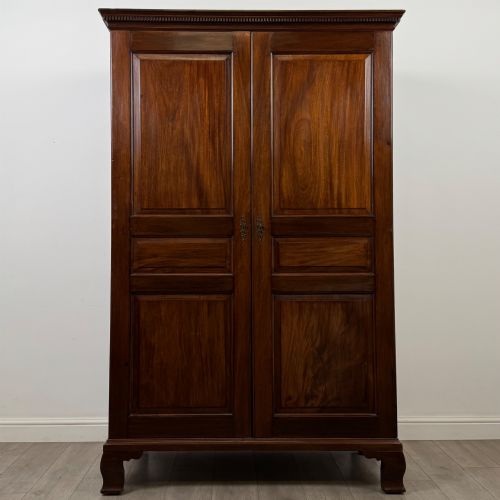
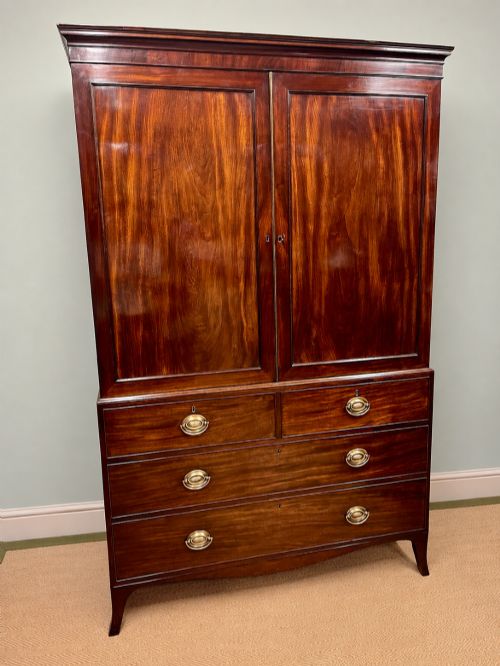
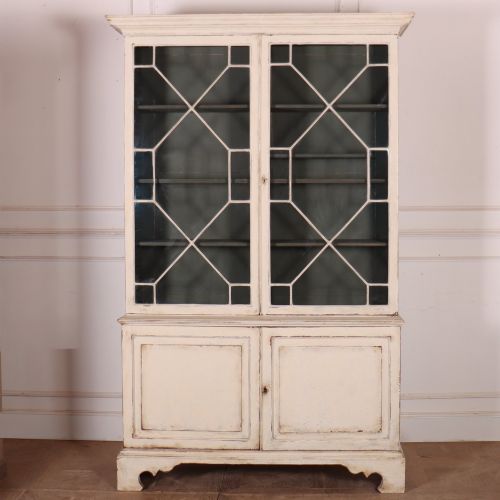
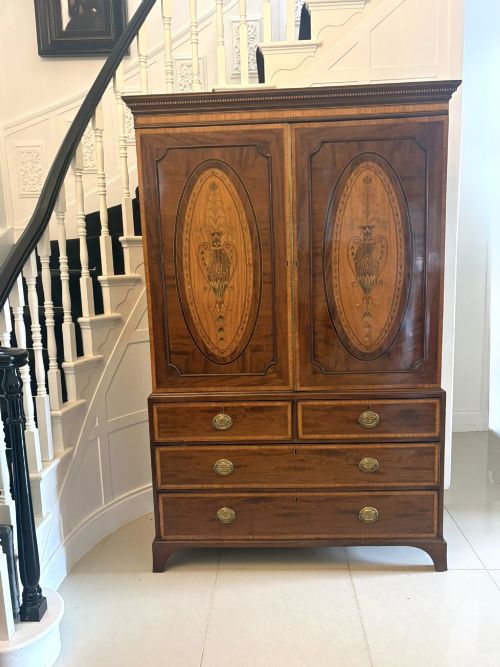
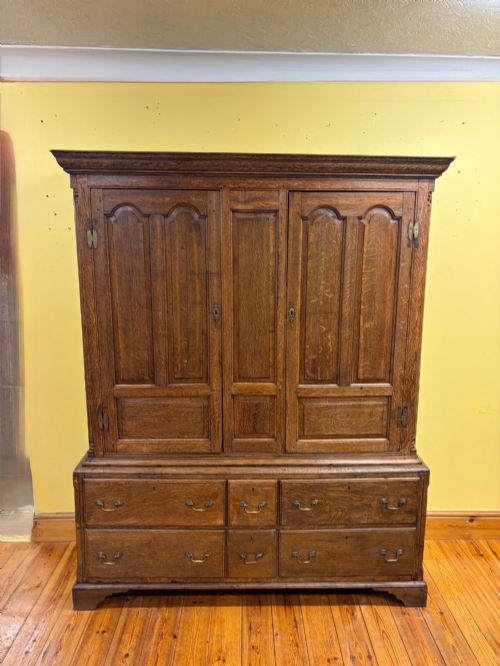
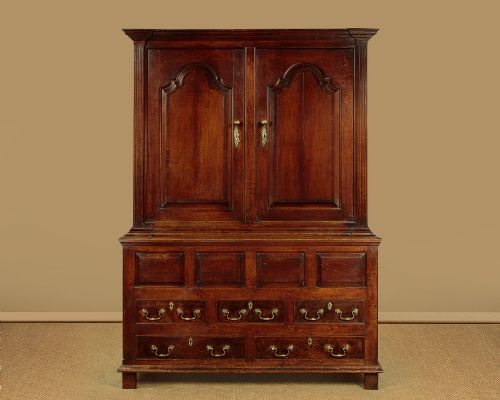
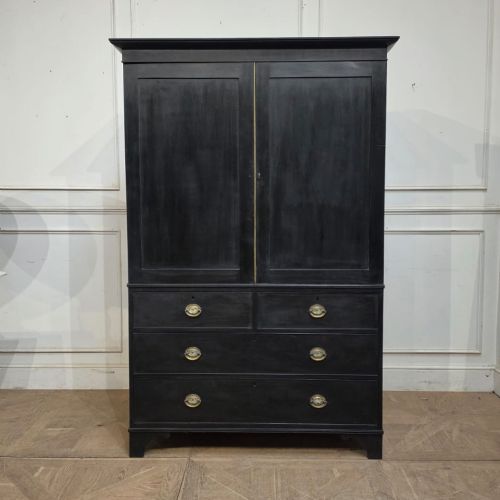
A georgian linen press cupboard is a traditional two-section piece of furniture featuring upper doors that enclose sliding trays or shelves, sitting above a chest of base drawers. These pieces date principally from the eighteenth and nineteenth centuries, spanning the Georgian, Regency, and early Victorian eras.
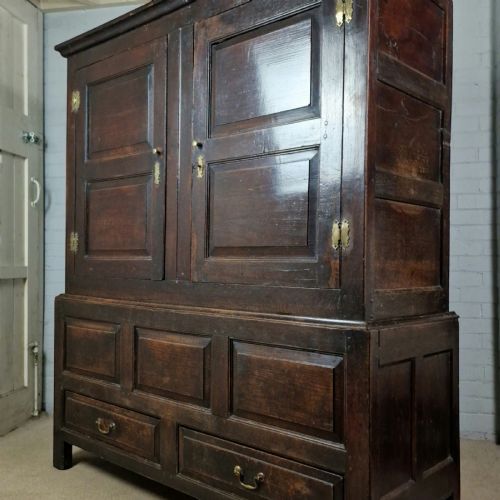
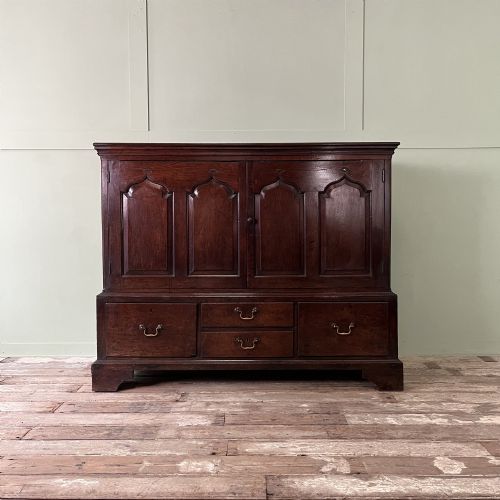
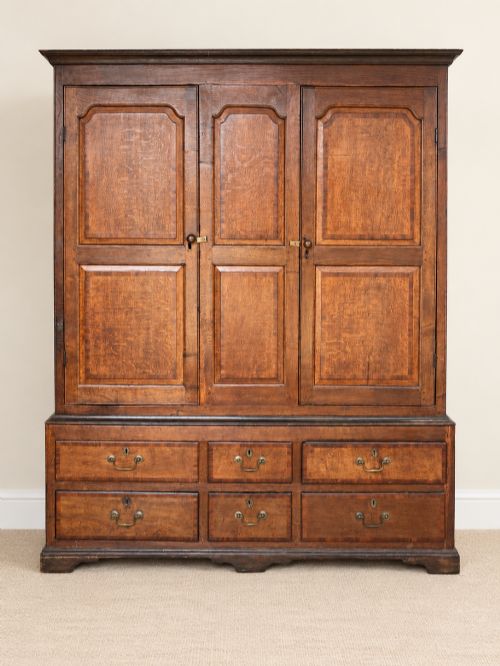
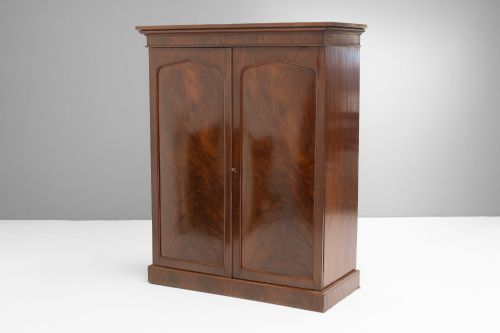
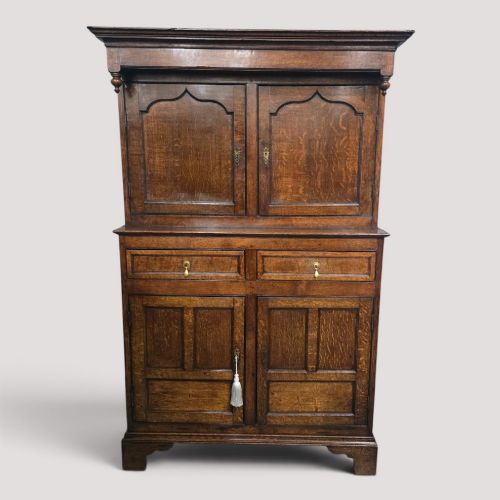
You will encounter regional variations, ranging from formal mahogany examples with panelled doors to robust Welsh vernacular pieces built from local oak. Lower dwarf presses and low cottage pine cupboards also appear frequently alongside grand breakfront wardrobes.
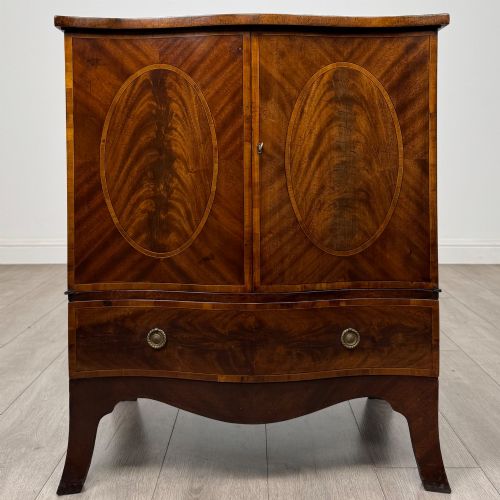
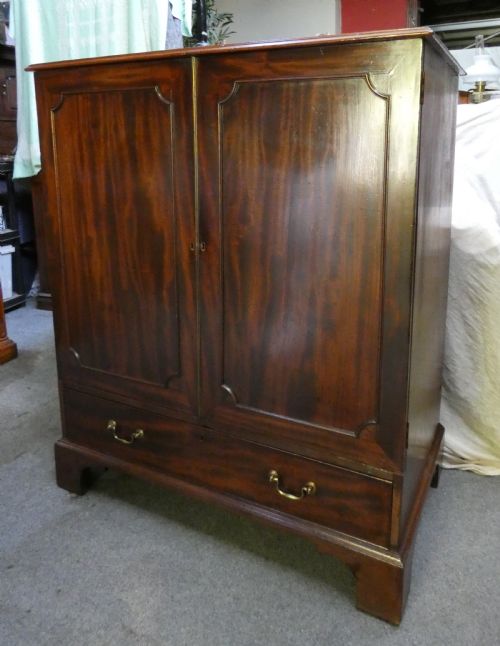
Historically utilised for storing flat linens, household textiles, and gentlemen's attire before fitted wardrobes became standard, these pieces served as primary bedroom and landing storage. Their dual construction allows them to function effectively today for modern clothing storage or as living room media cabinets.
How they were made
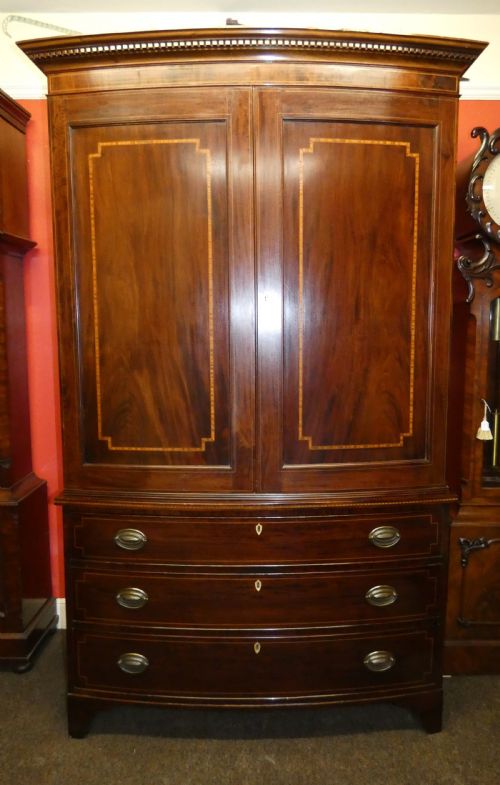
Cabinetmakers constructed these cupboards primarily using native timbers such as oak for earlier vernacular pieces, alongside imported mahogany and flame mahogany veneers for high-status urban examples. Secondary softwoods like pine appear commonly in carcases, drawer linings, and regional country pieces.
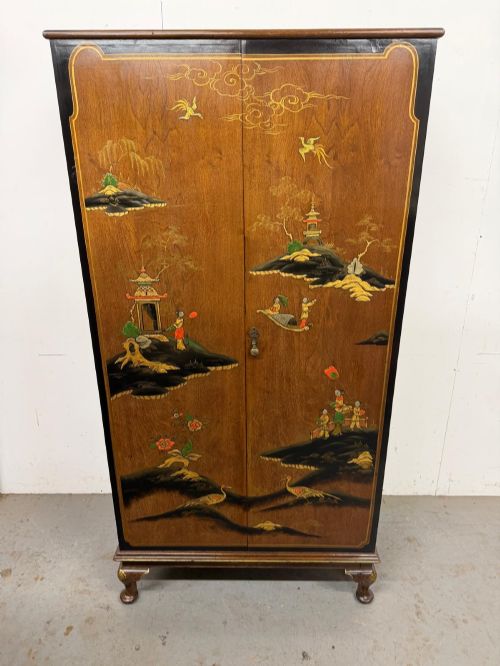
Construction techniques combined traditional frame and panel joinery with dovetailed drawer boxes and pegged joints. Decorative elements relied on brass hardware, satinwood inlay, blind fretwork cornices, and occasionally painted finishes or lacquer work.
Makers integrated sliding internal trays, known as linen slides, within the upper cabinet section to hold folded fabrics without crushing them. Base sections incorporated graduated drawer arrangements, utilising dust boards between tiers to maintain structural rigidity.
Several country examples retain traces of their original blue and cream paint, applied before natural wood finishes became fashionable.
What varies in quality
The choice of timber underpins the hierarchy of quality, distinguishing dense, well-figured flame mahogany veneers and quarter-sawn oak from utilitarian painted pine. Figure matching across panelled doors and drawer fronts demonstrates the cabinetmaker's skill and ambition.
Proportion and architectural detail separate standard utility pieces from exceptional commissions. Refined cornicing, precise satinwood stringing, original brass handles, and well-executed fretwork elevate the visual weight of the piece.
Internal integrity and survival of original elements dictate the standing of individual examples. Retaining the original internal sliding trays, uncompromised backboards, and stable drawer bases without excessive timber shrinkage marks the difference between undisturbed survivals and heavily restored items.
Gillows
The Georgian Linen Press Cupboard Glossary
- Linen press
- A tall storage cabinet comprising an upper section with doors enclosing sliding trays for folded textiles, positioned over a lower chest of drawers. This form evolved to protect household linens from dust and dampness before built-in closets existed.
- Flame mahogany
- A highly figured timber veneer sliced from the branch junctions of the mahogany tree, displaying distinctive flickering flame-like patterns. Cabinetmakers applied this expensive veneer to primary display surfaces on fine late eighteenth and nineteenth-century pieces.
- Blind fretwork
- Carved decorative woodwork applied to a solid background rather than pierced right through, often seen along the cornices of better quality cabinets. This technique mimics Chinese lattice designs popular during the mid-Georgian period.
- Compactum
- A multi-functional wardrobe or storage cabinet combining hanging space, shelves, and drawers within a single unified footprint. The term denotes a late nineteenth or early twentieth-century evolution of the traditional press.
- Livery cupboard
- An early form of freestanding storage furniture originally used for storing food, drink, or clothing, frequently associated with vernacular oak traditions. These pieces often feature panelled doors and unpretentious regional joinery.
Georgian Linen Press Cupboard: Frequently Asked Questions
What is inside a linen press?
Inside the upper doors, you find a series of pull-out wooden trays or shelves designed originally for flat-folded table linen and bedsheets. Many modern owners remove some trays to convert the upper cavity into standard clothes hanging space.
The lower section consists of a chest of drawers, ranging from two short drawers over three long ones to a deep single drawer configuration. This combination provides versatile storage for both folded garments and hanging items.
How do I date a Georgian press?
Dating relies on observing a combination of timber selection, construction methods, and stylistic details. Earlier pieces from the mid-eighteenth century generally utilise solid oak with field panelling and pegged joints.
Later pieces from the Regency period frequently employ flame mahogany veneers, brass inlay, and more refined bracket feet or turned legs. Drawer construction also offers clues, shifting from hand-cut dovetails with uneven spacing to more uniform machine-sawn joints in the nineteenth century.
Where were these cupboards used?
These pieces traditionally stood in bedrooms, dressing rooms, and wide upper hallways of substantial country houses and town residences. They served as the primary wardrobe solution for storing family textiles and gentleman's attire.
In modern homes, their large scale suits them to spacious bedrooms, landings, or high-ceilinged living areas. Some find a second life housing modern electronics or everyday household items.
Are the sliding trays removable?
Most internal sliding trays rest on fixed wooden runners attached to the sides of the upper cabinet interior. You can lift them straight out without damaging the structural framework of the piece.
Removing these trays allows you to install a hanging rail for full-length garments. Many surviving examples retain their original trays intact for historical authenticity.