

Antique Green Gemstone Jewellery
Antique green gemstone jewellery brings together emeralds, peridots, jade and other verdant stones set across Victorian, Edwardian and Art Deco designs.
Antique Green Gemstone Jewellery
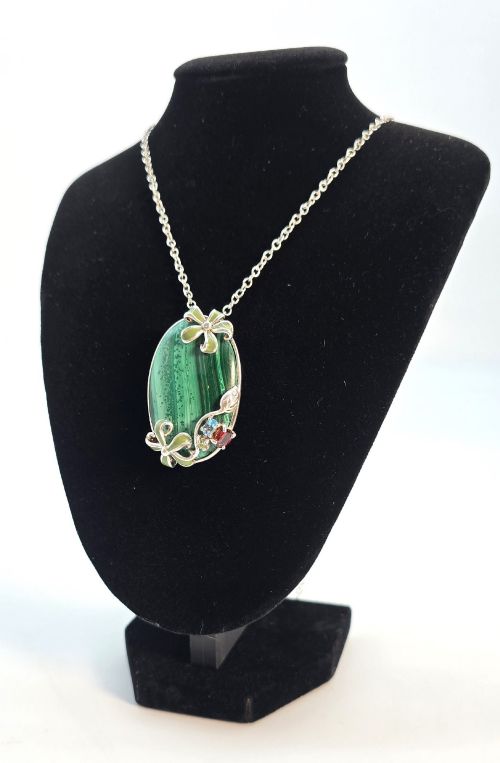
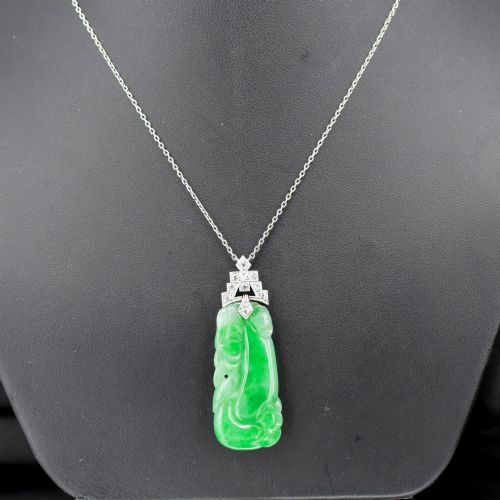
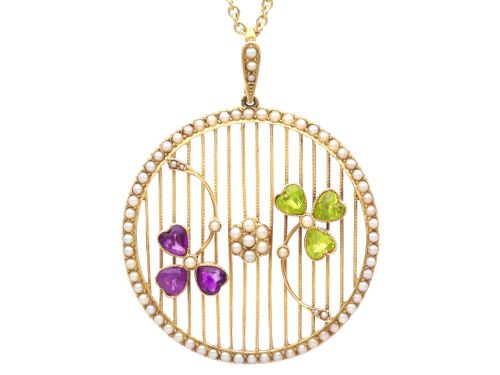
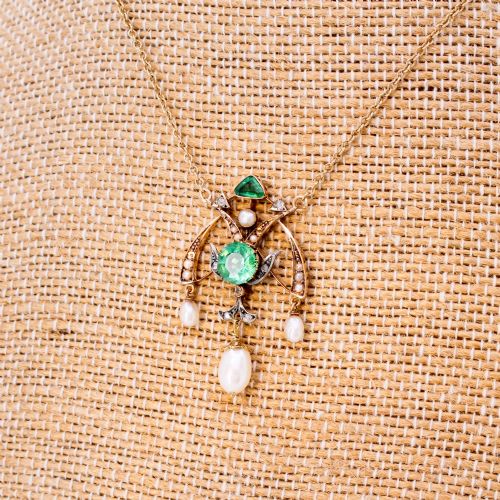
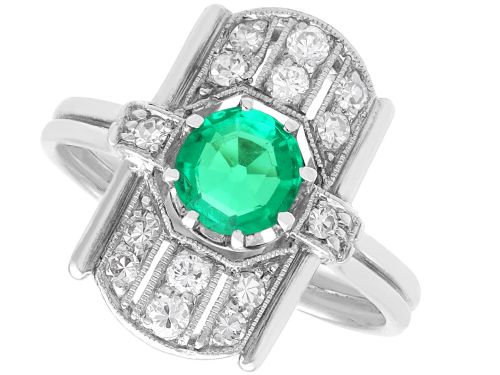
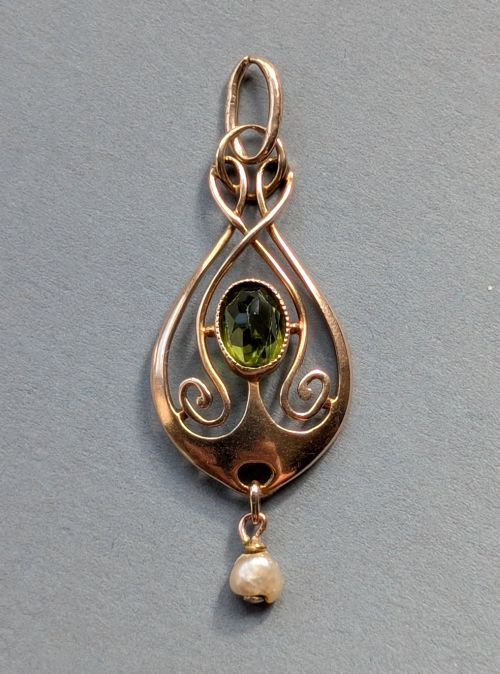
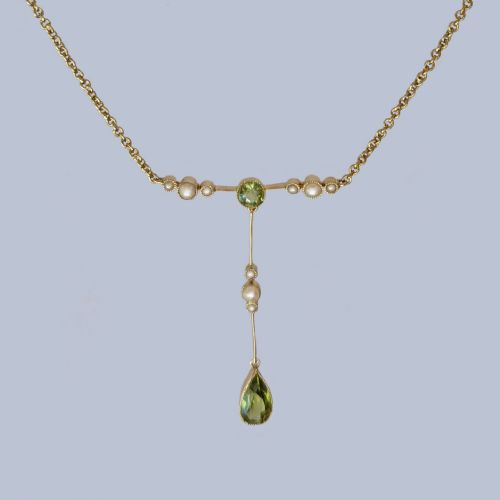
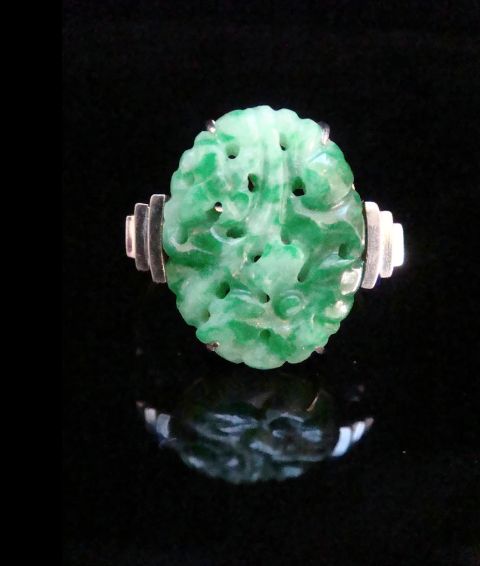
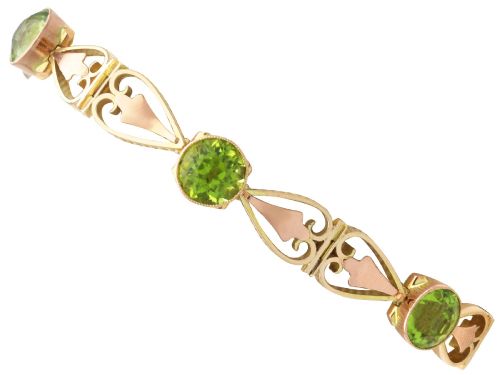
Edwardian and Art Nouveau examples frequently pair peridot or emerald with seed pearls in yellow gold settings, while Art Deco designs lean towards platinum and white gold housing carved jade or calibrated emeralds.
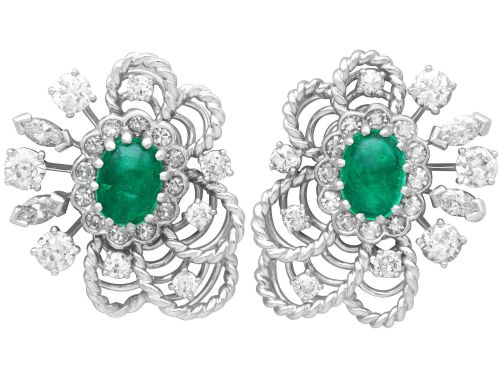
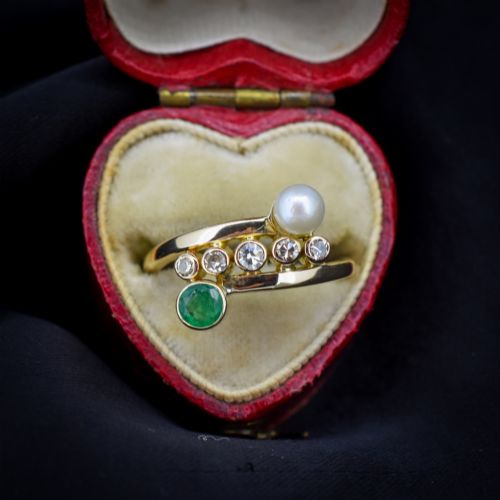
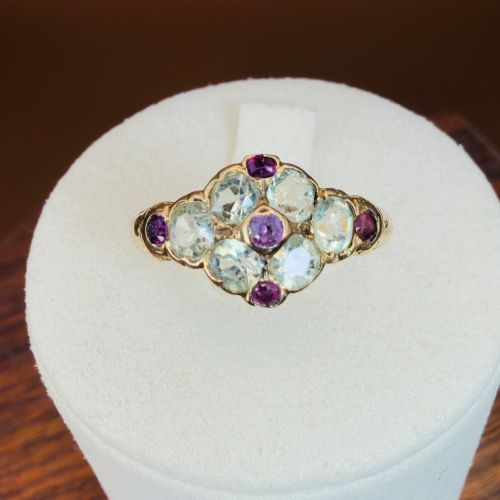
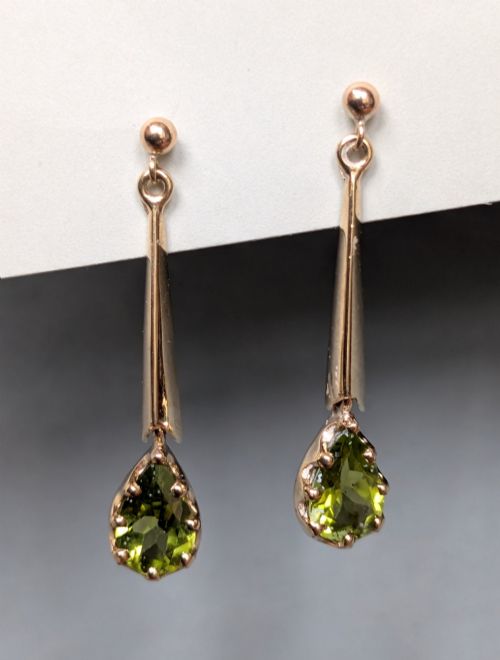
Victorian pieces in this category often take the form of cluster rings or drop earrings incorporating emeralds alongside old cut diamonds. Simpler silver or gold mountings also hold nephrite and jadeite bead strands from the late nineteenth and early twentieth centuries.
How these pieces were made
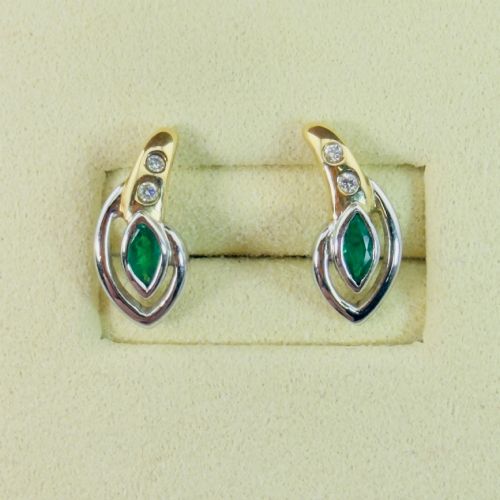
Maker's workshops utilised precious metals such as platinum, sterling silver and various purities of gold, including 9ct, 14ct, 15ct and 18ct yellow and white gold. Stones were secured using claw settings, bezel mounts or intricate millegrain work that defined Edwardian and Art Deco manufacturing.
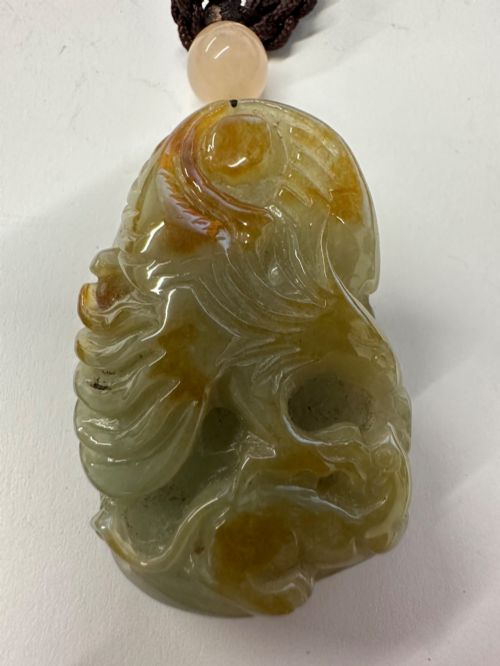
Lapidary techniques combined faceted cutting styles like oval, pear, cushion and princess cuts with smooth cabochons and Chinese hand-carved jade motifs. Natural pearls, diamonds and seed pearls were integrated using fine wirework and cluster arrangements.
Antique Green Gemstone Jewellery Retail Price Guide 2026
Typical asking prices for green gemstone jewellery among the pieces listed under this phrase on Sellingantiques today, from the lower quarter to the upper quarter. They describe what is for sale here now, not the wider market.
Materials span platinum, sterling silver, 9ct, 14ct, 15ct and 18ct gold, paired with diamonds and natural pearls.
What varies in quality
Quality differences rest primarily on the natural characteristics of the stones themselves, such as the depth of colour in an imperial jade carving or the clarity and origin notes accompanying a Colombian emerald. The finesse of the metalwork, from hand-carved jade details to delicate millegrain edges on platinum cluster rings, separates standard production from finer workshop output.
The integrity of the original mountings and the matching of secondary stones like old cut diamonds or natural pearls also influence the overall standard of a piece.
Murrle Bennett·G. Colani
The Antique Green Gemstone Jewellery Glossary
- Cabochon
- A gemstone shaped and polished with a smooth convex surface rather than faceted. This style highlights the natural colour and internal qualities of stones like jade.
- Millegrain
- A decorative jewellery technique involving a line of tiny raised metal beads along the edges of a setting. It is commonly found on Edwardian and platinum Art Deco mountings.
- Old cut
- A diamond cutting style prevalent before the modern brilliant cut, characterised by a smaller table, higher crown and larger culet. These stones catch candlelight and early electric light distinctively.
- Seed pearl
- Very small natural or cultured pearls used extensively in Victorian and Edwardian cluster jewellery and pendant necklaces. They are often strung on silk or secured with fine seed-pearl work.
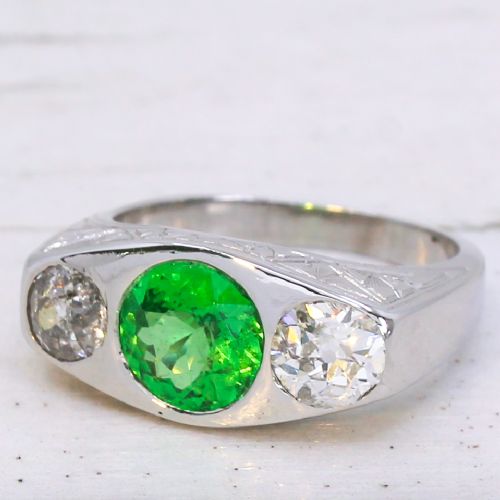
- Tsavorite
- A vibrant green grossular garnet variety discovered in East Africa and occasionally seen in antique and vintage gemstone settings from the early twentieth century.
Antique Green Gemstone Jewellery: Frequently Asked Questions
How do I care for antique green gemstone jewellery?
Different green stones require specific care routines due to varying hardness levels on the Mohs scale. Softer materials like jade and pearls benefit from gentle cleaning with a soft cloth rather than harsh ultrasonic baths.
Stones set in gold or platinum should be checked periodically by a professional jeweller to ensure the claws remain secure.
Can I wear these antique rings every day?
Daily wear is possible for sturdier configurations like gold or platinum diamond and emerald cluster rings, provided they receive proper care. Softer stones or antique settings with delicate open backs require more mindful handling.
Removing rings before strenuous tasks prevents undue wear on antique metalwork and prongs.
How do I identify the period of a piece?
Stylistic clues such as floral Art Nouveau motifs, geometric Art Deco lines or heavy Victorian cluster settings help determine the era. Hallmarks stamped into the gold or platinum provide official assay marks and date letters.
Examining the back of the piece reveals construction methods characteristic of specific decades.
Are all emeralds in these pieces treated?
Many antique emeralds carry traditional minor oil treatments to enhance clarity, which has been standard practice for centuries. Certificate details on specific pieces often note the presence and extent of such clarity enhancements.
Untreated stones or those with specific geographic origins like Colombia frequently command distinct collector interest.