


Antique Graphite Sketches
Antique graphite sketches capture immediate observations on paper through the direct stroke of a pencil, offering collectors intimate glimpses into past lives and artistic processes.
Antique Graphite Sketches
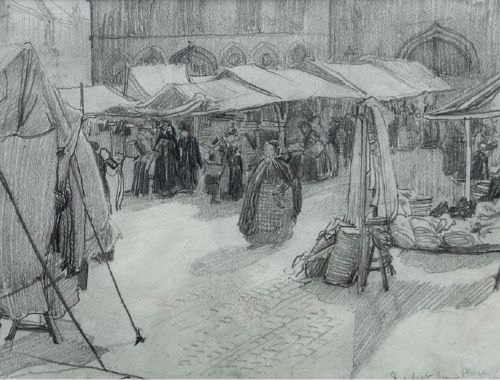
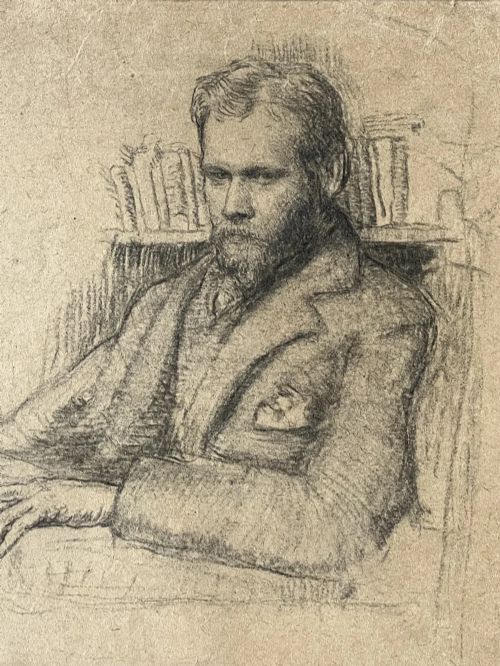
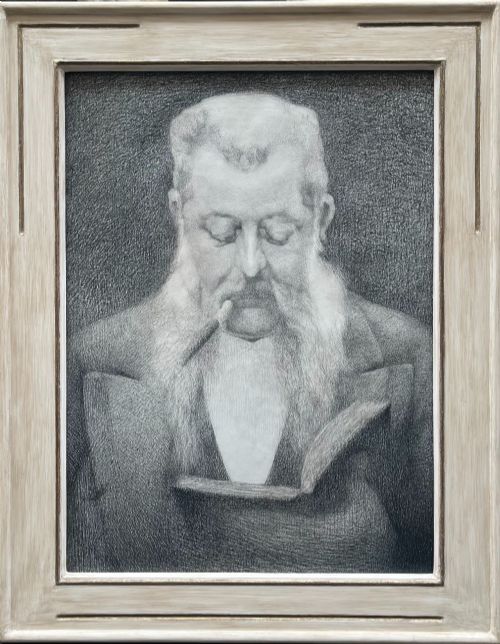
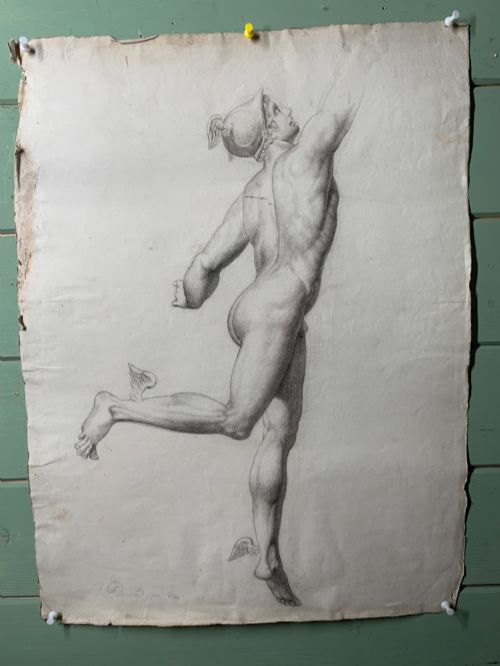
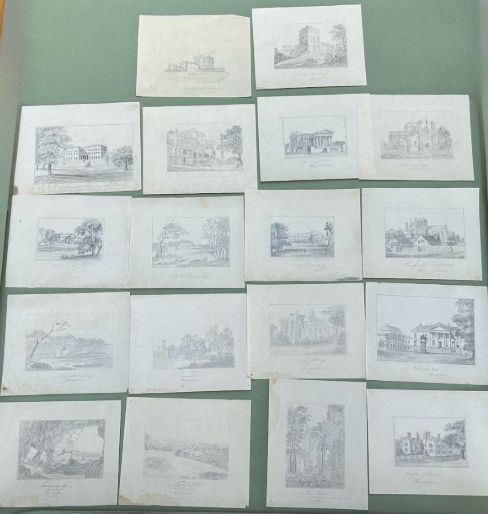
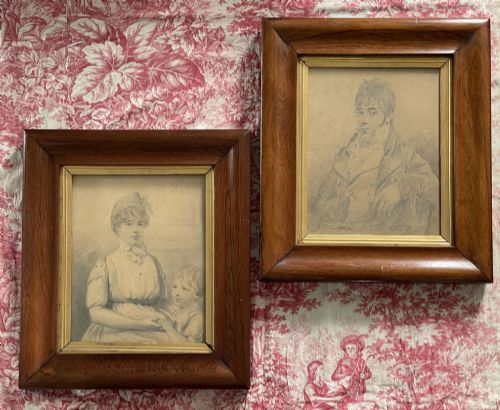
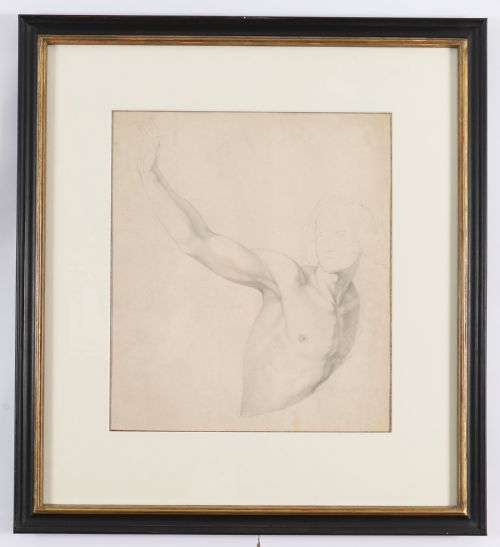
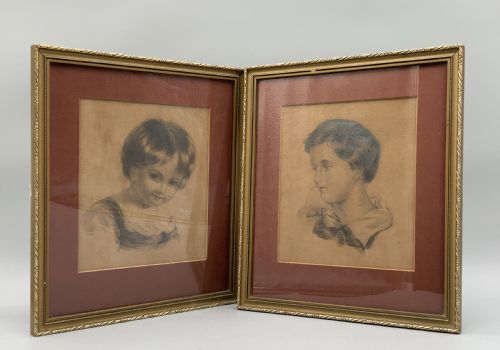
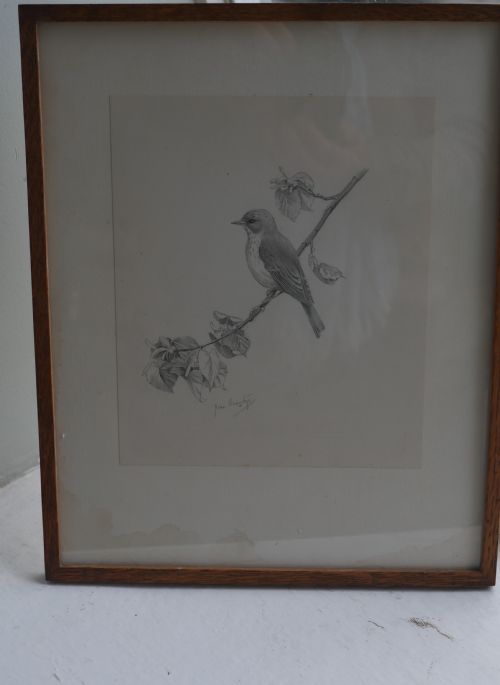
When you search for antique graphite sketches, you are looking at original works on paper rendered in pencil, charcoal, and plumbago. These pieces range from rapid landscape studies and architectural notes to highly finished academic life drawings and formal portraits.
The selections available span multiple centuries, with significant representation from the eighteenth, nineteenth, and early twentieth centuries. You will encounter both anonymous sheets and signed works by named artists, often framed in wood with glass.
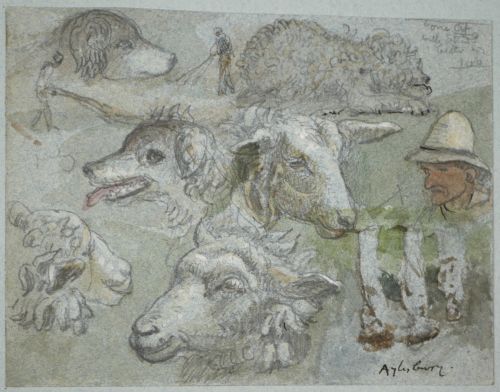
Subject matter varies widely across the inventory, including figurative studies, still lifes, domestic animals, and historical scenes. Many items preserve the direct touch of an artist working from life or recording a composition in preparation for a larger painting.
How they were made
The primary medium across these pieces is graphite or pencil on paper, occasionally supplemented by chalk, ink, or watercolour washes. Plumbago, an early form of pure carbon, appears in eighteenth-century works to achieve fine, metallic lines.
Support materials consist chiefly of various grades of paper, sometimes mounted or framed behind glass with wood mouldings and gold leaf accents. Many drawings remain housed in period frames that complement the draughtsmanship.
Materials documented on the page combine traditional graphite and pencil with chalk, watercolour, and gold leaf.
What varies in quality
Quality in these drawings rests upon the confidence and economy of the draughtsman's line. A skilled hand conveys volume, texture, and expression with minimal strokes, whereas weaker work relies on laboured shading or hesitant corrections.
The level of finish also distinguishes the pieces, separating quick marginal notations or academic exercises from fully realised portraits and compositional studies. Condition of the paper and preservation beneath glass further influence the visual impact of the work.
James Smetham·Augustus John·James Ferguson·Ozias Humphry·Henri Josephe Hesse·Fred Lawson·Sir Nathaniel Dance-Holland·Henry Edridge
The Antique Graphite Sketches Glossary
- Plumbago
- An early form of pure native graphite used for detailed miniature portraits in the eighteenth century. It produces a distinct silvery grey line with a subtle metallic sheen.
- Academic study
- A drawing executed as part of an artist's training, often focusing on the human figure, anatomy, or antique sculpture. These pieces demonstrate rigorous attention to proportion and light.
- Grisaille
- A painting or drawing executed entirely in shades of grey or neutral monochrome. This technique often serves to simulate sculpture or prepare for an engraved plate.
- Chalk
- A soft drawing material used alongside graphite to add highlights or deep shadows on tinted paper. It allows artists to build up tonal contrast rapidly.
- Manner of
- A term used when a work is executed in the distinct style of a well-known master without being an actual copy by that hand. It indicates stylistic influence rather than direct attribution.
Antique Graphite Sketches: Frequently Asked Questions
How should I frame antique sketches?
Protect works on paper by using acid-free mounts and framing them behind glass to prevent atmospheric damage. Keep them away from direct sunlight to avoid fading the graphite and paper over time.
Selecting simple wooden mouldings allows the historical character of the drawing to remain the primary focus on the wall.
Are these drawings signed?
Many sheets feature artist signatures, studio stamps, or period inscriptions identifying the sitter or location. Anonymous works are equally common, representing everyday practice or preliminary studies.
Attribution often relies on historical context, stylistic comparisons, and contemporary documentation rather than a signature.
What is the difference between graphite and plumbago?
Plumbago refers specifically to the natural form of carbon used in eighteenth-century portraiture before modern pencil manufacturing developed. It yields a characteristic fine, silvery line often seen in small-scale portrait drawings.
Graphite encompasses the broader category of pencil drawing materials utilised across the nineteenth and twentieth centuries for varied tonal effects.
How do I identify the period of a drawing?
Dating relies on paper characteristics, clothing styles of sitters, framing materials, and handwriting on the reverse or mount. Academic conventions and artistic techniques also shift distinctly between the eighteenth and twentieth centuries.
Comparing the work to dated examples by similar schools helps narrow the window of creation.