

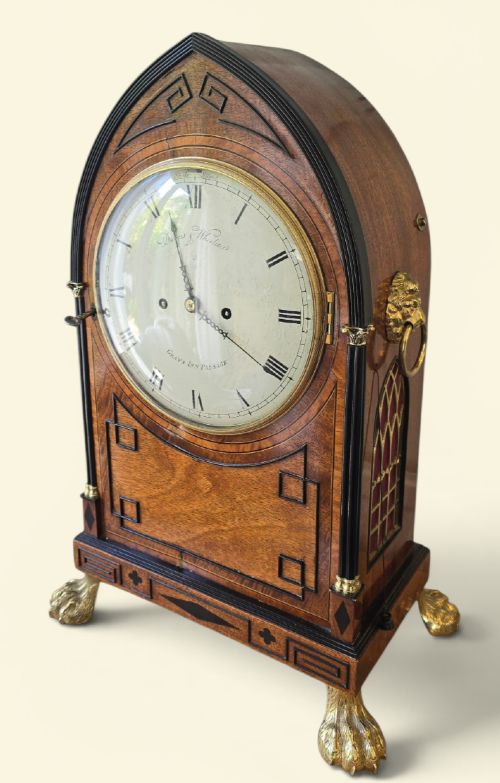

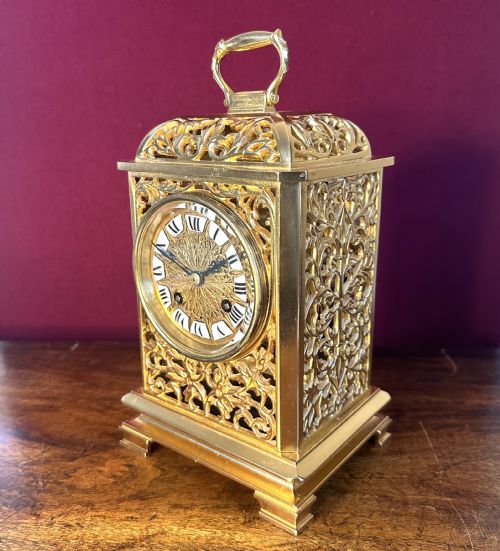


Antique Gothic Table Clock
An antique gothic table clock brings vertical architectural forms, pointed arches and heavy brass movements together to anchor a room.
Antique Gothic Table Clock
An antique gothic table clock is a timepiece built to sit upon a bracket, desk or mantelpiece, drawing directly upon medieval architectural vocabulary for its silhouette.
The versions most commonly met on this page date from the nineteenth century, spanning Victorian Gothic revivals and earlier Regency interpretations.
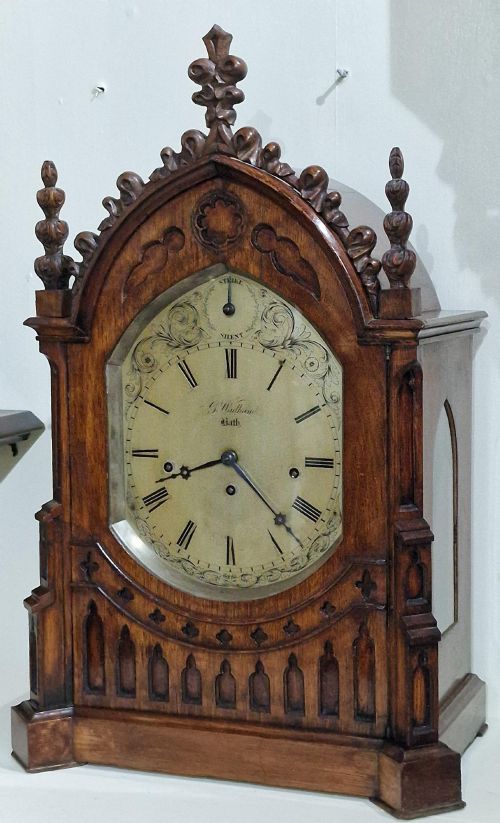
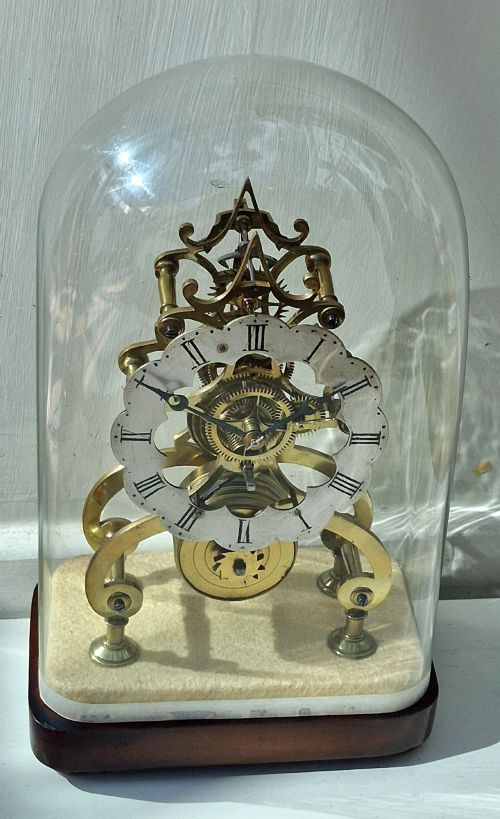
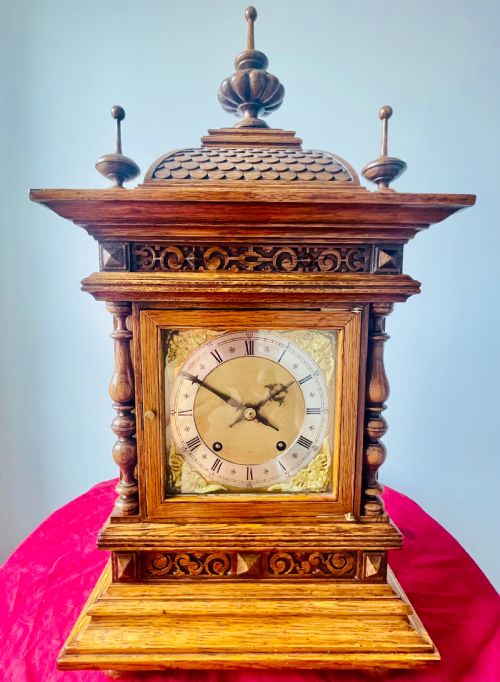
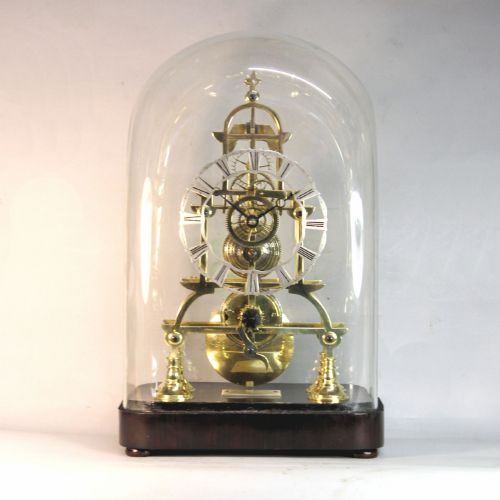
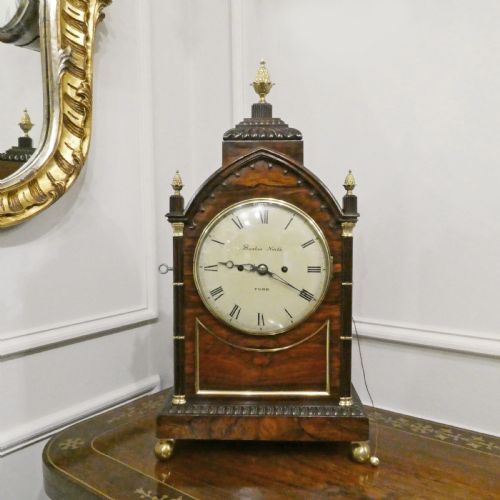
These clocks appear in various forms, including bracket clocks, skeleton clocks and mantel clocks, often housing striking or fusee movements.
How they were made
Maker workshops built the structural cases from dense timbers such as mahogany, oak and rosewood, frequently incorporating brass inlay, or cast them in bronze, ormolu and brass.
Internal mechanisms relied on heavy brass plates and gears, driven by fusee movements or spring barrels designed to maintain steady power as the mainspring unwound.
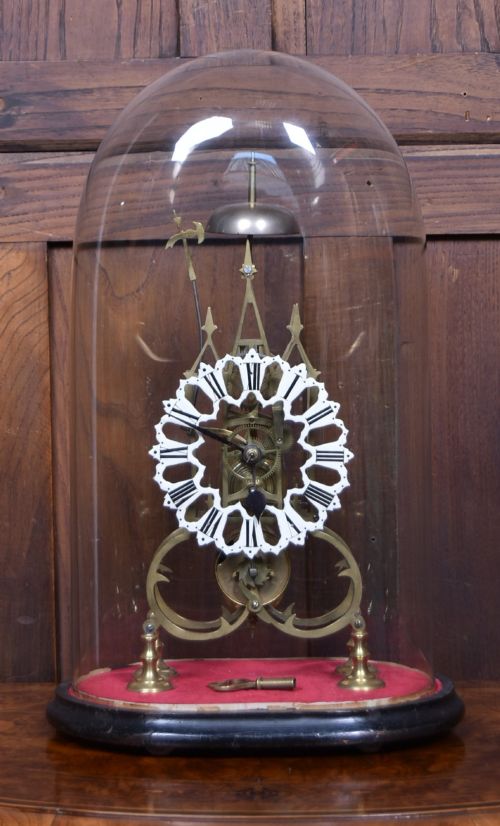
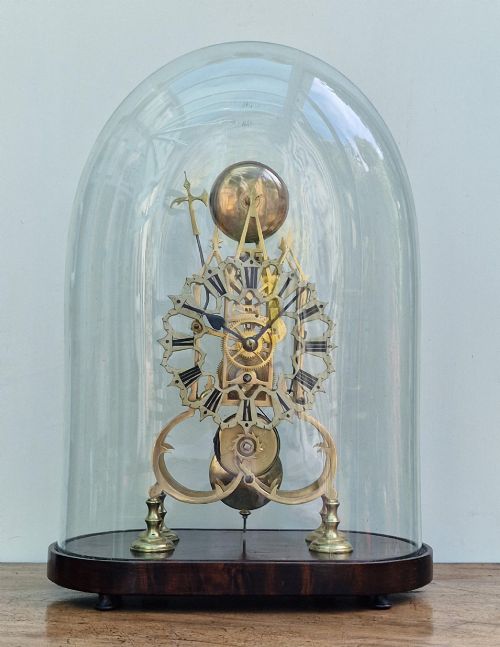
Enamel dials, silvered brass chapters and glass domes protected fragile hands and exposed skeleton movements from dust while revealing the intricate gear trains.
Materials across these listings include rosewood, mahogany, oak, marble, brass, bronze, glass and enamel.
What varies in quality
The standard of an antique gothic table clock rests upon the crispness of its architectural casting and the precise hand-cut joinery of its timber case.
Complexity and finish within the movement itself distinguish standard production pieces from fine signed examples, particularly where triple fusee, quarter-striking or musical trains are present.
The integrity of original components, from glass domes and silvered dials to matching pendulum suspensions, elevates a piece above those altered or assembled from mixed eras.
George Wadham·Winterhalder·Richard Winter·Barber and North·George Orpwood·Desbois and Wheeler·Winterhalder and Hofmeier·Thwaites·Cording·Wilkinson·Ravrio·E White·Ganthony·Edwards·Hunt and Roskell·Japy Freres·Samuel Marti
The Antique Gothic Table Clock Glossary
- Fusee
- A conical pulley used in better clocks to equalise the diminishing power of the mainspring as it unwinds. This ensures the gear train receives uniform force for steady timekeeping.
- Skeleton clock
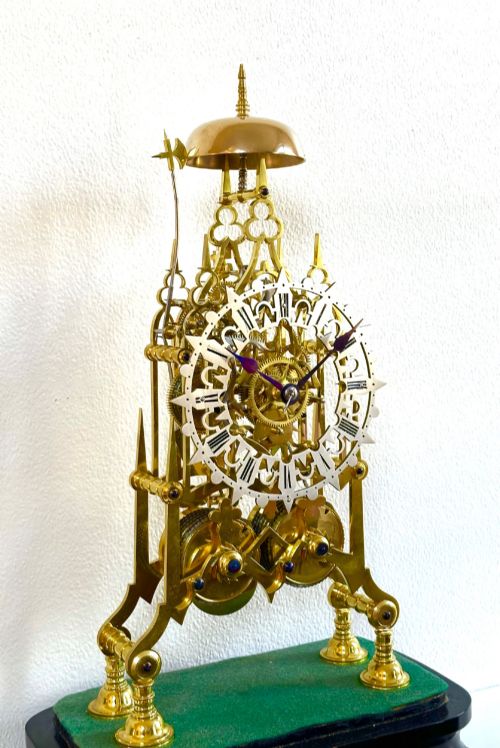
- A timepiece with an exposed gear train stripped of a conventional solid case, allowing the intricate brass wheels and plates to be viewed directly beneath a glass dome.
- Lancet top
- A clock case profile featuring a pointed, arched top that mimics the lancet windows seen in medieval gothic architecture. This shape was especially popular during the Regency and Victorian periods.
- Bracket clock
- A portable timekeeper originally designed to sit upon a wall bracket, though most now rest on tables or mantelpieces. They frequently feature sophisticated striking or chiming mechanisms.
- Grand Sonnerie
- A complex striking train that chimes the hours and the quarters automatically on every quarter hour. It represents high horological ambition in carriage and table clocks.
Antique Gothic Table Clock: Frequently Asked Questions
What is an antique gothic table clock?
An antique gothic table clock is a timepiece designed for domestic placement, styled with the pointed arches, trefoils and heavy architectural detailing characteristic of the gothic revival.
These clocks range from compact skeleton movements housed under glass domes to substantial wooden bracket clocks driven by fusee movements.
How do you wind a fusee clock?
Wind a fusee clock by inserting the key into the dial winding square and turning it gently until the spring reaches full tension. Care must be taken not to overwind the mechanism.
Most fusee movements require attention every seven to eight days to maintain accurate timekeeping without straining the internal brass chain or gut line.
Where should you place a table clock?
Place a table clock on a sturdy, level surface away from direct sunlight, drafts and damp environments that could warp wooden cases or rust steel pivots. Mantelpieces and heavy sideboards provide stable support.
Ensuring the surface is completely level allows the pendulum or balance wheel to swing with even beats, which keeps the movement running reliably.
How do you identify a skeleton clock?
Identify a skeleton clock by its open brass frame, which exposes the entire wheel train and escapement to view without a solid wooden or marble case blocking the sides. Many are displayed under glass domes.
These timepieces emerged as ornamental showpieces for Victorian parlours, celebrating both mechanical precision and architectural skeletonisation.