



Antique Gooseneck Lamp
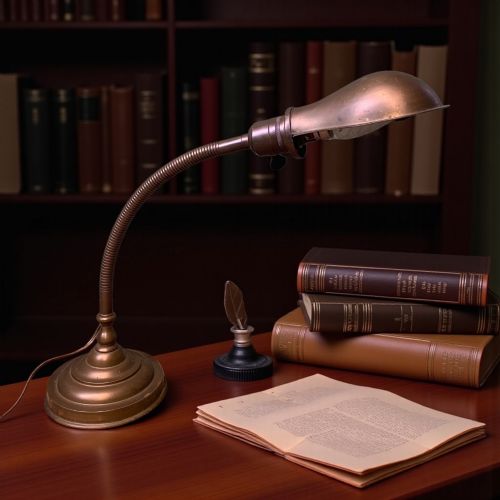
An antique gooseneck lamp brings directional light and industrial utility to a workspace, combining flexible brass arms with heavy cast bases.
Antique Gooseneck Lamp
An antique gooseneck lamp provides focused illumination through adjustable arms and flexible necks, serving as a practical desk or floor light. The pieces gathered here span the nineteenth century through the nineteen-forties, capturing the transition from traditional reading lamps to articulated industrial designs.
Most examples you encounter on this page date from the Edwardian period or the nineteen-twenties, constructed in brass, bronze, and cast iron. Desk lamps and adjustable reading lamps dominate the selection, alongside occasional floor lamps and wall sconces featuring shell-shaped or cranberry glass shades.
Materials and construction
Makers utilised solid brass, patinated bronze, and heavy cast iron to construct durable stands and weighted bases that support extended arms. Flexible tubing, swivel joints, and adjustable angles allow the metal neck to bend and hold position without slipping.
Shades take various forms, incorporating delicate cranberry glass, moulded porcelain, or simple metal reflectors to direct the beam. Wiring has frequently been updated in keeping with modern safety standards while retaining the original metalwork.
Antique Gooseneck Lamp Retail Price Guide 2026
Typical asking prices for gooseneck lamp among the pieces listed under this phrase on Sellingantiques today, from the lower quarter to the upper quarter. They describe what is for sale here now, not the wider market.
Listings feature adjustable desk lamps, floor lamps, and wall sconces spanning the Edwardian era, Art Deco period, and the nineteenth century.
Variations in quality
Quality rests upon the integrity of the flexible mechanism and the weight of the base, ensuring the lamp remains stable when fully extended. Solid brass and patinated bronze castings demonstrate superior craftsmanship compared to lighter plated metals.
The presence of original components, such as specialised shades in cranberry glass or porcelain, elevates the standard of a piece. Finer examples retain smooth articulation in the swivel joints and original surface finishes.
Hawkins
The Antique Gooseneck Lamp Glossary
- Gooseneck
- A flexible or articulated metal neck that bends into various positions to direct light. It allows the lamp to function as a task light for reading or drafting.
- Cranberry glass
- A rich red-pink glass created by adding gold chloride to the molten batch. It appears frequently in Edwardian lampshades.
- Patinated brass
- Brass that has developed a subdued surface sheen or oxidation through age and handling. This treatment adds depth to the metal components.
- Standard lamp
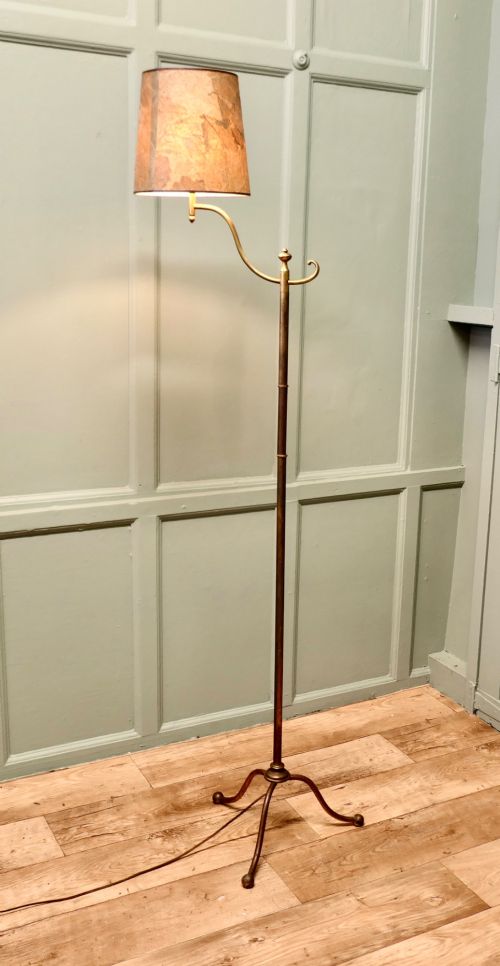
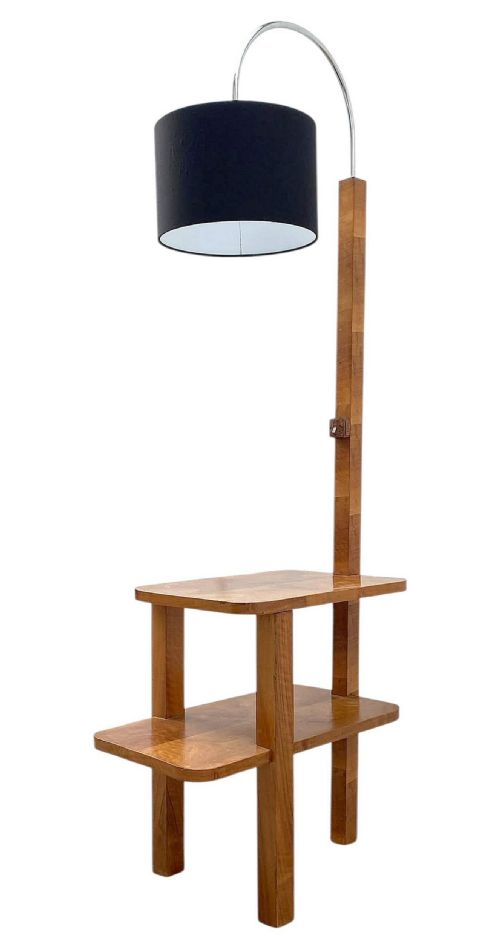
- A tall floor-standing lamp designed to illuminate a room rather than a specific desk surface. Several period examples appear in this selection.
Antique Gooseneck Lamp: Frequently Asked Questions
How do I use an antique gooseneck lamp safely?
Many period lamps arrive rewired with modern electrical flex to meet contemporary safety requirements while preserving the vintage housing. It remains sensible to have any historical wiring checked by a qualified electrician before daily use.
Position the heavy base on a stable surface and adjust the flexible brass neck gently to avoid straining the internal wiring or historical joints.
Can I replace the shade on my desk lamp?
Original shades in cranberry glass or porcelain contribute significantly to the character of a period lamp. Finding exact historical replacements can prove difficult if an original shade breaks.
Ensure any replacement shade matches the original fitter size and weight to maintain the balance of the adjustable arm.
How do I distinguish Edwardian lamps from nineteen-thirties designs?
Edwardian reading lamps often feature polished brass, porcelain elements, and cranberry glass shades associated with traditional studies. Nineteenth-century and early twentieth-century pieces frequently display ornate casting work.
Nineteen-thirties designs lean toward streamlined Art Deco forms, shell-shaped metal shades, and industrial articulated arms like the Anglepoise.
Where were these lamps originally placed?
Desk lamps and adjustable reading lamps served in offices, libraries, and notaries' rooms where focused task lighting was essential. Floor standing torchere lamps and standard lamps illuminated corners of domestic sitting rooms.
Wall sconces provided directional light in hallways or above specific work surfaces in Edwardian and interwar interiors.