

Antique Gold Three Stone
When choosing an antique gold three stone ring, you select a piece carrying a trio of gems set in precious metal across the finger.
Antique Gold Three Stone
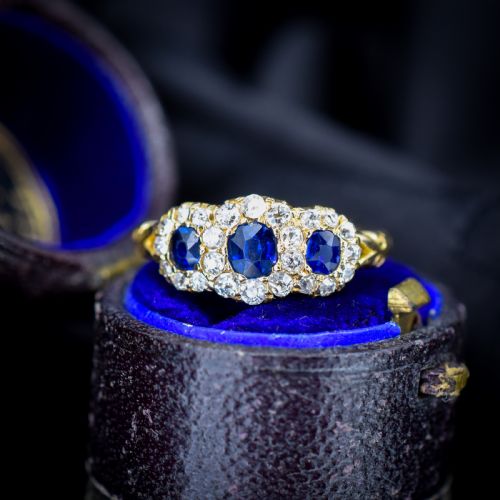
The search phrase antique gold three stone encompasses rings featuring three principal gems mounted on a precious metal band, often termed trilogy rings. These pieces appear frequently in Victorian, Edwardian, and Art Deco designs spanning the nineteenth and twentieth centuries.
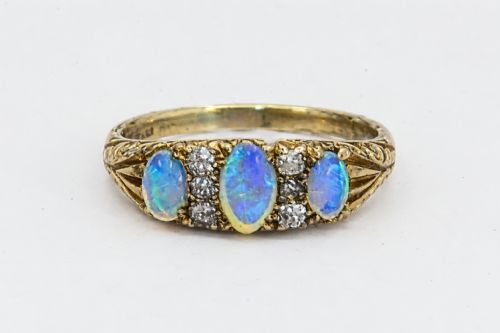
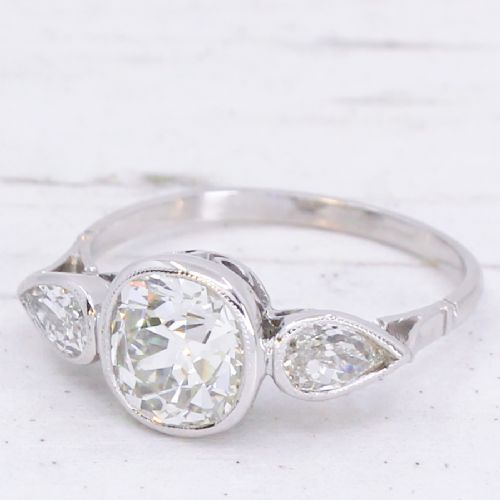
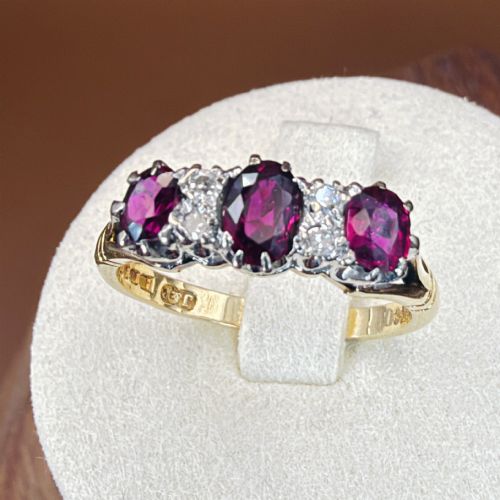
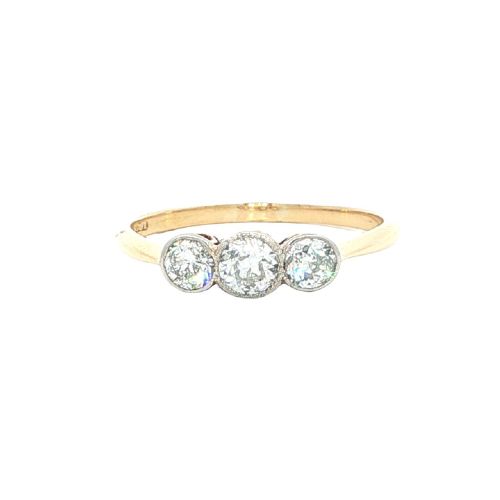
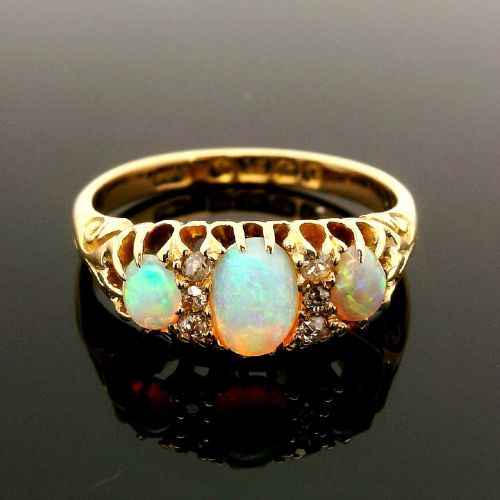
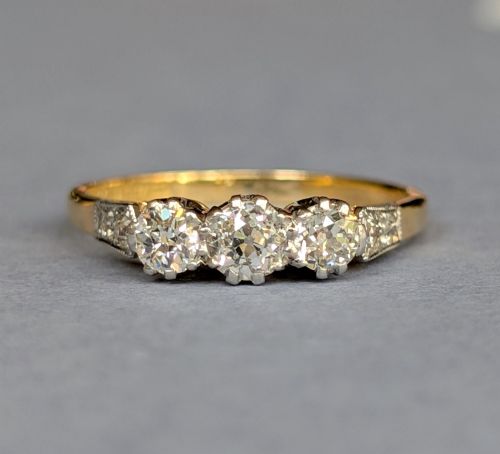
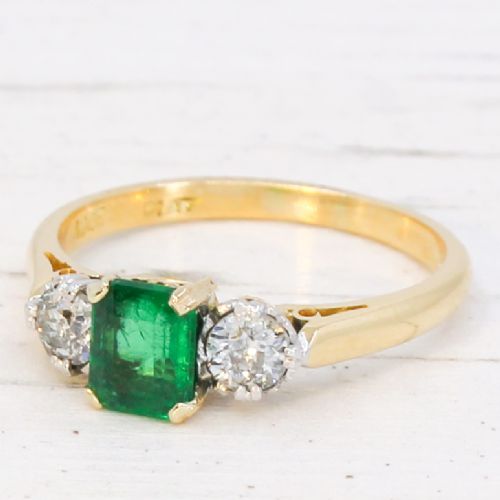
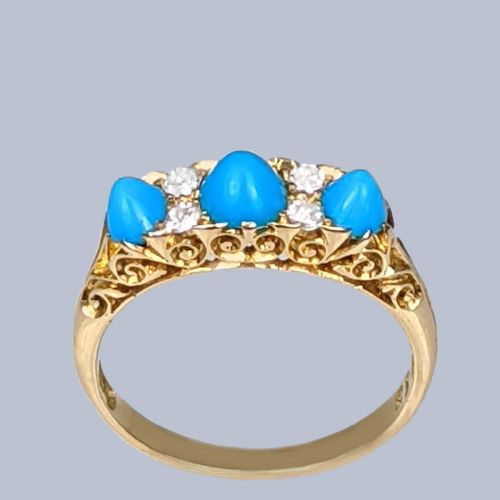
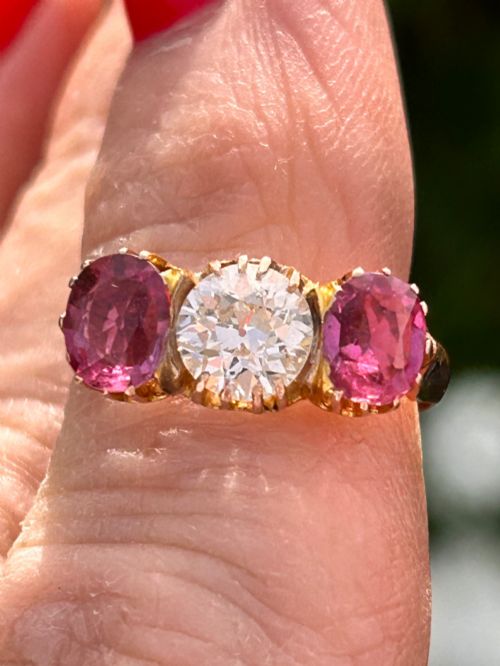
Most examples found on this page pair central diamonds with rubies, sapphires, or opals, mounted in eighteen-carat yellow gold or platinum combinations. The format serves as a traditional choice for engagement or commemorative jewellery, placing three stones to represent past, present, and future.
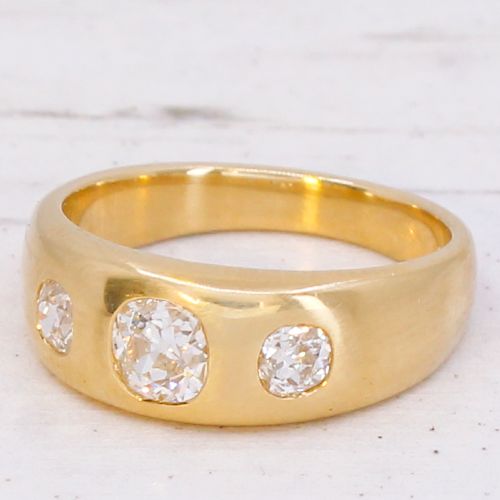
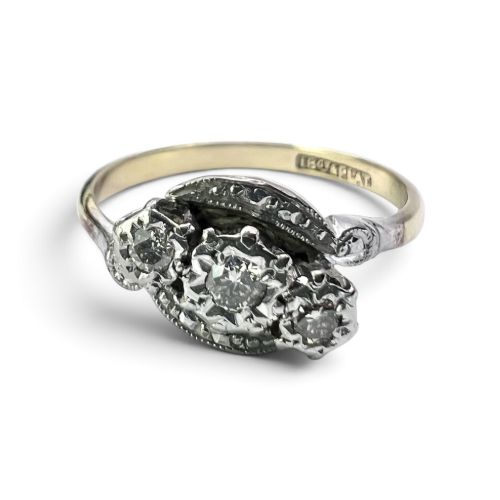
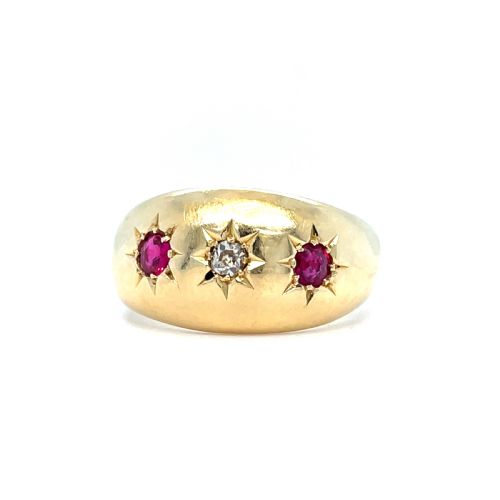
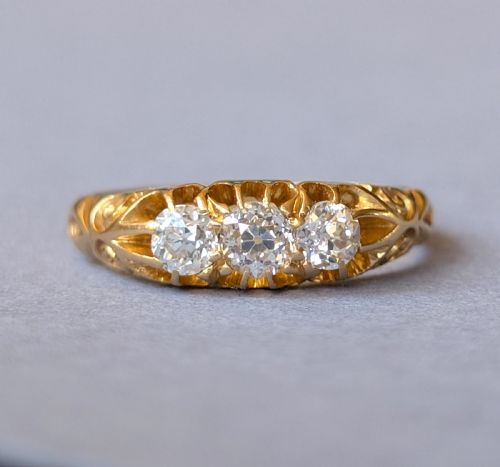
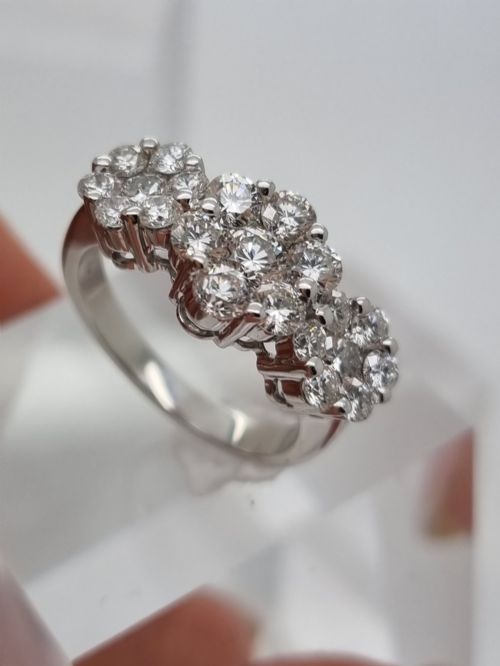
Makers utilised distinct settings ranging from traditional claw mounts to flush gypsy settings, where stones sit level with the band. Boat shapes and starburst clusters also emerge among the selection, altering the silhouette while maintaining the core three-stone arrangement.
How they were made
Goldsmiths worked primarily with eighteen-carat yellow gold and platinum, occasionally incorporating white gold or silver to enhance the brilliance of mounted diamonds. Platinum gained favour in Edwardian and Art Deco workshops for its strength, allowing delicate claw and pierced settings.
Gemstones feature hand-cut facets, including old cushion, old pear, and old European cuts that display softer light return than modern brilliant cuts. Stones were secured by hand-formed claws or flush-set into thick gold bands for everyday durability in gypsy styles.
Certain gypsy rings hide secret hand-stamped maker marks tucked safely inside the thick gold band, waiting for a jeweler's loupe.
What varies in quality
Quality rests upon the matching and proportion of the three principal gems, alongside the weight and preservation of the metal mount. Well-matched stone sizes and harmonious colour saturation distinguish finer examples from more modest compositions.
The integrity of the setting work and the crispness of hallmark stamps indicate the level of craftsmanship involved. Minimal wear to the band shoulders and secure, original stone retention elevate a ring's standing.
The Antique Gold Three Stone Glossary
- Trilogy ring
- A ring set with three stones, traditionally symbolising the past, present, and future of a relationship. This term is frequently used interchangeably with three-stone designs.
- Gypsy ring
- A style where gemstones are flush-set directly into a heavy tapered band rather than held in raised claws. This setting protected the stone girdles and suited daily wear.
- Old cut
- A diamond facet arrangement hand-cut before the standardisation of modern round brilliant cuts, typically displaying smaller tables and higher crowns. These cuts produce distinctive candlelit refraction.
- Hallmark
- An official stamp applied to precious metals indicating purity, origin, and sometimes the year of creation. These marks help verify the period of manufacture.
- Boat ring
- A navette-shaped setting where the central stones sit within an elongated boat-like frame. The outline tapers gracefully towards the finger.
Antique Gold Three Stone: Frequently Asked Questions
What do three stones symbolise?
The three stones traditionally represent the past, present, and future of a couple's journey together. This sentimental meaning made the configuration popular for Victorian and Edwardian engagement tokens.
Over time, the arrangement also evolved into a favored style for anniversaries and personal milestones, maintaining its romantic association across decades.
How do I care for antique gold rings?
These pieces require gentle handling due to their age and the delicate nature of antique settings. Regular inspection by a jeweller ensures that claws remain secure around the gemstones.
Remove rings before engaging in heavy manual work or swimming, and clean them with warm soapy water and a soft brush rather than harsh ultrasonic devices.
Can I wear an antique trilogy ring daily?
Many examples were built for everyday wear, particularly heavier gypsy-set bands that protect the girdle of each stone. Lighter claw-set rings from the Edwardian period demand more cautious handling.
Assess the thickness of the shank and the condition of the settings to determine whether a particular ring suits continuous daily use.
How do I distinguish Edwardian from Victorian rings?
Victorian pieces often feature warmer yellow gold settings, turquoise, opals, and bolder cluster arrangements. Hallmarks can frequently narrow down the exact year of production.
Edwardian items lean towards platinum-topped gold, delicate filigree work, and brighter diamond groupings influenced by changing stylistic preferences around the turn of the twentieth century.