
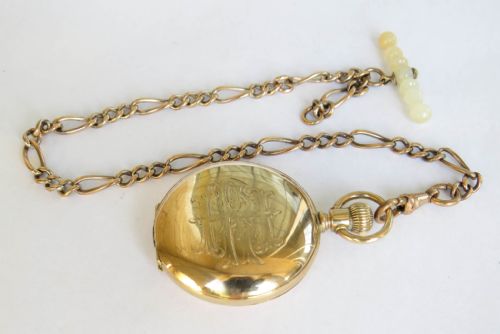
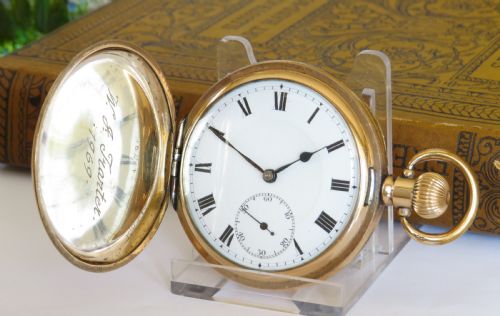




Antique Gold Hunter Watch
An antique gold hunter watch brings a spring-loaded metal lid to a pocket watch dial, protecting the glass while adding a satisfying click to the daily routine.
Antique Gold Hunter Watch
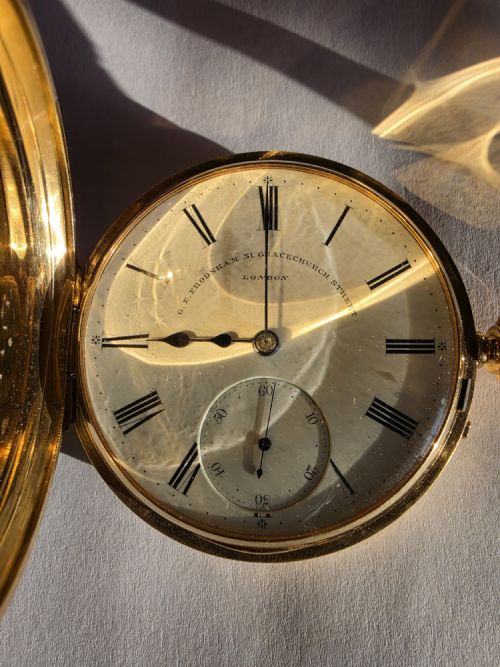
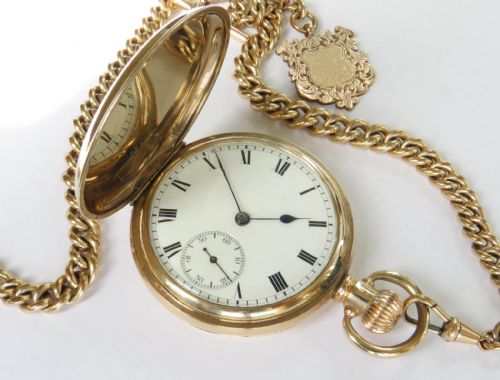
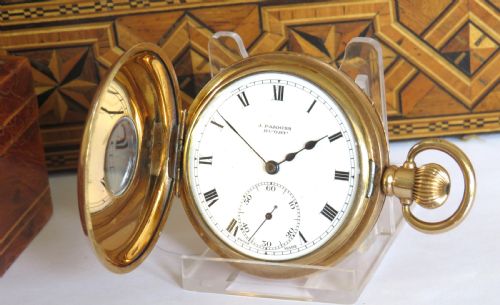
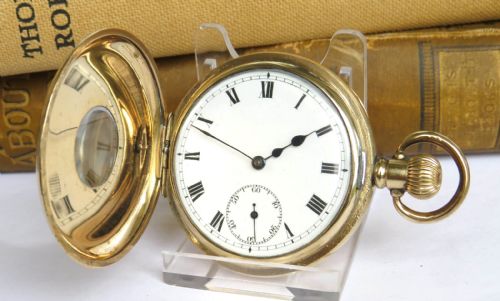
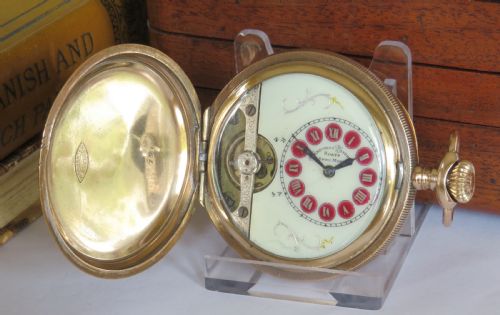
An antique gold hunter watch comprises a fully enclosed pocket timepiece featuring a protective metal spring cover over the dial, contrasting with open-face equivalents. Buyers seeking this phrase encounter varieties spanning the Victorian, Edwardian, and Art Deco periods, alongside interwar pieces from the nineteen-twenties and nineteen-thirties.
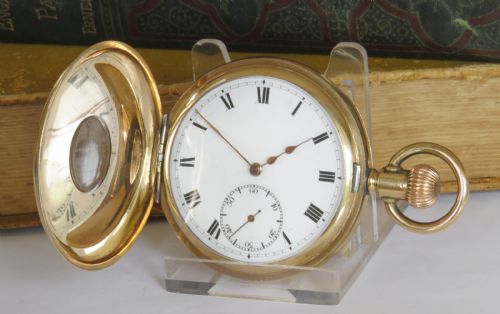
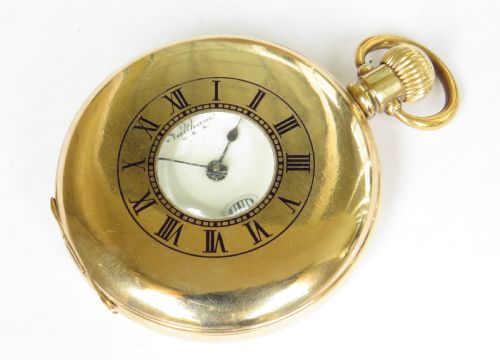
The selection ranges from robust gold-filled or gold-plated daily carriers to heavy solid carat gold specimens, including eighteen-carat, fourteen-carat, and nine-carat variants. Enclosed formats frequently appear as full hunters covering the entire dial or half hunters featuring a small glass window framed by enamel numerals on the outer lid.
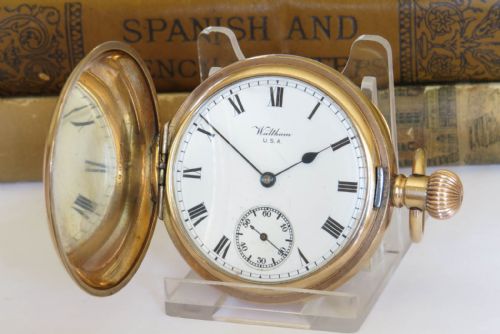
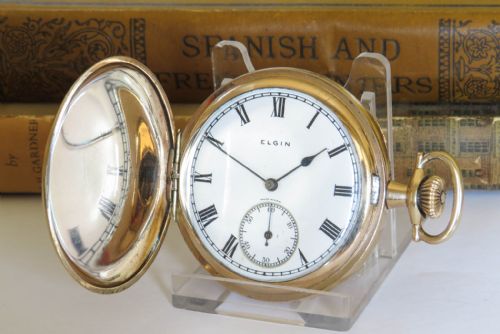
Origins stretch across English makers in London and Glasgow to Swiss workshops and American factories like Waltham and Elgin. Forms include standard button-wind pocket pieces, fob watches, and complex mechanical movements such as fusee setups and repeater mechanisms.
Materials and Construction
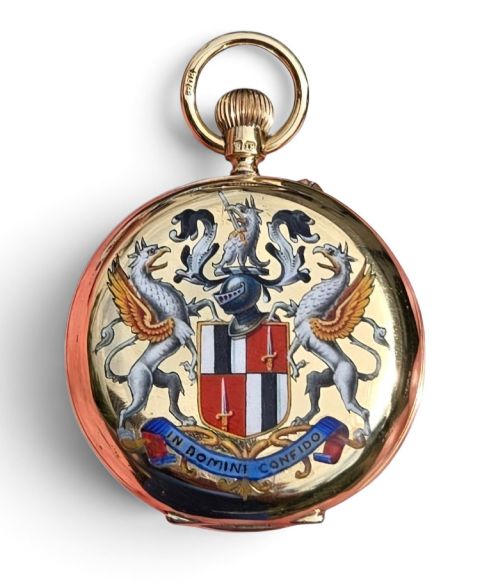
Cases utilise solid precious metals like eighteen-carat gold, fourteen-carat gold, and nine-carat gold, alongside gold-filled and gold-plated brass alloys. Metal cases often receive engine-turned decoration, intricate hand engraving, or coloured enamel highlights around the bezel and chapter ring.
Internal movements rely on brass plates, steel pinions, and jewelled bearings to reduce friction, coupled with glass crystals protecting the enamel dials. Fusee movements incorporate chain-driven cones to equalise mainspring torque, whilst later lever escapements utilise balance wheels and hairsprings for accurate timekeeping.
Listings feature Victorian, Edwardian, and Art Deco periods, utilising materials from nine-carat gold to gun metal and enamel.
Quality and Craftsmanship
Superior examples distinguish themselves through the weight and purity of the gold casing, intricate hand-engraved detailing, and the complexity of the internal movement. High-grade mechanisms often feature multiple jewel bearings, adjusted escapements, and signed plates from notable makers.
Case construction dictates durability, where solid gold housings maintain integrity better than thin plated alternatives. Dial execution also sets tiers, separating standard painted markers from crisp fired enamel layouts and detailed window framing on half hunter lids.
George Edward Frodsham·Waltham·Limit Revue·R Stewart Glasgow·Elgin·Urania·Record·Hebdomas Patent·Lonville·A Golay Leresche Geneve·Eastern Watch Case Co Criterion·Baume And Co·Pimco·L Roberts Geneve·Tiffany And Co·J Lyndsey·J Dauer Geneve·George Jackson·Electa
The Antique Gold Hunter Watch Glossary
- Hunter
- A pocket watch fitted with a spring-loaded hinged metal cover that protects the glass dial from scratches. Pressing the crown typically releases the lid.
- Half Hunter
- A hunter case variation featuring a central glass aperture on the outer lid, allowing the wearer to check the hands without opening the cover.
- Fusee
- A conical pulley mechanism connected to the mainspring by a fine chain, designed to maintain even power delivery as the spring unwinds.
- Gold Filled
- A durable composite material consisting of a heavy layer of gold mechanically bonded to a base metal core.
- Enamel
- A glassy substance fused to metal surfaces through high-temperature firing, used to create smooth white watch dials and decorative exterior details.
- Engine Turned
- A geometric decorative pattern precision-engraved onto metal cases using a specialised lathe to cut intricate repeating lines.
Antique Gold Hunter Watch: Frequently Asked Questions
What is a hunter watch?
A hunter watch is a pocket timepiece equipped with a hinged metal lid that springs open via a crown-mounted button to reveal the dial.
This protective cover guards the glass face against daily pocket wear, dust, and impact.
How do I wind the watch?
Most pieces on this page wind via the top crown, whilst older fusee specimens may require a separate key applied to a square arbor on the movement plate or dial.
Care should be taken not to overwind the mainspring when resistance increases.
Can I wear an antique pocket watch daily?
Many people carry these pieces in waistcoats or jacket pockets using compatible watch chains and fobs.
Regular mechanical servicing keeps the vintage geartrain running reliably for daily use.