

Antique Gold Convex Mirror
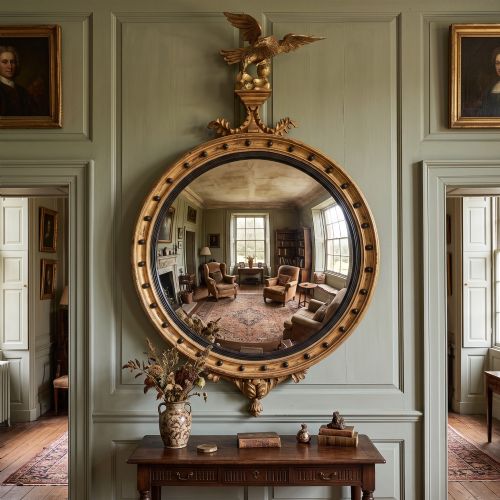
An antique gold convex mirror bends the light of a room into a singular, curving sphere that captures the entire interior within its frame.
Antique Gold Convex Mirror
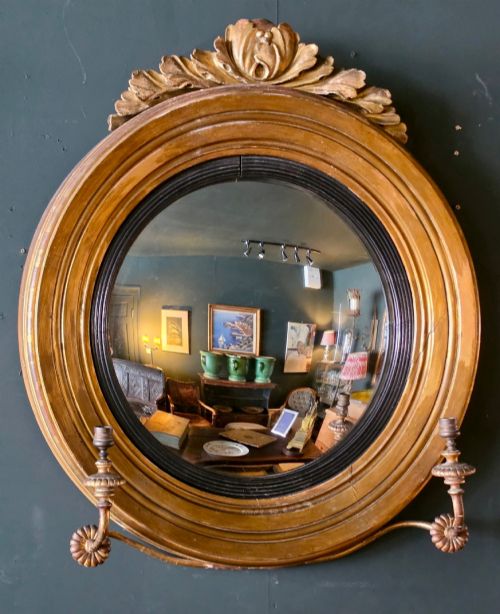
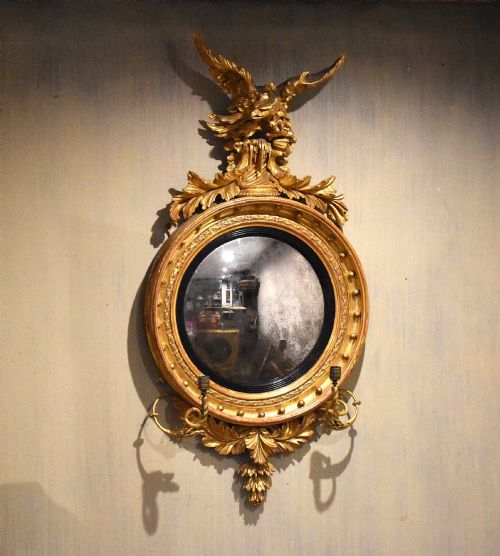
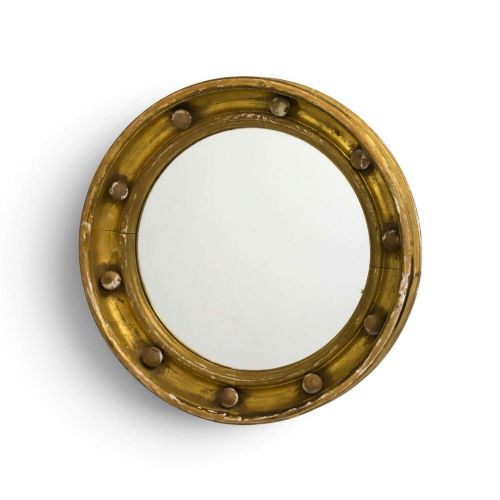
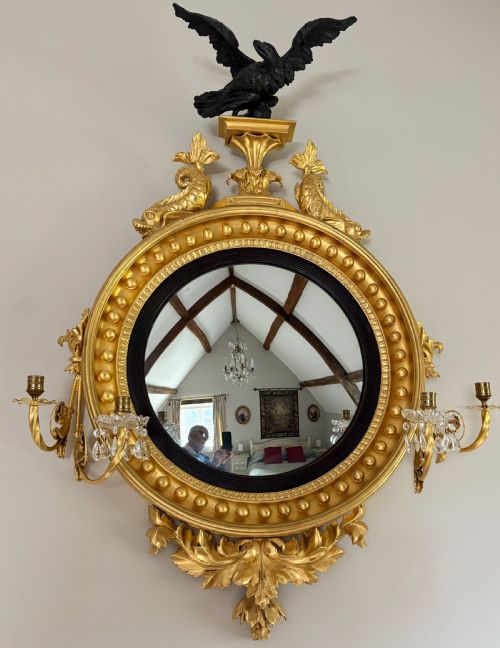
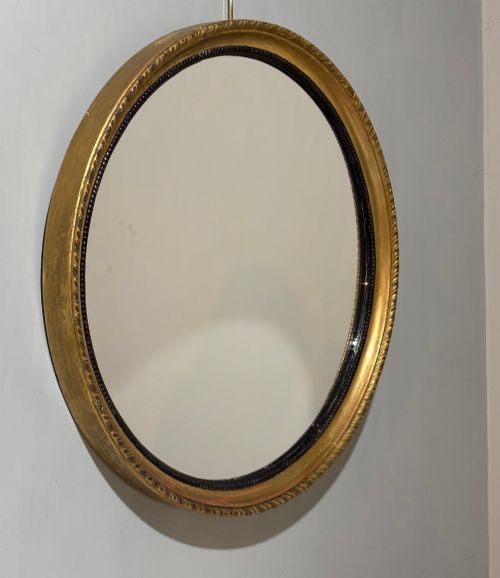
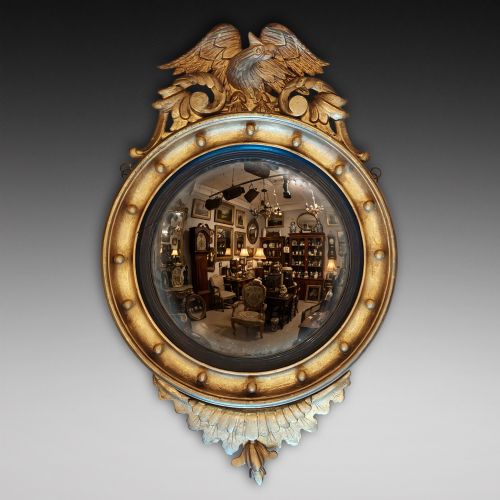
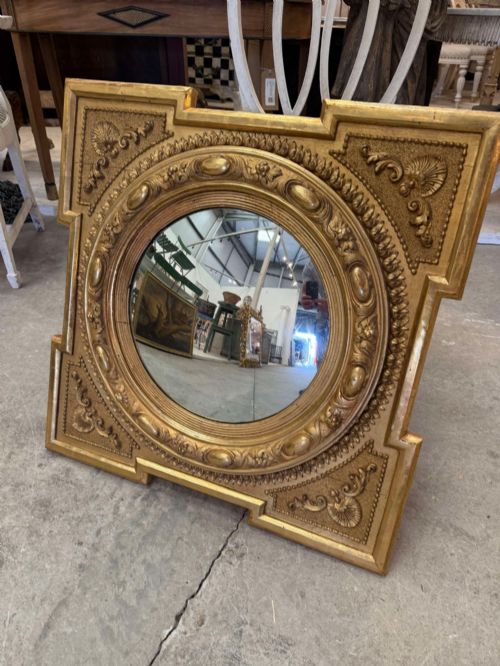
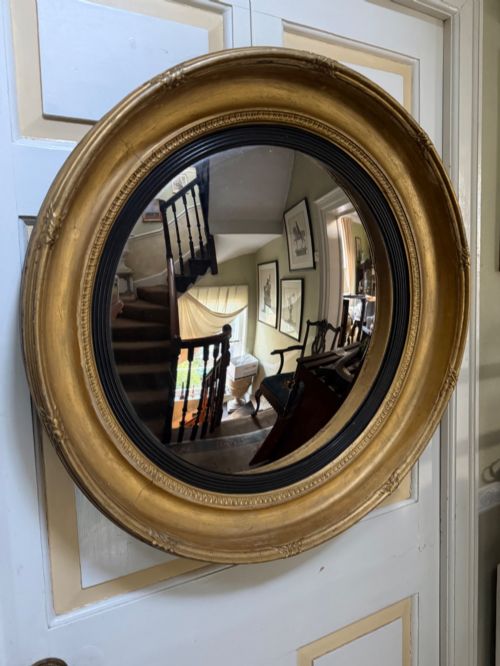
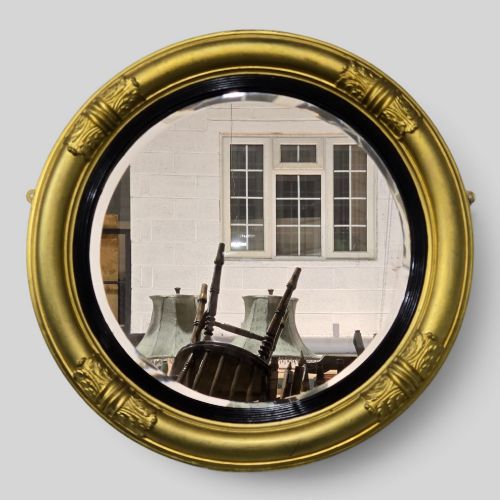
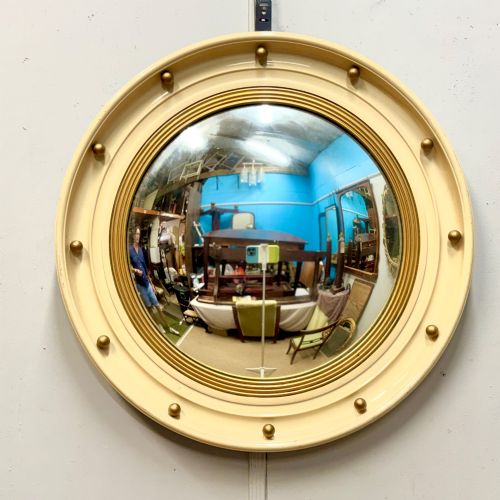
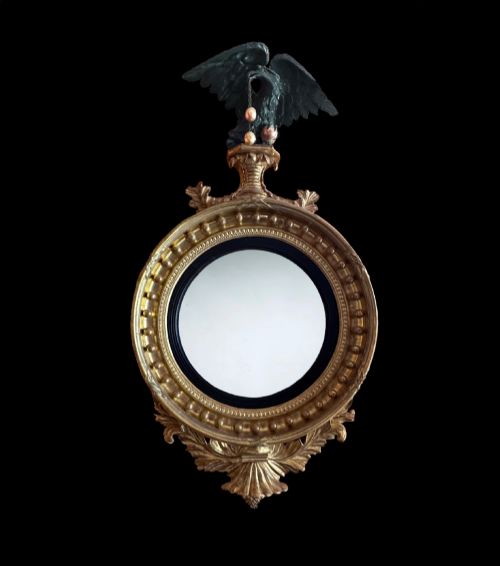
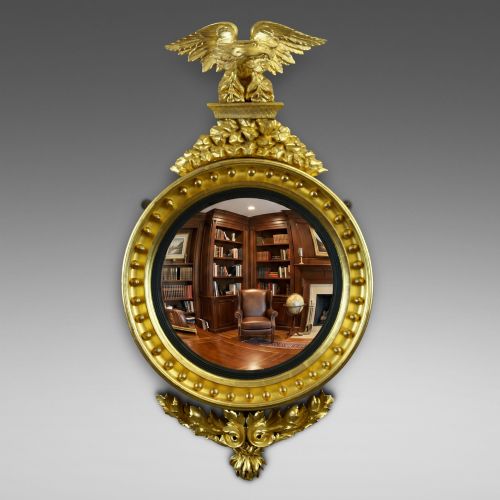
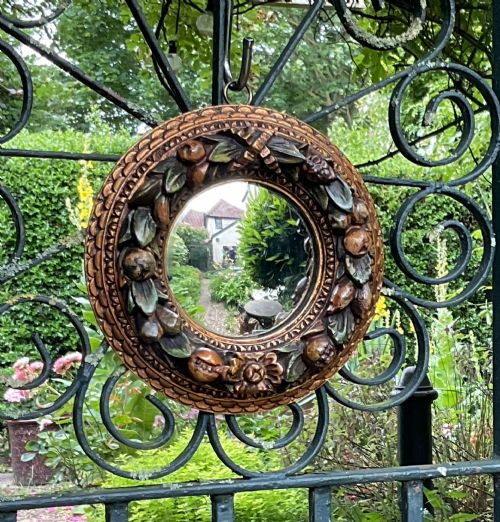
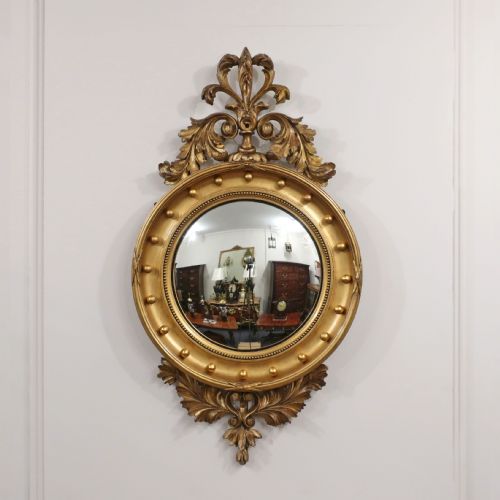
An antique gold convex mirror takes circular form, framed in giltwood and gesso, drawing the eye toward a bulging spherical glass plate. This page centres primarily on pieces from the Regency period, alongside nineteenth-century examples and later revivals spanning into the twentieth century.
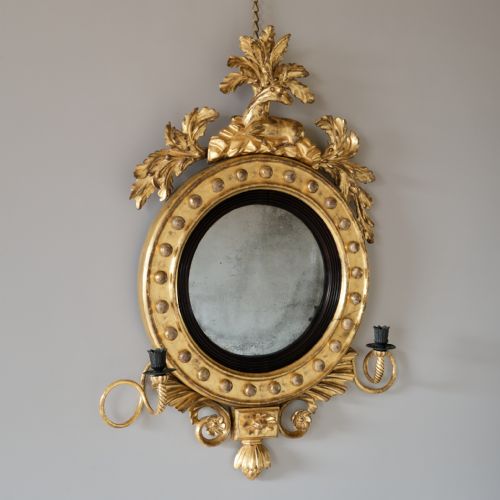
Wall mirrors and girandoles dominate the forms found here, often carrying decorative details such as ball decoration, ebonised slips, or eagle crest mounts. The scale ranges from small chamber pieces to large wall-hanging plates of bold proportions.
Materials and construction
Makers carved timber to build the circular frames, applying coats of gesso before gilding the surface in gold leaf. Glass was blown or cast to create the distinct convex curve that characterises the mirror plate.
Ebonised wood and brass appear alongside giltwood to form contrasting slips and candle arms on girandole models. Traditional joinery and plasterwork hold the heavy circular mouldings together.
Antique Gold Convex Mirror Retail Price Guide 2026
Typical asking prices for gold convex mirror among the pieces listed under this phrase on Sellingantiques today, from the lower quarter to the upper quarter. They describe what is for sale here now, not the wider market.
Watch out for miniature reflections of yourself wearing a slightly wider hat than usual.
Assessing quality in a convex mirror
The crispness of the carved gesso and giltwood ornamentation dictates the calibre of the piece, particularly on crests like eagles and surrounding ball decorations. Finer examples retain deep, sharp relief where lesser pieces appear softened by over-restoration or heavy wear.
The quality of the mirror glass itself and the depth of the ebonised slip indicate the care taken during manufacture. Original surfaces with honest patination carry greater depth than later replacements.
The Antique Gold Convex Mirror Glossary
- Convex mirror
- A circular wall glass with an outward-curving spherical plate that reflects a wide, distorted panorama of the room.
- Giltwood
- Timber coated with a layer of gold leaf applied over a prepared gesso base. This finish provides the characteristic metallic gleam on antique frames.
- Gesso
- A plaster mixture applied to carved wood to create a smooth surface for gilding. It allows for crisp, detailed moulding around the frame.
- Girandole
- A wall mirror fitted with candle branches or sconces attached to the frame. The curved glass helps to multiply the flickering candlelight.
- Ebonised slip
- A dark, blackened inner moulding placed inside the main frame to create a visual border around the mirror glass.
Antique Gold Convex Mirror: Frequently Asked Questions
What is a convex mirror?
A convex mirror is a circular wall glass featuring a bulging, spherical plate that reflects a wide-angle view of its surroundings.
Historically placed in reception rooms and parlours, these pieces served both to illuminate spaces by catching natural light and to monitor activity across a room.
How do I hang a heavy convex mirror?
Due to the substantial weight of the timber frame, gesso, and thick glass, these mirrors require secure wall fixings anchored directly into masonry or solid studs.
Professional hanging hardware rated for heavy loads ensures the piece remains safely supported on the wall.
How do I date an antique convex mirror?
Dating relies on examining the construction of the wooden backing, the composition of the gesso, and the style of the frame ornament.
Regency models often feature distinct ball decoration and eagle crests, while later nineteenth-century and revival pieces show variations in the gilding and joinery.