

Antique Gold Bed
An antique gold bed brings warmth and period character to a bedroom through polished metalwork, gleaming brass, and gilt finishes.
Antique Gold Bed
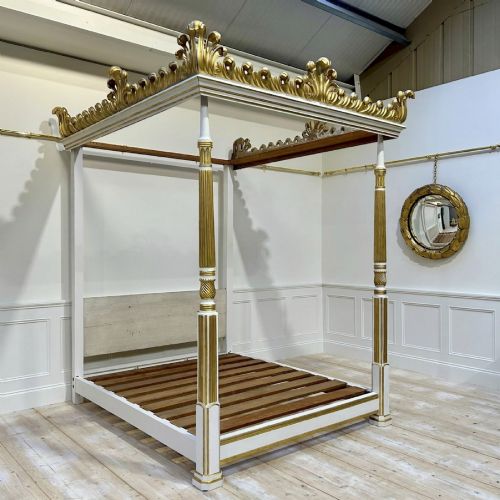
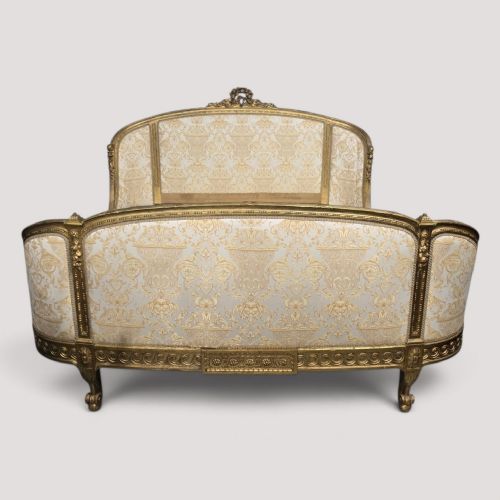
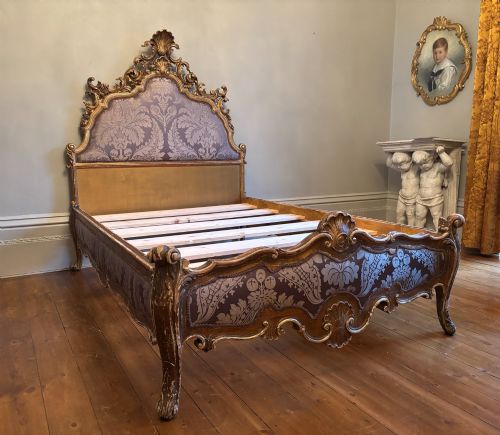
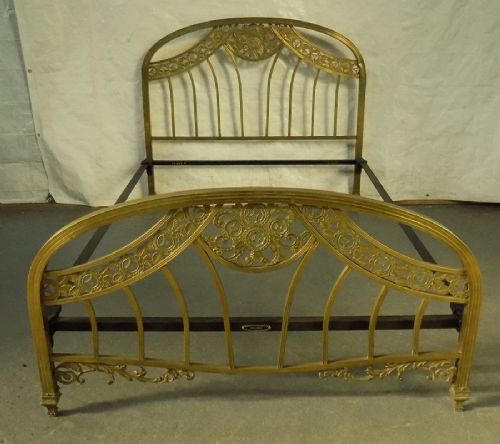
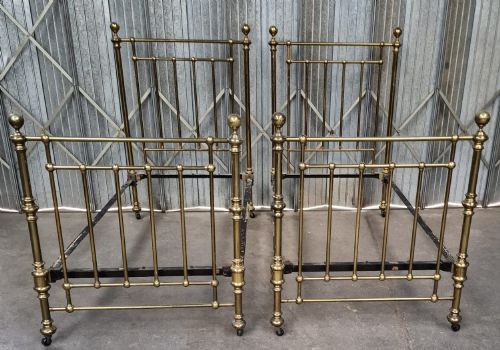
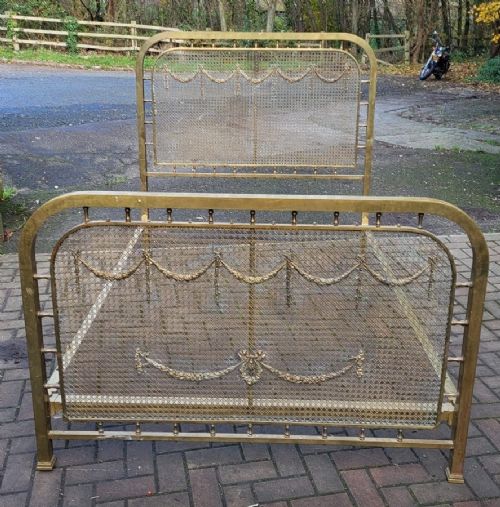
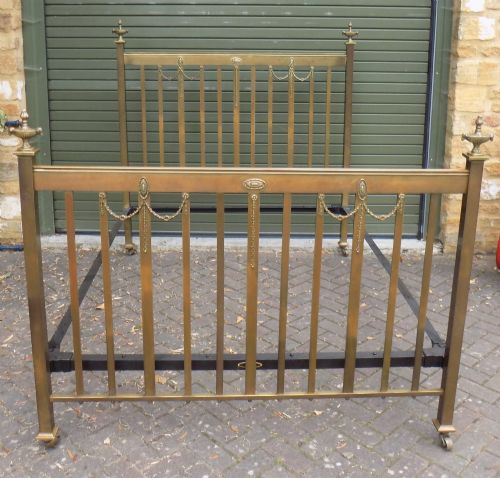
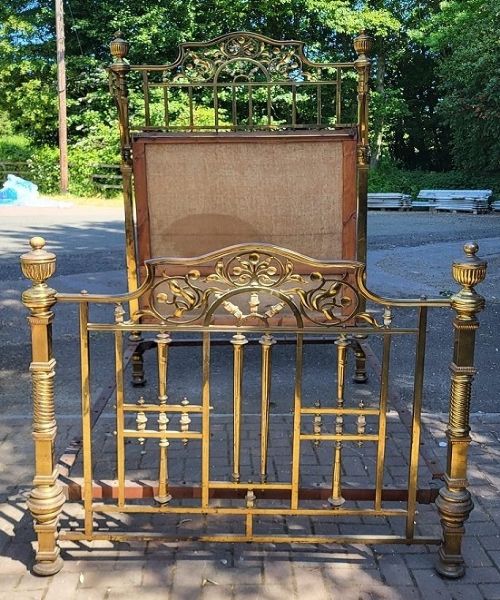
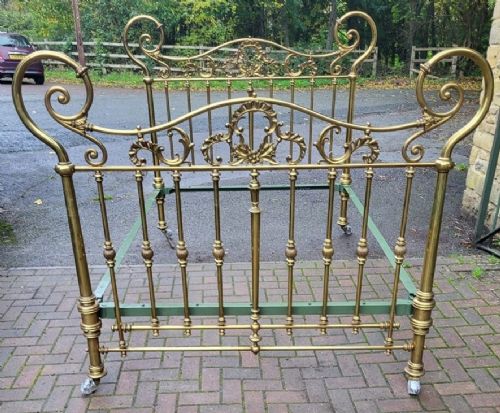
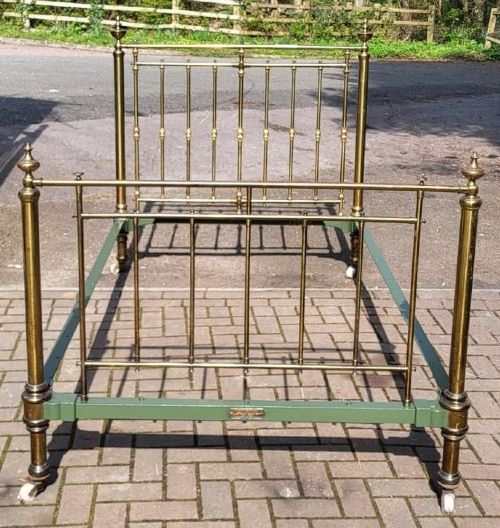
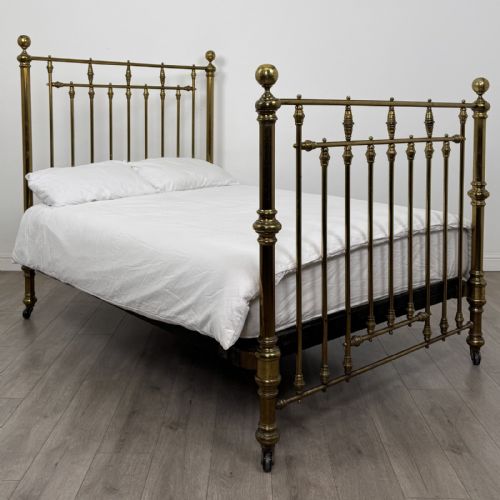
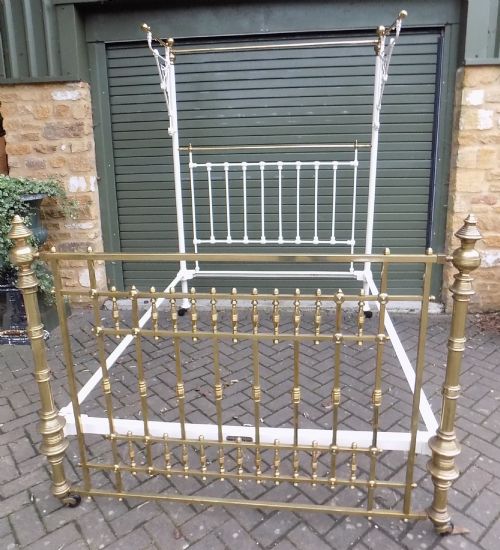
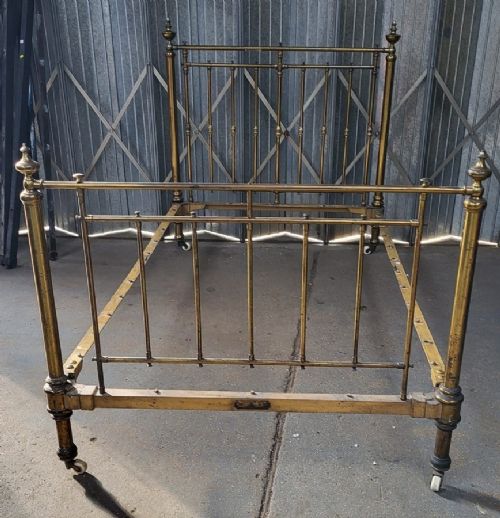
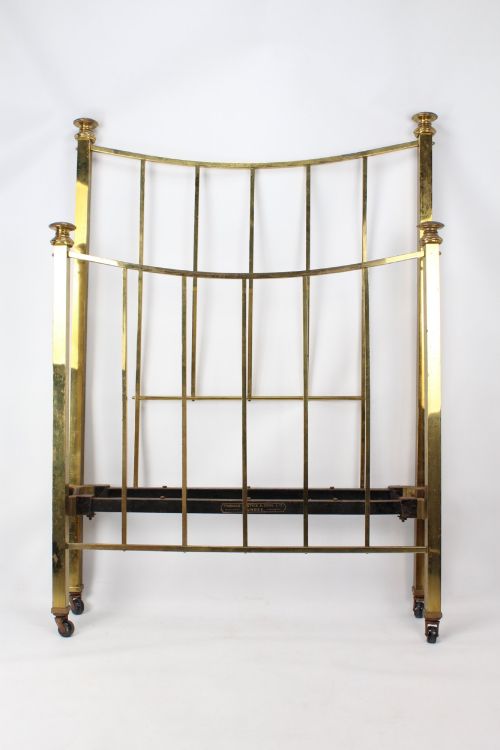
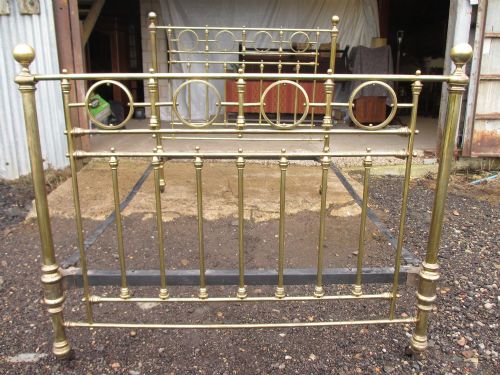
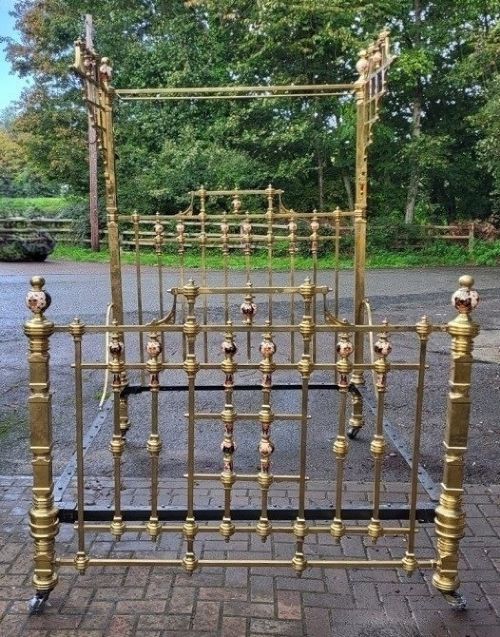
When searching for an antique gold bed, buyers encounter a selection of nineteenth-century and early twentieth-century metal bedsteads, giltwood frames, and day beds. The most common forms on this page are Victorian and Edwardian brass double and single bedsteads, often featuring iron slot-in frames and castors. These pieces span various revivals, including Italian Rococo, Louis XIV, and Art Nouveau styles.
Beyond standard bedframes, the evidence includes related furnishings such as giltwood stools, pelmets, bed crowns, and day beds decorated with gilt. Makers like Hoskins & Sewell, Winfield, Shoolbred, and Maple & Co produced high-end brass and metal beds during the Victorian era. Sizes range from single and double up to king and super king dimensions.
How they were made
Makers constructed these beds primarily using brass, cast iron, and iron frames, often combining materials to ensure structural strength while maintaining a decorative golden appearance. Giltwood, gesso, and mahogany served in related frames, day beds, and seating, applying traditional carving and gilding techniques. Brass components were cast, polished, and fitted with detailed finials or decorative tubing.
Iron slot-in frames provided the necessary internal support for heavy mattresses while remaining modular for assembly. Ceramic elements and castors frequently completed the functional design of Victorian and Edwardian bedsteads.
Antique Gold Bed Retail Price Guide 2026
Typical asking prices for gold bed among the pieces listed under this phrase on Sellingantiques today, from the lower quarter to the upper quarter. They describe what is for sale here now, not the wider market.
Listings feature nineteenth-century and early twentieth-century pieces, spanning the Victorian and Edwardian periods with materials including brass, cast iron, and giltwood.
What varies in quality
Quality in these beds rests upon the crispness of the brass casting, the complexity of the ornamentation, and the integrity of the original joints and castors. Exhibition quality pieces demonstrate superior detailing in their finials and heavy-gauge tubing, distinguishing them from standard utility frames.
The presence of maker stamps from established firms like Maple & Co or Hoskins & Sewell elevates a piece, as does the survival of original components such as slot-in iron frames and ceramic castors without modern replacements.
Hoskins & Sewell·Winfield·Maple & Co·Shoolbred
The Antique Gold Bed Glossary
- Bedstead
- The framework of a bed, consisting of posts, headboard, and footboard, designed to hold a mattress and base. In older pieces, these are frequently modular and constructed from brass or iron.
- Giltwood
- Wood that has been coated with gold leaf or gold paint to give a luxurious metallic finish. This technique appears on decorative beds, day beds, and seating frames.
- Half Tester
- A bed featuring a canopy that extends only partway over the head of the bed rather than covering the entire length. These create a striking focal point in larger bedrooms.
- Finial
- A decorative ornament fixed to the top of a bedpost or corner of a frame. They range from simple spherical shapes to elaborate cast brass designs.
- Gesso
- A plaster-like material applied to wood surfaces as a base for gilding or painting. It allows craftsmen to carve intricate relief details before applying gold leaf.
Antique Gold Bed: Frequently Asked Questions
Are these beds easy to assemble?
Most nineteenth-century metal bedsteads utilise a simple slot-in wedge or bolt system that allows the headboard, footboard, and side rails to disconnect easily.
Two people can typically assemble a brass or iron bed frame within minutes using basic tools if needed.
How do I clean polished brass?
Polished brass requires gentle dusting with a soft cloth to prevent the accumulation of grime and airborne pollutants.
Abrasive metal cleaners should be avoided on antique lacquered or patinated surfaces to preserve the original finish.
Can I use castors on wood floors?
Original castors on iron and brass frames were designed for carpets and can sometimes mark delicate hardwood floors.
Using discreet caster cups protects wooden flooring while keeping the bed securely in place.