
Antique Gold Bangle Bracelet
An antique gold bangle bracelet brings solid metal work and historic gemstones together around the wrist in styles ranging from Victorian revival to Art Deco.
Antique Gold Bangle Bracelet
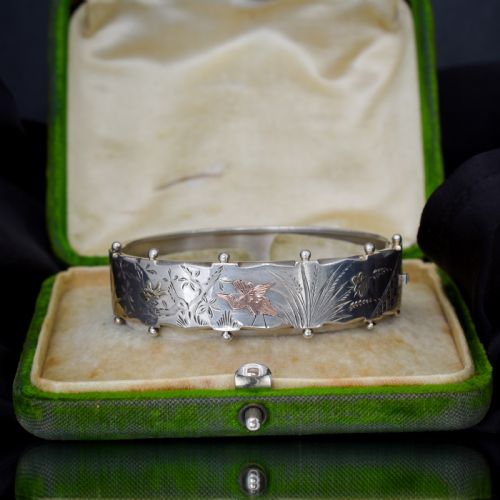
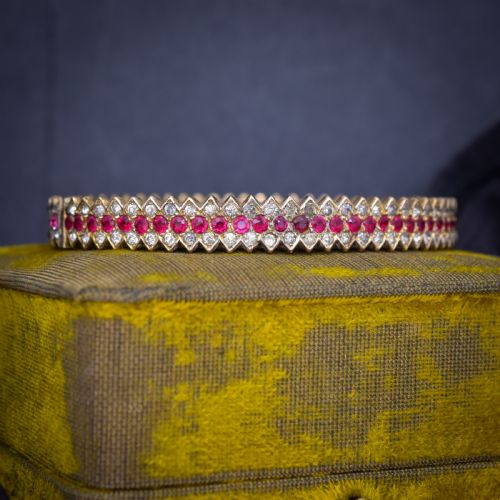
An antique gold bangle bracelet spans rigid closed hoops, hinged cuffs and flexible gate link constructions produced across the nineteenth and twentieth centuries. The selection on this page covers periods from the Victorian era through Edwardian and Art Deco designs up to mid-century pieces.
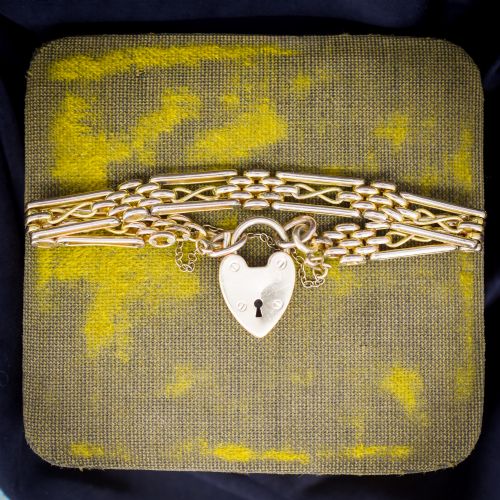
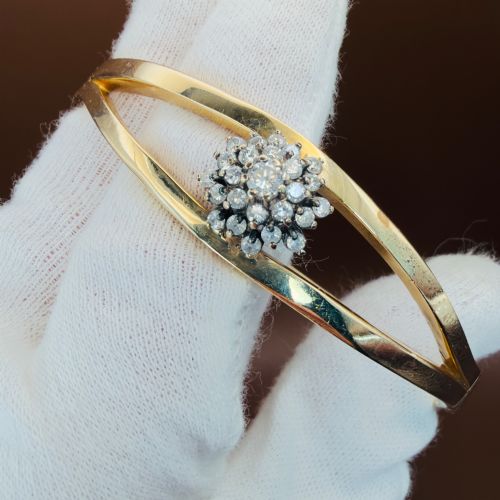
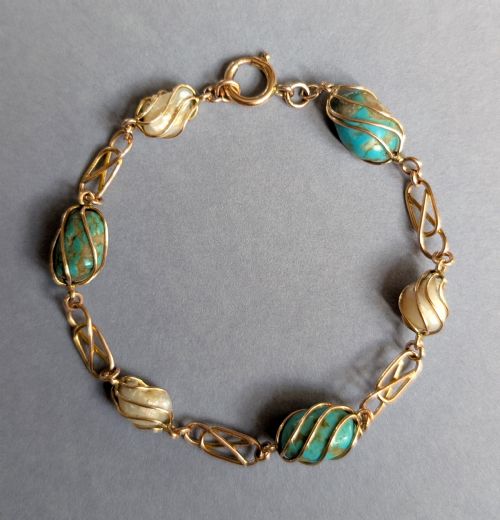
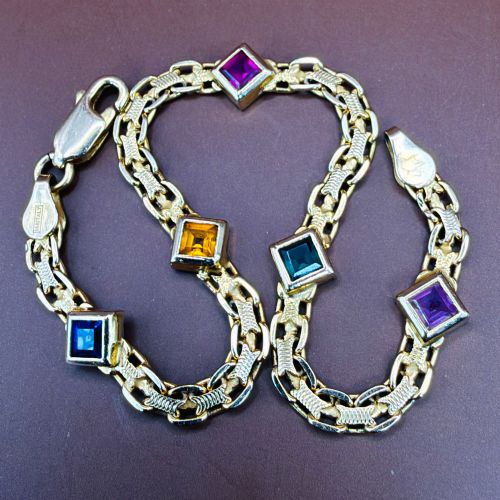
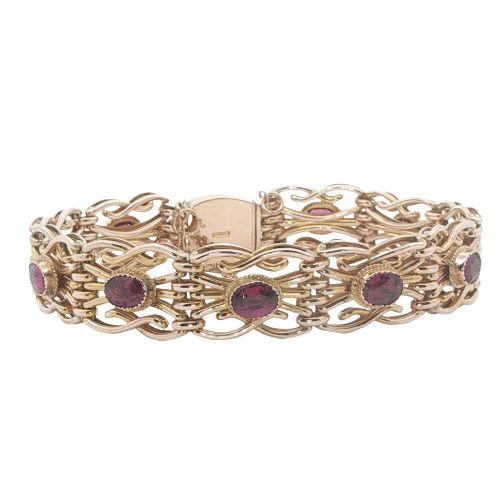
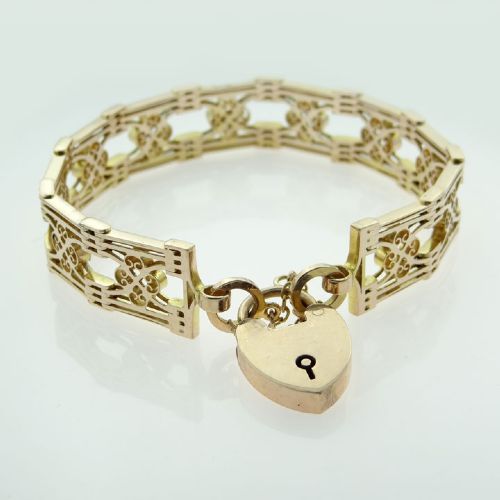
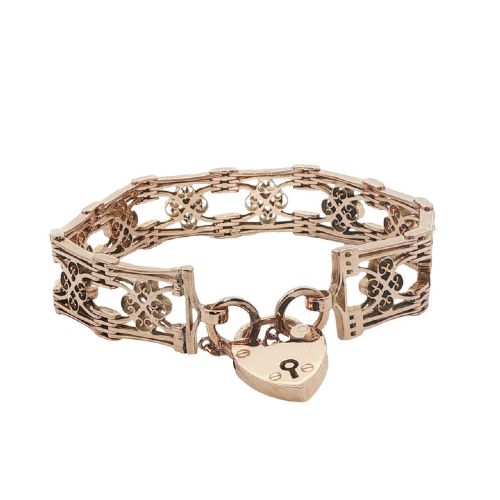
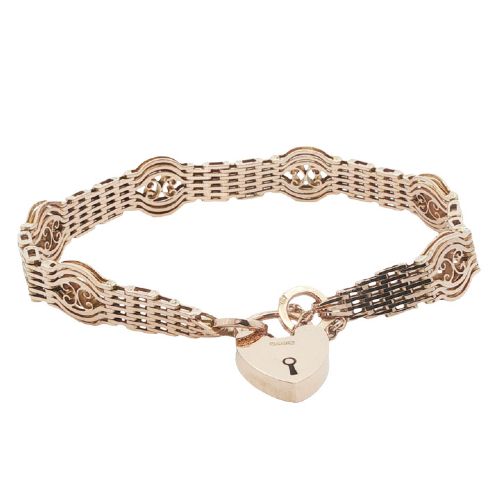
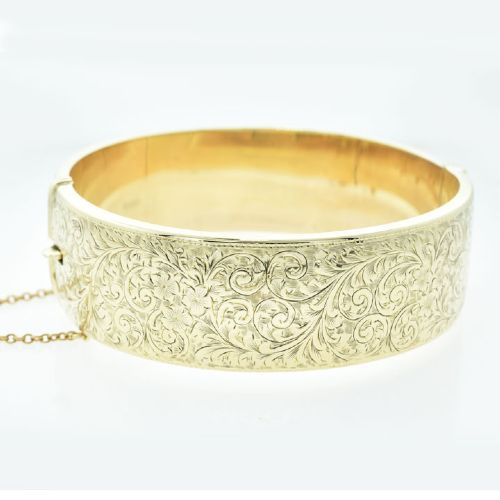
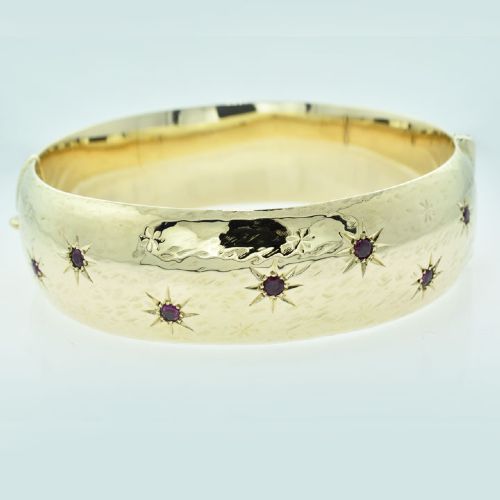
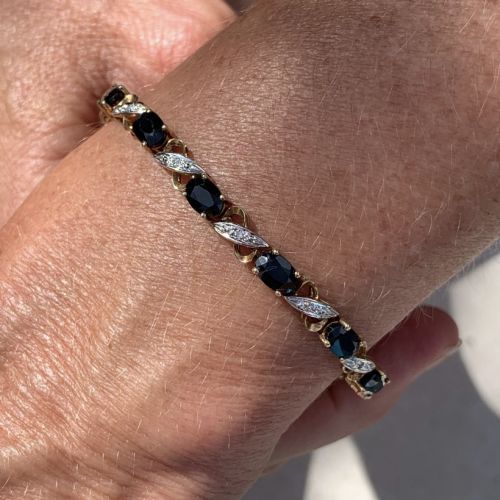
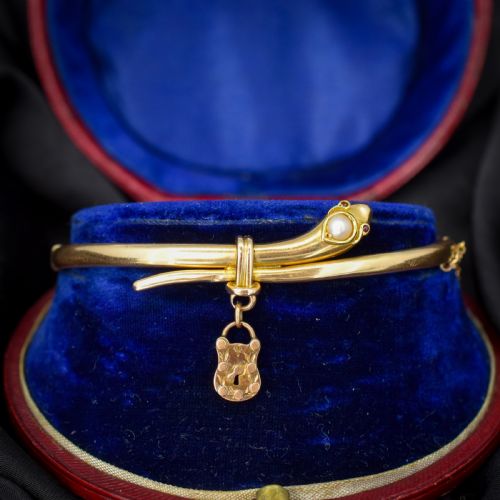
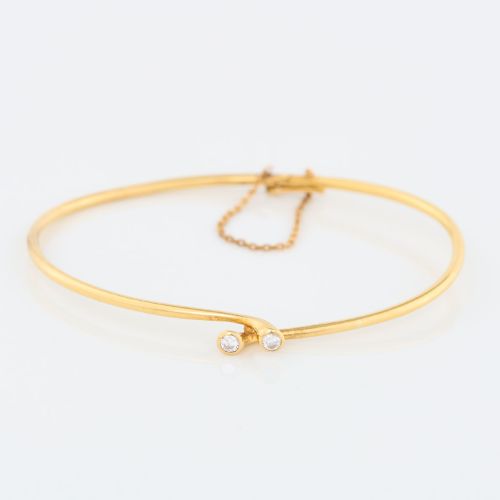
Makers fashioned these pieces in yellow, rose and white gold, incorporating gemstones such as diamonds, rubies, sapphires, garnets, turquoise and pearls. Forms include gate bracelets fastened with heart padlocks, serpent wraps and wide engraved cuffs.
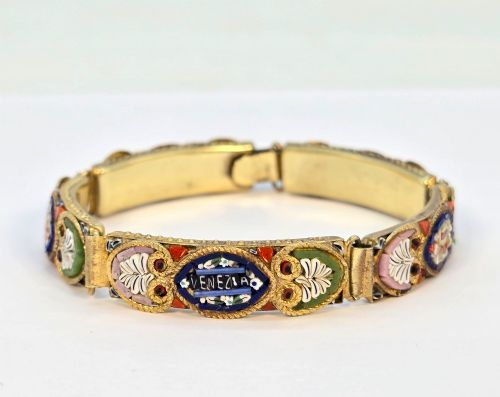
Buyers encounter regional variations including Italian micro mosaics from the Grand Tour and Scottish agate jewellery alongside mainstream British hallmarked pieces. Each variant reflects the specific decorative vocabulary of its decade of origin.
How They Were Made
Goldsmiths utilised 9ct, 14ct, 15ct and 18ct gold alongside silver-topped gold settings designed to enhance the brilliance of old mine cut diamonds. Metal was drawn into wire, cast into rigid hoops or fabricated into hollow gate links connected by secure pins.
Gemstones were secured using claw settings, grain settings and flush mounts, while decorative elements relied on hand engraving, applied wirework in Etruscan revival styles and natural materials like seed pearls, coral and agate.
Listings feature items from the Victorian, Edwardian and Art Deco periods, utilising 9ct, 15ct and 18ct gold set with diamonds, rubies and pearls.
What Varies in Quality
The standard of an antique gold bangle bracelet depends on the weight and purity of the gold alloy utilised, alongside the integrity of any structural hinges and safety chains. Higher quality examples retain crisp hand engraving and original gemstone configurations without replacement stones.
Artisanal execution separates standard production items from finer work, particularly in the precision of micro mosaics, the matching of natural pearls and garnets, and clear hallmark stamps indicating maker and assay office.
The Antique Gold Bangle Bracelet Glossary
- Gate bracelet
- A flexible link bracelet constructed with multiple parallel bars joined by vertical links, frequently secured with a heart padlock.
- Old mine cut
- An early diamond cut characterised by a cushion shape, high crown and large culet facet, typical of nineteenth-century jewellery.
- Grand Tour
- A nineteenth-century travel phenomenon producing souvenir items like Italian micro mosaic panels mounted in gold frames.
- Etruscan revival
- A nineteenth-century design style emulating ancient Greek and Etruscan goldwork through granulation and applied wire decoration.
- Almandine garnet
- A deep red variety of garnet commonly utilised in Victorian and Edwardian cluster rings and bangles.
Antique Gold Bangle Bracelet: Frequently Asked Questions
How do I care for my gold bangle?
Clean antique gold and gemstone pieces gently using a soft cloth and warm soapy water, avoiding harsh chemical dips that can damage pearls and softer stones.
Store rigid bangles individually in padded boxes to prevent surface scratching from neighbouring items in your collection.
Are these bracelets suitable for daily wear?
Many solid gold designs withstand regular wear, but hinged antique pieces and delicate seed pearl settings require mindful handling during daily activities.
It is wise to remove older jewellery before swimming, gardening or heavy manual tasks to protect delicate clasps and claws.
How can I date my gold bangle?
Examine the piece for official hallmarks, maker marks and structural clues such as safety chains, clasp types and gemstone cuts characteristic of specific decades.
Victorian and Edwardian pieces often display distinct motifs like snakes, padlocks and specific revival styles that narrow down the manufacturing period.
What is rolled gold?
Rolled gold involves a sheet of gold mechanically bonded to a base metal core, offering the appearance and durability of solid gold at a different production level.
This technique became common in various nineteenth and twentieth-century jewellery pieces designed to be accessible yet robust.