


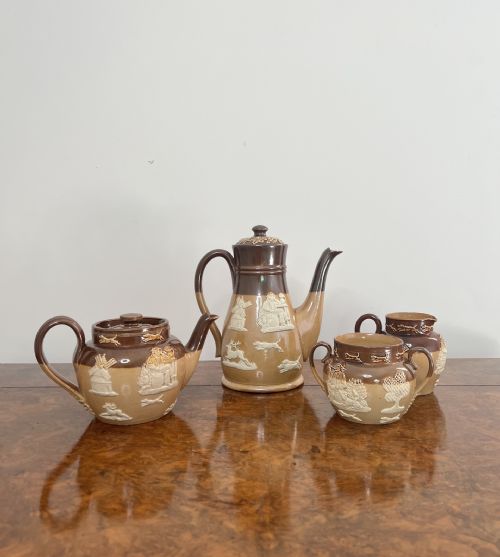


Antique Glazed Milk Pitcher
These antique glazed milk pitcher pieces bring daily utility and rich nineteenth century character to a table.
Antique Glazed Milk Pitcher
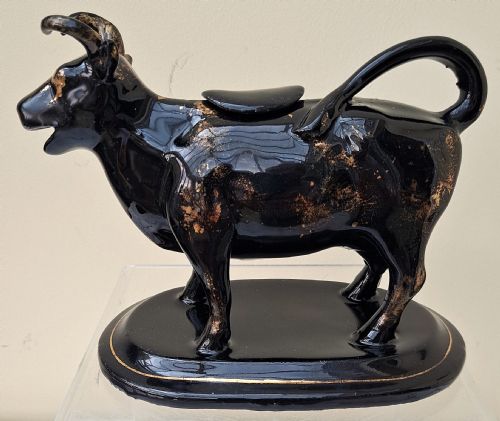
An antique glazed milk pitcher covers earthenware and stoneware vessels designed for pouring milk or cream, spanning the nineteenth century and Victorian periods. You will regularly encounter earthenware and stoneware jugs in forms such as cream jugs, milk jugs, and cow creamers.
How they were made
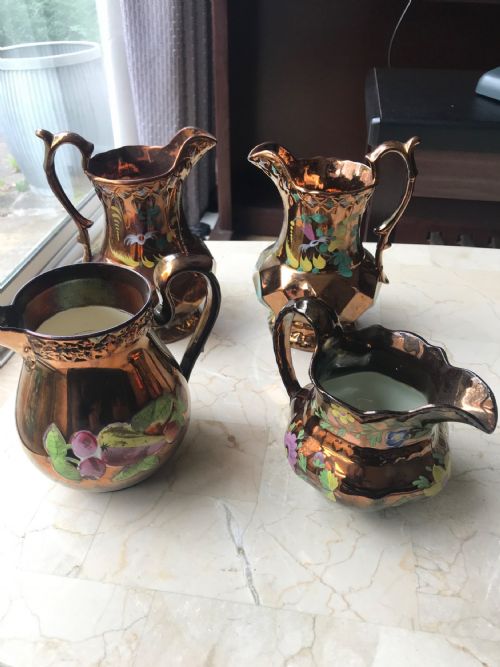
Potters shaped these pieces from earthenware, pearlware, ceramic, and stoneware, applying copper lustre glaze, enamel glaze, or salt glaze surfaces. Decoration relied heavily on hand-decorated fruit motifs, blue and white transfers, and gilt highlights.
Makers utilised traditional moulding and throwing techniques before firing, often finishing bodies with rich black basalt or lustrous metallic sheens. The combination of durable ceramic bodies with protective lead or salt glazes ensured practical daily service.
The listings show nineteenth century items created from earthenware, stoneware, and pearlware with copper lustre, enamel, and salt glazes.
What varies in quality
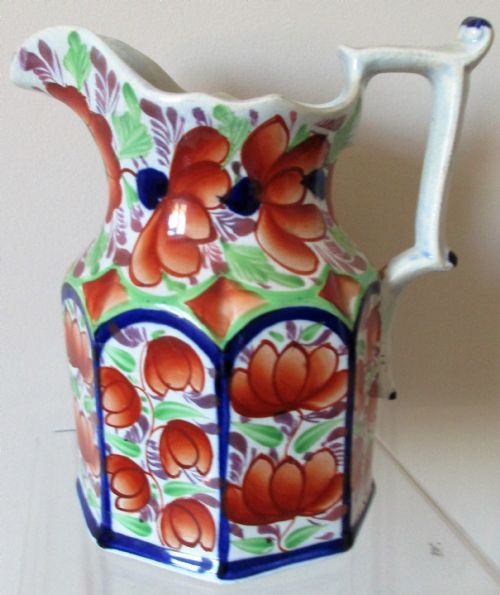
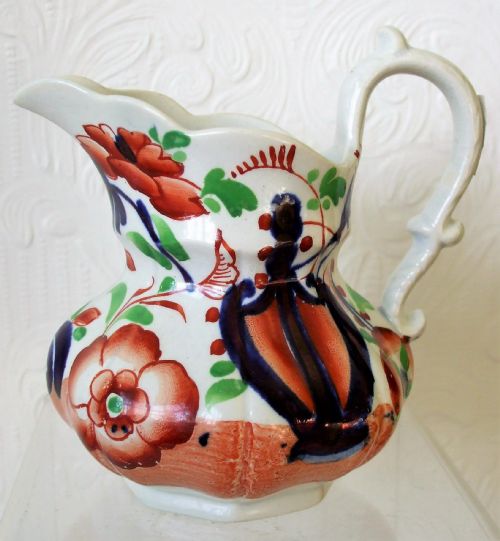
Quality rests upon the crispness of the moulded relief and the control shown in hand-decorated enamel and copper lustre finishes. Stronger examples display deep, even glazes and precise application of patterns such as the Gaudy Welsh Pagoda or Gwent designs.
Figural pieces like cow creamers succeed when the modelling remains sharp and expressive rather than soft or blurred. The integration of gilt details and the clarity of transfer-printed blue and white decoration further separate standard kitchenware from finer display items.
Doulton Lambeth
The Antique Glazed Milk Pitcher Glossary
- Earthenware
- Porous pottery fired at lower temperatures, requiring a glaze to become impermeable to liquids. This material forms the body of many nineteenth century jugs.
- Salt glaze
- A glassy, textured finish achieved by throwing common salt into the kiln during high temperature firing. It creates a distinctive pitted surface seen on stoneware.
- Copper lustre glaze
- A metallic surface treatment imparting a reflective, coppery sheen to ceramic bodies. It is frequently found on Victorian Staffordshire jugs.
- Pearlware
- A refined earthenware developed in the eighteenth century featuring a bluish glaze that pooling in recesses makes the body appear whiter. It bridges the gap between creamware and later white ironstone.
Antique Glazed Milk Pitcher: Frequently Asked Questions
What is a cow creamer?
A cow creamer is a ceramic jug modelled in the shape of a cow, designed to hold and pour milk or cream from an opening on the back.
These figural vessels date back to the eighteenth and nineteenth centuries and often include a small milkmaid figure or flat base for stability.
How do I date a Victorian jug?
Dating relies on stylistic markers, material changes, and factory marks stamped into the ceramic body during production.
Nineteenth century pieces often exhibit distinct characteristics such as copper lustre glazes, transfer printed patterns, or salt glaze stonework typical of the Victorian era.
Can I use these pitchers daily?
While these pitchers were originally built for practical kitchen use, age and glaze composition make many better suited for gentle display.
Porcelain and stoneware bodies tolerate careful handling, but historic glazes require hand washing to prevent degradation over time.
What is Gaudy Welsh pottery?
Gaudy Welsh refers to a colourful type of earthenware decorated with vibrant cobalt blue, copper lustre, and iron red enamel.
Patterns like Gwent and Pagoda were popular in the nineteenth century, intended to brighten modest homes with affordable yet striking tableware.