





Antique Glass Screen
An antique glass screen partitions a room or shields a hearth, bringing layered light and historical weight into a modern interior.
Antique Glass Screen
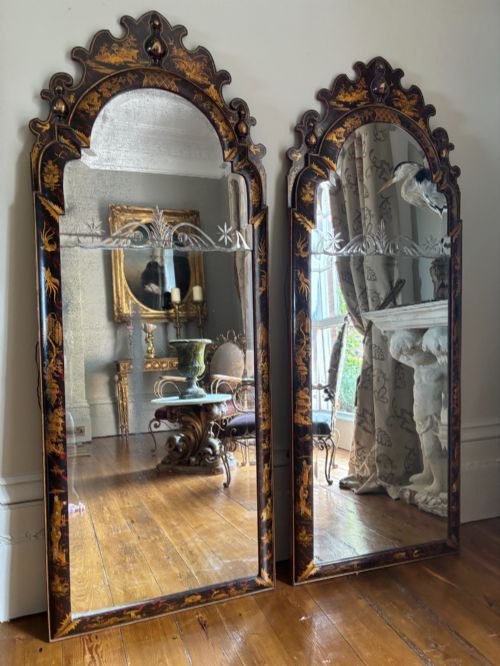
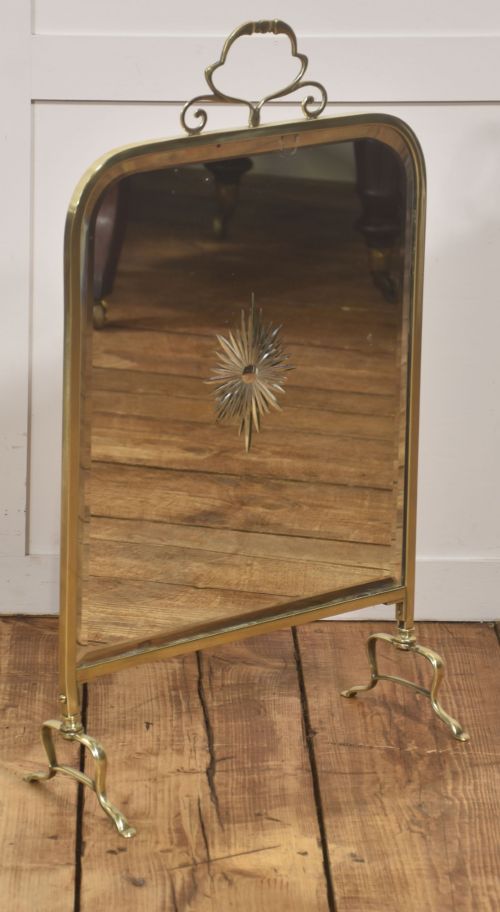
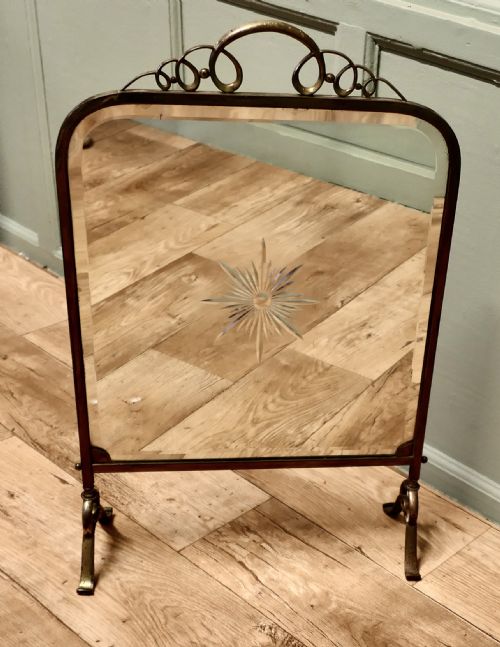
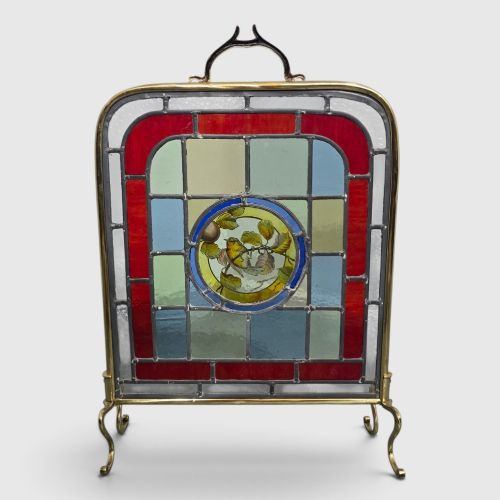
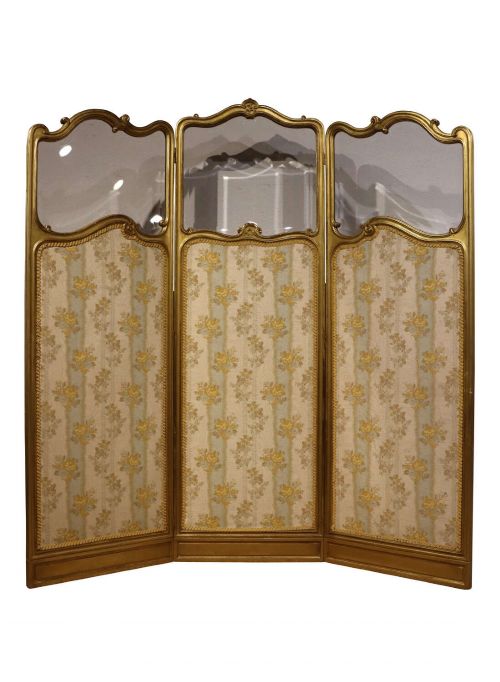
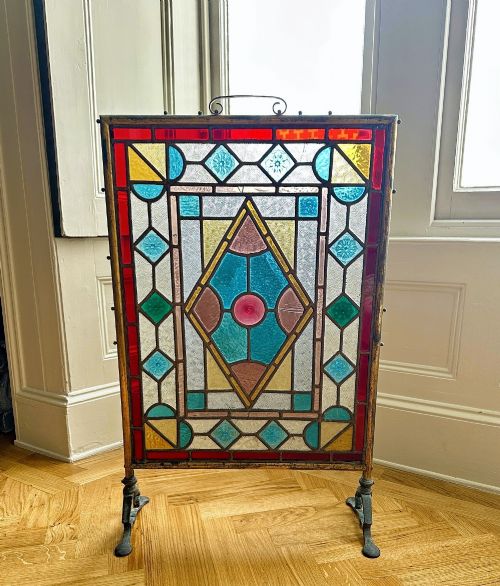
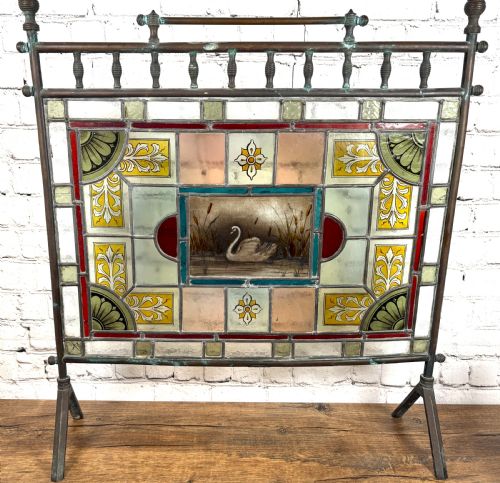
Buyers seeking an antique glass screen typically encounter hearth guards and folding room partitions originating from the Victorian period through the early twentieth century. These furnishings combine transparent, mirrored, or stained panels with structural frames of brass, giltwood, mahogany, or oak.
The selections range from single-panel fire screens designed to sit before an unused fireplace to tall, multi-fold room dividers and vanity screens. Most pieces reflect prevailing design movements such as Art Nouveau, Art Deco, and the Arts and Crafts style.
Domestic interiors benefit from these objects by utilising translucent or reflective surfaces to alter light levels and create gentle separation within a room. Their survival depends on the durability of the heavy frames supporting the glass panels.
Materials and construction
Frames rely on sturdy timbers such as mahogany, walnut, and oak, alongside cast or sheet brass and carved giltwood. Metal components often provide the rigidity needed to hold heavy glazed panels safely in place.
Glazing techniques include bevelled edges, leaded joints, etched patterns, and sunburst mirror arrangements. Some folding screens incorporate secondary materials like silk panels alongside the glass to add texture and opacity.
Antique Glass Screen Retail Price Guide 2026
Typical asking prices for glass screen among the pieces listed under this phrase on Sellingantiques today, from the lower quarter to the upper quarter. They describe what is for sale here now, not the wider market.
The design styles represented across these screens include Art Nouveau, Art Deco, Arts and Crafts, and Victorian aesthetic traditions.
Assessing quality and execution
The calibre of a screen rests on the weight of its metal framework and the depth of carving in the wood or gilt. Heavier brass castings and solid hardwood framing indicate robust construction designed for long-term domestic use.
Glazing quality is evident in the precision of bevels, the clarity of etched motifs, and the tightness of lead came. Superior execution shows in balanced proportions and stable hinges that support multi-fold panels without sagging.
The Antique Glass Screen Glossary
- Bevelled glass
- Glass with an angled edge cut and polished to a specific width around the periphery. This treatment catches and refracts light across the room.
- Fire guard
- A protective barrier placed in front of a fireplace to shield occupants from radiant heat. These items frequently utilise glass or mesh panels within metal frames.
- Giltwood
- Timber that has been coated with a thin layer of gold leaf or gesso powder. It provides a bright, reflective surface popular in formal nineteenth-century interiors.
- Leaded glass
- Individual pieces of glass joined together by strips of lead came. The resulting matrix forms decorative geometric or pictorial patterns.
- Pole screen
- A freestanding screen featuring an adjustable vertical panel mounted on a slender central pole. It allowed users to block hearth heat from their faces.
Antique Glass Screen: Frequently Asked Questions
What is an antique glass screen used for?
These screens served primarily as hearth guards to block intense fireplace heat or as movable partitions to create privacy in large rooms.
Today, they function as decorative room dividers, wall mirrors, or focal points in living spaces.
How do I clean an antique glass screen?
Use a soft, dry cloth to remove dust from the frame and delicate glass surfaces without applying excessive pressure.
Avoid harsh chemical cleaners on giltwood and antique brass to preserve the original surface patination.
Are these screens heavy?
Many examples are surprisingly heavy due to the combination of solid timber frames, cast brass, and thick glass panels.
Multi-fold configurations require stable placement to ensure the panels balance securely when extended.
How do I date an antique glass screen?
Dating relies on stylistic markers such as sinuous Art Nouveau curves, geometric Art Deco lines, or heavy Victorian carving.
Construction methods, including the type of hinges and the manufacturing style of the glass, also offer chronological clues.