
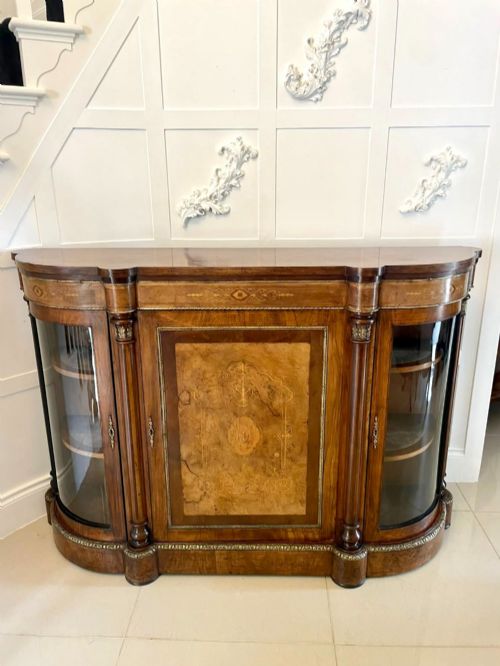
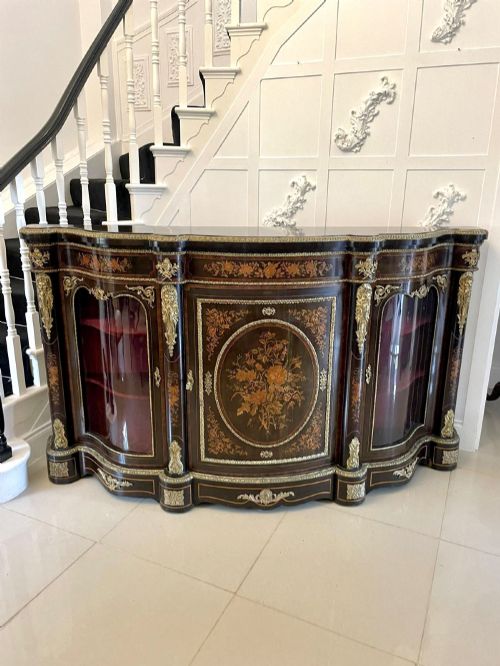
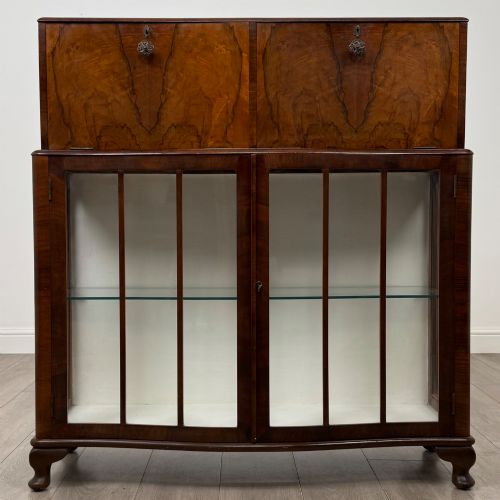
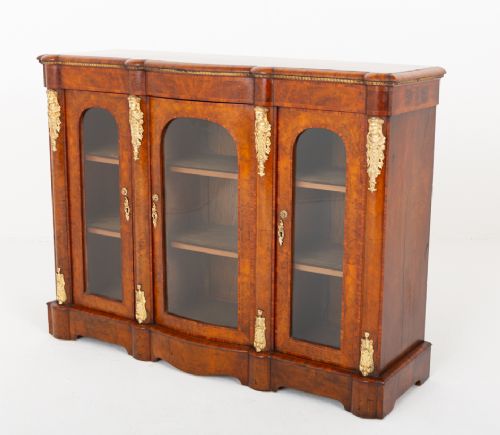
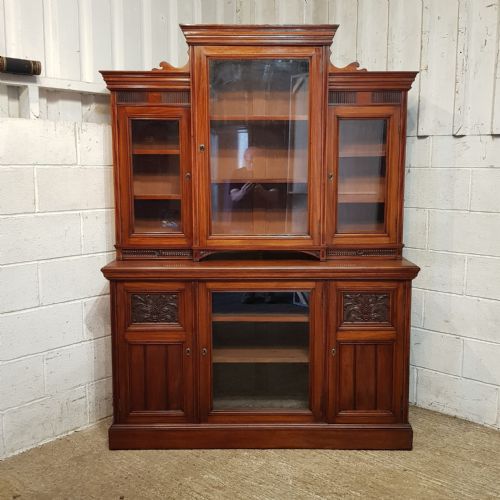
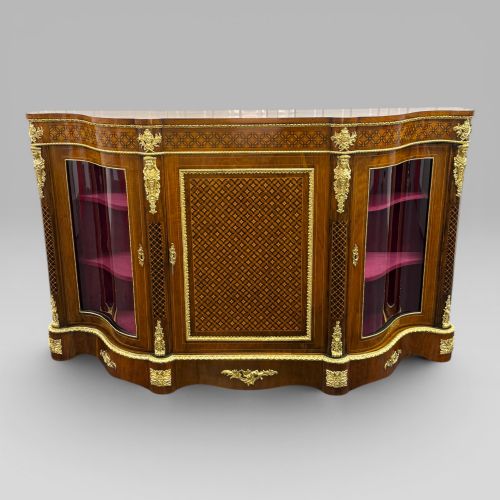
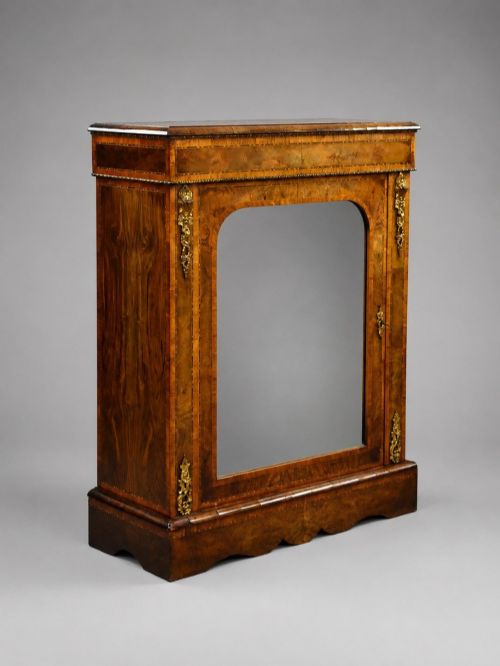


Antique Glass Front Sideboard
An antique glass front sideboard brings together rich timber and glazed display, serving as a focal point for the formal interior.
Antique Glass Front Sideboard
When you search for an antique glass front sideboard, you encounter low display furniture primarily designed for formal reception rooms. These pieces combine glazed central or flanking compartments with timber carcases, originating mainly across the Victorian and Edwardian periods.
The most common form you meet on this page is the credenza, alongside serpentine display cabinets and side cabinets. Makers produced these using figured timbers like burr walnut and rosewood, often shaping the front with graceful curves or bow ends.
Examples span the mid nineteenth century through to the early twentieth century, showing influences from the Aesthetic Movement, Sheraton Revival, and French designs. They function both as storage units and as stages for precious ceramics and decorative objects.
Materials and construction
Cabinet makers utilised dense native and exotic hardwoods for the carcase, applying figured burr walnut, rosewood, and mahogany veneers to prominent surfaces. Marquetry inlay in lighter woods and brass stringing frequently decorate the doors and friezes.
Ormolu mounts, cast in bronze and gilt, accentuate the curves of serpentine credenzas and frame the glazed panels. Glass panels are set into timber doors to protect the interior shelves while offering a clear view of the contents.
Materials represented across the selection include burr walnut, rosewood, ebonised wood, mahogany, ormolu, and brass.
What separates the finest examples
The sophistication of the timber figure and the intricacy of the marquetry define the upper tier of these pieces. Dense burr walnut with matching symmetrical grain patterns demonstrates superior selection by the workshop.
The weight and crispness of the ormolu mounts also set better examples apart from standard production. Heavy, finely chased gilt bronze mounts integrated harmoniously into a serpentine front indicate skilled execution.
Maison Gagneau·Edwards and Roberts
The Antique Glass Front Sideboard Glossary
- Ormolu
- Gilt bronze mounts applied to furniture to accent corners, friezes, and borders. The technique involves coating cast bronze with a mercury and gold amalgam before heating.
- Marquetry
- Inlay work using various tinted woods fitted together to form pictorial or geometric patterns on a veneer surface. Craftsmen used this technique extensively on Victorian walnut furniture.
- Serpentine
- A curved furniture front characterised by a convex centre flanked by concave ends. This shape requires advanced woodworking skill to fit doors and mouldings accurately.
- Pieta dura
- An inlay technique using cut and fitted polished coloured stones to create decorative designs. It appears on select high status nineteenth century cabinets.
Antique Glass Front Sideboard: Frequently Asked Questions
What is an antique glass front sideboard?
These pieces are low decorative cabinets featuring glass doors, commonly known as credenzas, pier cabinets, or display units. They originated primarily during the Victorian and Edwardian eras for formal entertaining spaces.
Craftsmen built them using rich timbers like burr walnut, rosewood, and mahogany, often incorporating ormolu mounts and delicate marquetry inlay to enhance their appearance.
Where were they placed in a home?
Victorian households positioned these cabinets in drawing rooms or dining rooms against principal walls. Their low profile ensured they did not obstruct paintings or window light while providing a surface for lamps and ornaments.
Inside the glazed sections, owners displayed prized porcelain, glassware, and small collectibles protected from dust.
How do I date an antique glass front sideboard?
Dating relies on combining the timber choice, decorative style, and construction methods. Mid-nineteenth century pieces often feature heavy burr walnut veneers with elaborate marquetry and ormolu mounts.
Later Edwardian examples tend towards lighter satinwood or mahogany with refined neoclassical Revival details following Sheraton patterns.
How do I care for walnut veneer?
Walnut veneer requires stable indoor humidity away from direct sunlight and heat sources to prevent timber movement and fading. Dusting with a dry, soft cloth preserves the polished finish without moisture damage.
Applying specialist wax periodically helps nourish the timber and maintain the depth of the grain.