


Antique Glass Condiment Stand
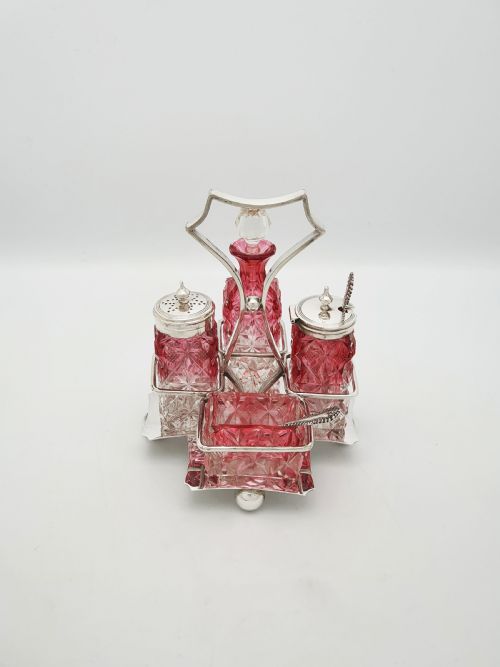
An antique glass condiment stand holds the table together, combining cut crystal with metal frameworks for mustard, oil, and vinegar.
Antique Glass Condiment Stand
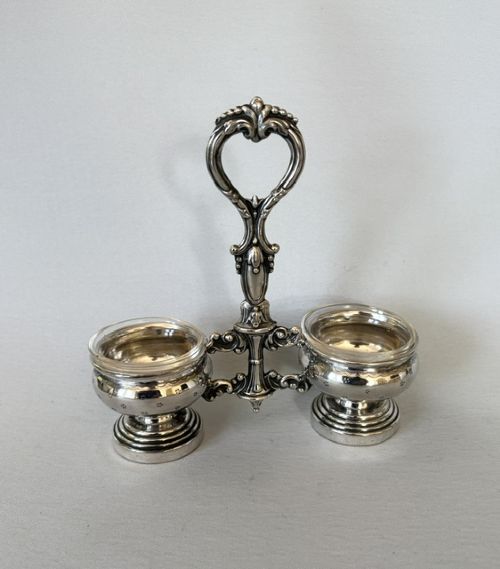
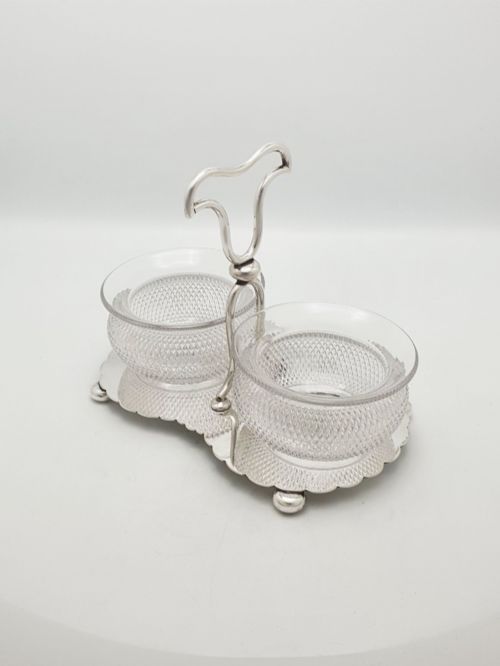
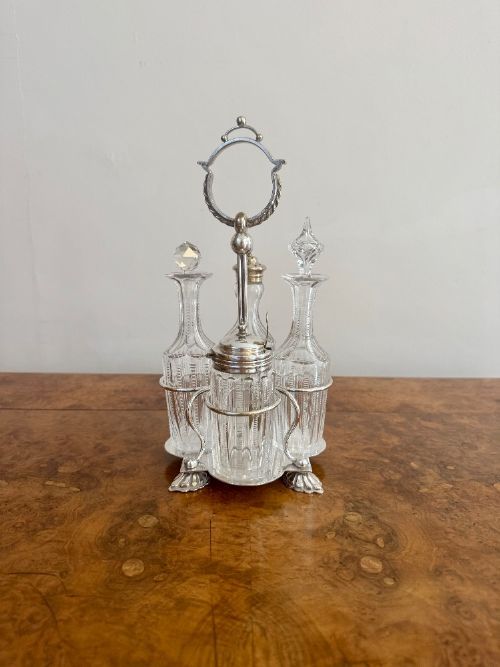
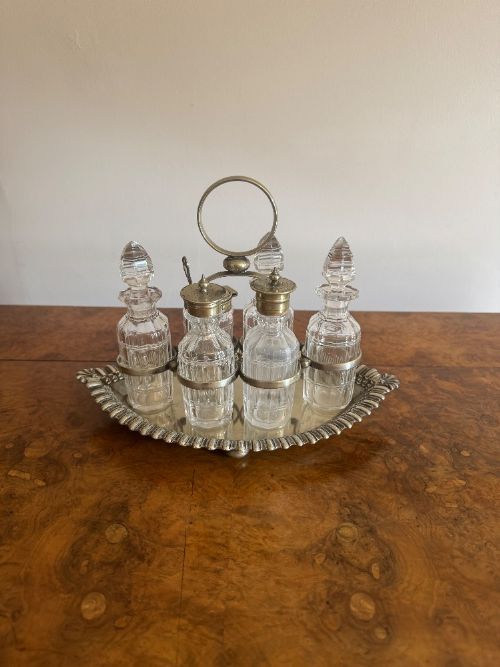
An antique glass condiment stand serves as a tabletop frame holding glass bottles, cruets, or preserve bowls for meals. Buyers searching for an antique glass condiment stand will frequently encounter Edwardian silver plated frames holding multiple cut glass bottles, alongside Victorian and Georgian iterations.
The objects range from bachelor sets holding two or three vessels up to large seven-bottle or eight-piece serving frames. Smaller preserve dishes, jam pots, and relish caddies also appear under this heading alongside standard cruet sets.
Materials and construction
Makers combined heavy lead crystal, cut glass, and cranberry glass with silver plate, Old Sheffield plate, and sterling silver. Glass components were often hand cut or flashed to produce faceted surfaces that caught the light.
Metal stands utilised cast or stamped frames, incorporating carrying handles and secure rings to hold the individual bottles and jars safely during dining.
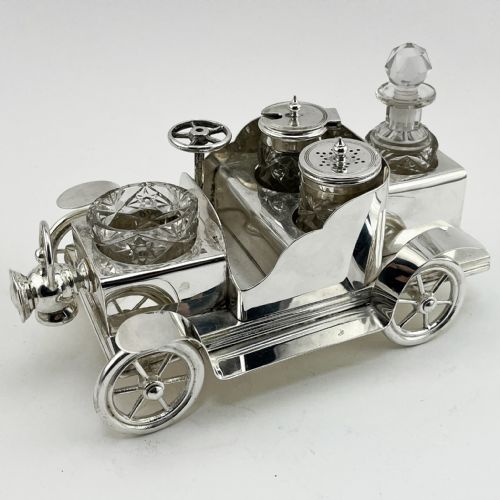
Unusual novelty variants include miniature vintage car frames designed to motor condiments across the dining table.
Judging the standard
Quality rests upon the crispness of the glass cutting and the weight of the metal framework. Finer examples feature heavy lead crystal bottles that fit their designated rings precisely, matched with substantial silver plating or solid sterling silver mounts.
Makers and silversmiths who executed marked pieces with balanced proportions and complete, matching sets separate the top tier from standard utility tableware.
Mappin Brothers·Walker & Hall·Charles Thomas Fox·Elkington & Co·Hester Bateman
The Antique Glass Condiment Stand Glossary
- Cruet set
- A collection of glass bottles or castors mounted on a stand for vinegar, oil, pepper, and mustard.
- Cranberry glass
- A rich red glass produced by adding gold chloride to the molten batch during the Victorian and Edwardian periods.
- Old Sheffield plate
- A composite material made by fusing a thin sheet of silver to a thicker copper base before shaping.
- Lead crystal
- Glass containing metal oxide that increases weight, refractive index, and clarity for deep hand cutting.
Antique Glass Condiment Stand: Frequently Asked Questions
What is an antique glass condiment stand?
It is a decorative tabletop frame designed to hold glass bottles, cruets, and jars containing sauces, oils, and preserves during meals.
These stands evolved from simple single-bottle holders into elaborate multi-bottle dining centerpieces with integrated handles.
How do I date an antique condiment set?
Dating relies on hallmarks stamped on silver components, the style of the metal framework, and the manufacturing technique of the glass vessels.
Georgian and Victorian sets often display distinct silversmith marks, while Edwardian and Art Deco pieces exhibit lighter frames and geometric crystal cutting.
Were all condiment sets made of silver?
Many sets utilised silver plate or Old Sheffield plate over a base metal to provide the appearance of solid silver at a lower cost.
Sterling silver frames do exist, typically bearing full hallmarks that record the assay office and year of production.
How should I clean glass cruet bottles?
Warm water and mild soap suit the glass portions, avoiding harsh abrasives that might scratch the surface or damage cut facets.
Silver or plated metal frames require dedicated polish applied carefully to prevent residue from entering the glass openings.