


Vintage Cut Glass Shaker
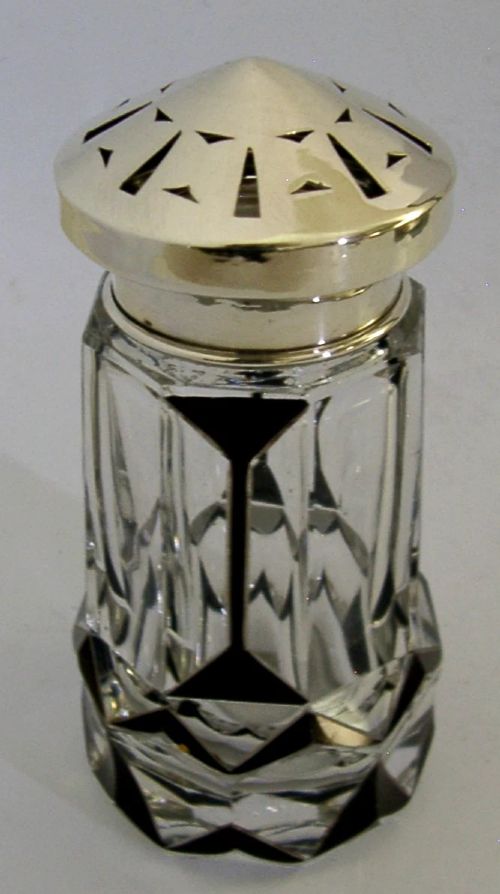
These vintage cut glass shaker pieces combine heavy crystal bodies with silver mounts, bringing practical elegance to the table.
Vintage Cut Glass Shaker
A vintage cut glass shaker takes several forms across this selection, including cocktail shakers, sugar sifters, pepper pots, and individual salt and pepper shakers. The most frequent iteration is the Edwardian or Art Deco cruet set or condiment stand holding multiple glass bottles alongside silver plated frames.
Makers produced these items in various periods ranging from the Georgian era through to the Edwardian years and the 1930s. Buyers will encounter both standalone shakers and multi-bottle sets housed in fitted cases or silver plated stands.
How they were made
The primary materials recorded in these listings are cut glass and heavy lead crystal, paired with sterling silver, silver plate, and enamel mounts. Artisans hand cut the glass bodies to create faceted patterns that catch the light.
Metal components include pierced silver tops, collars, and stands, sometimes accented with paste stones or enamel work for decorative effect.
Listings span seven distinct periods, from Georgian and Victorian eras through to Edwardian designs and the 1930s.
What varies in quality
Quality rests on the depth and crispness of the hand cutting upon the glass body, alongside the weight and gauge of the silver or silver plate used for the mounts and frames. Superior examples display precise geometric or floral facets that remain sharp to the touch.
The completeness of multi-bottle sets and the presence of original makers' marks on the metal components further distinguish finer pieces from standard production.
Hukin & Heath
The Vintage Cut Glass Shaker Glossary
- Cruet set
- A matched collection of glass bottles or shakers for condiments, held within a metal stand or frame. These sets often include mustard pots, oil cruets, and salt shakers.
- Sugar sifter
- A tall shaker featuring a pierced top designed for dusting fine pastries or desserts with sugar. Examples frequently combine cut glass bodies with silver tops.
- Silver plate
- A base metal coated with a thin layer of sterling silver. This technique allowed manufacturers to create decorative frames and mounts at a lower cost than solid silver.
- Paste
- Faceted glass or lead crystal cut to imitate gemstones. It appears in jewellery items and decorative mounts from the Edwardian period onwards.
Vintage Cut Glass Shaker: Frequently Asked Questions
What is a cruet set?
A cruet set is a collection of glass bottles and shakers designed to hold condiments such as oil, vinegar, salt, and pepper at the dining table. They typically sit within a dedicated metal stand for easy transport.
In this selection, cruet sets appear alongside standalone sugar shakers and cocktail shakers, spanning Edwardian and Georgian periods.
How do I clean cut glass?
Cut glass benefits from gentle washing in warm, soapy water using a soft cloth or brush to reach inside faceted patterns. Avoid harsh abrasives that might scratch the surface.
Silver mounts require separate care with a suitable polish to prevent tarnishing without touching the glass.
How do I date a glass shaker?
Dating relies on stylistic clues, mounting materials, and any accompanying hallmarks stamped on the silver components. Georgian and Victorian pieces show different manufacturing traits compared to Edwardian and Art Deco examples.
Design motifs and the specific cut of the glass provide further context for the period of origin.